How Do I Connect a Light Switch
6 August 2026
How Do I Connect a Light Switch?
Connecting a light switch is genuinely straightforward once the power is properly isolated, but there's a legal distinction worth understanding before you start: replacing a like-for-like switch is generally fine to do yourself, while installing a new switch on a new circuit is notifiable work under Part P of the Building Regulations and needs certifying. Getting clear on which side of that line your job falls on matters as much as the wiring itself.
What You Need
A voltage tester, a proper one, used to confirm the circuit is genuinely dead before touching any wiring.
A screwdriver set appropriate for your switch plate fixings.
The new switch, matching the number of gangs and switch type of the existing one.
A torch or portable light, since you'll have the circuit switched off.
Your phone, for photographing the existing wiring before you disconnect anything.
Step 1: Isolate the Power Properly
Switch off the relevant circuit breaker at your consumer unit. If you're not certain which breaker controls that specific switch, turn off the main switch for the whole consumer unit rather than guessing, since mislabelled breakers are genuinely common, particularly in older properties.
Step 2: Test That It's Actually Dead
This is the step that matters most for safety and the one most commonly skipped by people confident enough to attempt the job in the first place. Remove the switch plate and use a proper voltage tester directly on the terminals to confirm there's no live current, rather than relying on the breaker being off. Breaker labels are wrong often enough that this check is genuinely worth doing every single time.
Step 3: Photograph the Existing Wiring
Before disconnecting anything, take a clear photo of how the wires currently connect to the old switch. Terminal layouts vary between manufacturers, and a reference photo removes any guesswork when you come to connect the new one, particularly if the new switch's terminals aren't arranged identically to the old.
Step 4: Understand the Terminals
For a standard one-way switch, the core setup is simple: a permanent live feed comes into one terminal, and a switched live wire leaves from another, heading to the light fitting. The circuit completes only when the switch is closed. Some setups also have a neutral present at the switch, particularly relevant if you're fitting a smart switch, since many need constant power for their internal electronics where a standard mechanical switch doesn't. Check your new switch's requirements against what's actually in your wall box before assuming compatibility.
Two-way switching, where one light is controlled from two separate switches, uses a different arrangement involving three-core-and-earth cable and strapping wires between the switches. This is meaningfully more complex than a one-way replacement, and if you're converting a one-way setup to two-way rather than replacing an existing two-way switch, that's new circuit work and falls into notifiable territory.
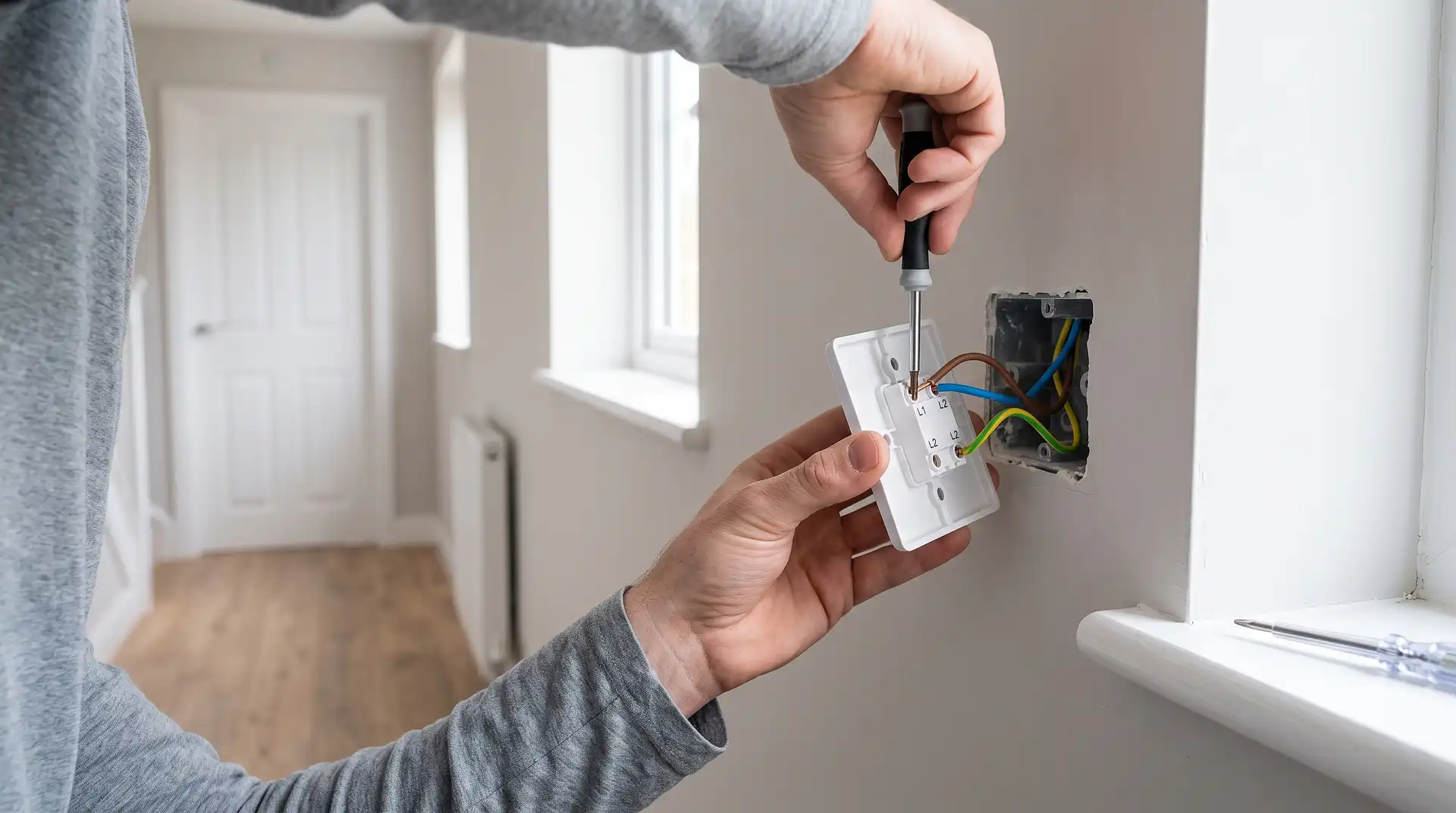
Step 5: Connect the New Switch
Loosen the terminal screws on the old switch, disconnect each wire, and connect them to the corresponding terminals on the new switch, following your photo and the new switch's own wiring diagram. Tighten each terminal screw securely, a loose connection is a common cause of a switch that works intermittently or, in more serious cases, generates heat at the connection point over time.
Step 6: Fit the Plate and Test
Push the wiring carefully back into the wall box without sharp folds, screw the plate into place, and check it sits flush and level. Restore power at the consumer unit and test the switch, it should operate smoothly with no flickering, buzzing, or warmth at the plate after a few minutes of use.
When to Stop and Call an Electrician
Stop and call a Part P registered electrician if you open the switch plate and find anything unexpected, unfamiliar wiring configurations, signs of scorching, or wiring that doesn't match any standard setup you recognise. The same applies if the job involves a bathroom, requires a new circuit, or if your new smart switch needs a neutral wire your existing setup simply doesn't have.
Sometimes what looks like a switch problem turns out to be something else in the circuit entirely, particularly when lights behave inconsistently rather than simply not working. Our related guide on the InstantCost blog covers how to diagnose and fix flickering lights , worth reading before replacing a switch if the actual symptom you're chasing is intermittent or flickering light rather than a switch that's genuinely failed.
Common Mistakes and What to Do Instead
Mistake: trusting the breaker label without testing. Mislabelled circuits are common enough that this is a genuine safety risk, not a theoretical one. Always test with a proper voltage tester on the actual terminals before touching wiring.
Mistake: not photographing the original wiring. This is a ten-second step that removes all guesswork later, particularly when the new switch's terminal layout differs slightly from the old one.
Mistake: assuming a smart switch will fit any existing setup. Many need a neutral wire present at the switch, which plenty of UK wiring doesn't include there. Check what's in your wall box before buying.
Mistake: leaving terminal screws loose. A loose connection causes intermittent operation and can generate heat at the connection point over time. Confirm each terminal is properly tightened before refitting the plate.
Mistake: treating new circuit work as a simple swap. Adding a switch where none existed, or converting one-way to two-way switching, is notifiable work requiring Part P certification, not an extension of a straightforward replacement.
What It Costs in the UK
According to InstantCost.co.uk's 2026 UK electrician pricing data, hourly rates run £40 to £75, with London and the South East at £55 to £75 an hour and the Midlands, North and Wales closer to £40 to £55. Most electricians charge a one-hour minimum plus a call-out fee of £40 to £80 for short jobs, which is worth factoring in for something as quick as a switch replacement.
For related jobs, adding or replacing a socket typically costs £90 to £150 including a minor works certificate, and light fitting or spotlight installation typically costs £120 to £280 per room supplied and fitted. If your switch issue turns out to be part of a wider electrical problem, an EICR safety inspection typically costs £150 to £350 depending on property size, and a consumer unit replacement typically costs £550 to £950 fully fitted including RCDs and Part P notification.
Job | Typical UK Cost (2026) |
|---|---|
Electrician hourly rate | £40 to £75 |
London and South East hourly | £55 to £75 |
Midlands, North, Wales hourly | £40 to £55 |
Call-out fee (short jobs) | £40 to £80 |
Add or replace a socket | £90 to £150 |
Light fitting or spotlights, per room | £120 to £280 |
EICR safety inspection | £150 to £350 |
Fuse board / consumer unit | £550 to £950 |
These are UK market estimates based on InstantCost.co.uk's 2026 pricing data and vary by region and provider. Always get three written quotes for any job over £500.
Staying Safe
All electrical work in UK dwellings must be carried out by a Part P registered electrician, NICEIC, NAPIT, ELECSA or STROMA, or be separately inspected and certified. Always ask for the registration number before work begins and verify it on the relevant body's website rather than taking it on trust. Ask to see public liability insurance too, £2 million minimum is the standard expectation.
If children are in the home, keep them well away from the work area while the switch plate is off and wiring is exposed, and never leave a partially connected switch accessible, even briefly, without either finishing the job or making the circuit properly safe first.
Part P notification requirements and what counts as notifiable work can be updated, and rules differ slightly across Scotland, Wales, and Northern Ireland, so check current guidance via GOV.UK or ask a registered electrician if you're unsure whether your specific job needs certifying.
FAQ
Do I need an electrician to connect a light switch? Not for a straightforward like-for-like replacement in the same position on the same circuit, which is non-notifiable work. Installing a new switch, new circuit work, or anything in a bathroom does legally require a Part P registered electrician.
How do I know if the power is really off before I start? Switch off the relevant circuit breaker, or the main switch if you're unsure which one, then test directly on the switch terminals with a proper voltage tester. Breaker labels are wrong often enough that this check genuinely matters.
Can I fit a smart light switch myself? Sometimes, but check first, many smart switches need a neutral wire present at the switch, which plenty of existing UK wiring doesn't include. Confirm what's in your wall box before buying.
What is Part P notification and when does it apply? It's a Building Regulations requirement for notifiable electrical work, including fuse board changes, new circuits, and bathroom or outdoor work. Like-for-like replacements of existing sockets and fittings don't require it.
How much does an electrician charge to fit a light switch? Hourly rates run £40 to £75 with a one-hour minimum plus a call-out fee of £40 to £80, so a straightforward switch replacement typically falls within a single hour's charge plus call-out.
What should I do if I find unusual wiring behind the switch plate? Stop and call a Part P registered electrician. Signs of scorching, unfamiliar configurations, or anything that doesn't match a standard setup are worth a professional assessment before going further.