How Do You Apply Plumber's Tape
24 July 2026
How Do You Apply Plumber's Tape? (Direction Matters More Than You'd Think)
Plumber's tape — properly called PTFE thread seal tape — only works if it's wrapped in the same direction the fitting screws in. Wrap it the wrong way and the act of screwing the joint together unwinds the tape instead of compressing it into the threads, which is the single most common reason a "sealed" joint still leaks. The material itself is nearly foolproof; the direction is the part that actually determines whether it works.
What Plumber's Tape Actually Does
PTFE tape fills the microscopic gaps between the threads of a screwed pipe fitting, creating a seal as the joint is tightened. It's not an adhesive and it isn't meant to glue anything together — it works purely through the tape compressing into the thread grooves as the connection is tightened, which is why wrap direction and tension matter so much more than how much tape you use.
What You Need
PTFE thread seal tape — sold in most hardware shops, typically in a small roll, usually white for general use (yellow tape is a thicker variant specifically for gas fittings and shouldn't be substituted for water fittings, or vice versa).
A clean, dry fitting — any old tape residue, thread sealant, or debris on the threads should be removed before applying new tape.
Step 1: Identify the Thread Direction
Look at which way the fitting screws in — almost all standard plumbing fittings use a right-hand thread, meaning they tighten clockwise when viewed from the end you're looking at. This matters because the tape needs to wrap in the same direction the fitting turns when tightening, so the act of screwing it in winds the tape tighter into the threads rather than unwinding it.
Step 2: Start at the End of the Thread
Hold the fitting with the threaded end facing you, and start wrapping the tape at the end of the thread furthest from the fitting's body, leaving the very first thread or so uncovered. Starting slightly back from the very end helps avoid tape fragments breaking off into the pipe once the joint is assembled.
Step 3: Wrap in the Correct Direction
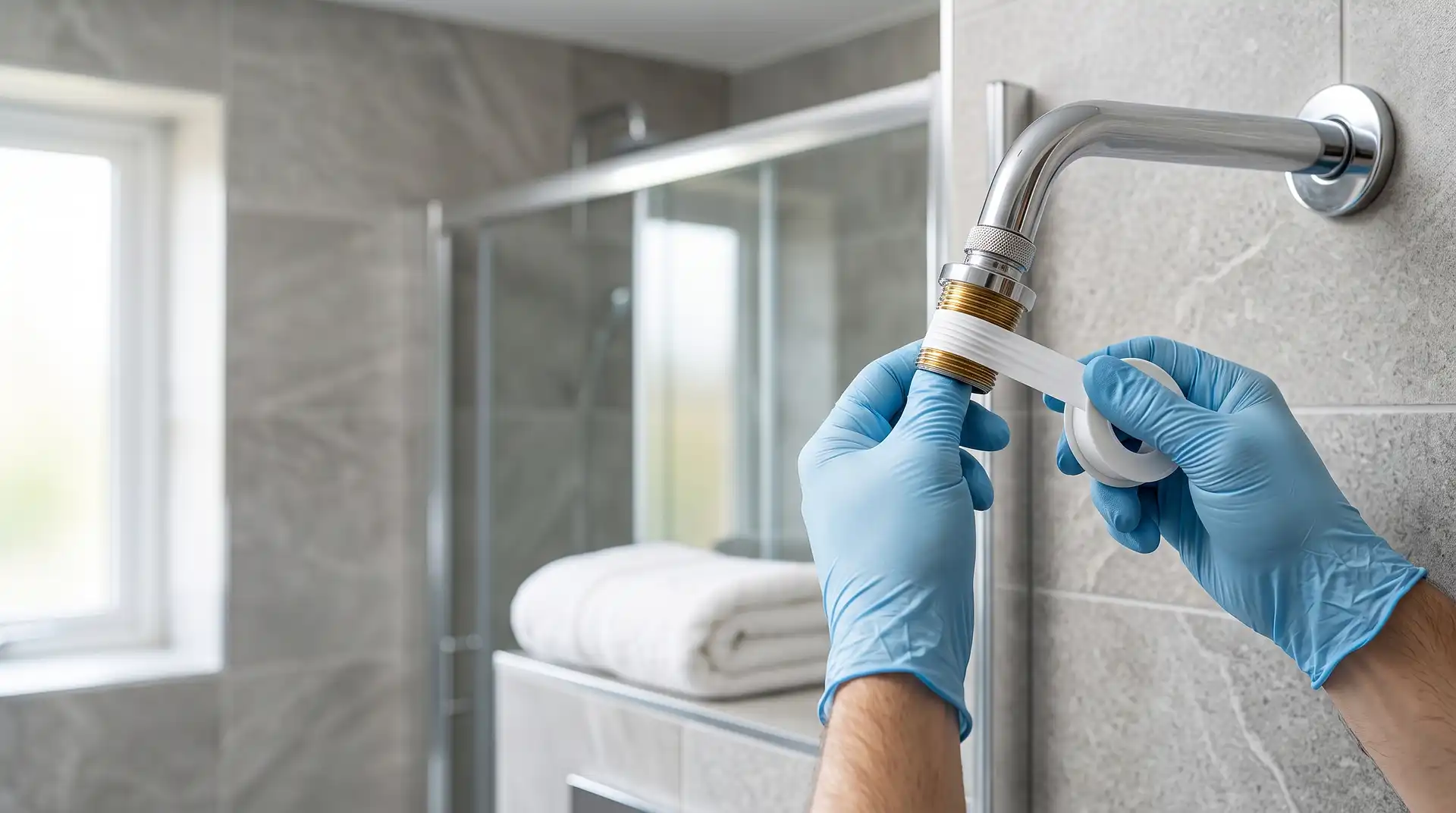
Wrap the tape clockwise around the thread (matching the direction the fitting tightens), pulling it reasonably taut as you go so it beds into the thread grooves rather than sitting loosely on top of them. Overlap each wrap by roughly half the tape's width as you move along the thread, working toward the fitting's body.
Step 4: Use Enough Wraps
Two to three wraps is standard for most water fittings, though slightly more (often 3–4) is common for gas fittings using the appropriate yellow gas-rated tape, and larger diameter threads sometimes need a wrap or two more than a small fitting to fully cover the thread surface. Err toward slightly more rather than less if you're unsure, since too little tape is far more likely to cause a leak than a small amount of extra tape causes a problem.
Step 5: Press the Tape Into the Threads
Once wrapped, press the tape gently into the grooves of the thread with your fingers, which helps it sit properly before the fitting is screwed together and reduces the chance of it bunching or tearing during assembly.
Step 6: Screw the Fitting Together
Thread the fitting together by hand first to make sure it's starting straight and not cross-threading, then tighten with a spanner or wrench to a firm, snug fit — not aggressively overtightened, which can damage the tape's seal or, on some fittings, crack the material. If the fitting doesn't feel like it's tightening smoothly and evenly, back it off and check it hasn't started cross-threaded before continuing.
Common Mistakes and What to Do Instead
Mistake: wrapping the tape in the wrong direction. This is the single most common cause of a joint that still leaks despite being taped — wrapping against the tightening direction means the tape unwinds as the fitting is screwed in rather than compressing into the threads. Always check which way the fitting tightens before wrapping.
Mistake: using too little tape. A single loose wrap often isn't enough to fully seal the thread gaps. Two to three snug wraps, slightly more for larger fittings, is the standard range worth aiming for.
Mistake: wrapping too loosely. Tape that isn't pulled reasonably taut sits on top of the threads rather than bedding into them, which reduces how effectively it seals the joint once tightened.
Mistake: using water-rated (white) tape on a gas fitting. Gas fittings need the thicker, gas-rated (typically yellow) PTFE tape specifically, and shouldn't be sealed with standard white tape. If you're working on anything gas-related, this distinction matters for safety, not just performance.
Mistake: reusing old tape or applying new tape over old. Old tape residue should be fully removed before applying fresh tape, since layering new tape over old residue creates an uneven surface that doesn't seal reliably.
Mistake: overtightening the fitting. Beyond a firm, snug fit, additional tightening doesn't improve the seal and can damage the tape or the fitting itself, sometimes making the joint worse rather than better.
When Tape Alone Isn't Enough
Plumber's tape works well on standard threaded pipe fittings, but it isn't a fix for a cracked fitting, a fitting with damaged or worn threads, or a compression joint, which seals differently and doesn't use tape in the same way. If a joint continues to leak after correctly reapplying tape (checking direction, wrap count, and tension), that generally points to a problem with the fitting itself — damage, wear, or an incompatible connection — rather than something more tape or tighter tightening will resolve.
What It Costs in the UK
PTFE thread seal tape is inexpensive — a standard roll typically costs £1–£4, and a single roll covers a substantial number of fittings for most household use, making this one of the cheapest genuine fixes in home plumbing. Gas-rated (yellow) tape is similarly priced, typically £2–£5 per roll.
If a leak persists after correctly reapplying tape and the fitting itself needs replacing or professional attention, a standard plumber callout in the UK typically costs £60–£100, with an hourly rate of £40–£75 for the work itself, and £50 commonly cited as a national average. Emergency or out-of-hours rates typically run £80–£120 per hour, roughly 1.5–2× the standard rate. London and the South East generally sit at the higher end of these ranges.
Item/Service | Typical UK Cost (2026) |
|---|---|
PTFE thread seal tape (standard, white) | £1–£4/roll |
PTFE thread seal tape (gas-rated, yellow) | £2–£5/roll |
Plumber callout (standard) | £60–£100 |
Plumber hourly rate | £40–£75 (avg. ~£50) |
Emergency/out-of-hours rate | £80–£120/hour |
These are UK market estimates and vary by provider and region — reapplying tape correctly resolves the vast majority of threaded joint leaks, so it's worth the few minutes it takes before assuming a fitting needs replacing or professional attention.
Staying Safe
Always use gas-rated tape specifically for any gas fitting — this isn't interchangeable with standard water-fitting tape, and using the wrong type on a gas connection is a genuine safety issue, not just a performance one. Any work on gas pipework or appliances should only be carried out by a Gas Safe registered engineer; applying tape to a water fitting is a reasonable DIY task, but gas connections are a different matter entirely and fall outside general DIY scope.
If children are in the home, keep any tools and loose fittings tidied away during the job rather than left accessible, and check the completed joint for leaks before considering the job finished, since even a small drip left unnoticed can lead to water damage over time.
Fitting types and thread standards can vary, so it's worth checking your specific fitting's manufacturer guidance if anything looks non-standard, and always using a Gas Safe registered engineer for any gas-related plumbing work.
FAQ
Which direction should I wrap plumber's tape? Clockwise, matching the direction the fitting tightens (almost all standard fittings use a right-hand thread). Wrapping the wrong way causes the tape to unwind rather than compress as the joint is tightened.
How many times should I wrap plumber's tape around a fitting? Two to three wraps is standard for most water fittings, with slightly more for larger fittings or gas connections using the appropriate gas-rated tape.
Can I use white PTFE tape on a gas fitting? No. Gas fittings need thicker, gas-rated tape (typically yellow), not standard white water-fitting tape. This is a safety requirement, not just a performance preference.
Why is my joint still leaking after I applied plumber's tape? The most common cause is wrapping the tape in the wrong direction. Other causes include too few wraps, tape applied too loosely, or a damaged or worn fitting that tape alone can't fix.
Do I need to remove old tape before reapplying new tape? Yes. Old tape or sealant residue should be fully cleaned off the threads before applying fresh tape, since layering new tape over old residue creates an uneven, less reliable seal.
How much does plumber's tape cost? A standard roll of PTFE thread seal tape typically costs £1–£4 in the UK, and covers a substantial number of household fittings, making it one of the cheapest effective plumbing fixes available.