How Does a Plumber Find a Water Leak Underground
14 July 2026
How Does a Plumber Find a Water Leak Underground?
An underground leak is invisible by definition, which means a plumber isn't looking for the leak itself — they're looking for its indirect signature: a sound, a gas trace, a temperature difference, or a change in pressure. Every professional detection method works this way, and understanding that principle explains why plumbers don't just start digging where they guess — targeted, non-invasive detection is almost always cheaper and less disruptive than exploratory excavation, which is why it's become the standard first step rather than a premium add-on.
Step One: Confirming the Leak Is Actually Underground
Before any specialist equipment comes out, most plumbers start with a simple test that costs nothing and takes about 30 minutes: turning off the internal stopcock (usually under the kitchen sink) and watching the water meter. With the stopcock off, no water should be reaching any internal fixture — so if the meter is still ticking over or showing a flow indicator, the leak sits between the meter and the property, meaning it's very likely in the underground supply pipe rather than inside the house. If the meter stays still with the stopcock off, the leak is more likely internal — a toilet, tap, or appliance — and the investigation shifts indoors instead.
This single test is why a plumber will often ask about your water meter and recent bills before booking any specialist equipment — it narrows down whether underground detection is even the right next step, and skipping it is how some call-outs end up more expensive than they needed to be.
Acoustic Leak Detection
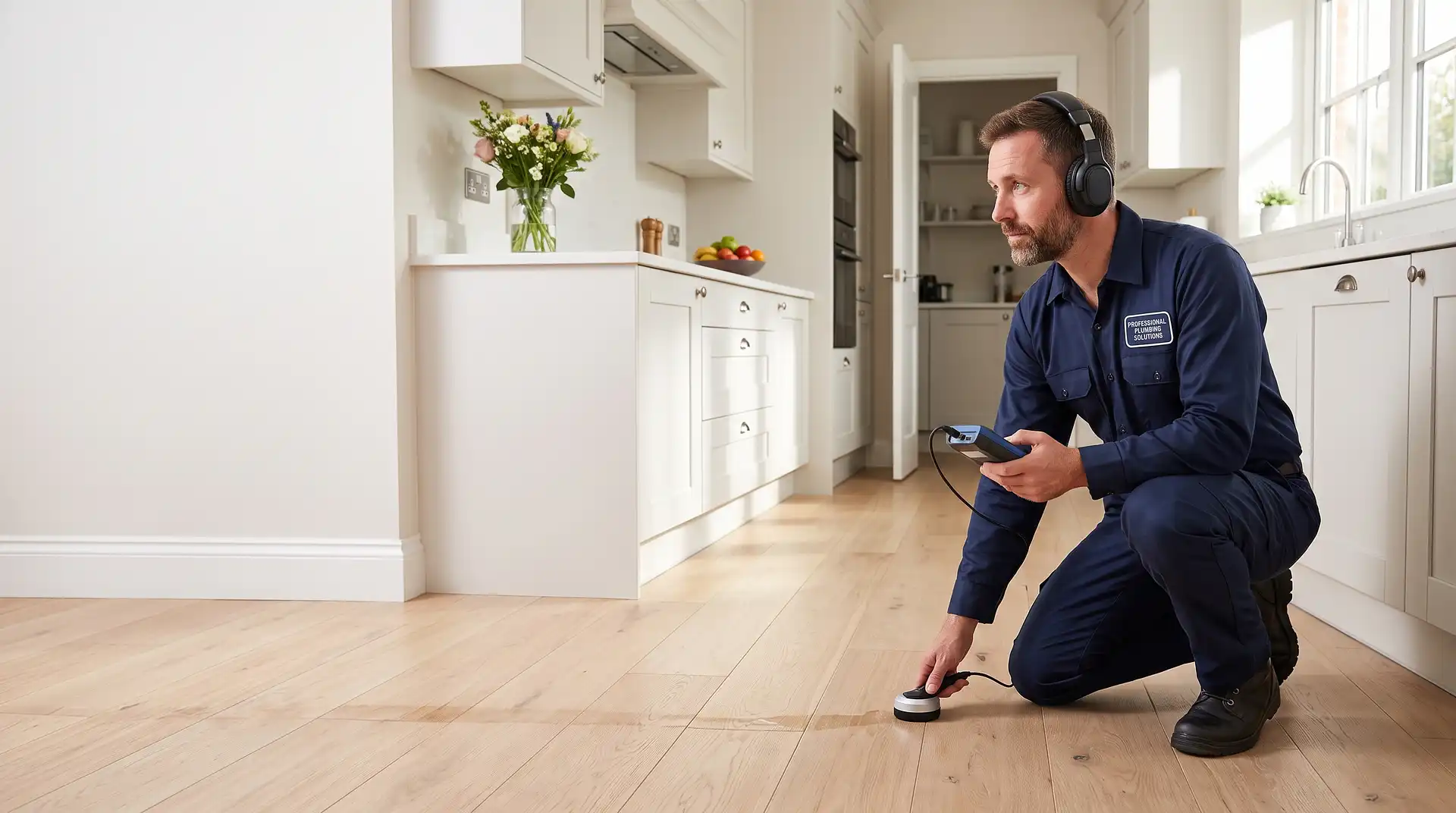
This is the most commonly used method for underground and hidden pipe leaks. Pressurised water escaping through a crack or joint makes a distinct sound — a hiss or rush that travels along the pipe and through the surrounding ground or building material. A trained technician uses sensitive listening equipment, sometimes a ground microphone placed at intervals along the suspected pipe route, and listens through headphones for that specific sound signature, moving the microphone until the sound peaks in intensity at one point. Because sound travels differently through soil, concrete, and different pipe materials, this takes real trained judgement, not just equipment — which is part of why professional acoustic detection outperforms consumer listening devices by a wide margin.
Tracer Gas Detection
When acoustic detection alone doesn't pinpoint the leak clearly enough — often the case with very small leaks, low water pressure, or noisy surrounding environments — plumbers use tracer gas instead. The water supply is shut off and a safe, non-toxic gas mixture (usually a hydrogen-nitrogen blend) is pumped into the empty pipe. The gas escapes through any crack or joint failure and rises up through the ground or floor above it. A handheld "sniffer" device, sensitive enough to detect the gas in tiny concentrations, is passed over the suspected area and beeps more intensely as it nears the escape point — since the gas molecules are small enough to pass through soil, concrete, and most flooring materials, this method can locate leaks that sound-based methods struggle with, particularly under thick concrete or deep underground.
Thermal Imaging
A leaking underground pipe changes the temperature of the ground or floor immediately above it, since escaping water either warms or cools the surrounding material depending on whether it's a hot or cold supply line. A thermal imaging camera picks up this temperature difference as a visible pattern, which can help confirm or narrow down a leak location alongside acoustic or gas methods, particularly for leaks close to the surface. It's rarely used entirely alone for underground work, since surface temperature changes can have other causes, but it's a useful cross-check that adds confidence before any digging starts.
Pipe Cameras and Pressure Testing
For accessible sections of pipe, a small camera can be fed through to visually inspect the interior for cracks, corrosion, or joint failures, giving a direct visual confirmation rather than an inferred location. Pressure testing — isolating a section of pipe and monitoring whether it holds pressure over time — helps confirm that a leak exists in a specific section and roughly how significant it is, which is often done alongside acoustic or gas detection rather than as a standalone method.
Putting It Together
In practice, plumbers rarely rely on just one method. A typical underground leak investigation might start with the meter test to confirm the leak is external, move to acoustic detection to narrow the search to a rough section of pipe run, and finish with tracer gas or thermal imaging to pinpoint the exact spot before any digging begins. This layered approach is what allows a plumber to mark a precise excavation point rather than digging up an entire pipe run — the difference between a small, targeted repair and a much larger, more disruptive and expensive job.
Common Mistakes and What to Do Instead
Mistake: assuming a rising water bill or damp patch means the leak is directly underneath. Water travels along the path of least resistance underground and can surface or pool well away from the actual leak point. This is exactly why professional detection exists — visual signs alone are an unreliable guide to the true location.
Mistake: digging speculatively before detection. Blind excavation based on a guess is one of the more common ways homeowners end up spending more than they needed to, both in labour and in the risk of striking other underground services. Detection first, digging second, is the far more cost-effective order.
Mistake: not checking home insurance before booking. Many UK building insurance policies include "trace and access" cover, which pays for the cost of finding and accessing a hidden leak (though usually not the repair itself). Checking this before paying out of pocket is worth the few minutes it takes.
Mistake: assuming all detection methods are interchangeable. Acoustic detection works best on pressurised, relatively accessible pipe runs; tracer gas suits leaks under thick concrete or where sound-based methods struggle. A specialist choosing the wrong method first can add unnecessary time and cost — asking which method they plan to use, and why, is a reasonable question to put to any provider.
What It Costs in the UK
Professional water leak detection in the UK generally falls between roughly £250 and £1,500, with the specific figure depending heavily on the method required and how hidden or deep the leak is. Standard domestic leak detection, using acoustic equipment as the primary method, typically costs £300–£750. Tracer gas detection, often needed for underground or under-slab leaks that acoustic methods can't pinpoint clearly, typically costs more — commonly £250–£2,000 depending on the complexity and how much of the property needs testing. Thermal imaging as a supporting method often starts from around £200 when used alongside another primary technique.
Several specialists quote a combined figure covering the full investigation — narrowing the search, confirming with a second method, and providing a written report — commonly landing around £425–£750 for a typical domestic underground leak. Larger properties, commercial premises, or particularly complex or deep leaks can push costs toward the £1,000–£1,500+ range. It's worth noting that this cost covers detection only, not the repair itself, which is quoted separately once the leak's exact location and cause are confirmed.
Method | Typical UK Cost (2026) | Best For |
|---|---|---|
Standard acoustic detection | £300–£750 | Most underground and hidden pipe leaks |
Tracer gas detection | £250–£2,000 | Under-slab, deep, or hard-to-pinpoint leaks |
Thermal imaging (supporting method) | From £200 | Confirming a suspected area, near-surface leaks |
Combined investigation (multi-method + report) | £425–£750 | Typical domestic underground leak |
Complex/commercial leak detection | £1,000–£1,500+ | Larger properties, deeper or more complex leaks |
These are UK market estimates and vary by property, leak severity, and provider — check your home insurance for "trace and access" cover before paying out of pocket, and get a written report as part of any detection service, since it's often needed to support an insurance claim or repair quote.
Staying Safe
If a leak is confirmed to require excavation, any digging near underground utilities carries real risk — striking a gas, electricity, or telecoms line during DIY digging is a genuine hazard, which is part of why professional detection and marking before digging matters beyond just cost efficiency. A reputable specialist will use a cable avoidance tool (CAT scan) or check utility plans before excavating, and this is a reasonable thing to ask about if you're commissioning repair work following detection.
Tracer gas used in professional leak detection is specifically formulated to be safe and non-toxic for this application, but the process does involve temporarily isolating and pressurising sections of your water system — it's worth confirming with any specialist that your water supply will be restored and tested before they leave, particularly if the property will be unoccupied afterward.
Specific safety procedures and utility-marking requirements can vary by region and provider, so it's worth confirming a specialist's approach to utility safety before any excavation work begins, especially in a property with children who may be near an open excavation.
FAQ
How do I know if my water leak is underground rather than inside my house? Turn off your internal stopcock and check your water meter. If the meter still shows flow with the stopcock off, the leak is between the meter and your property, meaning it's very likely in the underground supply pipe.
What's the most accurate method for finding an underground leak? Acoustic detection is the most commonly used first method, with tracer gas typically used as a follow-up for leaks under thick concrete or where sound-based detection doesn't give a clear result.
How much does underground leak detection cost in the UK? Most domestic underground leak detection costs £300–£750 for standard acoustic methods, rising to £250–£2,000 for tracer gas detection depending on complexity, plus potentially more for very deep or commercial leaks.
Does home insurance cover leak detection costs? Many UK building insurance policies include "trace and access" cover, which typically pays for the detection and access costs, though usually not the repair itself. Always check your specific policy.
Is tracer gas safe to use in my home's water pipes? Yes. The gas mixtures used in professional leak detection are specifically formulated to be safe and non-toxic, and the process is a standard, widely used professional technique.
Do I need to dig up my whole garden to find an underground leak? No. Professional detection is designed specifically to avoid this — the combination of acoustic, tracer gas, and thermal methods is meant to pinpoint an exact location so any excavation can be small and targeted rather than exploratory.