How Much Does a Bathroom Renovation Cost
12 July 2026
How Much Does a Bathroom Renovation Cost in the UK?
Most UK bathroom renovations land somewhere between £4,500 and £9,000, but that range hides more than it reveals — the actual figure depends far less on the size of the room than on one decision: are you keeping the existing layout, or moving the toilet, bath, or shower to a new position. Rerouting plumbing is consistently the single biggest cost driver in a bathroom project, and it's the detail most budget estimates skip over.
The Three Spec Tiers
Budget refresh: £2,000–£4,500. Like-for-like replacement — new toilet, basin, and bath in the same positions as before, basic sanitaryware from a builders' merchant, splash-area tiling rather than full floor-to-ceiling, fresh silicone and paint. This tier keeps every fixture where it already is, which is what keeps the price down.
Mid-range renovation: £5,500–£8,500. A new suite with better-quality fittings — a wall-hung toilet, thermostatic shower, semi-recessed basin — full wall and floor tiling, a heated towel rail, an upgraded extractor fan, and often some minor plumbing changes to improve the layout without a full reroute. This is where most UK households land, and it's the tier most cost guides use as their headline "average."
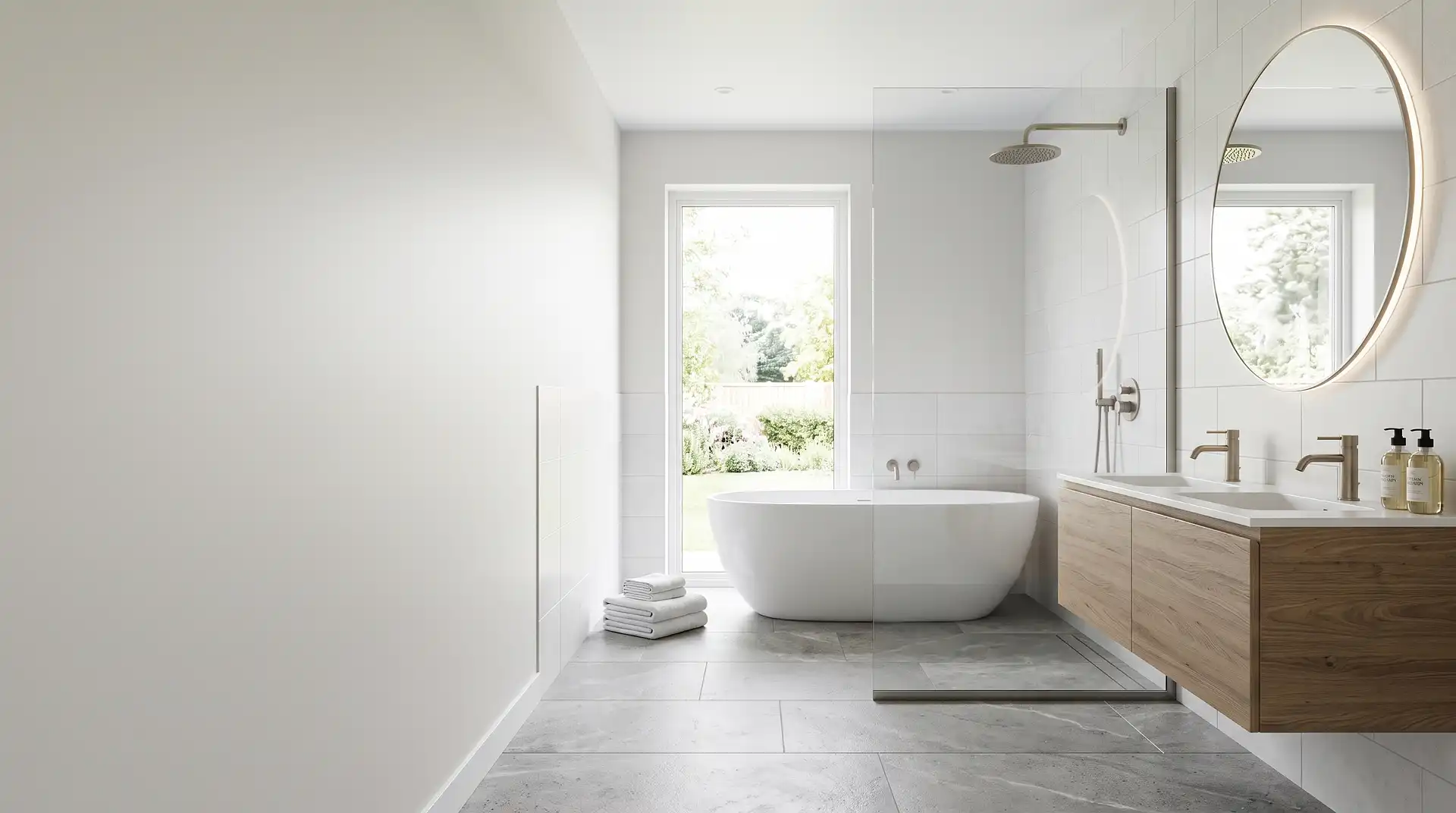
High-end/luxury: £12,000–£25,000+. Premium sanitaryware, large-format or bespoke tiling, underfloor heating, a walk-in wet-style shower or freestanding bath, and often genuine layout changes — moving the toilet or bath to a different wall, which brings soil-pipe rerouting into play. Structural changes or listed-building constraints can push costs well beyond this range.
What Drives the Price More Than Anything Else
Moving a toilet or the main waste stack — rerouting the 110mm soil pipe to a new position — typically adds £1,000–£2,500 on its own, since it involves cutting into floors or walls, achieving the correct drainage fall, and often needs Building Control sign-off. Keeping every fixture in its existing position, by contrast, can cut plumbing costs by up to a third compared with a layout change. If budget is the priority over redesign, this single decision matters more than any fixture choice.
Wet rooms sit in their own category for a related reason: full-room waterproofing (tanking) adds £400–£1,000 in materials and a full day of specialist labour on top of standard renovation costs, plus a graded drainage floor and non-slip tiling — which is why a wet room typically costs 20–30% more than an equivalent standard bathroom, usually landing at £8,000–£15,000+.
Element-by-Element Breakdown
Item | Typical UK Cost (2026) |
|---|---|
Toilet, basin, and bath/shower (combined) | £600–£2,500 |
Tiling (labour only, per m²) | £20–£60 |
Tiles (materials, per m²) | £15–£150 depending on type |
Strip-out and disposal of old bathroom | £300–£1,000 |
Moving toilet/waste stack | £1,000–£2,500 |
Wet room tanking (waterproofing) | £400–£1,000 |
New extractor fan (fitted) | Around £300 |
Electric underfloor heating | £60–£85 per m² |
Bathroom vanity unit installation | £150–£300 |
Labour typically makes up 45–60% of the total project cost, which is why quotes with a big labour-to-materials gap are worth double-checking — either the fittings are genuinely premium, or something in the labour scope isn't itemised clearly.
Bathroom Type Changes the Maths
A downstairs loo or small cloakroom is a fraction of the cost of a full bathroom, largely because it needs only a toilet and basin rather than a full suite — realistic budgets range from around £1,500 up to £4,500 for a full remodel of the space. A small en-suite or shower room, with a shower rather than a bath and less floor area to tile, typically runs £4,500–£9,000. A standard family bathroom (roughly 2–2.4m × 1.8–2.4m, the most common UK size) is the £5,500–£8,500 mid-range figure most guides quote as the national average. A wet room, as covered above, runs £8,000–£15,000+ due to the waterproofing and drainage requirements specific to that format.
Regional Price Differences
London and the South East consistently run higher than the rest of the UK — most sources put this at 15–25% above the national average, with some London-specific guides citing up to 30% for premium finishes or difficult access (narrow staircases, limited parking, flats requiring extra logistics for waste removal and deliveries). Scotland, the North East, and parts of Wales tend to sit 8–15% below the national average. This means the same "mid-range £7,000 bathroom" can realistically cost anywhere from roughly £6,000 to £9,000 depending purely on postcode, before any specification differences are factored in.
Common Mistakes and What to Do Instead
Mistake: mixing spec tiers within one project. A premium tap set sitting on a budget basin, or an expensive shower door next to a builders'-merchant toilet, is the most common way budgets quietly balloon. Pick one tier and source fittings consistently within it.
Mistake: assuming the suite is the main cost. Sanitaryware is often only a third to a half of the total bill — labour, tiling, plumbing alterations, and waterproofing typically account for more of the total than most people expect going in.
Mistake: not budgeting for strip-out separately. Removing the old bathroom — bath, toilet, sink, tiles, and flooring, plus disposal — commonly costs £300–£1,000 and is frequently left out of headline quotes that only cover the new installation.
Mistake: keeping the old layout "to save money" without checking what's behind the walls. Even a like-for-like replacement can uncover hidden issues — old or damaged pipework, damp, or rot — once tiles come off. A contingency of 10–15% on top of any quote is a realistic buffer for this.
Mistake: buying your own suite to save on materials without checking trade discounts. Buying independently can save 10–20% on the sticker price, but it also forfeits the 20–30% trade discount many plumbers get from suppliers, and shifts responsibility for compatibility, delivery damage, and warranty claims onto the homeowner. It isn't automatically the cheaper route once that trade-off is accounted for.
DIY vs Hiring Professionals
Bathrooms are one of the least forgiving rooms for DIY error, since poor waterproofing or incorrect drainage falls often cost more to fix retrospectively — through water damage to floors or the room below — than they would have cost to do properly the first time. Cosmetic work (repainting, replacing a toilet seat, minor caulking) is reasonable to DIY. Anything involving plumbing alterations, electrics, or tanking should go to a qualified tradesperson, both for the compliance reasons below and because the failure mode for getting it wrong in a bathroom specifically involves water and structural damage rather than just an untidy finish.
Timeline
A small cloakroom or en-suite typically takes 3–5 working days. A standard family bathroom with no layout changes usually takes 6–10 days, covering strip-out, first-fix plumbing and electrics, tiling, fitting, and finishing. Larger bathrooms or projects involving wall demolition, new plumbing runs, or bespoke joinery typically need 10–15+ days. Layout changes or underfloor heating generally add 3–5 days on top of a standard timeline.
UK Building Regulations and Site Safety
Most like-for-like bathroom replacements don't require Building Regulations approval. However, moving plumbing significantly, adding a new bathroom where none existed, or altering electrics can bring the project under Building Control, and any electrical work in a bathroom's zoned wet areas must comply with Part P of the Building Regulations — this is why qualified, Part P-registered electricians typically charge more, since they carry the compliance responsibility. If you live in a listed building or conservation area, or the work affects shared drainage in a flat, additional approvals may be needed before work starts — check with your local authority or a registered tradesperson before committing to a layout change.
During the renovation itself, a bathroom mid-strip-out is a genuine hazard zone — exposed pipework, temporarily disconnected electrics, power tools, and trip hazards from removed flooring or fixtures. If children are in the home during the works, keep the room off-limits and closed off outside working hours rather than assuming a "finished for the day" site is safe to wander into; tools, loose tiles, and adhesive or sealant products left out overnight are common and easily avoidable risks.
Building Regulations requirements and local planning rules can change and vary by council, so it's worth checking current guidance (e.g. via GOV.UK or your local authority's building control team) before finalising any layout change, especially one involving plumbing or electrics.
FAQ
How much does an average bathroom renovation cost in the UK? Most UK homeowners spend £5,500–£8,500 for a mid-range family bathroom in 2026, with national averages commonly cited around £6,500–£7,000, though this varies by region and specification.
What's the single biggest factor that increases bathroom renovation costs? Moving the toilet or main waste stack to a new position, which typically adds £1,000–£2,500 due to the plumbing and drainage work involved, plus possible Building Control sign-off.
How much does a wet room cost compared to a standard bathroom? Wet rooms typically cost 20–30% more than an equivalent standard bathroom, mainly due to full-room waterproofing (tanking) and specialist drainage, landing at roughly £8,000–£15,000+.
Do I need Building Regulations approval for a bathroom renovation? Not for a like-for-like replacement in most cases. Moving plumbing significantly, adding a new bathroom, or altering electrics can require Building Control involvement or a Part P-registered electrician.
Is it cheaper to keep the existing bathroom layout? Yes, significantly. Reusing existing toilet, bath, and basin positions can cut plumbing costs by up to a third compared with relocating fixtures, since it avoids rerouting waste pipes.
How long does a bathroom renovation take in the UK? A standard family bathroom with no layout changes typically takes 6–10 working days. Small en-suites take 3–5 days, while larger renovations or layout changes can take 10–15+ days.