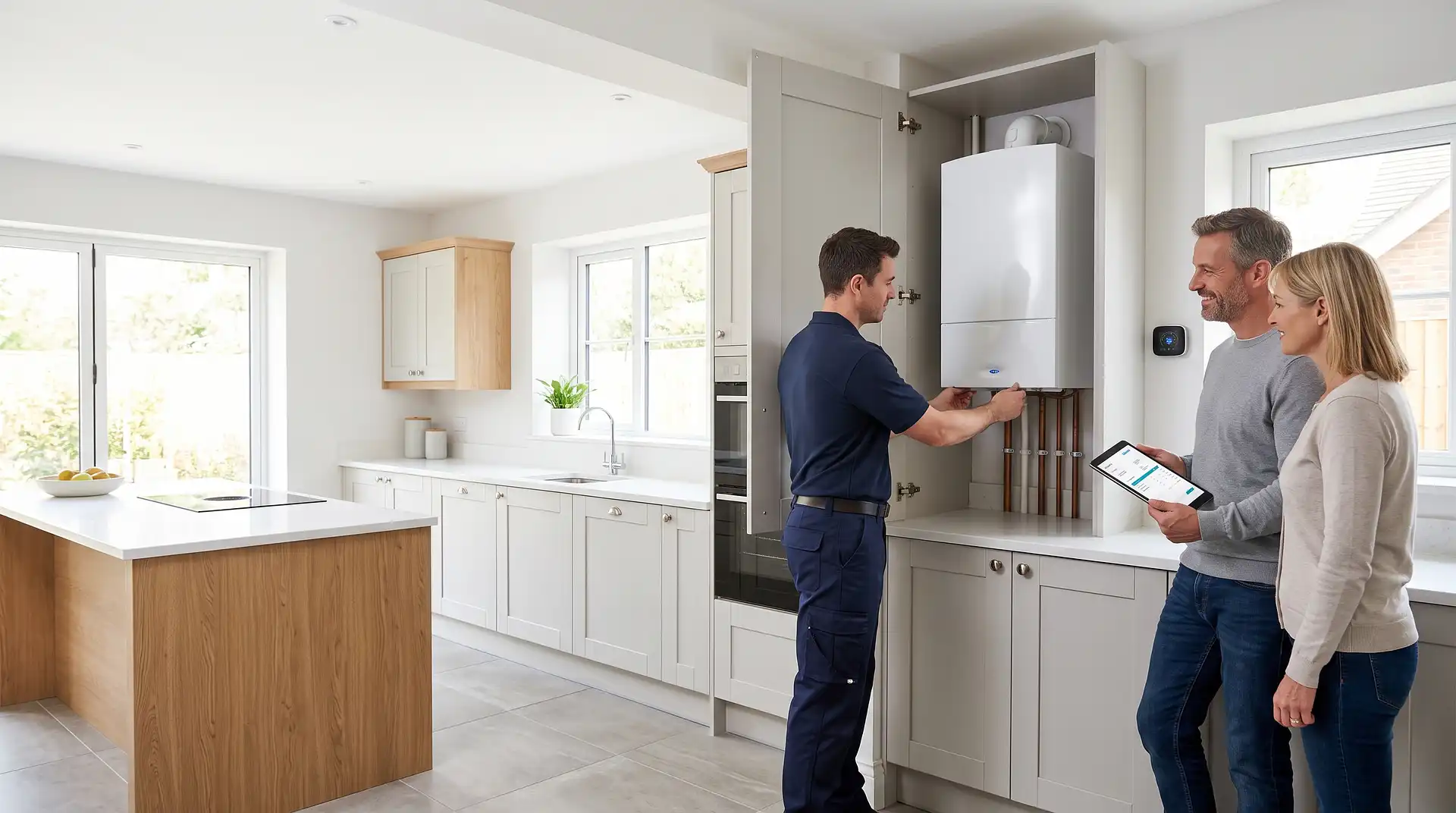
How Much Is a New Boiler
15 July 2026
Most UK homeowners pay somewhere between £1,800 and £4,500 for a straightforward like-for-like boiler swap, with the average landing around £2,400. But that headline figure hides the one decision that moves the price more than anything else: are you replacing your boiler with the same type in the same spot, or changing type, moving its location, or upgrading the pipework around it. A simple combi-to-combi swap can take under a day; a conversion from a regular boiler to a combi, with a tank and cylinder removed, can add a full extra day of labour and a meaningfully higher bill.
A Quick Note on Sourcing
Boiler pricing varies noticeably between UK cost-comparison sites, since each pulls from a different mix of trade quotes and installer networks — some quote supply-only figures, others quote fully installed totals, and a few include extras like flushing or smart controls by default. The figures below are consolidated from several current UK sources to give a realistic range rather than a single number from one calculator, and it's worth treating any individual online quote as a starting estimate rather than a final price until a qualified engineer has actually surveyed your property.
Cost by Boiler Type
Combi boilers are the most popular choice in the UK and the cheapest to install, since they need no separate hot water cylinder or cold water tank. Installed prices typically run £1,800–£3,500, with the boiler unit alone costing £600–£2,500 depending on brand and output, and installation labour adding roughly £300–£1,200 on top.
System boilers, which work with a hot water cylinder and suit homes with two or more bathrooms needing simultaneous hot water, typically cost £2,500–£4,000 installed. If an unvented cylinder isn't already in place, that alone can add £500–£1,000.
Regular (heat-only/conventional) boilers, the traditional choice for older properties with an existing tank-and-cylinder setup, typically cost £2,000–£4,500 installed for a like-for-like replacement — cheaper than switching to a different boiler type in the same property, since the existing infrastructure is reused rather than removed.
Electric boilers suit homes off the gas grid or those wanting a low-carbon option, typically costing £1,750–£3,250 installed. They need no flue, which simplifies installation, but running costs are usually higher than gas.
Oil boilers, common in rural properties without a mains gas connection, typically cost £2,300–£6,000 installed, with a commonly cited average around £4,000.
Biomass boilers, which burn sustainably sourced wood pellets, are the most expensive mainstream option, typically £6,000–£14,500 installed, reflecting both the unit cost and the additional space needed for fuel storage.
What Drives Installation Cost Beyond the Unit Price
Like-for-like vs. type conversion. Swapping a combi for a new combi in the same spot is the cheapest, fastest job — typically 4–6 hours of labour. Converting from one boiler type to another (regular to combi, for instance) usually takes 1.5–2 days, since it involves removing a tank and cylinder, altering pipework, and sometimes rerouting the flue, which adds significantly to the labour cost.
Relocating the boiler. Moving the boiler to a different room or wall typically adds £500–£1,000 or more, covering the extra pipework, flue routing, and often additional making-good work once it's fitted.
Access and pipework condition. Older homes with narrower access, dated pipework needing replacement, or a boiler located somewhere awkward to reach all add labour time, which is consistently the biggest driver of cost variation beyond the headline boiler price.
Radiators. If old radiators can't handle the output or pressure of a new boiler efficiently, replacing them typically costs £200–£400 per radiator, and this is a common "hidden extra" that a basic online calculator often doesn't include by default.
Common Extras Worth Budgeting For
Extra | Typical UK Cost (2026) |
|---|---|
Smart thermostat | £200–£400 |
Magnetic filter | £100–£200 |
System power flush | £150–£1,000 (inc VAT for a full flush) |
Radiator replacement (per radiator) | £200–£400 |
Unvented hot water cylinder (if needed) | £500–£1,000 |
Relocating the boiler | £500–£1,000+ |
A power flush — clearing sludge and debris from the existing central heating system before a new boiler goes in — is worth taking seriously rather than skipping to save money, since installing a new boiler onto a dirty system is one of the more common causes of early breakdowns and can also affect warranty validity with some manufacturers.
Regional Price Differences
London and the South East typically cost £250–£700 more than the rest of the UK for an equivalent installation, driven by both higher labour rates and stronger demand. National installer networks and larger companies also tend to charge more than local independent engineers — choosing a local, vetted installer over a national brand can save roughly £500–£1,500 in labour costs on a comparable job, though national companies sometimes offer faster turnaround or bundled finance options that a smaller local firm may not.
Free and Subsidised Replacements
Some households qualify for a fully funded boiler replacement through the UK's ECO4 scheme, aimed at improving energy efficiency in eligible homes. Eligibility generally depends on receiving certain benefits (such as Universal Credit, Pension Credit, or Child Benefit) or having a household income under a set threshold combined with a poor EPC rating (D–G). It's worth checking current eligibility criteria directly, since scheme rules and income thresholds are periodically updated, before assuming you don't qualify.
Common Mistakes and What to Do Instead
Mistake: comparing a supply-only price against an installed price. Some quotes cover just the boiler unit; others include labour, flushing, and a magnetic filter as standard. Always confirm exactly what's included before comparing two numbers side by side.
Mistake: skipping a power flush to save money upfront. A dirty system installed onto a new boiler is a common cause of reduced efficiency and premature breakdowns, and can affect manufacturer warranty terms. It's rarely worth cutting from the budget.
Mistake: choosing boiler type based on price alone rather than household hot water demand. A cheap combi boiler in a home with two bathrooms used simultaneously will likely underperform. Match the boiler type to actual household usage, not just the lowest quote.
Mistake: not checking Gas Safe (or OFTEC for oil) registration. This is a legal requirement for gas work, not optional best practice, and using an unregistered installer also typically voids the manufacturer warranty. Always verify registration independently rather than taking a quote's word for it.
Mistake: assuming every online "instant quote" calculator gives a final price. These tools are useful for a starting budget range, but a proper fixed quote requires a home survey — a good indicator of a reputable installer is one who wants to see your property before finalising a price rather than committing sight unseen.
Staying Safe and Compliant
All gas boiler installation work in the UK must legally be carried out by a Gas Safe registered engineer — this isn't optional guidance, and unlicensed gas work is both illegal and a genuine safety risk. Oil boiler installations require an OFTEC-registered technician instead. Always ask for a registration number and verify it directly on the relevant official register (Gas Safe Register, or the OFTEC register for oil) rather than relying on a company's own website claim.
During installation, the property will typically be without heating and hot water for the duration of the work, and engineers will be working with gas, water, and sometimes electrical connections — if children are in the home, it's worth keeping them away from the work area while pipework, flue components, or tools are exposed, and confirming with the engineer when it's safe to resume normal use of the system.
Gas Safe and OFTEC requirements, ECO4 scheme eligibility, and Building Regulations for boiler installations can change, so it's worth checking current guidance (e.g. via GOV.UK, the Gas Safe Register, or OFTEC) before committing to any installation, and confirming an engineer's registration independently before work begins.
FAQ
How much does a new boiler cost in the UK? Most homeowners pay £1,800–£4,500 for a straightforward like-for-like combi boiler replacement in 2026, with the average around £2,400. Costs rise significantly for boiler type conversions, relocations, or larger properties needing system or regular boilers.
What's the cheapest type of boiler to install? Combi boilers are generally the cheapest to install, since they don't require a separate hot water cylinder or tank, and a like-for-like combi swap typically takes just 4–6 hours of labour.
Why do boiler quotes vary so much between companies? Some quotes are supply-only (boiler unit alone), while others include installation, flushing, a magnetic filter, and extras as standard. Always check exactly what's included before comparing prices.
Can I get a free boiler replacement in the UK? Some households qualify for a fully funded replacement through the ECO4 scheme, based on certain benefits or household income combined with a poor EPC rating. Check current eligibility criteria, since they can change.
Do I need a Gas Safe engineer to install a new boiler? Yes, legally, for any gas boiler. Oil boilers require an OFTEC-registered technician instead. Always verify registration directly with the official register before work begins.
Is it worth getting a power flush with a new boiler? Generally yes. Installing a new boiler onto an unflushed system with existing sludge and debris is a common cause of reduced efficiency and early breakdowns, and can affect warranty validity with some manufacturers.