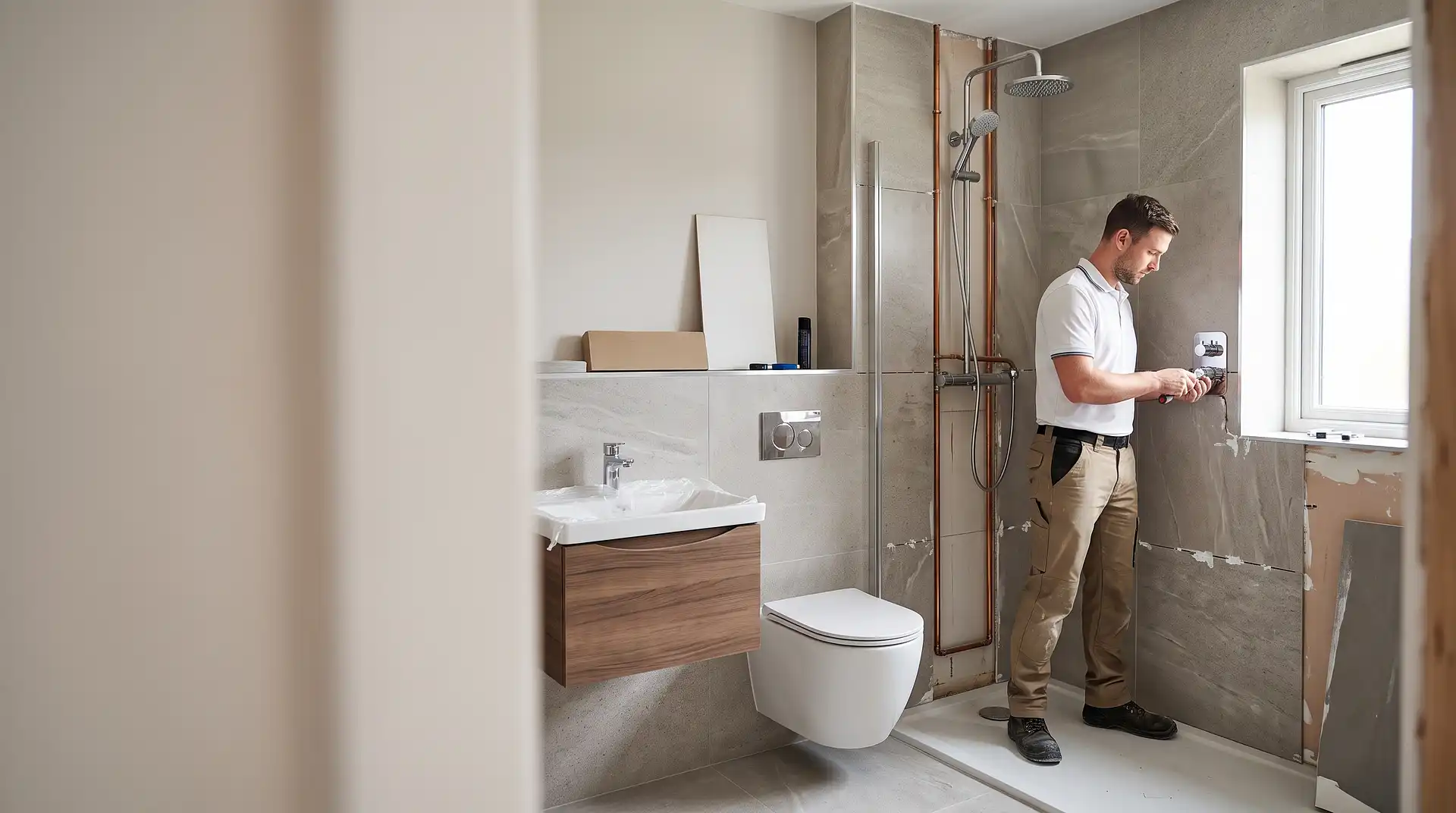
How Much to Fit a Bathroom
1 August 2026
How Much to Fit a Bathroom, Labour Only?
Labour-only bathroom fitting in the UK typically costs £1,200 to £4,000, with a standard 3-piece bathroom generally landing at £1,200 to £1,800 and larger 4 to 5-piece installations reaching £2,500 or more. The wide range exists because "labour only" means different things to different fitters, some quote for the full installation including plumbing, tiling, and basic electrics, while others price each trade separately, so the figure you're comparing against a quote genuinely depends on what's inside it, not just the headline number.
Day Rate vs. Fixed Price
Bathroom fitters generally work in one of two ways. A day rate, typically £250 to £350 nationally with a fair amount of regional spread either side, suits open-scope jobs where decisions are being made as you go or where the property has genuine unknowns that make a fixed price risky for the fitter to offer upfront. A fixed project price, commonly £1,200 to £2,500 for a standard bathroom, suits a clearly defined job where the layout, fixtures, and scope are already settled before work starts. Fixed pricing gives you cost certainty; day rate pricing gives the fitter flexibility to handle whatever comes up, and it's worth agreeing which structure you're working under, and getting it in writing, before any work begins rather than assuming.
What Labour Only Actually Covers
A straightforward labour-only quote for a full bathroom installation typically includes removing the old suite, basic plumbing connections for the new fixtures, fitting the bath, basin, toilet, and shower, and often some tiling and basic electrics if the fitter is multi-skilled. It typically excludes the sanitaryware, tiles, and other materials themselves, which you either supply separately or the fitter sources at an additional cost. Gas work and notifiable electrical work specifically need separately qualified tradespeople regardless of how the rest of the job is structured, since a general bathroom fitter usually isn't qualified or insured to carry these out even if they're comfortable with basic electrics.
Cost by Bathroom Size and Type
Bathroom Type | Typical Labour-Only Cost (2026) |
|---|---|
Standard 3-piece bathroom | £1,200 to £1,800 |
Larger 4 to 5-piece bathroom | £2,000 to £2,500 |
Full installation (general range) | £1,500 to £4,000 |
Wet room installation | £2,500 to £5,000 |
Walk-in shower (tray, screen, plumbing, fitting) | £600 to £1,500 |
En-suite addition | From £3,000 |
Wet rooms sit well above standard bathroom fitting costs specifically because of tanking, waterproofing the floor and lower walls to a proper standard, and the drainage planning a level, flush floor requires, which takes meaningfully more skill and time than fitting a standard bath or shower tray.
Day Rates by Region
Region | Typical Day Rate (2026) |
|---|---|
National average | £245 to £340 |
London and South East | £300 to £570 |
North East, Wales, Northern Ireland | £180 to £250 |
UK range overall | £158 to £570 |
Regional variation here is genuinely significant, London rates can run more than double what a fitter in Northern Ireland or the North East might charge for comparable work, largely reflecting differences in cost of living, demand, and local competition rather than a meaningful difference in skill level between regions.
How This Compares to a Full Renovation Budget
According to InstantCost.co.uk's 2026 UK pricing data, labour typically represents 40 to 55% of the total cost of a bathroom renovation project, with a mid-range full renovation, including materials, sanitaryware, and tiling alongside labour, commonly landing at £5,500 to £8,500. Applying that 40 to 55% split to a mid-range renovation puts the labour portion at roughly £2,200 to £4,675, which lines up closely with the £1,500 to £4,000 labour-only range quoted directly by fitters, a useful cross-check if you're trying to work out whether a labour-only quote you've received looks reasonable against a full renovation budget for the same size bathroom.
InstantCost's data also flags that keeping the existing layout, reusing the current toilet, bath, and basin positions rather than moving them, cuts plumbing costs by up to a third compared with relocating fixtures. This applies just as directly to a labour-only quote as it does to a full renovation, since it's specifically the plumbing and pipework relocation that drives labour time up, not the fixtures themselves.
What Pushes Labour Costs Up
Relocating fixtures. Moving a toilet, bath, or shower to a different position, rather than reusing existing plumbing connections, adds meaningfully to labour time and is consistently the single biggest driver of labour cost beyond bathroom size.
Hidden issues. Damaged plaster, outdated pipework, existing leaks, or hidden mould, none of which show up until the old suite comes out, can expand the scope of work partway through a job that was originally quoted on a smaller assumption.
Tile size and layout. Large-format or standard-size tiles are quicker to lay than intricate patterns or very small mosaic tiling, which directly affects how many labour hours a tiling stage takes.
Wall-hung fixtures. A wall-hung toilet with a concealed cistern frame takes longer to fit than a standard back-to-wall or close-coupled toilet, since it involves building a supporting frame the simpler option doesn't need.
Multiple trades vs. one multi-skilled fitter. Using several separate tradespeople, a plumber, an electrician, a tiler, can speed up a project but generally raises overall coordination cost compared with one experienced fitter handling most of the job themselves.
Common Mistakes and What to Do Instead
Mistake: comparing quotes without checking what "labour only" includes. One fitter's labour-only price might include tiling and basic electrics, while another's covers plumbing and fixture fitting alone. Ask for an itemised breakdown before comparing two figures as if they're the same scope.
Mistake: accepting a fixed price without the fitter surveying the space first. A reputable fitter will want to see the bathroom before committing to a firm number. Be cautious of anyone offering a fixed price without a survey, since it often means hidden issues get discovered, and charged for, once work is underway.
Mistake: assuming the cheapest day rate is the best value. A lower day rate from an inexperienced fitter can end up costing more overall if the job takes longer or needs remedial work later. Check references, reviews, and completed project photos alongside the rate itself.
Mistake: not confirming who handles gas and notifiable electrical work. A general bathroom fitter, even a skilled one, typically isn't qualified for gas work or notifiable electrical changes. Confirm upfront whether this is included, subcontracted, or entirely your responsibility to arrange separately.
Mistake: not agreeing payment structure and milestones before work starts. Staged payments tied to specific milestones protect both sides against disputes partway through a job. Get this, along with the overall scope, in writing before any work begins.
What Labour-Only Fitting Costs: Quick Reference
Item | Typical UK Cost (2026) |
|---|---|
Day rate, national average | £245 to £340 |
Day rate, London/South East | £300 to £570 |
Day rate, lower-cost regions | £158 to £250 |
Standard 3-piece bathroom (fixed price) | £1,200 to £1,800 |
Larger 4 to 5-piece bathroom (fixed price) | £2,000 to £2,500 |
Wet room installation | £2,500 to £5,000 |
Full installation, general range | £1,500 to £4,000 |
Labour share of a full renovation budget | 40 to 55% of total project cost |
These are UK market estimates and vary by region, bathroom complexity, and whether fixtures are being relocated. Get at least three written, itemised quotes before committing, and confirm whether the figure is a day rate or a fixed project price.
Staying Safe
Verify any fitter's trade qualifications, particularly if they're presenting themselves as covering plumbing, tiling, and electrics all at once, and check they hold public liability insurance alongside a workmanship guarantee, commonly one to five years among reputable fitters. If part of the job involves gas or notifiable electrical work, confirm this is being handled by a separately qualified, registered tradesperson rather than assumed to be covered by the general fitter's scope.
Trade qualification requirements and what counts as notifiable electrical work can be updated, so it's worth checking current guidance and verifying any tradesperson's registration directly before committing to a labour-only arrangement covering multiple trades.
FAQ
What does "labour only" mean for a bathroom fitting quote? It generally means the fitter's charge for their work and time, excluding the cost of sanitaryware, tiles, and other materials, which you either supply yourself or the fitter sources separately at additional cost.
How much does it cost to fit a bathroom, labour only, in the UK? Typically £1,200 to £4,000 depending on bathroom size and scope, with a standard 3-piece bathroom generally costing £1,200 to £1,800 and larger installations reaching £2,500 or more.
What's the average day rate for a UK bathroom fitter? Around £245 to £340 nationally, though this ranges from roughly £158 in lower-cost regions to £570 in London and the South East, reflecting significant regional variation in demand and cost of living.
Is it cheaper to keep the existing bathroom layout? Yes, significantly. Reusing existing toilet, bath, and basin positions rather than relocating them can cut plumbing labour costs by up to a third, since it avoids the pipework relocation that drives labour time up considerably.
Should I choose a day rate or a fixed price for my bathroom fitting? A fixed price suits a clearly defined job with settled scope and gives cost certainty. A day rate suits open-scope jobs or properties with genuine unknowns, giving the fitter flexibility to handle unexpected issues as they arise.
Does labour-only pricing include plumbing and electrics? It depends on the fitter. Many multi-skilled fitters include basic plumbing and electrics in their labour-only price, but gas work and notifiable electrical changes always need separately qualified tradespeople regardless of how the rest of the job is priced.