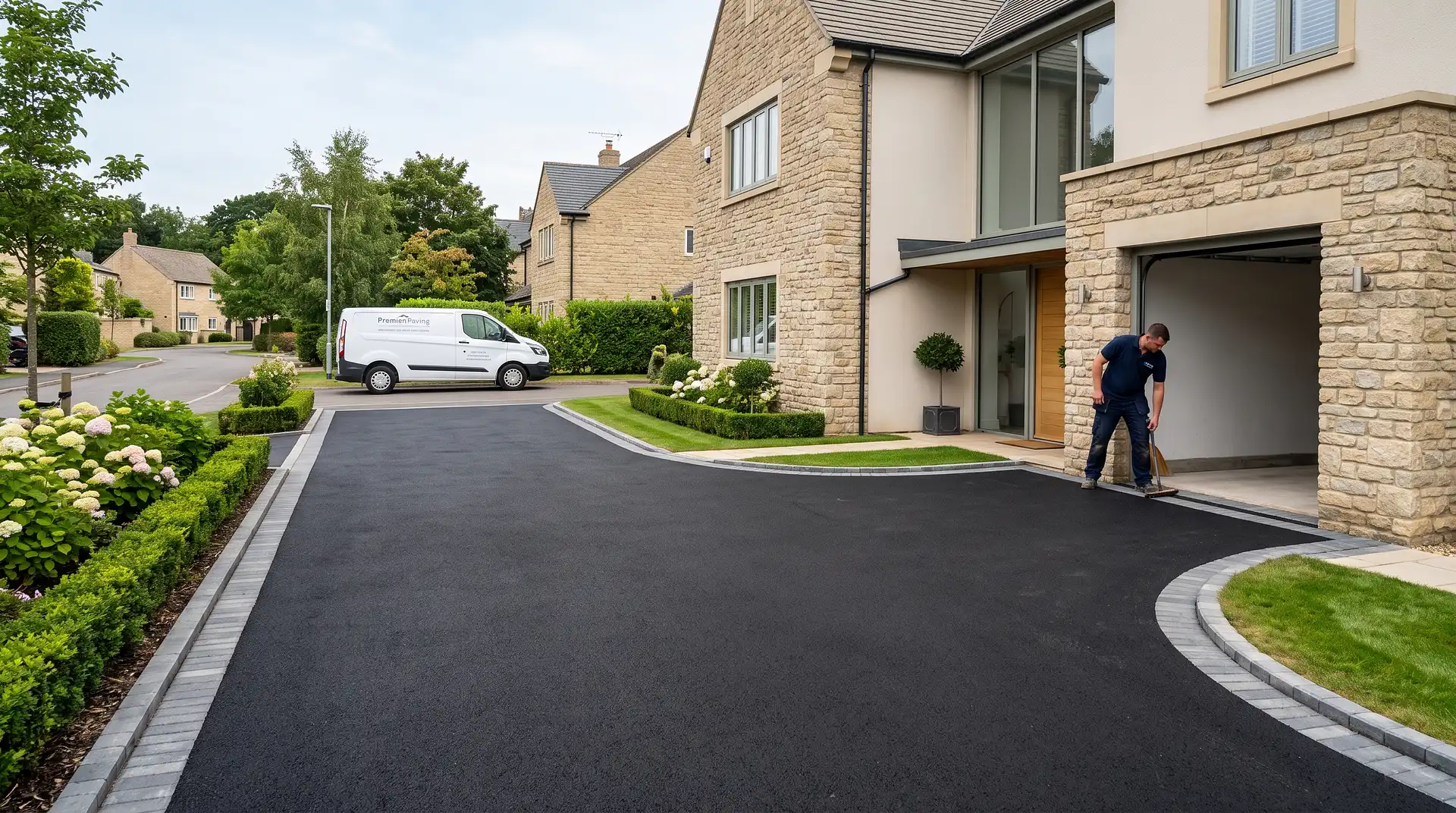
How Much to Tarmac a Drive
29 July 2026
How Much to Tarmac a Drive?
Most UK homeowners pay somewhere between £45 and £100 per square metre to have a driveway tarmacked, with a huge amount of that range coming down to one thing: how much groundwork the job needs before any tarmac goes down. A resurface over an existing, structurally sound base can sit at the low end of that range. A full dig out, with excavation, a new sub base, and edging, pushes the same size driveway toward the top of it, sometimes beyond £100 per m² once everything is included.
The Core Number
Across current UK pricing data, the typical installed cost for tarmac sits between £45 and £100 per square metre, with several trade sources converging on £80 to £90 per m² as a realistic average for a standard job that includes materials, labour, and basic sub base preparation. A few sources quote figures closer to £95 to £100 per m² once every element of a full installation is factored in, so it's worth treating anything quoted well below £45 per m² with a bit of caution, since it may not include full groundwork or a proper sub base.
Cost by Driveway Size
Driveway Size | Typical UK Cost (2026) |
|---|---|
Single car, around 20m² | £1,300 to £2,200 |
Two car, around 50m² | £2,250 to £4,500, sometimes up to £6,000 |
Large, multiple car, around 100m² | £4,500 to £10,000 |
For a straightforward 50m² two car driveway, the figure most commonly cited across UK trade sources sits around £3,750 to £4,500 fully installed, though this can run higher where the ground needs significant preparation or a coloured finish is chosen. The overall national average across all driveway sizes is typically quoted around £2,900 to £3,750, though this blends smaller and larger jobs together rather than reflecting any single specific size.
What's Actually Included in the Per-m² Price
A proper tarmac installation isn't just the surface layer. It typically includes removing the existing surface (£16 to £28 per m²), excavating to the required depth, laying and compacting a sub base of Type 1 aggregate, usually around 150mm thick (£14 to £23 per m²), and then applying the tarmac itself in two layers: a binder course and a wearing course of hot mix asphalt (£35 to £70 per m² for this stage alone). Edging, needed to provide structural support and stop the edges cracking over time, typically adds £15 to £40 per linear metre depending on the material used.
A cheap quote that skips or shortcuts any of these stages isn't really a cheaper version of the same job. It's a different, lower spec job, and it's one of the more common reasons a driveway needs costly repair or resurfacing years earlier than it should.
What Pushes the Price Up
Groundwork condition. If the existing base is sound and you're simply resurfacing, costs sit well below a full dig out and rebuild. Poor ground, clay soil, or a driveway with no usable existing base all add meaningfully to the final figure.
Access. Limited access for machinery and delivery vehicles slows the job down and adds labour time, particularly on properties with narrow side access or no direct route from the road.
Coloured tarmac. Standard black tarmac is the cheapest option. Coloured tarmac, red being a popular choice, typically costs 10 to 20% more than standard black.
Drainage. Drainage channels, often required by regulation for larger, non-permeable driveways, typically add £20 to £40 per linear metre.
Edging and kerbs. Edging stones or kerbs, needed to properly finish and structurally support the tarmac's edges, typically cost £20 to £30 per linear metre.
Region. London and the South East typically run 10 to 20% above the national average, while the North of England, Scotland, and Wales often come in 5 to 10% cheaper, largely reflecting differences in regional labour rates.
Resurfacing vs. a Full New Installation
If your existing driveway already has a sound, stable base beneath it, resurfacing is considerably cheaper than a full dig out and rebuild, since the excavation and sub base stages, some of the most labour intensive parts of the job, aren't needed. This is worth clarifying with any contractor quoting your job: ask specifically whether they're proposing a resurface over the existing base or a full new installation, since the difference in scope explains a large part of why quotes for what sounds like the same job can vary so widely.
How Tarmac Compares to Other Driveway Materials
Material | Typical UK Cost per m² (2026) |
|---|---|
Tarmac | £45 to £100 |
Gravel | £40 to £80 |
Concrete | £20 to £60 |
Block paving | £70 to £120 |
Resin bound | £70 to £110 |
Clay pavers | £70 to £100 |
Natural stone | £50 to £105 |
Tarmac sits toward the lower to mid end of the driveway material range, which is a large part of why it remains one of the most popular choices for UK homeowners. It combines durability, a neat finish, and a comparatively quick installation, typically 2 to 3 days for a standard job, against materials like block paving or natural stone that cost meaningfully more per m².
Common Mistakes and What to Do Instead
Mistake: comparing quotes on price per m² alone without checking scope. A low quote that skips proper excavation or uses a thinner sub base isn't a bargain. It's a driveway more likely to crack, sink, or need resurfacing within a few years. Ask exactly what groundwork is included before comparing figures.
Mistake: assuming resurfacing and a full new installation cost the same. They don't, and the difference is significant. Confirm which one you actually need, and which one you're being quoted for, since an existing base that isn't as sound as it looks can turn an expected resurface into a full rebuild partway through the job.
Mistake: not budgeting for edging and drainage separately. These are commonly quoted as add ons rather than included in the headline per-m² price. Ask specifically whether edging, kerbs, and any required drainage are included in your quote or charged on top.
Mistake: choosing the cheapest quote without checking sub base depth. A properly compacted 150mm Type 1 sub base is what gives a tarmac driveway its 15 to 30 year lifespan. Thinner sub base depths are a common way contractors cut costs, and they shorten how long the surface lasts considerably.
Mistake: ignoring long term maintenance costs when comparing to other materials. Tarmac's ongoing maintenance is genuinely low: occasional crack sealing at £2 to £5 per linear metre and resealing every 5 to 7 years at £5 to £10 per m². Factor this into any comparison against materials that look cheaper upfront but cost more to maintain over time.
Maintenance and Lifespan
A properly installed tarmac driveway typically lasts 15 to 30 years with relatively minimal upkeep. Annual maintenance is generally limited to occasional crack sealing, and resealing every 5 to 7 years extends the surface's life and appearance considerably for a modest cost relative to full replacement. UK weather does affect tarmac over time: heavy rain and frost can shorten lifespan where drainage is poor, and summer heat can temporarily soften the surface, which is part of why proper drainage and sealing genuinely matter rather than being an optional extra.
What It Costs in the UK: Quick Reference
Item | Typical UK Cost (2026) |
|---|---|
Tarmac installation, per m² | £45 to £100 |
Existing surface removal, per m² | £16 to £28 |
Sub base preparation, per m² | £14 to £23 |
Binder and wearing course, per m² | £35 to £70 |
Edging or kerbs, per linear metre | £15 to £40 |
Drainage channels, per metre | £20 to £40 |
Coloured tarmac surcharge | 10 to 20% above standard black |
Crack sealing (maintenance) | £2 to £5 per linear metre |
Resealing (every 5 to 7 years) | £5 to £10 per m² |
These are UK market estimates and vary by region, ground condition, access, and provider. Always ask a contractor to break down what's included in their headline figure, and get at least three quotes for anything beyond a very small job.
Staying Safe and Getting a Fair Quote
Ask any contractor for a clear written breakdown of what's included: excavation depth, sub base thickness and material, drainage provision, and edging. A reputable installer should be willing to explain exactly what they're proposing rather than giving a single headline figure with no detail behind it. For larger or non-permeable driveways, check whether planning permission or drainage compliance (SuDS regulations) applies to your specific project, since driveways over a certain size replacing permeable ground can require council notification.
If children will be around the property during installation, keep them well away from the work area while excavation, machinery, and hot asphalt are in use, since both the equipment and the material itself present genuine hazards during the laying process.
Planning permission and drainage requirements can vary by council and be updated, so it's worth checking current guidance via your local authority or GOV.UK before finalising a larger driveway project, particularly one replacing an existing permeable surface with a non-permeable one.
FAQ
How much does it cost to tarmac a driveway in the UK? Typical costs run £45 to £100 per square metre, with £80 to £90 per m² a realistic average for a standard job including materials, labour, and sub base preparation. A 50m² two car driveway typically costs £3,750 to £4,500.
Is tarmac cheaper than block paving? Generally yes. Tarmac typically runs £45 to £100 per m², while block paving typically costs £70 to £120 per m², making tarmac one of the more budget-friendly driveway materials while still offering good durability.
Why do tarmac driveway quotes vary so much between contractors? Mostly scope. A quote for resurfacing over an existing base costs considerably less than a full dig out with new excavation and sub base, and quotes that skip proper groundwork can look cheaper without actually being a comparable job.
How long does a tarmac driveway last? A properly installed tarmac driveway typically lasts 15 to 30 years, provided it has a proper sub base and reasonable maintenance such as occasional crack sealing and resealing every 5 to 7 years.
Does coloured tarmac cost more than standard black? Yes, typically 10 to 20% more than standard black tarmac, which remains the cheapest and most common option for UK driveways.
How long does it take to tarmac a driveway? A standard installation typically takes 2 to 3 days, though larger driveways, difficult access, or significant groundwork preparation beforehand can extend this timeline.