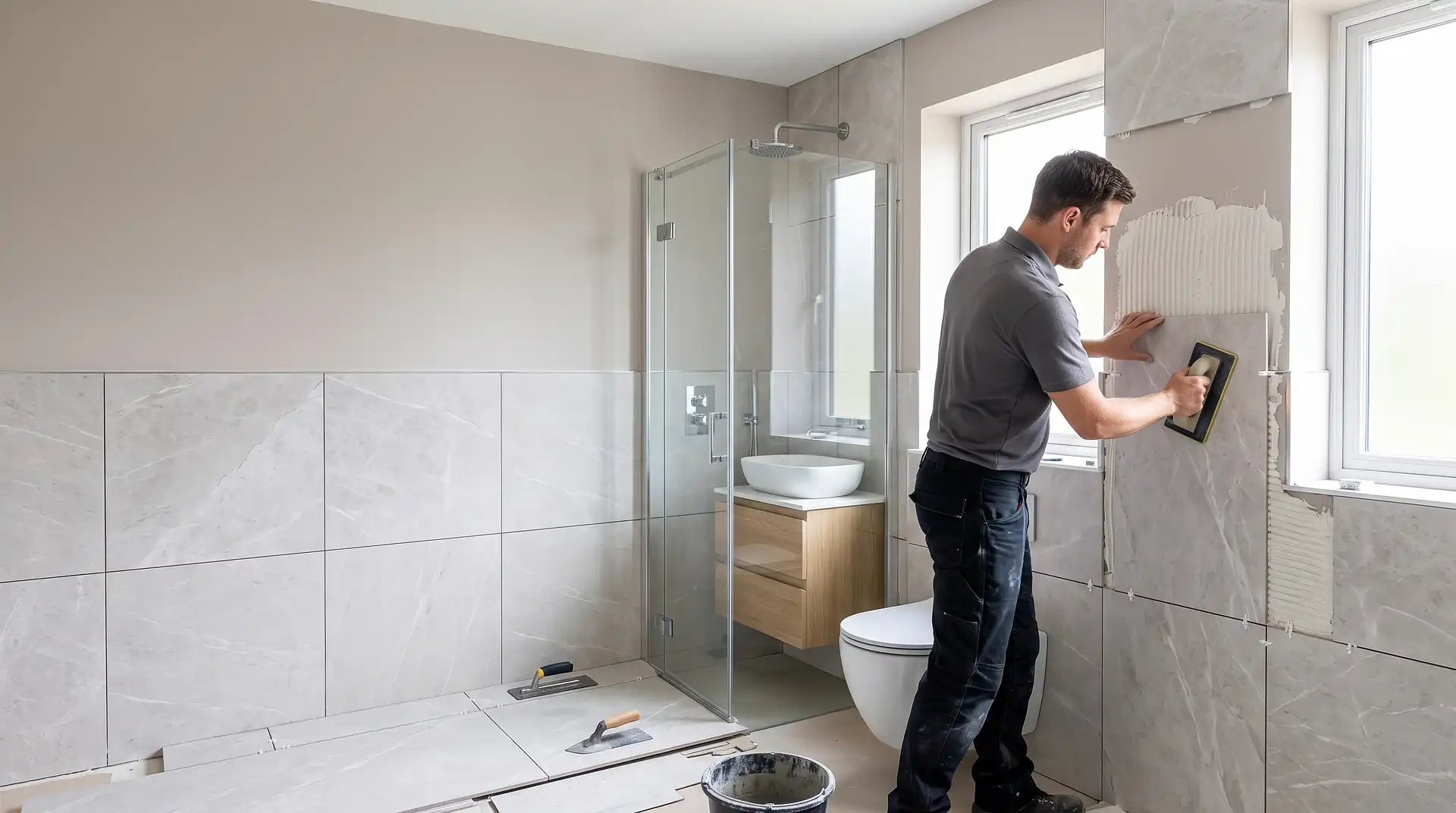
How Much to Tile a Bathroom
1 August 2026
How Much to Tile a Bathroom?
Most UK homeowners pay £1,000 to £3,000 to tile a standard bathroom floor and walls, though the real figure swings considerably depending on two decisions: which material you choose, and how much of the room you actually cover. A budget ceramic tile on a floor-only refresh sits at the bottom of that range. Full-height porcelain or natural stone across every wall and the floor of a shower enclosure pushes the same room toward the top of it, and sometimes beyond.
The Core Numbers
Tiling labour alone, before materials, commonly runs £30 to £70 per square metre in the UK, with published tiler day rates of £150 to £250, sometimes reaching £350 for specialist or high-demand areas. Including both supply and fitting together, wall tiling typically costs £25 to £90 per m² and floor tiling £20 to £100 per m², with the wide spread reflecting the material tier chosen far more than any difference in the labour itself.
For a full standard bathroom, tiling the walls with ceramic tiles typically costs £750 to £1,600, while tiling just the floor typically costs £150 to £450. Combined, a complete standard bathroom, floor and walls together, typically lands at £1,000 to £3,000 for the tiling work itself, before the shower screen, fittings, or any other renovation elements.
Cost by Tile Material
Material | Typical Cost per m² (2026), Supply and Fit |
|---|---|
Ceramic | £40 to £70 |
Porcelain | £70 to £110 |
Large-format or natural stone | £110 to £180+ |
Budget ceramic (basic wall tiles) | £25 to £60 |
Premium/mosaic or intricate pattern | £120 to £180+ |
Material choice is genuinely the single biggest lever on total cost. Ceramic remains the most budget-friendly option and is a perfectly durable, practical choice for most bathrooms. Porcelain sits in the mid-range, denser and harder to cut cleanly than ceramic, which is reflected in both the tile price and the labour needed to work with it. Natural stone and large-format tiles sit at the top, since they need specialist tools, stronger adhesives, and considerably more careful handling, a single cracked piece of natural stone is a genuinely costly mistake in a way a cracked ceramic tile simply isn't.
Wall Tiling vs. Floor Tiling
Tiling bathroom walls tends to cost more in total than tiling the floor, simply because there's usually more wall surface area to cover, particularly in a fully tiled shower enclosure with floor-to-ceiling walls. Half-height tiling, rather than covering walls fully to ceiling height, is a straightforward way to reduce cost meaningfully, commonly saving £800 to £1,500 in an average-sized room compared with full-height coverage, without compromising the practical, water-resistant purpose tiling serves around a bath, basin, or shower.
What Affects the Price Beyond Material
Tile size and lay pattern. A simple grid pattern with a standard tile size is the baseline, quickest and cheapest to install. Anything more intricate, herringbone, diagonal, or small mosaic tiles, means more cuts, more waste, and considerably more labour time, since fiddly small tiles are genuinely slower to lay and grout properly than a straightforward larger format.
Room complexity. A simple square floor is quick work. A bathroom with a toilet to tile around, a shower niche cut in, a window reveal, and multiple doorways is a puzzle that slows the job down and pushes the labour rate needed to make it worthwhile higher.
Tanking. In wet areas specifically, shower enclosures, wet rooms, and bath surrounds, a waterproofing membrane applied to the wall before tiling is strongly recommended, and required by most insurers. This typically adds £200 to £400, and it's worth treating as a non-negotiable line item rather than an optional extra, since failed tanking is consistently one of the most expensive bathroom defects to fix retrospectively once moisture has already got behind the tiles.
Removing existing tiles. If you're retiling over an existing surface, removing the old tiles first adds time, mess, and cost. Wall tiles typically cost £10 to £20 per m² to remove, while floor tiles, especially those set on a solid bed of adhesive, are harder to remove and can add £150 to £400 to a standard bathroom job.
Region. London and the South East typically run 20 to 35% above these figures, while the North East, Scotland, and parts of Wales tend to sit 10 to 15% below, broadly in line with regional labour rate differences seen across other trades.
How Tiling Fits Into a Full Bathroom Renovation Budget
According to InstantCost.co.uk's 2026 UK pricing data, a mid-range bathroom renovation, covering the full suite, tiling, and finishing, typically costs £5,500 to £8,500, with a small cloakroom refresh landing at £1,800 to £3,000 and a luxury refit reaching £9,000 to £18,000. Tiling is one of the larger individual line items within that total budget, and at £1,000 to £3,000 for a standard room, it commonly represents somewhere between a fifth and a third of a mid-range renovation's overall cost, a useful benchmark if you're trying to work out whether a tiling quote you've received looks proportionate to the rest of your renovation budget.
InstantCost's data also notes that labour typically makes up 40 to 55% of total renovation cost, and tiling is one of the more labour-intensive elements of that split, given how much of the total tiling cost, £30 to £70 per m², is skilled labour time rather than material cost. This is part of why choosing standard tile sizes and a simple lay pattern, rather than an intricate custom design, is one of the more effective ways to control cost within a fixed renovation budget without necessarily downgrading the material itself.
Timeframe
A typical UK tiler covers roughly 5 to 8 m² of wall tiling or 4 to 6 m² of floor tiling per day, so a standard bathroom generally takes 2 to 3 days of active tiling work, plus at least a further drying day before grouting can begin. If existing tiles need removing first, add a further day to that timeline, and if tanking is being applied as part of the job, that also needs its own drying time before tiling can start on top of it.
Common Mistakes and What to Do Instead
Mistake: comparing quotes without checking whether tanking is included. Some tiling quotes include waterproofing membrane in wet areas as standard; others price it separately or skip it entirely unless asked. Always confirm this specifically, since it's the single most consequential item for long-term durability in a wet room or shower enclosure.
Mistake: choosing an intricate pattern without budgeting for the extra labour it needs. Herringbone, diagonal layouts, and small mosaic tiles all take meaningfully longer to lay and grout than a standard grid pattern. If budget is a priority, a simple layout with a larger-format tile achieves a clean, contemporary look at a lower labour cost.
Mistake: not ordering enough tile to cover cuts and breakages. Order around 10% more than the exact area you need for a standard layout, rising to 15% for complex patterns like herringbone or diagonal layouts, and keep spare boxes after the job finishes for future repairs.
Mistake: assuming floor-to-ceiling tiling is necessary throughout. Half-height tiling in areas away from direct water contact achieves a similar aesthetic at meaningfully lower cost, commonly saving £800 to £1,500 in an average bathroom, without compromising practicality where it actually matters.
Mistake: not budgeting separately for old tile removal on a retile. This is commonly forgotten when comparing a retile quote against a new-build tiling quote for a similar-sized room. Removal adds real time and cost that a straightforward new installation doesn't need.
What It Costs in the UK: Quick Reference
Item | Typical UK Cost (2026) |
|---|---|
Wall tiling, per m² (supply and fit) | £25 to £90 |
Floor tiling, per m² (supply and fit) | £20 to £100 |
Labour only, per m² | £30 to £70 |
Tiler day rate | £150 to £250 |
Standard bathroom, walls only | £750 to £1,600 |
Standard bathroom, floor only | £150 to £450 |
Standard bathroom, full floor and walls | £1,000 to £3,000 |
Tanking membrane (wet areas) | £200 to £400 |
Old wall tile removal, per m² | £10 to £20 |
Old floor tile removal (standard bathroom) | £150 to £400 |
These are UK market estimates and vary by region, tile material, and room complexity. London and the South East typically run 20 to 35% above these figures. Always confirm whether tanking, tile removal, and grouting are included in a quoted price.
Staying Safe
Ask any tiler specifically whether tanking is included for wet areas, and confirm they're using a proper waterproofing membrane rather than relying on grout and sealant alone to keep moisture out, since this is the detail that determines whether a bathroom stays free of damp and mould behind the tiles for years, or develops problems within a much shorter timeframe. A reputable tiler, ideally TrustMark-registered, should be able to explain their approach to tanking without being specifically pushed to justify it.
Insurance requirements around tanking and waterproofing in wet areas can vary by provider, so it's worth checking your specific home insurance policy's requirements if you're planning a new shower enclosure or wet room.
FAQ
How much does it cost to tile a bathroom in the UK? A standard bathroom, floor and walls together, typically costs £1,000 to £3,000, depending on tile material, lay pattern, and how much of the room is covered. Ceramic tiles sit at the lower end, natural stone and large-format tiles at the top.
Is porcelain or ceramic cheaper to tile a bathroom with? Ceramic is generally cheaper, typically £40 to £70 per m² supply and fit, compared with porcelain at £70 to £110 per m². Ceramic remains a durable, practical choice for most bathrooms despite the lower cost.
Do I need to pay extra for waterproofing before tiling a shower? Yes, a tanking membrane in wet areas typically adds £200 to £400 and is strongly recommended, often required by insurers. It's worth treating as essential rather than optional, since failed tanking is one of the most expensive bathroom defects to fix later.
How long does it take to tile a bathroom? A standard bathroom typically takes 2 to 3 days of active tiling, plus at least a further day for drying before grouting. Removing existing tiles first, or applying tanking, each add roughly another day to the overall timeline.
Does tile pattern affect the cost? Yes, meaningfully. A simple grid pattern with standard tiles is the quickest and cheapest to install. Herringbone, diagonal layouts, or small mosaic tiles all take considerably longer to lay and grout, which is reflected in the labour cost.
How does bathroom tiling fit into an overall renovation budget? For a mid-range bathroom renovation costing £5,500 to £8,500, tiling at £1,000 to £3,000 typically represents roughly a fifth to a third of the total budget, making it one of the larger individual cost lines within a full renovation.