How to Bleed a Radiator
17 July 2026
How to Bleed a Radiator (Step by Step, Without a Leak)
A radiator with a cold top and a warm bottom almost always means trapped air, not a fault — air rises to the top of the radiator and blocks hot water from filling that section, which is why the top stays cool while the bottom, still full of water, heats normally. Bleeding the radiator releases that trapped air and lets water fill the whole thing evenly. It's a five-minute job with the right tool, and the only real risk is losing more system pressure than intended if you don't check the boiler gauge afterward.
How to Tell If a Radiator Needs Bleeding
With the heating on and radiators warm, feel each one from top to bottom. A radiator that's cold at the top and warm at the bottom has trapped air and needs bleeding. A radiator that's cold all over, or cold in patches lower down, is more likely a different issue — sludge buildup or a closed valve — and bleeding alone won't fix it. A gurgling or clanking noise from the radiators or pipework is also a common sign of trapped air worth checking.
What You Need
A radiator bleed key — a small, inexpensive square-socket key that fits the bleed valve on almost all standard radiators; a flathead screwdriver works on some slot-style valves if you don't have a key.
A cloth or small towel — to catch the small amount of water that escapes once air has cleared.
A small container or tray — to hold under the valve, since some drips are normal even with a careful technique.
Step 1: Turn the Heating Off
Switch the heating off and let the radiators cool for a while before bleeding them. Bleeding a hot radiator isn't especially dangerous, but working on a cool system is more comfortable and reduces the risk of a small splash of hot water.
Step 2: Find the Bleed Valve
The bleed valve is a small square-socket fitting, usually at the top corner of the radiator, opposite the end with the flow control valve. It's a distinct small screw-like fitting separate from the main valves at the bottom of the radiator.
Step 3: Insert the Key and Turn Slowly
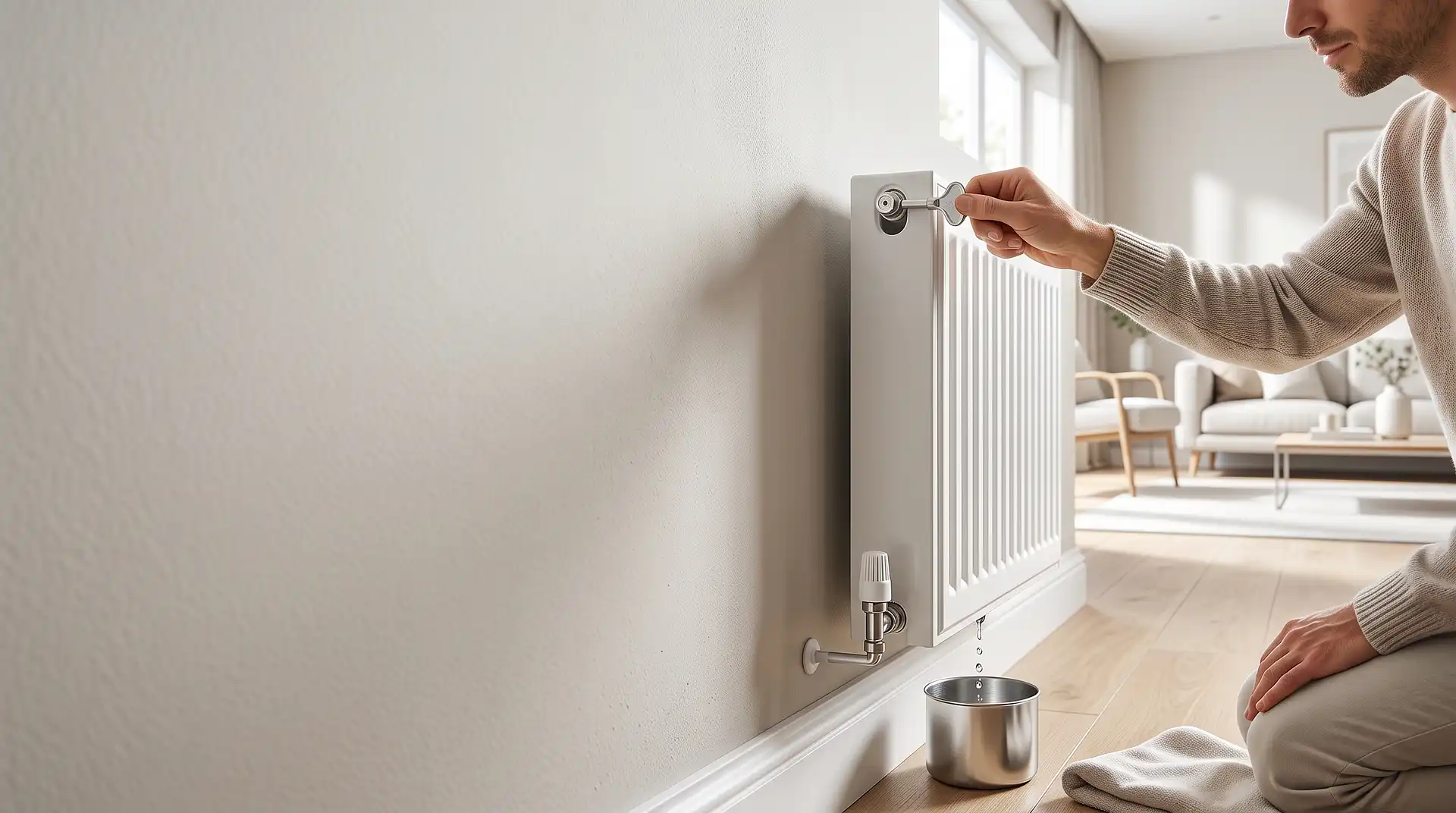
Fit the bleed key onto the valve and turn it slowly, no more than a quarter to half turn anticlockwise. You'll hear a hissing sound as trapped air escapes — this is normal and exactly what you're aiming for. Hold the cloth beneath the valve, since water will follow once the air has cleared.
Step 4: Close the Valve as Soon as Water Flows Steadily
The moment the hissing stops and a steady trickle of water appears, close the valve promptly by turning it clockwise. Leaving it open once water starts flowing wastes system water and drops pressure more than necessary, requiring a bigger top-up afterward.
Step 5: Check the Boiler Pressure Gauge
Bleeding a radiator releases a small amount of water from the system, which can lower boiler pressure. Check the gauge once you've finished all the radiators that needed bleeding — if pressure has dropped below the normal range (typically below 1 bar on a cold system), top it up using the boiler's filling loop before switching the heating back on.
Step 6: Turn the Heating Back On and Recheck
With the heating running again, feel each radiator you bled — it should now heat evenly from top to bottom. If a radiator is still cold at the top after bleeding, repeat the process once more; if it's still not resolving after a second attempt, the issue may not be trapped air.
Common Mistakes and What to Do Instead
Mistake: opening the valve too far, too fast. This can cause water to spray out rather than trickle, both wasting more system water than necessary and making a bigger mess. A quarter turn is usually enough to release air steadily and controllably.
Mistake: not checking boiler pressure afterward. Bleeding several radiators in one session can noticeably lower system pressure, and skipping the pressure check can leave you with a boiler that won't fire properly until it's topped back up.
Mistake: bleeding radiators from the bottom of the house upward, or in a random order. Working from the radiator closest to the boiler out to the furthest, or lowest floor to highest, generally clears air more effectively across the whole system than bleeding in a random order, since it follows the general direction air tends to migrate.
Mistake: assuming a radiator that's still not heating properly after bleeding just needs more bleeding. If air release doesn't fix a cold radiator, sludge buildup or a stuck valve is a more likely cause, and repeated bleeding won't resolve either.
Mistake: over-tightening the bleed valve when closing it. This can damage the valve seal over time, leading to a slow drip later. Snug is enough — forcing it further isn't necessary and can cause more problems than it solves.
When Bleeding Isn't the Right Fix
A radiator that's cold in the middle or in patches, rather than specifically cold at the top, is more likely affected by sludge or debris settled inside it — bleeding releases air, not sludge, so it won't help here. A radiator that's cold all over despite the heating being on and other radiators working normally often points to a closed or faulty valve rather than trapped air. If multiple radiators across the house need bleeding frequently — every few weeks or months — that's usually a sign of a slow air ingress issue somewhere in the system (sometimes linked to an automatic air vent fault or a small leak) rather than something to keep manually correcting indefinitely, and it's worth mentioning to a heating engineer at your next boiler service.
What It Costs in the UK
Bleeding a radiator yourself costs next to nothing — a radiator bleed key typically costs £3–£10, and the process itself uses no additional materials beyond a cloth to catch drips. If you don't want to do it yourself, or if bleeding doesn't resolve the issue and a professional visit is needed, a standard heating engineer callout typically costs £60–£120 for a scheduled visit. If sludge buildup turns out to be the actual cause, a power flush to clear the system typically costs £150–£1,000 depending on the number of radiators and the extent of the buildup, and if a specific radiator valve needs replacing, that's usually a smaller add-on cost, commonly £50–£150 including labour.
Situation | Typical UK Cost (2026) |
|---|---|
Radiator bleed key | £3–£10 |
DIY bleeding | Free beyond the key |
Standard engineer callout | £60–£120 |
Power flush (sludge removal) | £150–£1,000 |
Radiator valve replacement | £50–£150 |
These are UK market estimates and vary by provider and region — bleeding itself is free once you own a key, so it's always worth trying that first before assuming a bigger, costlier fix is needed.
Staying Safe
Bleeding a radiator is a low-risk task, but a few precautions matter. Let the system cool before starting to avoid any risk of a hot water splash from the valve. Keep the bleed key turning slowly and under control rather than forcing it, since a stripped or damaged valve is harder and more expensive to fix than the original trapped-air issue. If a valve feels seized or won't turn with reasonable effort, don't force it — a stuck valve is worth asking a heating engineer to look at rather than risking damage.
If children are in the home, keep them away from the radiator while you're working, and make sure any released water is wiped up promptly, since a wet floor near a radiator is a minor slip risk that's easily avoided.
Radiator valve types and bleeding procedures can vary slightly between manufacturers and older heating systems, so it's worth checking your system's manual if anything looks different from a standard setup, or asking a heating engineer if you're ever unsure.
FAQ
How do I know if a radiator needs bleeding? Feel it while the heating is on — if it's cold at the top and warm at the bottom, trapped air is the likely cause and bleeding should fix it.
How often should radiators be bled? As needed, typically once or twice a year for most systems. If you're bleeding the same radiators every few weeks, that points to an underlying air ingress issue worth mentioning at your next boiler service.
What happens if I bleed a radiator that doesn't need it? Little happens beyond releasing a small amount of water and slightly lowering system pressure. It's not harmful, but it's unnecessary if the radiator was already heating evenly.
Does bleeding a radiator lower boiler pressure? Yes, slightly, since it releases a small amount of system water. Check the boiler pressure gauge after bleeding and top up via the filling loop if it's dropped below the normal range.
Why is my radiator still cold after bleeding it? If it's cold in patches or all over rather than specifically at the top, the cause is more likely sludge buildup or a closed valve, not trapped air, and bleeding won't resolve either.
How much does it cost to bleed a radiator? Bleeding it yourself costs next to nothing beyond a £3–£10 bleed key. A professional callout, if needed, typically costs £60–£120.