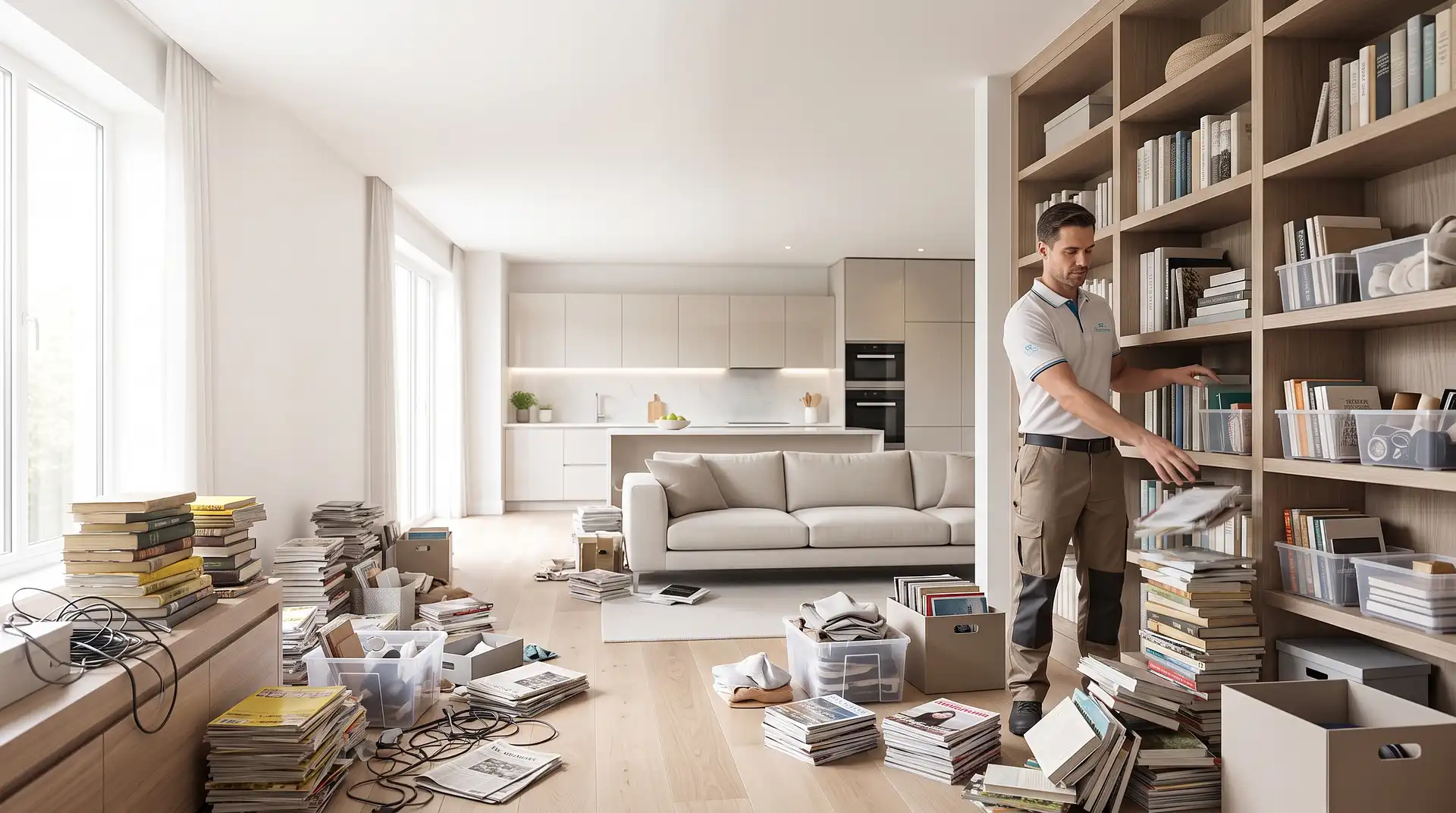
How to Clean a Hoarded House
9 September 2026
How to Clean a Hoarded House Safely
Cleaning a heavily cluttered or hoarded property starts with a safety assessment before anything else, checking for structural risks, pest infestation, and hazardous waste, followed by careful sorting, waste removal, and only then the deep clean itself. This is a genuinely different job from a standard deep clean, both in scale and in the physical and emotional care it needs, and treating it as a bigger version of normal cleaning usually leads to someone getting hurt, overwhelmed, or both.
If the property belongs to someone still living there, approaching the clean with patience and involving them in decisions wherever possible matters as much as the physical work itself. Hoarding is recognised as a genuine and often distressing condition, and a clean carried out without the person's involvement, even with good intentions, can cause real harm to their wellbeing and to your relationship with them.
Step 1: Assess Before You Touch Anything
Before moving a single item, walk through the property to identify immediate hazards. Look for blocked exits, floors that feel unstable or give slightly underfoot from the weight of stored items, exposed wiring, gas appliances that haven't been serviced, signs of damp or mould, and any evidence of pest activity such as droppings or nesting material.
If you find structural concerns, exposed electrics, or signs of a gas issue, stop and arrange for a qualified tradesperson to check the property before continuing with any physical clearance work. A hoarded property can hide genuine safety hazards behind stored items that have built up over months or years.
Step 2: Plan the Sorting Process
Work in defined zones, one room or even one section of a room at a time, rather than trying to tackle the whole property at once. Set up three or four clear categories before starting: keep, donate or sell, recycle, and rubbish, and physically separate items into these categories as you go rather than making a single pass and deciding later.
If the property's occupant is present and able to participate, involve them directly in sorting decisions rather than making choices on their behalf. This process can be slow and emotionally difficult for the person involved, and rushing it or making unilateral decisions about their belongings often causes distress that outweighs the practical benefit of moving faster.
Step 3: Remove Waste in Stages
Once items are sorted, arrange removal in a logical sequence, starting with anything hazardous or perishable, followed by general rubbish, then donations and recycling. Large volumes of accumulated waste from a hoarded property often exceed standard council collection limits, so check whether you need a skip, a licensed waste clearance company, or a bulky waste collection booking through your local council.
Some items found during a hoarding clean, including certain electricals, mattresses, and chemicals, have specific disposal requirements under UK waste regulations, and a licensed clearance company will know how to handle these correctly rather than risking a fly-tipping issue.
Step 4: Deep Clean the Cleared Space
Once a room is fully cleared, deep clean it properly before moving items back in or considering it finished. This typically means the same scope as a standard deep clean, skirting boards, behind where furniture stood, inside cupboards, floors, and any surfaces affected by dust or grime that's built up over an extended period, but often with an added layer of grime, pest droppings, or mould that a routine deep clean wouldn't encounter.
A Note on Pest Infestation
Long-term clutter creates ideal conditions for pests, particularly where food waste has accumulated or where clutter provides nesting material and hiding spots. If you find signs of an infestation, droppings, gnawed materials, nests, or live pests, arrange pest control treatment before or alongside the clearance rather than after, since disturbing an infestation during clearance without treatment can cause pests to spread further into the property.
A Note on Biohazard and Hazardous Material Situations
Some hoarded properties involve genuine biohazard conditions, animal waste, spoiled food, mould covering significant areas, or in more extreme cases, situations requiring specialist handling. If you encounter anything you're not confident handling safely with standard cleaning equipment and PPE, this is the point to bring in a specialist hoarding cleanup company rather than continuing with a domestic approach, both for your own safety and to ensure hazardous material is disposed of correctly.
When to Call a Professional
A specialist hoarding cleanup company is worth involving for properties with a significant volume of accumulated items, any biohazard concerns, structural damage, or where the emotional dynamics involved make a family member or friend attempting the clean directly a difficult or unwise approach. These companies typically work more slowly and sensitively than a standard house clearance service, often with staff trained specifically in supporting the property's occupant through the process.
Use InstantCost's house cleaning cost calculator to see what a deep clean would cost once a property has been cleared of excess items. If pest activity is found during the clear-out, it's also worth researching local pest control costs separately, since this is typically priced and booked independently from the cleaning itself.
Common Mistakes and What to Do Instead
Mistake: Clearing the property without the occupant's involvement or consent. Removing someone's belongings without their agreement, even with good intentions, can cause serious emotional distress and damage trust. Involve the person in decisions wherever they're able to participate.
Mistake: Trying to do the whole property in one day. Rushing a large-scale clear-out risks both physical injury from unstable or heavy items and emotional overwhelm for anyone present. Work in planned stages across multiple sessions rather than attempting everything at once.
Mistake: Ignoring structural or electrical warning signs. A floor that feels unstable, exposed wiring, or signs of a gas issue are genuine safety hazards that clutter can hide for a long time. Get these checked by a qualified professional before continuing with clearance work.
Mistake: Not wearing appropriate PPE. Dust masks, gloves, and eye protection matter more in a hoarded property than in routine cleaning, given the likelihood of mould, pest droppings, and accumulated dust. Always wear proper protective equipment throughout the process.
Mistake: Skipping pest control when signs of infestation are present. Clearing clutter without treating an active infestation can cause pests to spread to other parts of the property or neighbouring homes. Arrange treatment before or alongside the clearance.
Mistake: Disposing of items in ways that breach council waste rules. Large volumes of waste from a hoarding clean often exceed standard bin collection limits and some items need specific disposal routes. Check with your local council or use a licensed waste clearance company rather than risking a fly-tipping issue.
What It Costs in the UK
Item or Service | Typical UK Cost (2026) |
|---|---|
Specialist hoarding cleanup, single room | £250–£600 |
Specialist hoarding cleanup, whole property | £1,500–£5,000+ |
Standard house clearance (skip and labour) | £300–£800 |
Skip hire (8-yard, typical clearance size) | £250–£400 |
Pest control treatment | £80–£250 |
Deep clean, 3-bed house, after clearance | £180–£320 |
Professional decluttering and organising support | £30–£50 per hour |
Figures based on InstantCost.co.uk's 2026 UK house cleaning pricing data and vary by region, property size, and the extent of specialist work required.
Staying Safe
Wear gloves, a properly rated dust mask, and eye protection throughout, particularly when disturbing long-undisturbed clutter, where mould spores, dust, and pest droppings can all become airborne. Ventilate rooms well as you work, opening windows where possible even in cold weather.
Be cautious lifting items in cluttered rooms, since piled belongings can be genuinely heavy and unstable, and a collapse while someone is working nearby is a real injury risk. Never work alone in a property with structural concerns, and always have someone else aware of where you are and checking in periodically during larger clearance sessions.
Take the emotional side of this seriously as well as the physical side. If the property's occupant is showing significant distress, or if you suspect the hoarding relates to a wider difficulty they're experiencing, encourage them to speak with their GP or a specialist organisation such as Hoarding UK, rather than treating the clean as a purely practical task to complete and move on from.
The Health and Safety Executive provides guidance on safe manual handling and respiratory protection for work involving dust, mould, and biological hazards. Verify current PPE recommendations with HSE if the property involves significant mould, pest activity, or other hazardous material.
Frequently Asked Questions
How long does it take to clean a hoarded house? This varies enormously depending on the property's size and the volume of items involved, ranging from a single day for a lightly cluttered room to several weeks of sessions for a severely affected whole property, particularly where the occupant is involved in sorting decisions throughout.
Should I hire a specialist company or do it myself? For light to moderate clutter without hazardous material, a supported family clear-out can work well. For significant volume, biohazard concerns, structural issues, or difficult emotional dynamics, a specialist hoarding cleanup company is generally the safer and more sensitive choice.
Is it okay to throw away someone's belongings without asking? No, this should be avoided wherever the person is able to participate in decisions about their own belongings. Removing items without consent, even with good intentions, can cause serious distress and damage trust, and in some cases raises genuine welfare and legal considerations.
What should I do if I find pest infestation during a clean? Stop the clearance in that area and arrange professional pest control treatment before continuing, since disturbing an active infestation without treatment can cause pests to spread further into the property or to neighbouring homes.
Are there support services for people who hoard? Yes, organisations such as Hoarding UK provide advice and support specifically for people affected by hoarding and their families, alongside guidance available through a GP for anyone finding the situation distressing or overwhelming.
How much does it cost to clean a hoarded house professionally? A single heavily cluttered room typically costs £250 to £600 for specialist cleanup, while a whole property can range from £1,500 to £5,000 or more depending on size, waste volume, and whether biohazard conditions are involved.