How to Clean a House Dryer Vent
13 August 2026
How to Clean a House Dryer Vent (By Dryer Type)
There's a question worth settling before you start looking for ducting: does your dryer actually have a vent. Roughly speaking, UK homes have one of three dryer types, and only one of them has a vent hose and external outlet at all. Condenser and heat pump dryers work entirely differently, collecting moisture in a tank rather than expelling it outside, which means the maintenance they need is genuinely different from what vent-cleaning guides describe. Working out which you have first saves searching for ducting that was never there.
Which Dryer Do You Have?
Vented dryer. There's a flexible hose running from the back of the machine to an external wall outlet, or a hose you hang out of a window. Warm, moist air is expelled outside. This is the type that needs actual vent cleaning.
Condenser dryer. No hose to the outside. Instead there's a removable water tank, usually at the top or bottom of the machine, that you empty after cycles, plus a condenser unit accessible behind a panel at the front. Moisture is condensed back into water rather than vented.
Heat pump dryer. Similar to a condenser in having a water tank and no external vent, but with a heat pump system that recycles hot air, making it considerably more energy efficient. It has both a lint filter and a separate, finer heat exchanger filter.
Cleaning a Vented Dryer's Full System
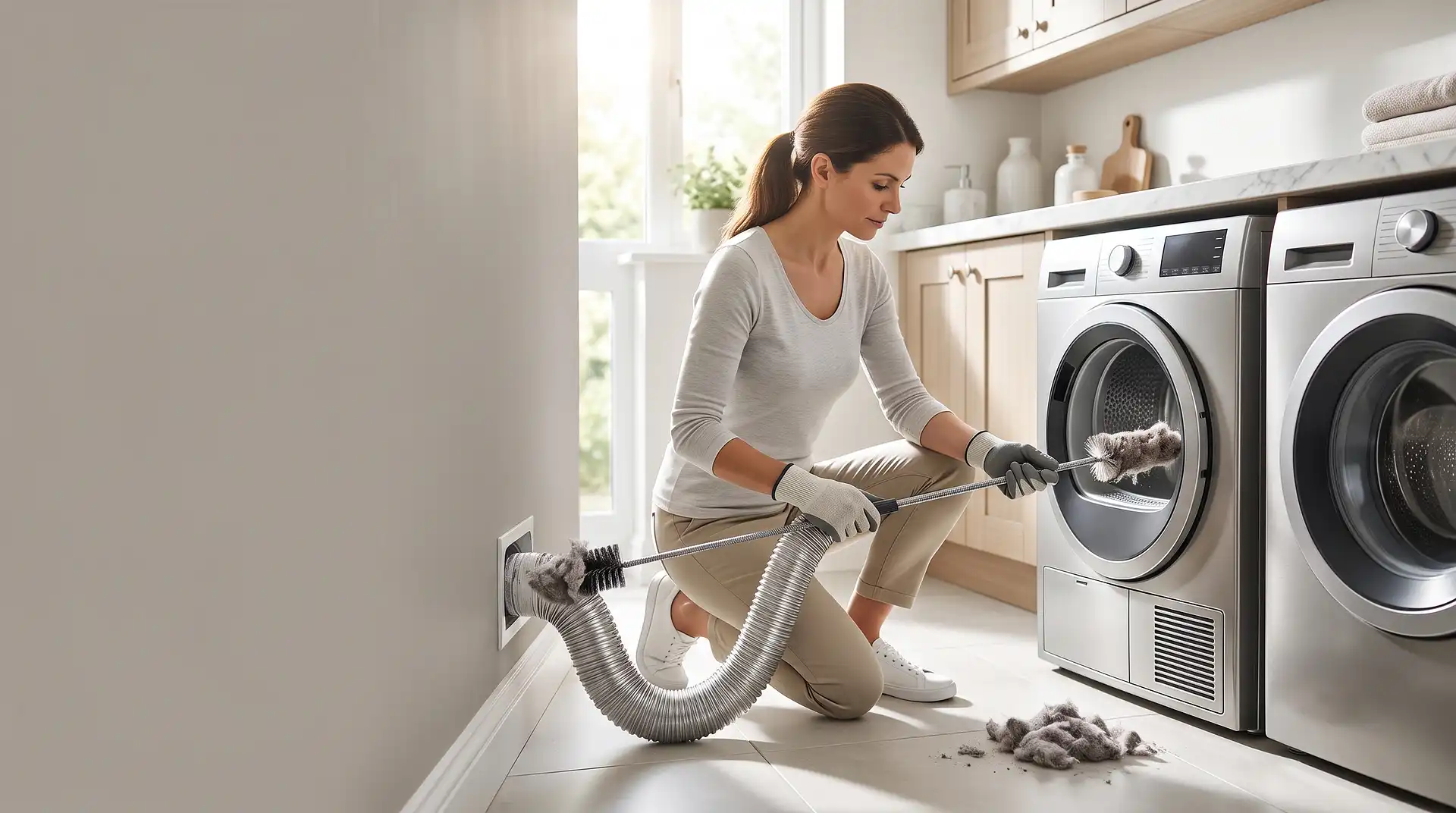
This is the type where lint buildup in ducting is a genuine fire risk, and where a proper clean means working through the whole run rather than just the filter.
Disconnect first. Unplug the machine. For a gas dryer, also turn off the gas valve and take care not to strain the gas line when moving the appliance.
Pull the dryer out and disconnect the duct. The vent connection is usually a 4-inch opening at the back. Disconnect the ducting from the machine itself.
Vacuum the machine's vent opening. Lint accumulates right at the outlet before it even enters the ducting.
Clear the duct in sections. Where the run is long enough to separate, do so and clear each section individually. This is also the moment to check what your ducting actually is, flexible foil or plastic accordion-style ducts trap far more lint in their ridges and any sagging low points than smooth rigid ducting does. If yours is the crinkly type, an upgrade is genuinely worth considering while you already have it apart.
Check the external outlet. Go outside and inspect the vent cover. Remove lint, debris, and any nesting material, birds and insects are drawn to the warmth and block vents surprisingly often, entirely separately from lint buildup. Confirm the flap opens freely and closes properly.
Clean behind and under the machine. Lint gathers here too, and you have access right now.
Reassemble properly. Secure every joint with clamps or foil tape rather than just pushing sections together, since a loose joint vents warm, moist, lint-carrying air into the space behind the dryer rather than outside.
Test. Run a short cycle and check you can feel exhaust air at the external outlet.
Maintaining a Condenser Dryer
There's no vent to clean, but there is genuine maintenance that gets neglected because people assume tankless means maintenance-free.
Empty the water tank after every cycle, or plumb it to a drain if the machine supports it. Clean the lint filter after every load, as with any dryer. Then, crucially, remove and clean the condenser unit itself, usually accessible behind a panel at the base of the machine. Manufacturers typically recommend rinsing it under a tap every few weeks to a month depending on use, and a clogged condenser is the single most common cause of a condenser dryer taking progressively longer to dry loads.
Maintaining a Heat Pump Dryer
Same tank-emptying and lint-filter routine, plus one extra step that's specific to this type and frequently missed. Heat pump dryers have a secondary heat exchanger filter, finer than the main lint filter, which needs cleaning periodically according to the manufacturer's guidance. Neglecting it produces exactly the same symptom as a blocked condenser, gradually lengthening drying times, and it's often the reason a heat pump dryer that started out efficient stops feeling that way.
Warning Signs Across All Three Types
Clothes taking noticeably longer to dry than they used to is the universal early signal, whichever type you have. On a vented dryer specifically, also watch for the machine or clothes feeling unusually hot at cycle end, the external vent flap staying shut while running, or a burning smell, which warrants stopping the cycle immediately rather than finishing it.
How Often
Clean the lint filter after every single load regardless of dryer type, this is the baseline and doesn't replace anything below.
For vented dryers, a full duct and external vent clean annually is the general recommendation, more often with heavy use or if you regularly dry towels, bedding, or pet blankets, which shed considerably more fibre.
For condenser dryers, rinse the condenser unit every few weeks to monthly depending on use.
For heat pump dryers, follow the manufacturer's stated interval for the heat exchanger filter, typically every few cycles to monthly.
Where This Fits in Household Maintenance
Dryer maintenance is a good example of a task that's genuinely important but sits outside any normal weekly cleaning routine, which is exactly why it gets forgotten until drying times have already crept up. Building it into a scheduled rotation alongside other periodic jobs is more reliable than waiting to notice a problem. Our related guide covers how often you should clean your house, including how to structure daily, weekly, monthly and quarterly tasks, useful for slotting appliance maintenance like this into a rotation that actually gets done rather than one that exists in theory.
Common Mistakes and What to Do Instead
Mistake: assuming every dryer has a vent to clean. Condenser and heat pump dryers have no external vent at all. Identify your type first rather than searching for ducting that doesn't exist.
Mistake: cleaning the lint filter and assuming that's the whole job. The filter catches most lint, not all. What escapes builds up in ducting, condensers, or heat exchanger filters depending on your machine type.
Mistake: never cleaning a condenser dryer's condenser unit. This is the most commonly neglected maintenance on condenser dryers, and the usual cause of progressively longer drying times.
Mistake: ignoring a heat pump dryer's secondary filter. It's separate from the main lint filter and easy to miss entirely. Neglecting it undermines exactly the efficiency you paid extra for.
Mistake: leaving flexible foil ducting in place on a vented dryer. Its ridges and tendency to sag trap considerably more lint than rigid ducting. If you're already disconnecting it to clean, that's the moment to upgrade.
Mistake: not securing duct joints on reassembly. A loose joint vents warm, lint-carrying air behind the machine rather than outside, creating a new accumulation point.
When to Call a Professional
Worth doing if a vented dryer's duct run is long, awkward, or genuinely inaccessible, if you're not confident handling a gas dryer's connections, if drying times or a burning smell persist after you've cleaned everything you can reach, or if a condenser or heat pump dryer's performance hasn't improved after cleaning the filters and condenser, which points to something needing an engineer rather than more cleaning.
What It Costs in the UK
DIY cleaning costs very little across all three types, foil tape or duct clamps for reassembling a vented system typically cost £3 to £8, and upgrading from flexible to rigid ducting typically adds £15 to £30 in materials for a standard run.
Professional tumble dryer vent cleaning for a vented system is commonly priced around £60 for a standard household job, covering the full run from machine to external outlet with airflow tested afterward.
If you're having this done as part of a broader clean rather than a standalone visit, according to InstantCost.co.uk's 2026 UK house cleaning pricing data, a deep clean of a 3-bedroom home typically costs £180 to £320, taking a team of two between 4 and 7 hours and covering behind-appliance areas that regular cleaning skips. Standard hourly domestic cleaning runs £15 to £25 an hour, with London and the South East at £22 to £28 and the Midlands, North West, Scotland and Wales typically £15 to £20.
Item or Service | Typical UK Cost (2026) |
|---|---|
Foil tape or duct clamps | £3 to £8 |
Rigid ducting upgrade (materials) | £15 to £30 |
Professional dryer vent cleaning | Around £60 |
Standard domestic cleaning, hourly | £15 to £25 |
Deep clean, 3-bed home | £180 to £320 |
House cleaning figures are based on InstantCost.co.uk's 2026 UK pricing data. Dryer vent cleaning pricing is based on current UK provider data and varies by region and duct accessibility.
Staying Safe
Always disconnect the dryer from its power supply, and the gas supply if applicable, before any cleaning, and let the machine cool fully first. Never leave a tumble dryer running overnight or while the house is empty, this is standard UK fire service advice for all dryer types regardless of how recently they were cleaned.
If you notice a burning smell, unusual noise, or the machine running noticeably hotter than normal, stop the cycle, unplug the machine, and have it checked before using it again rather than finishing the load.
Manufacturer guidance on filter and condenser cleaning intervals varies by model, so check your specific dryer's manual rather than relying on general intervals, particularly for heat pump models.
FAQ
Does my dryer have a vent that needs cleaning? Only if it's a vented dryer with a hose running to an external wall outlet. Condenser and heat pump dryers have no vent, they use a water tank and need condenser or heat exchanger filter cleaning instead.
How often should I clean a dryer vent? Annually for a vented dryer's full duct and external outlet, more often with heavy use. The lint filter itself should be cleaned after every single load regardless of dryer type.
Why is my condenser dryer taking longer to dry clothes? Most commonly a clogged condenser unit, accessible behind a panel at the base of the machine, which needs rinsing under a tap every few weeks to monthly depending on use.
What's the extra filter on a heat pump dryer? A secondary heat exchanger filter, finer than the main lint filter and separate from it. It's frequently missed entirely, and neglecting it causes drying times to lengthen gradually.
Is flexible foil ducting worse than rigid ducting? Yes, meaningfully. Its ridges and tendency to sag trap considerably more lint than smooth rigid ducting, making it worth upgrading while you have the system apart for cleaning.
How much does professional dryer vent cleaning cost in the UK? Around £60 for a standard household job on a vented system, covering the full run from machine to external outlet with airflow tested afterward.