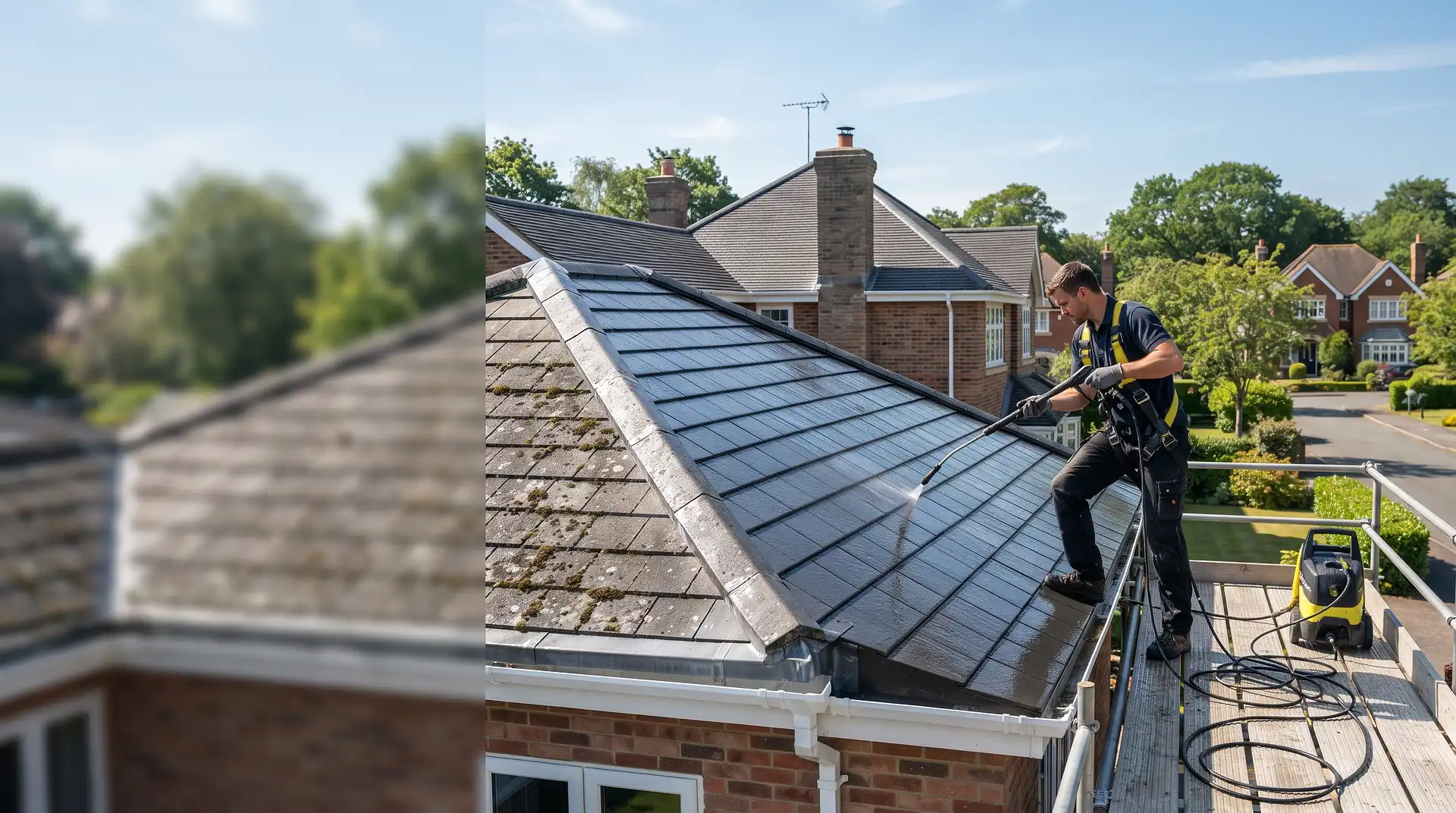
How to Clean a House Roof
14 September 2026
How to Clean a House Roof
A house roof is cleaned by removing moss and debris first, then treating the remaining algae and lichen with either a soft wash biocide treatment or, on suitable tile types, a carefully controlled pressure wash, followed by a rinse and a preventative treatment to slow regrowth. The method matters more here than on almost any other exterior surface, since the wrong approach doesn't just fail to clean the roof, it can lift tiles, damage mortar, and create leaks that cost far more to fix than the original moss ever cost to look at.
The single most important decision before starting anything is whether your roof covering can safely take pressure washing at all. Concrete tiles generally cope reasonably well. Older clay tiles, slate, and anything with fragile or degraded mortar joints are far better suited to a gentler soft wash approach, and getting this choice wrong is the most common cause of roof cleaning going badly.
Why Roofs Grow Moss and Algae
North-facing roof slopes and areas shaded by overhanging trees stay damp for longer after rain, creating ideal conditions for moss, algae, and in more established cases, lichen to take hold on the tile surface. Once established, moss holds moisture against the roof covering, which can accelerate frost damage to tiles during winter and, in more severe cases, work its way under tile edges and lift them slightly over time.
Step 1: Remove Loose Moss and Debris
Using a soft brush or a specific roof rake tool worked from the ridge downward, following the direction water naturally flows rather than against it, clear loose moss clumps and general debris from the tile surface. Work carefully around ridge tiles and valleys, where moss tends to accumulate most heavily due to slower water runoff in these areas.
Step 2: Choose Soft Wash or Pressure Wash
Soft Washing
Soft washing applies a biocide treatment, typically based on sodium hypochlorite or a similar algaecide, at low pressure, allowing the chemical to kill moss, algae, and lichen at the root rather than physically blasting it off. This method is considerably gentler on tiles, mortar, and pointing, and is generally recommended as the safer default for most UK roofs, particularly older properties, clay tiles, and slate.
Pressure Washing
Pressure washing physically removes moss and algae using high-pressure water, which can clean a roof more quickly and dramatically but carries real risk of dislodging tiles, forcing water under the roof covering, and damaging mortar joints if used incorrectly or at too high a setting. This method should only be used on roof coverings genuinely suited to it, typically sound, modern concrete tiles, and ideally only by someone experienced specifically with roof work rather than general exterior cleaning.
Step 3: Rinse and Inspect
Once treatment has had time to work, rinse the roof surface with clean water at a gentle setting, checking as you go for any tiles that seem loose, cracked, or displaced, since roof cleaning work often reveals pre-existing issues that weren't visible while obscured by moss and dirt.
Step 4: Apply a Preventative Treatment
A biocide or algaecide treatment applied after cleaning helps slow regrowth, particularly on shaded, north-facing sections most prone to moss returning quickly. This won't prevent regrowth indefinitely, but it meaningfully extends the time before the roof needs treating again.
A Note on Roof Type and Cleaning Suitability
Concrete tiles are generally the most tolerant of pressure washing, though even these benefit from a soft wash approach if they're older or showing signs of surface degradation. Clay tiles and natural slate are more fragile and considerably better suited to soft washing alone. Thatched, and specialist roof coverings need entirely specific care that falls well outside general roof cleaning guidance and should only be handled by a specialist familiar with that specific material.
A Note on Gutters and Roof Cleaning Together
Cleaning a roof often dislodges debris that ends up in the gutters below, so it's worth planning gutter clearance either immediately after roof cleaning or as part of the same visit if you're bringing in a professional. Leaving displaced moss and debris sitting in gutters after a roof clean can create a new blockage that undoes some of the benefit of the original work.
When to Call a Professional
Roof cleaning is one of the exterior jobs where professional help is genuinely the sensible default for most homeowners, given the combination of height, the risk of falling through unsupported sections if walked on incorrectly, and the specific knowledge needed to judge which cleaning method suits your particular roof covering. A professional roof cleaner will also have proper access equipment, harnesses, and the experience to spot early signs of tile damage that an untrained eye might miss entirely.
Use InstantCost's house exterior cleaning cost calculator to see what professional roof cleaning would cost for your property. If moss and algae are also affecting your driveway, how to get rid of moss on a driveway covers treating that separately.
Common Mistakes and What to Do Instead
Mistake: Walking directly on the roof without proper support. Roof tiles aren't designed to bear a person's full weight directly, and walking on them incorrectly can crack tiles or, in a worst case, cause a fall through weaker sections. Professional roof cleaners use roof ladders, crawl boards, or work from an access platform rather than walking freely across tiles.
Mistake: Pressure washing an unsuitable roof covering. High-pressure water on older clay tiles, slate, or roofs with degraded mortar can lift tiles, force water under the covering, and cause damage that's considerably more expensive than the original moss problem. Confirm your roof type is genuinely suited to pressure washing, or default to soft washing.
Mistake: Assuming a clean-looking roof after treatment means the job is finished. Biocide treatments continue working over the following days and weeks as moss and algae die off gradually rather than disappearing instantly. Give the treatment time to work fully before judging the result or considering a second application.
Mistake: Skipping gutter clearance after roof cleaning. Debris dislodged during roof cleaning commonly ends up blocking gutters below. Plan gutter clearance as part of the same job, or shortly afterward, rather than treating them as entirely separate tasks.
Mistake: Ignoring signs of tile damage found during cleaning. Cracked, loose, or displaced tiles discovered mid-clean are worth addressing before they lead to a leak, rather than continuing the cleaning and dealing with tile issues later. Flag any damage found immediately to whoever's carrying out the work.
Mistake: Not treating for regrowth prevention. Cleaning moss off without any preventative treatment means it's likely to return within a season or two, particularly on shaded, north-facing roof sections. Apply a biocide treatment after cleaning to slow how quickly moss re-establishes.
What It Costs in the UK
Item or Service | Typical UK Cost (2026) |
|---|---|
Roof jet wash / soft wash, standard semi-detached | £350–£750 |
Roof cleaning, per square metre | £8–£15 |
Gutter clearance (often bundled with roof clean) | £60–£150 |
Scaffold tower or access equipment hire (if separate) | £200–£500 |
Biocide preventative treatment, per application | Often included in professional quote |
DIY moss killer and roof rake (materials only) | £15–£40 |
Figures based on InstantCost.co.uk's 2026 UK house exterior cleaning pricing data and vary by region, roof size, and access requirements.
Staying Safe
Roof work carries a genuine and serious fall risk, and this is one of the exterior jobs where professional help is strongly recommended over a DIY approach for most homeowners, regardless of general confidence with ladders and other exterior cleaning tasks. If you do attempt any part of this yourself, never walk directly on roof tiles, use proper roof ladders or crawl boards designed to distribute weight safely, and never work alone or in wet or windy conditions.
Wear appropriate eye and skin protection when applying biocide or algaecide treatments, and keep the treated area clear of children, pets, and any washing lines or garden features that could be affected by chemical runoff during application and rinsing.
The Health and Safety Executive treats working at height, including domestic roof work, as a significant risk area, and recommends professional access equipment and training for any work above single-storey height. Homeowners attempting roof work themselves should follow HSE guidance on ladder safety and never work alone.
Frequently Asked Questions
Is it safe to pressure wash a house roof? It depends entirely on the roof covering. Sound, modern concrete tiles generally tolerate pressure washing reasonably well, but older clay tiles, slate, and roofs with degraded mortar are much better suited to a gentler soft wash treatment instead.
How often should a roof be cleaned? Most UK roofs benefit from cleaning every few years, though shaded, north-facing roofs prone to heavy moss growth may need attention more frequently, sometimes every two to three years, to prevent moss becoming deeply established.
Can I clean my own roof without professional help? It's possible for a confident, properly equipped person, but roof work carries a genuine fall risk, and incorrect technique can damage tiles or mortar. Most homeowners are better served by a professional with proper access equipment and roof-specific experience.
Does moss on a roof actually cause damage, or is it just cosmetic? Beyond appearance, moss holds moisture against tiles, which can accelerate frost damage in winter, and in more established cases can work under tile edges and cause slight lifting, potentially contributing to leaks over time.
What's the difference between soft washing and pressure washing a roof? Soft washing uses a biocide treatment at low pressure to kill moss and algae at the root, while pressure washing physically blasts growth away using high-pressure water. Soft washing is gentler and generally safer for most UK roof types.
Will cleaning my roof stop moss coming back permanently? No treatment prevents regrowth indefinitely, but a preventative biocide treatment applied after cleaning meaningfully slows how quickly moss re-establishes, particularly important on shaded or north-facing roof sections that stay damp longer.