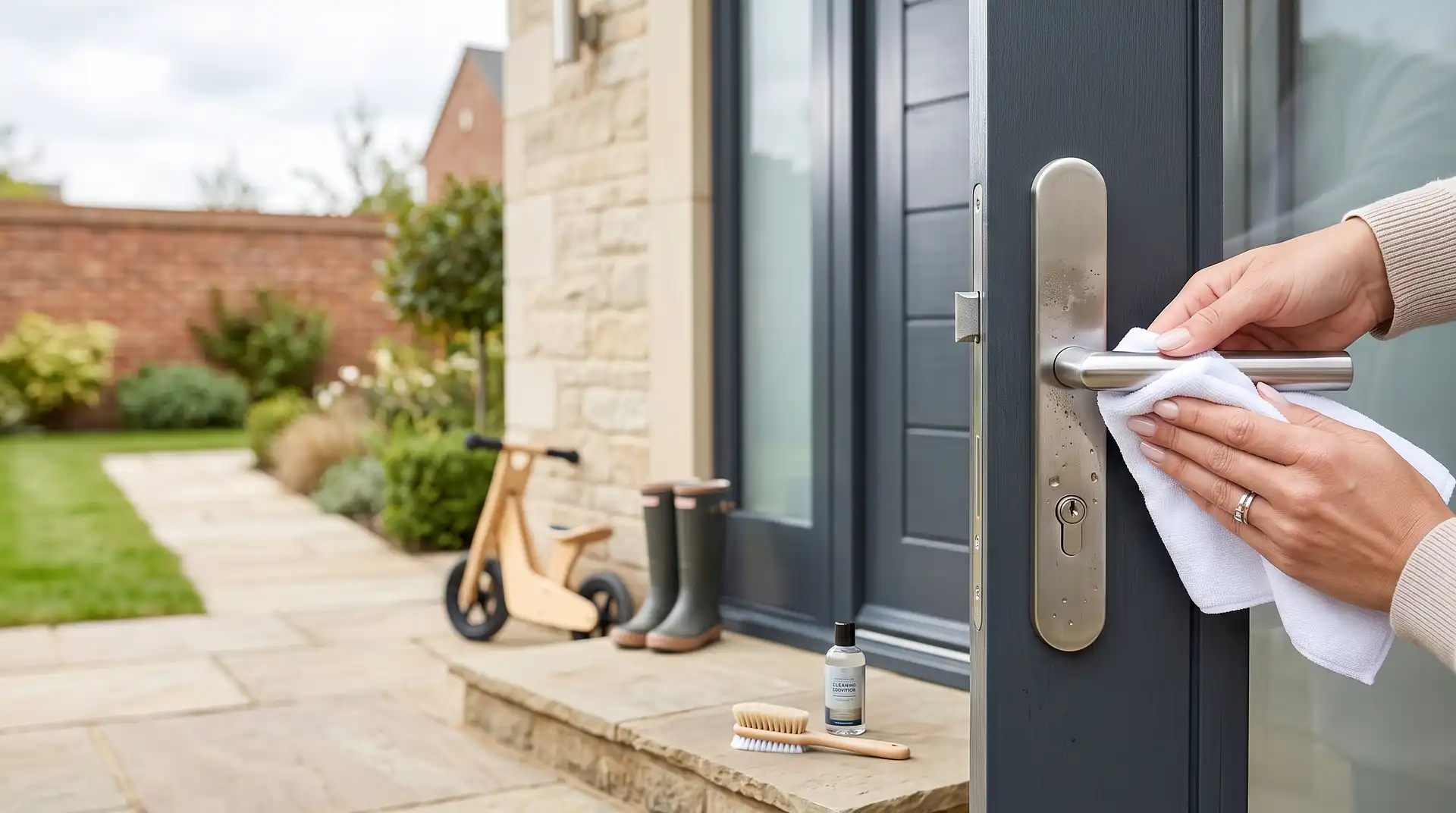
How to Clean an Exterior Door Handle
31 July 2026
How to Clean an Exterior Door Handle (By Material, Properly)
An exterior door handle is one of the most touched surfaces on the entire outside of a house, and one of the least cleaned, which is a genuinely odd combination when you think about it. It's exposed to weather, handled by everyone entering and leaving, and often gets nothing more than an occasional wipe as part of a general clean, if that. Cleaning it properly isn't complicated, but it does depend on knowing what it's actually made of, since brass, stainless steel, chrome, and painted or powder-coated finishes all need slightly different treatment to avoid dulling or damaging the surface.
Why This Matters Beyond Appearance
A weathered, tarnished, or grimy door handle is often the first thing a visitor's hand actually touches when arriving at a property, and it's a small but genuine factor in first impressions, alongside being a high-touch surface worth keeping hygienically clean for the household using it daily. Beyond appearance and hygiene, some materials, brass in particular, can develop surface corrosion over time if left uncleaned and exposed to weather, which eventually affects both look and function if genuinely neglected for long enough.
Identify the Material First
Brass has a warm, gold-toned colour and can be lacquered (sealed with a protective coating) or unlacquered (bare metal that tarnishes naturally over time). This distinction matters enormously for cleaning, since lacquered brass should never be polished with abrasive brass cleaner, which will damage the protective coating, while unlacquered brass generally benefits from occasional polishing to manage natural tarnish.
Stainless steel has a cool, silvery tone and is generally the most straightforward to clean, tolerating most mild cleaning products well without the tarnishing concerns brass has.
Chrome is bright and highly reflective, and while durable, it can show water spots and fingerprints more visibly than other finishes, making regular light cleaning more noticeable in its absence than with other materials.
Painted or powder-coated handles, often found on uPVC doors, need gentler treatment than bare metal, since abrasive cleaning can wear through the coating over time and expose the material beneath.
Cleaning Brass Handles
For lacquered brass, use a soft cloth with warm water and a small amount of mild dish soap, avoiding anything abrasive that could scratch through the protective lacquer coating. For unlacquered brass showing genuine tarnish, a dedicated brass cleaner, applied with a soft cloth and worked in small circular motions, restores shine effectively. A traditional alternative for light tarnish is a paste of lemon juice and baking soda or salt, left on for a few minutes before being rinsed off and buffed dry, though a proper brass cleaner generally gives a more even, longer-lasting result on anything beyond very light tarnishing.
Cleaning Stainless Steel and Chrome Handles
Wipe with a soft cloth dampened with warm water and a small amount of mild dish soap, then dry thoroughly with a separate clean cloth, since air-drying alone often leaves water spots, particularly on chrome. For stubborn marks or a build-up of grime, a dedicated stainless steel or chrome cleaner, applied sparingly, restores shine without the risk of scratching that an abrasive pad or scourer carries.
Cleaning Painted or Powder-Coated Handles
Use a soft cloth with warm water and mild soap only, avoiding anything abrasive that could wear through the coating over repeated cleaning. If the coating has already started to chip or wear in places, avoid scrubbing at those specific spots, since this accelerates further wear rather than fixing what's already happened, and a full repaint or replacement may be the more sensible fix for a handle in that condition.
Step-by-Step: General Method
Dampen a soft cloth with warm water and a small amount of mild dish soap, avoiding anything abrasive regardless of material.
Wipe the handle thoroughly, including the underside and any grooves or decorative detailing where grime tends to accumulate unnoticed.
Rinse the cloth and wipe again with clean water only, to remove any soap residue.
Dry immediately with a separate clean, dry cloth, rather than letting it air dry, since this is what prevents water spots and, on brass specifically, helps limit new tarnish forming.
For brass or chrome specifically, apply a small amount of appropriate metal polish if needed, following the product's instructions, and buff to a shine with a fresh cloth.
Common Mistakes and What to Do Instead
Mistake: using abrasive brass cleaner on a lacquered handle. This damages the protective coating and can leave a patchy, uneven finish that's difficult to fully correct. Check whether your brass is lacquered before choosing a cleaning product, and use only mild soap and water if it is.
Mistake: letting the handle air dry after cleaning. This is a common cause of water spots, particularly on chrome, and can also promote quicker tarnishing on unlacquered brass. Always dry with a clean cloth immediately after cleaning.
Mistake: using a general household cleaning spray not suited to the specific metal. Some all-purpose cleaners contain chemicals that can dull or discolour certain metal finishes over repeated use. Stick to mild soap and water for routine cleaning, and a material-specific product only when needed.
Mistake: scrubbing at chipped or worn paint on a powder-coated handle. This accelerates wear rather than fixing the underlying issue. Clean gently around damaged areas, and consider repainting or replacing a handle that's genuinely worn through in places.
Mistake: only cleaning the visible front of the handle. Grime and residue build up on the underside and in decorative grooves just as much as the visible top surface, and skipping these spots is one of the more common reasons a handle still looks slightly grubby after a quick wipe.
How Often to Clean It
Given how frequently an exterior handle is touched and how exposed it is to weather, a quick wipe every couple of weeks keeps most handles looking good with minimal effort, with a more thorough clean and polish, where applicable, every couple of months or whenever tarnish or grime becomes visibly noticeable.
A Note on Pricing
The InstantCost.co.uk page linked for this article covers carpet cleaning specifically, which isn't the right source for a task like this, so the figures below reflect general UK cleaning product and service pricing instead. Door handles are exactly the kind of high-touch surface covered in our guide on how often you should clean your house , which sets out where a quick task like this fits alongside the rest of a realistic weekly cleaning routine rather than being treated as a separate, forgettable chore.
What It Costs in the UK
Cleaning an exterior door handle yourself costs next to nothing if you already have mild dish soap and a soft cloth at home. A dedicated brass, chrome, or stainless steel cleaner, worth having on hand if your handles show regular tarnish or water spotting, typically costs £5 to £12 per bottle or tin and lasts for many applications.
This is rarely booked as a standalone professional service, but it's commonly included as part of a broader professional house exterior clean or a general deep clean, where high-touch points, door handles among them, are typically wiped down and disinfected as standard. According to current UK data, standard professional house cleaning runs £15 to £25 an hour, with a commonly cited national average around £20, so a task like this genuinely adds minimal extra time to a broader booking rather than being a meaningful cost on its own.
Item or Service | Typical UK Cost (2026) |
|---|---|
Mild dish soap and cloth (already owned) | Free |
Dedicated metal cleaner (brass, chrome, or steel) | £5 to £12 |
Included within a general professional house clean | Part of £15 to £25/hour standard rate |
These are UK market estimates. A door handle is rarely worth booking a standalone professional visit for, and is better handled either as a quick DIY task or as part of a broader cleaning service already covering high-touch points.
Staying Safe
Metal polishes and cleaning products, even mild ones, are worth keeping out of reach of children, and any dedicated brass or chrome cleaner should stay in its original labelled container rather than being decanted into an unmarked bottle. If you're cleaning a handle at height, on a taller exterior door with an unusual reach, take the same care you would with any other exterior task and avoid overreaching or using an unstable surface to reach it.
Product-specific safety guidance varies by manufacturer, so it's worth checking the label before use, particularly in a household with children.
FAQ
How do I know if my brass door handle is lacquered? Lacquered brass typically stays shiny and doesn't develop natural tarnish over time, while unlacquered brass gradually dulls and darkens with exposure. If you're unsure, treat it as lacquered and use only mild soap and water until you can confirm otherwise, since abrasive cleaner can damage a lacquer coating.
What's the best way to clean a stainless steel door handle? Warm water with a small amount of mild dish soap, applied with a soft cloth and dried immediately afterward with a separate clean cloth, handles most routine cleaning without any risk of scratching or dulling the finish.
Why does my chrome door handle keep showing water spots? This usually means it's being left to air dry rather than dried with a cloth after cleaning or after rain. Wiping it dry, particularly after any wet cleaning, prevents most water spotting on chrome.
Can I use general household cleaning spray on my door handle? It's better to avoid this and stick to mild soap and water, since some all-purpose cleaners contain chemicals that can dull or discolour certain metal finishes with repeated use.
How often should an exterior door handle be cleaned? A quick wipe every couple of weeks keeps most handles looking good, with a more thorough clean and polish, where applicable, every couple of months or whenever tarnish or grime becomes noticeable.
Is it worth polishing an exterior door handle regularly? For unlacquered brass, yes, since it naturally tarnishes with exposure to weather. Lacquered brass, stainless steel, and chrome generally need far less frequent polishing, mostly just routine cleaning to stay looking good.