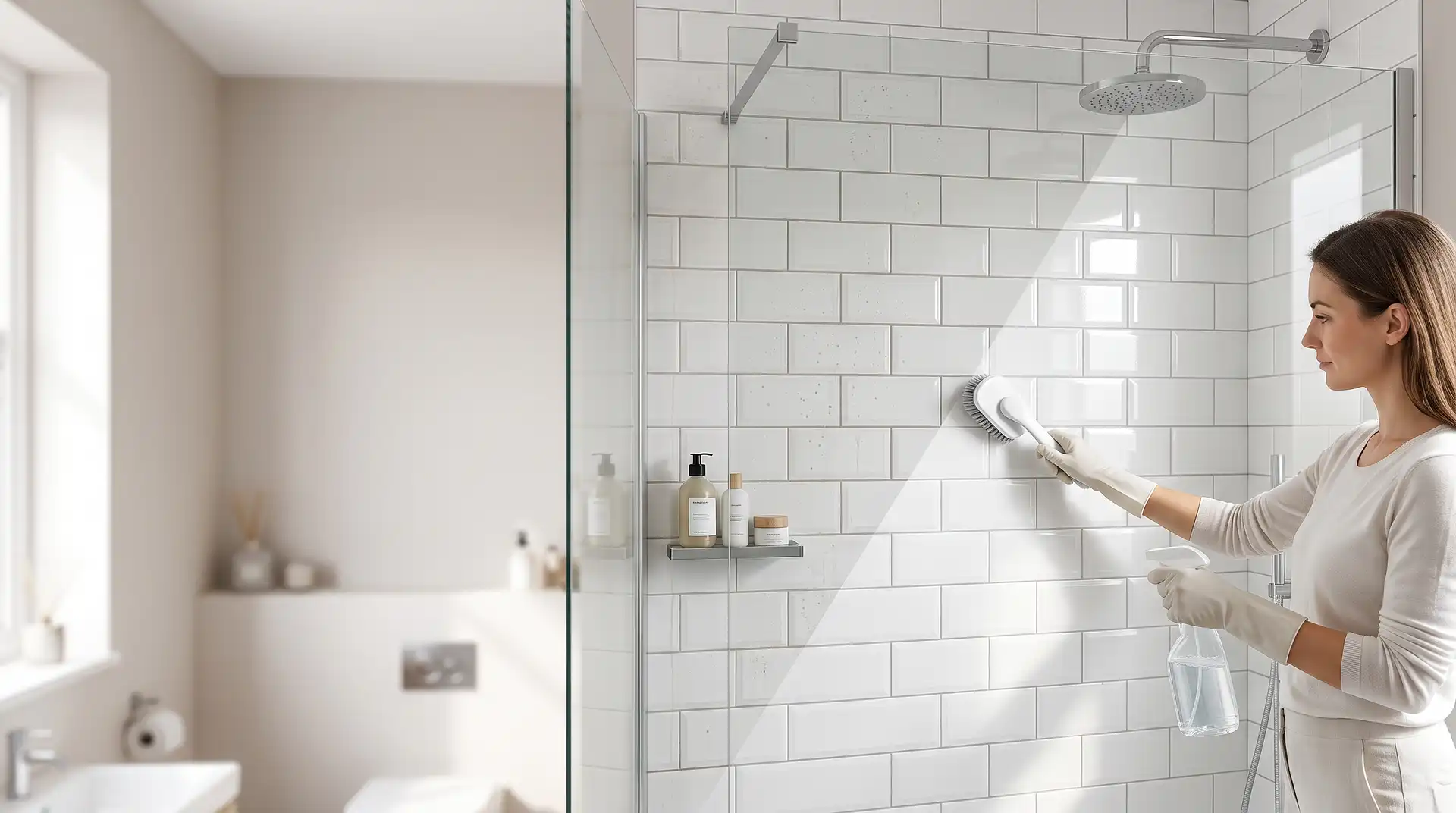
How to Clean Bathroom Tiles
12 July 2026
How to Clean Bathroom Tiles Properly (By Tile Type)
The single biggest mistake in cleaning bathroom tiles is using one method for every surface in the room. Glazed ceramic, porcelain, and natural stone all react differently to acid, abrasion, and standing water, and grout behaves nothing like the tile around it. Treating them all the same is why some tiles end up etched or dulled even after a "successful" clean, while the grout between them stays grey no matter how hard you scrub.
Know What You're Cleaning First
Glazed ceramic tile has a hard, non-porous surface and tolerates most standard bathroom cleaners well, including mild acidic products for limescale.
Porcelain tile is similarly durable and non-porous when fully glazed, but unglazed or matte porcelain is more porous and can stain if a product is left too long or not rinsed properly.
Natural stone — marble, travertine, limestone, slate — is the exception that changes everything. Stone is porous and, critically, acidic cleaners (including many standard limescale removers and even vinegar) etch and dull the surface permanently. Stone needs a pH-neutral, stone-safe cleaner specifically, never anything acidic.
Grout is porous regardless of what tile surrounds it, and this is where dirt, mould, and discolouration actually live even when the tile itself looks clean. Grout needs its own targeted treatment, not just whatever's used on the tile face.
If you don't know what your tiles are, treat them as if they might be natural stone until you've confirmed otherwise — a pH-neutral cleaner is safe on everything, whereas an acidic one can permanently damage stone with a single use.
The Method for Glazed Ceramic and Porcelain
Clear the surface and do a dry sweep or vacuum first to remove loose grit that would otherwise scratch the tile once you start scrubbing wet.
Apply a bathroom cleaner or a mild limescale remover to the tile face, leaving it to dwell for the time stated on the label — usually 5–10 minutes for standard soiling, longer for established limescale.
Scrub with a non-abrasive sponge or soft brush, working in small sections.
Rinse thoroughly with clean water — leftover product residue is one of the most common causes of tiles looking dull or streaky once dry.
Dry with a microfibre cloth rather than air-drying, which is what allows fresh limescale spots to form as water evaporates and leaves mineral deposits behind.
The Method for Grout
Grout needs mechanical scrubbing more than chemical strength, since it's the texture of grout, not just staining, that traps dirt.
Apply a grout-specific cleaner, or a paste of bicarbonate of soda and water, directly onto the grout lines and let it dwell for 10–15 minutes.
Scrub with a stiff-bristled grout brush or an old toothbrush, working along the line rather than across it, which gets into the groove more effectively.
Rinse and wipe away residue, checking whether the colour has actually lifted or just appears lighter while wet — grout often looks cleaner damp than it turns out to be once dry.
Consider a grout sealant once fully clean and dry — sealing porous grout after cleaning is what actually slows future staining, since unsealed grout absorbs dirt and moisture again almost immediately.
The Method for Natural Stone
Never use vinegar, lemon, or any acid-based cleaner on natural stone — this is the single most common cause of permanent stone damage in a bathroom, since the acid etches the surface on contact and can't be reversed by more cleaning. Use a pH-neutral stone cleaner specifically labelled safe for the stone type, applied with a soft cloth rather than an abrasive pad. Dry stone fully after cleaning, since standing water is more likely to cause staining or etching on porous stone than on glazed tile. If stone tiles are sealed, avoid anything that could strip the sealant — check the product label specifically states it's safe for sealed stone.
Common Mistakes and What to Do Instead
Mistake: using an acidic cleaner or vinegar on natural stone. This causes permanent etching that no amount of further cleaning fixes. Always confirm tile material before choosing a product, and default to pH-neutral if unsure.
Mistake: using an abrasive scouring pad on tile glaze. Repeated abrasive scrubbing dulls the glazed finish over time, even on hard-wearing ceramic. Use non-abrasive sponges and let dwell time do the work instead of scrubbing harder.
Mistake: scrubbing grout across the line instead of along it. Scrubbing perpendicular to the grout line spreads dirt sideways onto clean tile rather than lifting it out. Work along the groove itself with a narrow brush.
Mistake: not rinsing product residue off fully. Leftover cleaner dries into a dull film that looks like the tile still isn't clean, prompting more scrubbing that doesn't actually help. Rinse with clean water and dry with a cloth as a final step every time.
Mistake: ignoring grout until it's badly stained. Grout that's cleaned regularly stays manageable with mild products. Grout left for months or years often needs a stronger treatment, more dwell time, or professional steam cleaning to fully recover, rather than a five-minute wipe.
Advanced Tactics for Tiles That Stay Clean Longer
Sealing porous grout after a deep clean is the single most effective long-term step — sealed grout resists staining and mould growth in a way unsealed grout simply can't, regardless of how often it's cleaned. A squeegee run across wall tiles after every shower prevents most limescale and soap scum buildup before it has a chance to set, which is far easier than removing it later. Running the extractor fan for 15–20 minutes after showering reduces the humidity that both grout mould and limescale depend on to build up in the first place.
What It Costs in the UK
Professional tile and grout cleaning is typically priced either per room or per square metre, and UK rates for a standard family bathroom average around £35 for the room, rising to roughly £45 where tiles are delicate or natural stone needs specialist, gentler treatment. Priced by area, tile and grout cleaning generally runs £15–£25 per m², with most bathroom jobs falling in the £35–£100 range depending on room size and how neglected the grout is.
Heavier jobs — significant mould, years of untreated limescale, or natural stone requiring restoration rather than routine cleaning — cost more and may be quoted separately from a standard clean. Grout sealing, if done as an add-on after cleaning, is usually a smaller additional charge rather than a separate call-out, since it's done immediately after the grout is clean and dry.
Service | Typical UK Price (2026) | Notes |
|---|---|---|
Standard tile & grout clean, average bathroom | £35–£45 | Per-room flat rate |
Tile & grout cleaning, priced by area | £15–£25/m² | For larger tiled areas |
Full bathroom job (heavier soiling) | £45–£100 | Depends on room size, grout condition |
Grout sealing (add-on after cleaning) | Priced as an add-on | Slows future staining and mould |
These are UK market estimates and vary by tile material, condition, and provider — always confirm whether the quote includes grout sealing, and flag natural stone specifically, since it needs gentler (and sometimes pricier) treatment than ceramic or porcelain.
Staying Safe
Bathroom tile cleaning often involves acidic limescale removers, which should never be mixed with bleach or ammonia-based products — the combination can release toxic gas, and bathrooms are typically small, less ventilated spaces where that risk matters more than elsewhere in the house. Ventilate the room and rinse one product fully before applying another.
Store any tile or grout cleaning products in a locked cupboard or one with a child safety catch, out of reach, and keep them in their original labelled containers rather than a decanted spray bottle without a label — this matters as much for occasional stone-safe or grout-specific products as it does for everyday bathroom spray.
Product formulations and stone-care guidance can vary and change, so it's worth checking the manufacturer's specific safety data and stone-compatibility guidance (or asking a supplier directly) before using any new product on natural stone or in a household with children.
FAQ
Can I use vinegar to clean bathroom tiles? Only on glazed ceramic or porcelain — never on natural stone, where vinegar's acidity causes permanent etching. If you're unsure of your tile material, avoid vinegar and use a pH-neutral cleaner instead.
Why does my grout stay dirty even after scrubbing? Grout is porous, so surface wiping doesn't remove dirt trapped inside it. A dedicated grout cleaner or paste left to dwell for 10–15 minutes, combined with scrubbing along the line, lifts far more than a quick wipe.
How often should bathroom tiles and grout be professionally cleaned? Every 6–12 months for most households, depending on how often the extractor fan is used and how quickly limescale and mould tend to build up in that bathroom specifically.
Is it safe to use a steam cleaner on bathroom tiles? Generally yes on ceramic and porcelain, and it's a common professional method. Steam cleaning is typically discouraged on natural stone unless a specialist confirms it's appropriate for that specific stone type.
Should I seal grout after cleaning it? Yes, if it isn't already sealed. Sealing porous grout after a deep clean significantly slows future staining and mould growth compared to leaving it unsealed.
How much does professional tile and grout cleaning cost for a UK bathroom? A standard family bathroom typically costs £35–£45 for a flat-rate clean, or £15–£25 per m² if priced by area, rising for natural stone or heavily neglected grout.