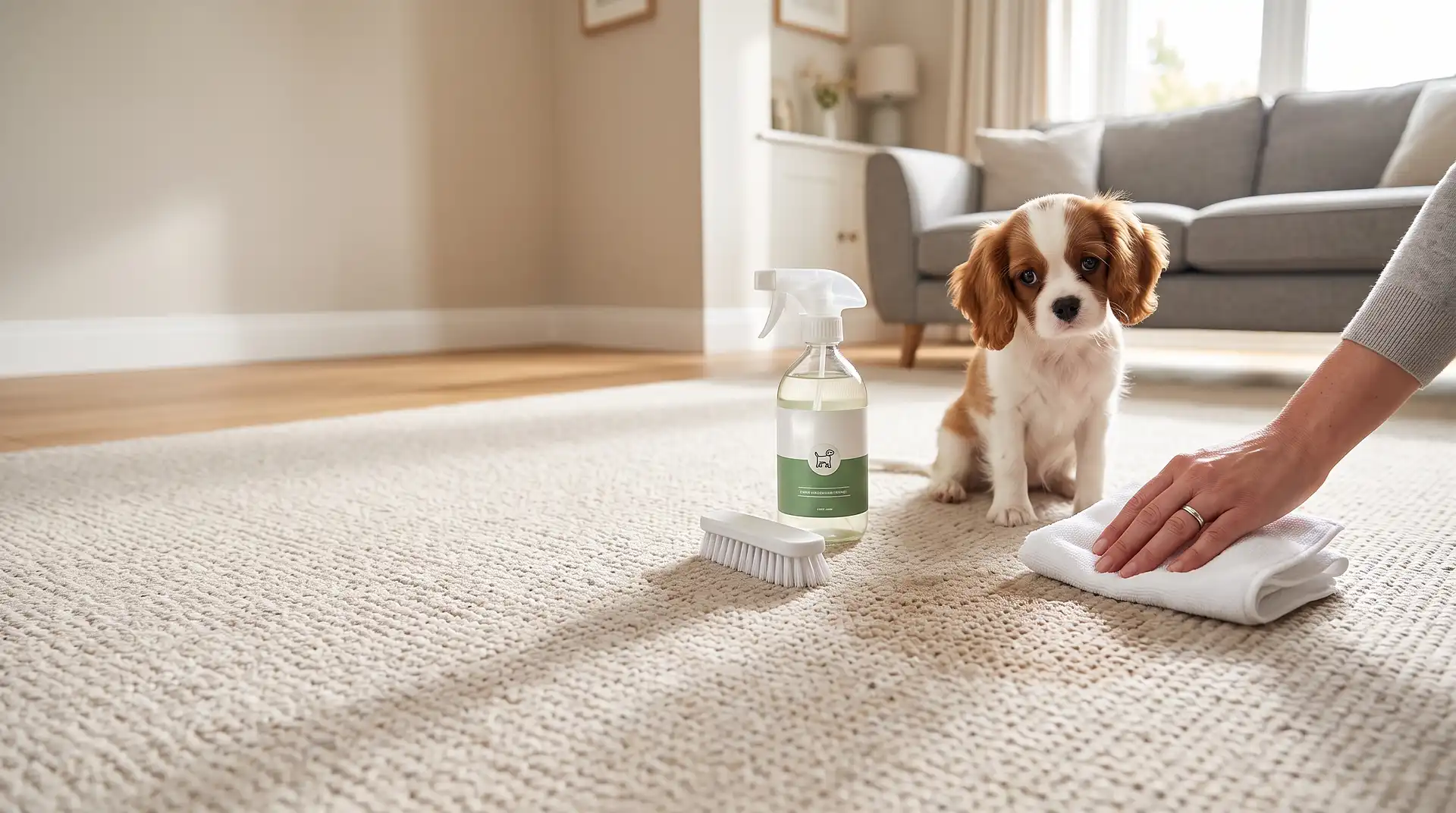
How to Clean Dog Pee From a Carpet
20 July 2026
How to Clean Dog Pee From a Carpet (So It Actually Stays Gone)
Most dog pee "cleans" fail for a specific chemical reason: urine leaves behind uric acid crystals that ordinary cleaning products don't break down. A general carpet cleaner or a spray of vinegar might remove the visible stain and smell in the moment, but the crystals stay bonded to the fibres and reactivate — releasing the odour again — every time humidity rises. This is why the same spot keeps smelling months after it looked completely clean, and why dogs often return to the exact same area to pee again even after a thorough-looking clean. The fix has to break down uric acid specifically, not just mask or lift the surface stain.
Why Enzyme Cleaners Are the Actual Fix
Standard carpet cleaners, soap, and vinegar can lift the visible stain and neutralise some odour temporarily, but none of them break down uric acid crystals. An enzymatic cleaner, specifically formulated for pet urine, contains bacteria cultures that digest the uric acid itself, removing the source of the smell rather than covering it. This is the single most important product distinction in this whole task — everything else in the process matters less than using an enzyme-based cleaner rather than a general one.
Step 1: Act Fast on Fresh Accidents
Blot (don't rub) fresh urine immediately with paper towels or a clean cloth, pressing down firmly to absorb as much liquid as possible before it soaks deeper into the carpet padding and subfloor. Rubbing spreads the urine further into the fibres and can push it deeper rather than lifting it out, which makes the eventual clean harder and increases the chance of it reaching the underlay.
Step 2: Blot With Water First
Once you've absorbed as much as possible, blot the area with a cloth dampened with cool water to dilute any remaining urine, continuing to blot rather than scrub. This step alone won't remove the smell, but it reduces the concentration before the enzyme treatment goes on.
Step 3: Apply an Enzymatic Cleaner Generously
Saturate the stained area with an enzyme cleaner, using enough that it penetrates as deep as the urine did — a light surface spray isn't enough if the urine has already soaked down into the padding. Most products specify how much to use per stain size on the label; when in doubt, err toward more rather than less, since under-treating is a common reason the smell returns.
Step 4: Let It Dwell for the Full Time Stated
This is the step most people rush, and it's critical — enzyme cleaners need real time, often 10–15 minutes minimum and sometimes several hours or overnight for set-in or larger stains, to fully break down the uric acid. Cover the area with a bowl or plastic wrap if leaving it for an extended period to slow evaporation and give the enzymes more working time.
Step 5: Blot Dry and Let It Air Dry Fully
Once the dwell time has passed, blot up the excess liquid with clean towels, pressing firmly, and let the area air dry completely, using a fan to speed this along if possible. Avoid walking on the area or covering it with a rug until it's fully dry, since trapping moisture against the carpet can encourage mould rather than help the odour issue.
Step 6: Check With a UV Light for Older or Hidden Stains
For an established or repeat problem area, a UV (blacklight) torch used in a darkened room reveals urine stains that aren't visible in normal light, including old, dried marks that continue to smell without a clear visible source. This is genuinely useful for confirming the full extent of an affected area before treating it, since urine can spread further under the carpet surface than the visible stain suggests.
Common Mistakes and What to Do Instead
Mistake: using a standard carpet cleaner or vinegar instead of an enzyme cleaner. Neither breaks down uric acid crystals, which is why the smell often returns despite the stain looking gone. Use a product specifically labelled as an enzymatic pet urine cleaner.
Mistake: using an ammonia-based cleaner. Urine itself contains ammonia compounds, and cleaning with an ammonia-based product can actually reinforce the scent marker that draws a dog back to the same spot to pee again. Avoid ammonia-based products for pet accidents specifically.
Mistake: using heat to dry the area quickly. Heat can set remaining stain and odour compounds into the fibres rather than helping, effectively baking in what the enzyme cleaner hasn't fully broken down yet. Air dry with good ventilation and a fan rather than a heater or hairdryer.
Mistake: not treating deep enough for older accidents. A surface-level enzyme application won't reach urine that's soaked into the carpet padding or subfloor. For older or repeated accidents in the same spot, a deeper soak — sometimes requiring the cleaner to sit for hours — or professional treatment is often needed.
Mistake: scrubbing instead of blotting. Scrubbing pushes urine deeper into the fibres and padding and can damage the carpet pile. Blotting lifts liquid out rather than spreading it further.
Mistake: assuming a stain that's no longer visible is fully treated. Odour can persist even after a stain is no longer visible to the eye, particularly in humid weather. A UV light check is a more reliable way to confirm an area is actually clear.
When to Call a Professional Instead
Professional treatment is worth considering for urine that's soaked through to the underlay or subfloor, repeated accidents in the same area over time (which usually means the smell has built up in layers beneath the surface), large or old stains where DIY enzyme treatment hasn't resolved the odour after a proper attempt, or situations involving multiple pets and a widespread, longstanding smell throughout a carpeted area. Professionals have access to stronger enzymatic treatments, subfloor sealants for cases where urine has reached the wood or concrete beneath the carpet, and equipment that can extract more thoroughly than a home carpet cleaner.
What It Costs in the UK
An enzymatic pet urine cleaner typically costs £8–£15 per bottle and, for isolated or fresh accidents, is usually all that's needed alongside the blotting technique above. A UV torch for checking the extent of a stain is a small additional one-off cost, typically £10–£20.
If professional treatment is needed, pricing for pet urine and odour treatment is usually higher than a standard carpet clean, since it involves stronger products and sometimes deeper extraction or subfloor treatment. According to InstantCost.co.uk's 2026 UK pricing data, a standard single-room professional carpet clean typically costs £35–£55, and pet-specific stain or odour treatment is generally priced as an add-on to this, commonly £10–£25 per stain for standard treatment, rising higher for extensive pet odour work requiring deeper extraction or subfloor sealant. A whole 3-bed house clean using hot water extraction — useful if pet accidents have occurred across multiple rooms — typically runs £140–£240 before any pet-specific add-ons.
Option | Typical UK Cost (2026) |
|---|---|
Enzymatic cleaner (per bottle) | £8–£15 |
UV torch (for detecting stains) | £10–£20 |
Professional single-room clean | £35–£55 |
Professional per-stain treatment (pet odour) | £10–£25/stain |
Professional whole-house clean (3-bed) | £140–£240 |
Subfloor sealant treatment (severe cases) | Priced separately, higher cost |
These are UK market estimates and vary by provider and severity — for a genuinely established, deep-set odour problem, professional treatment is often more cost-effective long-term than repeated DIY attempts that don't fully resolve it.
Staying Safe
Keep pets and children away from a treated area while the enzyme cleaner is dwelling and until it's fully dried, since some products recommend this specifically to let the enzymes work undisturbed and to avoid any skin contact with concentrated solution. Never mix an enzymatic cleaner with bleach or other cleaning chemicals — combining products can reduce the enzyme cleaner's effectiveness as well as create an unwanted chemical reaction. Store any cleaning product in its original labelled container, out of reach of children and pets.
Product-specific safety data and dwell-time guidance vary by manufacturer, so it's worth checking the label for any specific instructions, particularly around pet and child access to a treated area while it's still damp.
FAQ
Why does my carpet still smell like dog pee after I cleaned it? Standard cleaners don't break down uric acid crystals, which is what actually causes the lingering smell. An enzymatic cleaner specifically formulated for pet urine is needed to fully resolve it, not just a general carpet cleaner or vinegar.
Can I use vinegar to clean dog urine from carpet? Vinegar can help neutralise some odour temporarily, but it doesn't break down uric acid crystals the way an enzyme cleaner does, so the smell often returns, particularly in humid conditions.
How long should I leave enzyme cleaner on a urine stain? At least 10–15 minutes for fresh, small stains, but often several hours or overnight for older or larger stains, so the enzymes have enough time to fully break down the uric acid.
Why does my dog keep peeing in the same spot even after cleaning? If an ammonia-based cleaner was used, it can reinforce the scent marker that draws dogs back to the same area. Using an enzymatic cleaner specifically, rather than ammonia-based products, helps prevent this.
Should I use a UV light to find old pet stains? Yes, it's a genuinely useful step for confirming the full extent of urine staining, since it can reveal old or hidden marks not visible in normal light, particularly useful before treating a longstanding odour problem.
How much does professional pet urine carpet cleaning cost in the UK? Standard single-room cleaning starts around £35–£55, with pet-specific stain or odour treatment typically added as £10–£25 per stain, rising for extensive or deep-set odour requiring subfloor treatment.