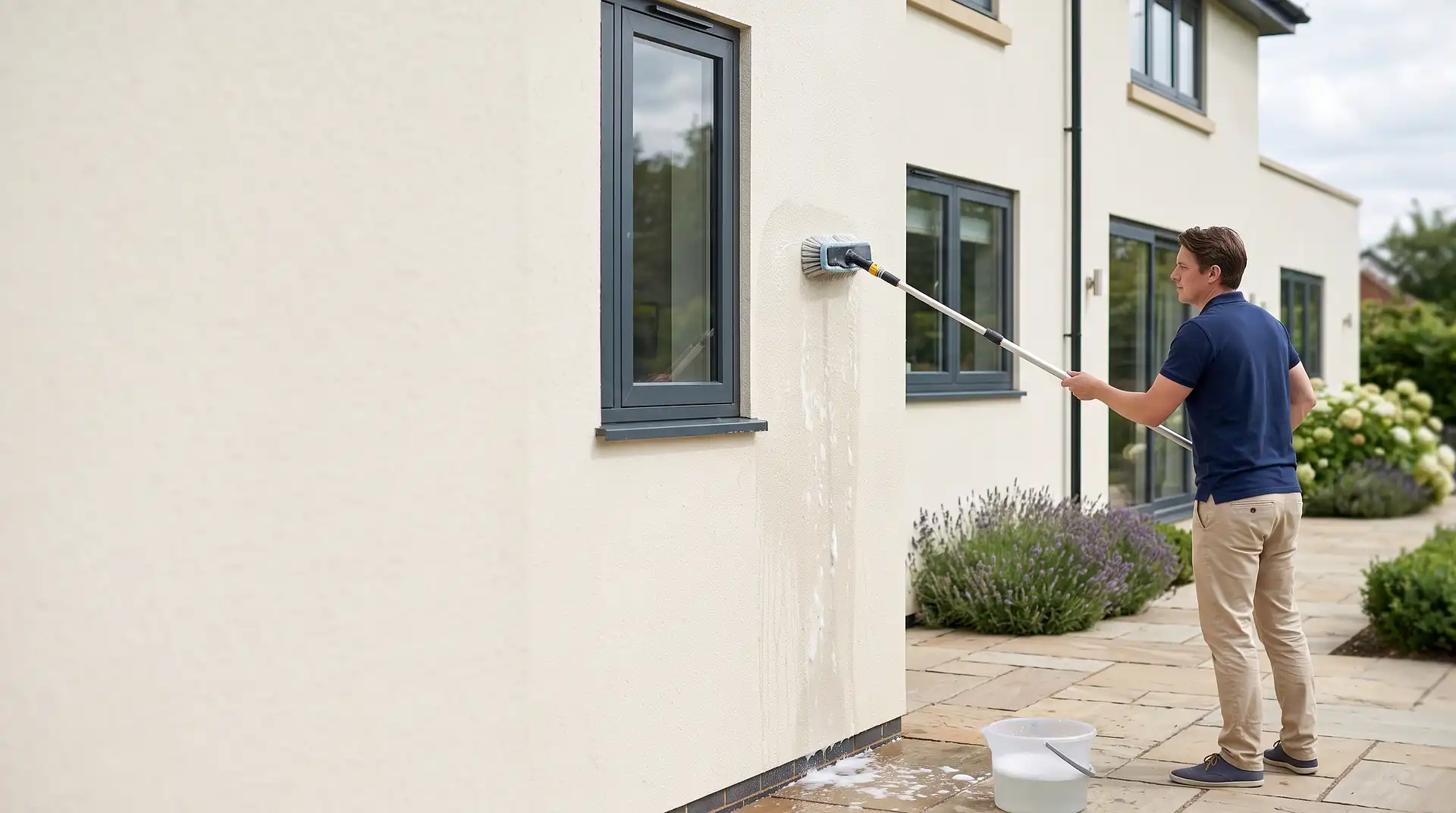
How to Clean Exterior Paint
30 August 2026
How to Clean Exterior Paint
Cleaning exterior paint removes contamination without damaging the paint film beneath. The challenge is that exterior paint is both the surface being cleaned and the layer being protected, which means the cleaning method needs to be effective enough to lift dirt and biological growth while gentle enough not to strip, chalk, or dull the finish.
Two variables determine the correct approach: what material is painted (masonry, timber, render, or composite) and what is on the surface (general grime, green algae, black mould, or weathered chalking). Matching both produces a clean result. Ignoring either risks visible damage to the paint finish.
How to Tell If the Paint Is Sound Enough to Clean
Before applying any product or water to exterior painted surfaces, run a dry cloth across a small test area and then press sticky tape against the surface and pull it away. Paint that comes away on the tape, or that powders heavily on the cloth, is chalking or failing. Cleaning failing paint accelerates its deterioration and exposes the substrate to water ingress.
If the paint is chalking or peeling significantly, cleaning is the wrong action. The surface needs rubbing down to remove loose material and repainting, not cleaning. Washing a surface where the paint is already failing forces water behind the remaining film and increases the area of failure.
Sound paint that holds firmly to the tape and produces minimal powder on the cloth is ready to clean.
Exterior Masonry Paint
Masonry paint is the most commonly applied exterior finish on UK rendered and brick properties and is formulated specifically to tolerate moisture and biological growth better than interior paints. Modern masonry paints contain fungicidal additives that slow algae and mould growth, though these diminish with weathering and UV exposure over five to seven years.
For general grime and light biological growth: A garden hose with a medium spray setting removes surface dust and light contamination on sound masonry paint without any cleaning product. Work from the top downward.
For established algae and green growth: A proprietary exterior masonry cleaner or a sodium hypochlorite-based biocide applied at the label dilution, left to dwell for 15 to 20 minutes, then rinsed. The chemistry kills the algae at the root rather than washing off the visible surface, which means the green colour may not disappear immediately but fades over the following one to two weeks as the dead growth weathers off.
Pressure washing masonry paint: Low pressure at 80 bar or below with a wide fan nozzle is generally safe on sound masonry paint. Higher pressure or a narrow jet strips paint from pointing, edges, and any area where adhesion is less than perfect. The pressure washer should be used for rinsing rather than as the primary cleaning tool.
Painted Timber and Cladding
Painted timber requires more caution than masonry because the wood substrate absorbs moisture readily, and a surface that has been pressure-washed can take days to dry fully. Timber that is kept wet for extended periods develops the conditions for wet rot regardless of how good the paint surface looks.
For painted timber cladding, fascias, and soffits, a soft cloth or soft brush with warm soapy water removes general grime effectively and safely. Work with the grain of the timber rather than across it. Rinse with a garden hose rather than a pressure washer.
For biological growth on painted timber, a purpose-made timber wash or diluted sodium hypochlorite solution applied carefully and rinsed off is appropriate. Avoid soaking the timber apply to a cloth rather than spraying directly onto the surface wherever possible, and rinse promptly.
Do not pressure wash painted timber at domestic pressure washer settings. The force strips paint from soft grain lines and edges, and the water driven into the wood grain typically takes longer to dry than the surrounding surface, creating a pattern of swelling and cracking that damages both the wood and the paint adhesion over subsequent seasons.
Painted Render
Painted render (render that has been painted over with masonry paint rather than through-coloured monocouche) is cleaned in the same way as plain masonry paint but with one additional check. Render that has been painted several times accumulates paint layers that can crack and peel from the render face when they reach a critical thickness. Any area of bubbling or lifting paint found during the pre-clean inspection needs addressing before the surface is wetted, as water drawn behind the lifting film accelerates further delamination.
For painted render in sound condition, the masonry paint cleaning method above applies directly. Soft washing with a biocide solution is preferable to pressure washing for any rendered surface regardless of whether it is painted.
Painted Fences and Garden Structures
Painted timber fences, gates, garden walls, and sheds require a similar approach to timber cladding but typically have more surface contamination from ground-level moisture, soil splash, and shade from adjacent planting.
A stiff brush with warm soapy water removes surface mud, moss, and lichen from painted fence panels. For heavier biological growth, a path and patio cleaner or diluted bleach solution applied with a brush, left for 10 minutes, and rinsed with a hose works effectively. Fence panels that are in good enough condition to clean rather than repaint typically benefit from a biocide treatment followed by a fresh coat of fence paint at the end of the cleaning season, which combines two seasonal maintenance tasks into one visit.
Cleaning Paint Drips From Exterior Surfaces
Accidental paint drips on brick, concrete, or paving from exterior painting jobs are a separate problem from general surface cleaning. Fresh paint drips can often be removed with a damp cloth before the paint skins over. Dried paint drips on masonry require a paint remover or a sharp scraper held at a low angle to the surface. Chemical paint removers formulated for masonry are available from decorating suppliers but need time to soften the dried paint before mechanical removal.
On uPVC window frames and guttering where dried paint drips are common after exterior painting, a small amount of white spirit on a cloth removes most latex and acrylic paint drips without damaging the uPVC surface. Test on a small area first.
Products to Avoid on Exterior Paint
Neat bleach: Full-strength bleach applied directly to exterior paint strips colour, dulls the finish, and if it runs down the wall, damages any vegetation below. Always dilute and rinse promptly.
Solvent-based degreasers: Solvents dissolve the binder in water-based masonry and timber paints, producing dull patches and surface softening. Use water-based exterior cleaners only on painted surfaces.
High-pressure washing at close range: Narrow jet nozzles at close range blast paint from edges, joints, and soft-grain timber lines. Use a wide fan nozzle at 80 bar or below for rinsing only.
Abrasive pads and wire brushes: These scratch painted surfaces and create paths for water ingress. Soft brushes only for scrubbing.
When to Call a Professional
Two-storey and above elevations, or any surface requiring access equipment beyond a comfortable step ladder, are the practical boundary for most DIY exterior paint cleaning. A scaffold tower hire runs £80 to £150 per day, and the professional option often makes better financial sense for a full elevation clean than the DIY cost of access equipment plus materials.
Professional exterior cleaning also becomes the right choice when the surface has contamination that simple biocide and rinsing cannot address: heavy oil staining from vehicle parking below a painted wall, graffiti on exterior paint, or paint that has accumulated decades of grime in a sheltered corner that soft washing alone will not penetrate.
According to InstantCost 2026 UK exterior cleaning pricing data, exterior wall cleaning runs £200 to £600 per elevation depending on size and access. Render soft washing specifically runs £150 to £400 per elevation. Window cleaning for a standard three-bedroom semi runs £40 to £80. Bundling multiple exterior surfaces into one visit typically saves 10 to 20% against separate bookings. For a full 2026 cost breakdown by surface and region, the InstantCost exterior cleaning cost guide has a calculator you can filter before approaching any contractor.
For the full exterior cleaning sequence that puts painted surfaces alongside render, bricks, gutters, and paths in the correct order, our related guide on how to clean render on a house covers the soft wash method in detail and explains why the application and rinse sequence matters as much as the product choice.
Common Mistakes and What to Do Instead
Mistake: cleaning failing or chalking paint instead of repainting. Washing a surface where the paint is already detaching from the substrate forces water behind the remaining film and increases the failure area. Do the tape test first.
Mistake: using neat bleach directly on exterior paint. Neat bleach strips colour and dulls painted finishes. Always dilute to the label recommendation and rinse promptly.
Mistake: pressure washing painted timber. Timber absorbs water under pressure, swells, and the paint cracks at swelling lines when it dries. Use a hose and brush on painted timber, not a pressure washer.
Mistake: using solvent-based cleaners on water-based exterior paint. Solvent dissolves the paint binder and softens the film, producing dull patches that cannot be reversed without repainting.
Mistake: not rinsing after biocide application. Biocide residue left on painted surfaces can affect the adhesion of any future paint coat applied over the surface and may leave a visible residue line at the runoff point.
Mistake: scrubbing with abrasive pads. Abrasive cleaning on any painted surface scratches the film, dulls the finish, and creates micro-channels that water enters and accelerates paint failure.
What It Costs in the UK
Item or service | Typical UK cost (2026) |
|---|---|
Exterior masonry cleaner or biocide | £10 to £30 per litre concentrate |
Sodium hypochlorite solution | £8 to £20 per litre |
Soft brush set for exterior use | £8 to £20 |
Scaffold tower hire (per day) | £80 to £150 |
Professional exterior wall clean (per elevation) | £200 to £600 |
Render soft wash (per elevation) | £150 to £400 |
Window clean, 3-bed semi | £40 to £80 |
Bundled exterior services saving | 10 to 20% |
Figures based on InstantCost 2026 UK exterior cleaning pricing data and vary by region, access difficulty, and surface condition.
Staying Safe
Biocide and bleach-based exterior cleaners are harmful to aquatic life. Runoff from painted wall cleaning must not enter surface water drains, which discharge directly to watercourses. Direct rinse water to soil away from ponds, or to a foul drain where the product label permits it.
Protect plants below the working area before applying any chemical cleaner. Wet the planting thoroughly before work begins, cover it during product application, and rinse the soil area thoroughly after the wall rinse is complete. Most established plants recover from diluted biocide contact if rinsed quickly, but direct application at cleaning concentration causes bleaching and death of most garden plants.
Working at height on ladders while managing a hose and brush is an overloaded position. Use a scaffold tower for any sustained exterior cleaning above comfortable arm reach from ground level. Three points of contact on a ladder is not achievable when one hand is holding a brush and the other a hose.
Keep children and pets away from the cleaned wall until the surface and surrounding ground are fully dry. Biocide residue on wet paths and borders is an ingestion risk for animals.
Exterior cleaning products containing sodium hypochlorite above 1% active chlorine are regulated biocidal products under the GB Biocidal Products Regulation. Products must be authorised for the intended use and applied according to label instructions. Commercial application for payment requires appropriate insurance and risk assessment. Homeowners applying authorised products to their own property are not subject to commercial requirements. Verify current product authorisations with the HSE.
FAQ
What is the best way to clean exterior painted walls? For general grime, a medium garden hose rinse removes surface dust from sound masonry paint. For biological growth, a diluted exterior biocide or masonry cleaner applied with a soft brush, left for 15 to 20 minutes, then rinsed removes algae and mould effectively. Avoid pressure washing except at low settings for rinsing, and never use solvents on water-based exterior paint.
Can you pressure wash painted exterior walls? At low pressure (80 bar or below) with a wide fan nozzle, pressure washing is safe on sound masonry paint for rinsing. It should not be used on painted timber, on any surface with lifting or chalking paint, or with a narrow jet at close range, which strips paint from edges and joints.
How do you get green algae off exterior paint? Apply a diluted sodium hypochlorite biocide or proprietary exterior masonry cleaner to the painted surface, leave for 15 to 20 minutes, then rinse. The biocide kills the algae at the root. The green colour fades over one to two weeks as the dead growth weathers off rather than disappearing immediately after treatment.
Can you clean painted timber cladding with a pressure washer? No. Pressure washers drive water into timber grain under pressure, causing swelling that cracks paint adhesion as the wood dries. Use a soft brush with warm soapy water and a garden hose rinse for painted timber surfaces.
How often should exterior painted walls be cleaned? Every two to three years for most UK properties, or more frequently on north-facing elevations in wetter regions where biological growth establishes faster. Applying a biocide wash between full cleans, every one to two years, slows regrowth significantly on surfaces prone to algae.
How much does professional exterior paint cleaning cost in the UK? Professional exterior wall cleaning runs £200 to £600 per elevation in 2026. Render soft washing costs £150 to £400 per elevation. Window cleaning for a standard three-bedroom semi runs £40 to £80. Bundling multiple surfaces saves 10 to 20%.