How to Clean Exterior Plastic Trim
9 September 2026
How to Clean Exterior Plastic Trim
Exterior plastic trim, the UPVC fascias, soffits and window trim found on most UK homes, is cleaned with warm water, a mild detergent, and a soft brush or sponge, working section by section and rinsing thoroughly afterwards. This straightforward approach handles general dirt and dust, while green algae and black streaking, the two most common problems on white UPVC, need slightly different treatment to actually clear rather than just being smeared around.
UPVC is a relatively low-maintenance material, but it isn't maintenance-free. Left untreated for several years, algae and mould take hold in the material's slightly textured surface, and by that point a simple wash often isn't enough to fully restore the original white finish.
Understanding What's Actually Growing on the Trim
Green discolouration, usually most visible on north-facing or shaded sections, is algae, which thrives in damp conditions with limited direct sunlight. Black streaking, often running downward from joints or fixing points, is typically a mix of mould and airborne pollution residue that collects where water regularly runs down the surface. Identifying which problem you're dealing with matters because algae responds well to a diluted bleach or specialist UPVC cleaner, while black streaking sometimes needs more mechanical scrubbing alongside chemical treatment.
Step 1: Remove Loose Dirt and Debris
Before applying any cleaning solution, brush away loose dirt, cobwebs, and debris with a dry soft-bristled brush. This prevents grit from being dragged across the surface once it's wet, which can create fine scratches in the UPVC finish over repeated cleaning sessions.
Step 2: Wash with Warm Water and Mild Detergent
Mix warm water with a small amount of washing-up liquid in a bucket, enough to create a light suds without being overly concentrated.
Apply the solution with a soft sponge or brush, working in sections along the length of the fascia or soffit rather than trying to cover the whole run at once.
Rinse thoroughly with clean water before the detergent has a chance to dry on the surface, using a hose on a gentle setting or a bucket of clean water and a fresh sponge.
Dry with a soft cloth if you want a streak-free finish, though air drying works perfectly well for routine cleaning.
Step 3: Treat Algae and Green Discolouration
For established green algae, a solution of one part household bleach to four parts water, applied with a soft brush and left for five to ten minutes before rinsing thoroughly, is effective on UPVC specifically, which tolerates diluted bleach far better than many painted surfaces. Always rinse completely afterwards and avoid letting bleach solution run onto nearby plants or grass.
Specialist UPVC cleaning products, widely available in UK hardware stores, are formulated specifically for this material and can be a gentler alternative to bleach if you're concerned about nearby planting or prefer not to use bleach-based products.
Step 4: Treat Black Streaking
Black streaks often need more mechanical effort than algae, since the residue can bind more stubbornly to the surface texture. A soft-bristled brush with a slightly more concentrated detergent solution, worked in a circular motion along the streak, usually lifts it with patience. For streaks that don't respond to detergent alone, the same diluted bleach solution used for algae can help, applied and left briefly before scrubbing gently and rinsing.
A Note on Restoring Heavily Discoloured or Chalky UPVC
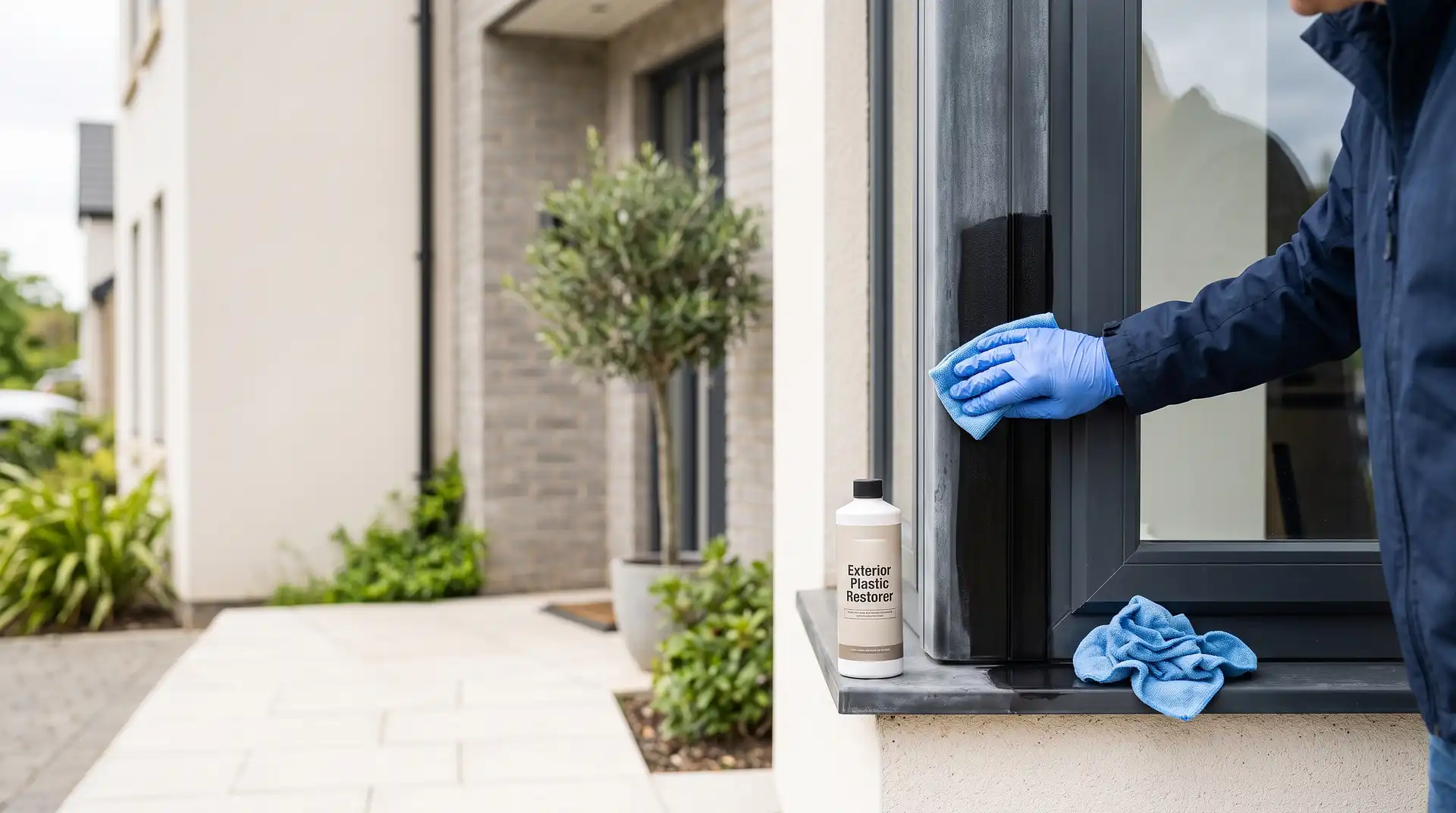
UPVC that's been exposed to UV light for many years without cleaning can develop a chalky, faded appearance that goes beyond surface dirt, caused by the plastic's outer layer breaking down. Standard cleaning won't reverse this. A specialist UPVC restoration product, applied after a thorough clean, can improve the appearance significantly, though very old or severely degraded trim sometimes needs replacement rather than restoration to fully recover its original finish.
When to Call a Professional
For trim at height that needs ladder access, particularly above a single storey or over an area without safe ground access, a professional exterior cleaner or window cleaner, many of whom already clean frames and soffits as part of a standard window round, can handle this safely with proper access equipment. This is also worth considering if algae or staining is extensive across a whole property, since a professional soft-wash service can treat the full exterior efficiently in one visit.
Use InstantCost's house exterior cleaning cost calculator to see what professional exterior cleaning would cost for your property. If you're tackling wider exterior cleaning at the same time, how to clean render on a house covers the adjoining wall surfaces that often need similar treatment.
Common Mistakes and What to Do Instead
Mistake: Using a pressure washer directly on UPVC trim. High pressure can force water behind fascias and soffits, into joints, or under fixings, leading to damp problems that aren't obvious until much later. Stick to a hose on a gentle setting or hand washing for this specific material.
Mistake: Using abrasive scourers or scrubbing pads. These can create fine scratches in the UPVC surface that trap dirt more easily over time, making future cleaning harder rather than easier. Use only soft brushes or sponges.
Mistake: Applying bleach solution without rinsing thoroughly. Bleach left to dry on the surface can affect the UPVC's finish over repeated applications and risks damaging nearby plants if it drips down. Always rinse completely with clean water after treatment.
Mistake: Cleaning only the visible front section and skipping soffits underneath. Soffits, the horizontal panels under the roof overhang, often show the worst algae growth because they receive less direct sunlight and rain washing, but get skipped since they're less visible from ground level looking straight ahead.
Mistake: Ignoring black streaking because it looks stubborn. Black streaks do respond to treatment, they just need more patience and mechanical effort than general dirt. Don't assume staining is permanent before properly attempting the detergent or diluted bleach method.
Mistake: Cleaning in direct, hot sunlight. Cleaning solution and rinse water can dry too quickly in strong sun, leaving streaks and reducing how effectively the detergent works. Clean on an overcast day or in shade where possible.
What It Costs in the UK
Cleaning UPVC trim yourself costs very little, but a dedicated line item for this specific service isn't broken out separately by most exterior cleaning companies, so figures below combine typical window cleaning add-on rates with general exterior cleaning day rates for larger jobs.
Item or Service | Typical UK Cost (2026) |
|---|---|
Washing-up liquid | £1–£2 |
Household bleach | £1–£3 |
Specialist UPVC cleaner | £6–£15 |
UPVC restoration product | £10–£20 |
Window cleaner (includes frames/soffits as standard) | £40–£80 per visit |
Dedicated fascia and soffit clean (whole property) | £80–£200 |
Full exterior soft wash (walls, trim, render) | £200–£600 |
Figures based on InstantCost.co.uk's 2026 UK house exterior cleaning pricing data and vary by region, property size, and access.
Staying Safe
Never use a pressure washer at height without proper training and equipment, since combining working at height with powerful water jets significantly increases fall and injury risk. If trim is above single-storey reach, use a professional with proper access equipment rather than an unstable ladder setup.
Wear gloves and eye protection when using bleach solution, and keep it away from skin and eyes throughout application and rinsing. Ventilate the area if working in an enclosed side return or similarly confined outdoor space, and never mix bleach with any other cleaning chemical, since combining certain products can release harmful fumes.
Keep children and pets away from the immediate work area while cleaning solution is being applied and until the area has been fully rinsed and any excess liquid has drained away or dried.
General UK household chemical safety guidance recommends never mixing bleach with other cleaning products, and using appropriate protective equipment when handling diluted bleach solutions outdoors. Always follow the specific product's label instructions.
Frequently Asked Questions
How often should I clean UPVC fascias and soffits? Once or twice a year is generally sufficient for most UK properties, though homes in shaded or damp locations prone to algae may benefit from a check every six months to catch green discolouration before it becomes established.
Can I use a pressure washer on UPVC trim? It's best avoided. High pressure can force water behind fascias and soffits and into joints, leading to damp issues that aren't immediately visible. A hose on a gentle setting or hand washing is safer for this material.
Why does my UPVC trim keep going green? Green discolouration is algae, which thrives in damp, shaded conditions, particularly on north-facing elevations or areas that don't get much direct sun or rain washing. Regular cleaning and treatment with a diluted bleach solution or specialist cleaner helps keep it under control.
Will bleach damage my UPVC trim? UPVC generally tolerates a properly diluted bleach solution well, unlike many painted surfaces, but always rinse thoroughly afterwards and avoid using it at full strength or leaving it to dry on the surface.
Can discoloured UPVC trim be restored to white, or does it need replacing? Most discolouration from dirt, algae, and staining responds well to proper cleaning and treatment. Severely chalky or UV-degraded trim that's gone beyond surface dirt may only partially improve with restoration products and could need replacing for a fully refreshed appearance.
Do window cleaners clean fascias and soffits as part of a normal visit? Many UK window cleaners include frames, sills and soffits as standard as part of a regular window cleaning round, though it's worth confirming this specifically when booking, since coverage varies between individual cleaners and companies.