How to Clean Exterior Porcelain Tiles
14 September 2026
How to Clean Exterior Porcelain Tiles
Exterior porcelain tiles are cleaned with warm water and a mild detergent for general dirt, and a specific porcelain-safe algae treatment for green staining, using a soft brush rather than an abrasive scourer to protect the surface's slip-resistant texture. Porcelain's low porosity is genuinely one of its biggest advantages outdoors, since it resists staining and doesn't absorb dirt the way natural stone or concrete can, but this same quality means dirt and algae tend to sit on the surface rather than soaking in, which changes the most effective cleaning approach slightly.
The textured, slip-resistant finish many exterior porcelain tiles have is also worth understanding before cleaning, since this texture can hold onto fine dirt and algae spores more than a completely smooth surface would, meaning regular light cleaning genuinely prevents a bigger job later more effectively than with some other paving materials.
Step 1: Sweep and Remove Loose Debris
Before applying any cleaning solution, sweep the area thoroughly to remove loose dirt, leaves, and debris. This prevents grit being dragged across the surface once wet, which can cause fine scratching over repeated cleaning sessions, even on a hard-wearing material like porcelain.
Step 2: Wash with Warm Water and Mild Detergent
Mix warm water with a small amount of pH-neutral detergent, avoiding anything strongly acidic or alkaline, since certain harsh chemicals can affect the grout between tiles even if the porcelain itself is more resistant.
Apply with a soft-bristled brush, working in manageable sections and paying particular attention to the textured surface where fine dirt tends to settle.
Rinse thoroughly with clean water, either using a hose or a bucket and clean cloth, before the detergent has a chance to dry and leave residue.
Step 3: Treat Green Algae and Staining
Algae growth, most common in shaded or consistently damp areas of a patio, needs a specific porcelain-safe algae treatment rather than assuming any general outdoor cleaner will do. Apply according to the product's instructions, typically leaving it for a stated contact time before rinsing, and always check the product confirms suitability for porcelain specifically rather than natural stone alone, since formulations do vary between the two.
Step 4: Clean the Grout Joints Separately
Grout between porcelain tiles is more porous than the tiles themselves and tends to show dirt and algae more readily. A stiff brush worked specifically along the joints, combined with the same mild detergent solution, usually lifts general grime. For more established algae or dark staining in grout lines specifically, a dedicated grout cleaner suited to exterior use can be more effective than relying on the general tile cleaning solution alone.
A Note on Pressure Washing Porcelain
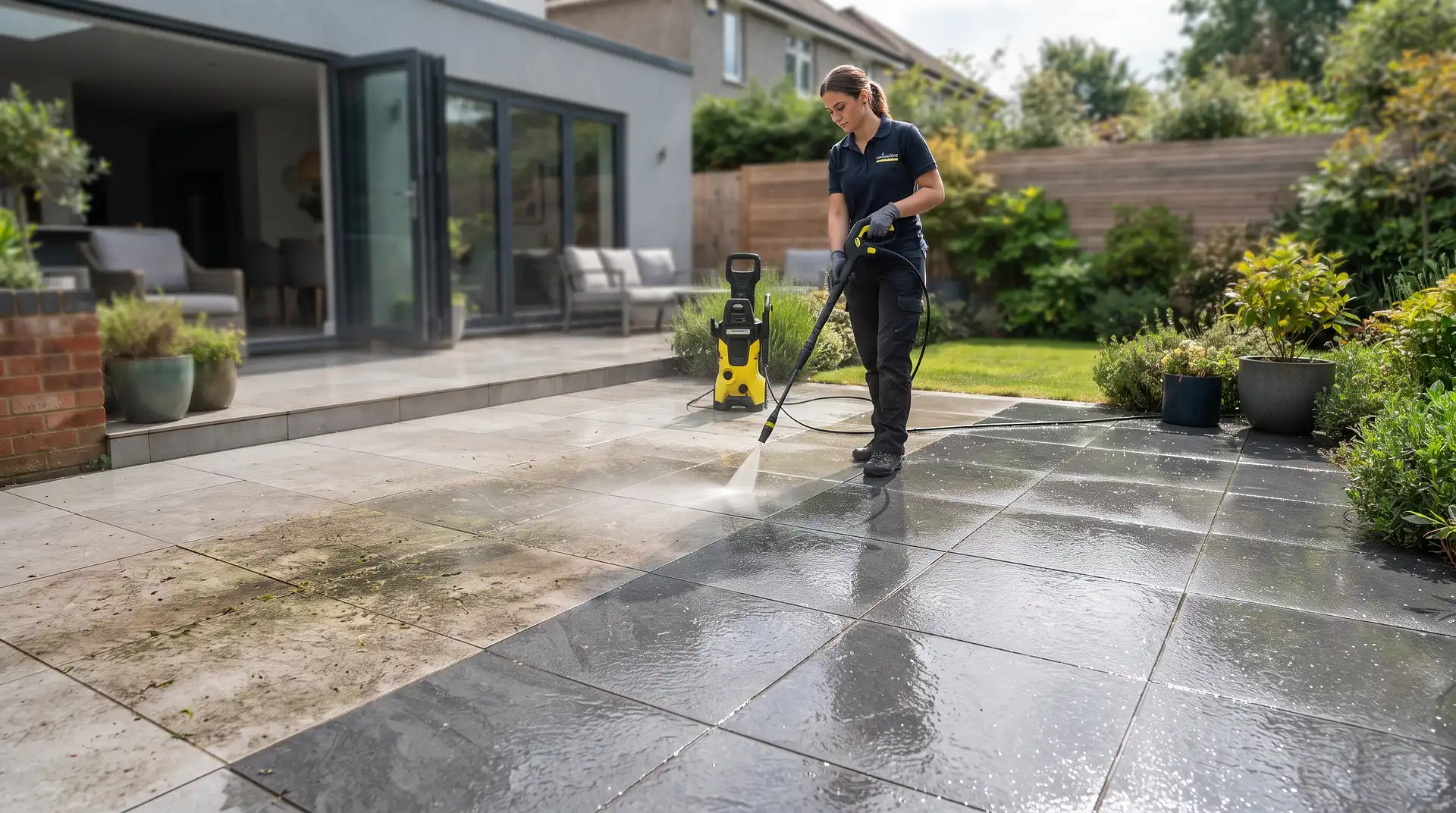
Porcelain tiles generally tolerate pressure washing better than many natural stone options, given their density and low porosity, but it's still worth using a moderate rather than maximum pressure setting and keeping the nozzle a reasonable distance from the surface. Excessive pressure held too close to grout joints specifically can erode grout over time even when the tiles themselves are unaffected.
A Note on Efflorescence
Some porcelain installations develop a white, powdery deposit called efflorescence, caused by mineral salts within the bedding or jointing materials beneath the tiles rising to the surface, particularly on newer installations. This is generally treated with a specific efflorescence remover rather than standard detergent, and it often reduces naturally over the first year or two after installation as the underlying materials fully cure and dry out.
When to Call a Professional
For a large patio area, particularly one with significant algae coverage or where pressure washing needs careful management around grout joints, a professional exterior cleaning company can treat the whole area efficiently and correctly judge pressure settings suited specifically to porcelain. This is also worth considering if efflorescence or staining seems unusually persistent despite proper cleaning attempts, since a professional can help distinguish a straightforward cleaning issue from an underlying installation problem.
Use InstantCost's house exterior cleaning cost calculator to see what professional patio cleaning would cost for your property. If moss or algae is also a problem elsewhere outside, how to get rid of moss on a driveway covers treating that on a different surface type.
Common Mistakes and What to Do Instead
Mistake: Using an abrasive scourer or wire brush. Even though porcelain is hard-wearing, an abrasive tool can dull the surface finish over repeated use, particularly on a textured, slip-resistant tile. Use a soft-bristled brush instead.
Mistake: Using a general natural stone cleaner without checking porcelain suitability. Some products formulated for limestone or sandstone aren't ideal for porcelain, and vice versa. Always check the specific product confirms it's suitable for porcelain before applying it broadly.
Mistake: Pressure washing directly and closely into grout joints. This can erode grout over time even when the surrounding tiles are unaffected by the same pressure. Keep the pressure washer nozzle at a reasonable distance and angle away from joints specifically.
Mistake: Ignoring grout as a separate cleaning task. Grout is more porous than porcelain tiles and shows dirt and algae differently, meaning it needs its own attention rather than assuming general tile cleaning covers it adequately.
Mistake: Treating efflorescence with standard detergent. General cleaning products don't address the mineral deposit causing efflorescence effectively. Use a specific efflorescence remover, or allow time for it to reduce naturally on a newer installation.
Mistake: Not cleaning regularly enough to prevent buildup. Porcelain's textured surface can hold onto fine dirt and algae spores over time, and infrequent cleaning allows this to become more established and harder to remove than regular light cleaning would.
What It Costs in the UK
Item or Service | Typical UK Cost (2026) |
|---|---|
pH-neutral outdoor tile detergent | £5–£12 |
Porcelain-safe algae treatment | £10–£20 |
Grout cleaner (exterior use) | £8–£15 |
Efflorescence remover | £10–£18 |
Professional patio jet wash, 20–30m² | £70–£180 |
Full exterior soft wash (patio, walls, driveway) | £200–£600 |
Figures based on InstantCost.co.uk's 2026 UK house exterior cleaning pricing data and vary by region, patio size, and level of soiling.
Staying Safe
Wear gloves when using any chemical treatment, including pH-neutral detergents and algae or efflorescence removers, and keep pets and children off the treated area until it's fully rinsed and dry. Store cleaning chemicals securely between uses, out of reach of children.
Be cautious of wet porcelain underfoot during and immediately after cleaning, since even slip-resistant textured tiles can feel slippery when covered in detergent solution or algae residue being worked loose. Allow the surface to dry fully, or work in appropriate non-slip footwear, particularly on a sloped or stepped patio area.
General UK outdoor chemical safety guidance recommends following product label instructions closely, avoiding contact with skin and eyes, and keeping treated areas clear of children and pets until fully rinsed and dry.
Frequently Asked Questions
Can I pressure wash exterior porcelain tiles? Generally yes, porcelain tolerates pressure washing better than many natural stone options due to its density, but use a moderate setting and keep the nozzle away from grout joints specifically to avoid eroding them over time.
Why does my porcelain patio keep getting green algae? Algae typically establishes in shaded, consistently damp areas, and porcelain's textured surface can hold onto spores more than a completely smooth finish. Regular cleaning and a porcelain-safe algae treatment applied proactively helps keep it under control.
What is the white powder appearing on my new porcelain patio? This is likely efflorescence, a mineral deposit rising from the bedding or jointing materials beneath the tiles, common on newer installations. It's treated with a specific efflorescence remover and often reduces naturally over the first year or two.
Is porcelain easier to clean than natural stone paving? Generally yes, due to its low porosity, porcelain resists staining and doesn't absorb dirt the way more porous natural stone can, though its textured surface still needs proper cleaning to prevent fine dirt and algae building up over time.
Can I use bleach on exterior porcelain tiles? Diluted bleach can be used for algae treatment on some porcelain products, but always check the manufacturer's specific guidance first, since some finishes or nearby grout types may not tolerate bleach as well as the porcelain tile itself.
How often should I clean an exterior porcelain patio? Light regular cleaning every few months, with a more thorough clean once or twice a year, generally keeps a porcelain patio looking good and prevents algae or grime becoming deeply established in the textured surface or grout joints.