How to Clean Exterior Walls Before Painting
21 July 2026
How to Clean Exterior Walls Before Painting (So the Paint Actually Sticks)
Paint applied over dirt, algae, or a chalky surface doesn't fail immediately — it fails months later, peeling or flaking away because it was never actually bonded to the wall itself, just to the layer of grime sitting on top of it. Cleaning exterior walls before painting isn't a cosmetic step, it's an adhesion step, and skipping it or rushing it is one of the most common reasons an otherwise well-applied exterior paint job doesn't last as long as it should.
Why This Step Matters More Than People Expect
Paint needs to bond directly to the surface beneath it, and anything between the wall and the paint — dust, algae, lichen, chalky degraded render, old flaking paint — becomes the actual surface the new paint is adhering to instead. If that layer isn't properly removed, the new paint is only as securely attached as whatever it's sitting on top of, which is why walls painted over unaddressed algae or a chalky surface often show peeling in patches within a year or two, well before a properly prepped wall would.
Method by Wall Material
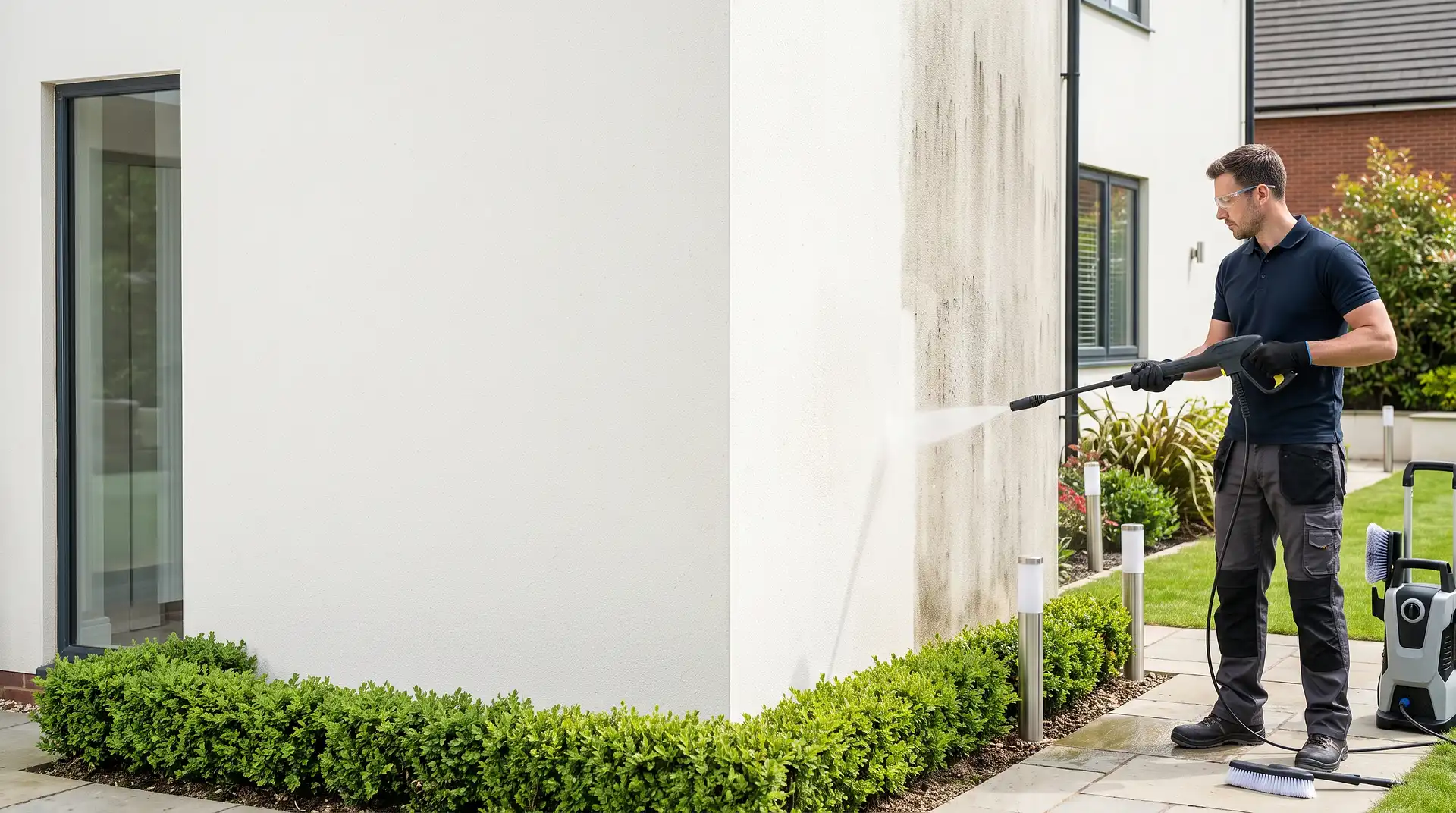
Render should be checked for algae, moss, and general dirt first. A soft wash — low-pressure water combined with a mild, biodegradable cleaning solution — is the standard, safest method for most render types, since high-pressure washing risks driving water behind the surface or damaging a delicate or aged render finish. Let it dry fully, then check for any chalky residue by wiping a dry hand across the surface; if it comes away powdery, the render needs a stabilising primer before painting, not just a clean.
Brick generally tolerates a firmer clean than render, but the same caution applies to older or softer brick, which can be damaged by high pressure. A stiff (non-wire) brush with a mild detergent solution handles general dirt, while established algae or moss needs a fungicidal wash left to dwell before rinsing. Painting over brick is less common than render or previously painted masonry, but if it's planned, the same principle applies — the brick face needs to be fully clean and dry, with any efflorescence (the white, powdery salt deposit) addressed before painting, since paint applied over it will lift as the salts continue to migrate to the surface.
Previously painted masonry needs any flaking or loose old paint removed first — scraping or wire-brushing loose material away — since new paint applied over failing old paint will fail at the same rate the old paint was failing, regardless of how good the new product is. Once loose paint is removed, clean as you would for render or brick beneath it.
Timber cladding or trim needs a gentler approach than masonry — a soft brush and mild detergent solution, avoiding high pressure, which can splinter or damage timber surfaces. Any loose, flaking old paint or stain should be scraped away, and bare timber patches may need a specific primer before the main paint coat, particularly if the wood has been exposed to weather for some time.
Treating Algae, Moss, and Mould
A fungicidal wash, left to dwell on the surface for the time stated on the product (commonly 15–30 minutes, sometimes longer for heavy growth), is the standard way to treat algae, moss, and mould before painting — not just rinsing them off with plain water, which removes visible growth but leaves spores behind that can regrow through the new paint film within months. This step matters even on a wall that looks mostly clean after a general wash, since algae spores aren't always visible to the eye until conditions favour regrowth.
Step-by-Step Method
Inspect the wall fully for algae, moss, chalky residue, flaking paint, and any cracks or damage that need repair before painting, not just cleaning.
Remove loose material — scrape or brush away any flaking old paint, loose render, or debris.
Apply a fungicidal wash to any areas showing algae, moss, or mould, and let it dwell for the time stated on the product label.
Wash the whole wall using the method appropriate to the material — soft wash for render, brush and mild detergent for brick, gentle cleaning for timber — working from the top down so dirty runoff doesn't dry on a section you've already cleaned.
Rinse thoroughly with clean water, working top to bottom again, to remove all cleaning solution and loosened debris.
Let the wall dry completely before painting — this is a step worth being patient with, since painting over a surface that's damp beneath the top layer traps moisture under the paint film and is a common cause of early blistering or peeling.
Check for chalking or bare patches once dry, and apply a stabilising primer to any powdery or highly absorbent areas before the main paint coat.
Drying Time Before Painting
Exterior walls typically need at least 24–48 hours of dry weather after washing before painting, though this varies with material, temperature, and humidity — render and masonry can hold moisture longer than they appear to from the surface, so waiting for a longer dry spell rather than the first dry-looking day is the safer approach, particularly for render or previously damp-affected walls. Painting too soon after cleaning is one of the more common causes of early paint failure, since trapped moisture beneath the paint film has nowhere to go once sealed in.
Common Mistakes and What to Do Instead
Mistake: rinsing off algae without a fungicidal treatment first. This removes visible growth but leaves spores behind, which commonly regrow and show through new paint within months. Always use a fungicidal wash with proper dwell time on any affected area before general washing.
Mistake: pressure washing render or older brick at full strength. This can drive water behind the surface or damage a delicate or aged finish. Soft washing — low pressure with a mild solution — is the standard, safer method for most render and older brick.
Mistake: painting before the wall is fully dry. Surface-dry isn't the same as fully dry, particularly for render and masonry, which can hold moisture beneath the surface for longer than expected. Trapped moisture under a fresh paint film is a common cause of blistering and early peeling.
Mistake: not addressing chalky or powdery render before painting. Paint applied directly over a chalky surface doesn't bond properly and can peel away along with the loose material beneath it. A stabilising primer is needed on any surface that comes away powdery to the touch.
Mistake: ignoring efflorescence on brick. The white, salty deposit that sometimes appears on brick indicates ongoing salt migration from within the wall, and painting over it without addressing the cause typically results in the paint lifting as salts continue to surface.
Mistake: skipping loose old paint removal. New paint applied over failing old paint fails at the same rate the old paint was already failing. Scrape or brush away any loose material before cleaning and repainting.
When to Hire a Professional Instead
DIY cleaning is reasonable for smaller areas, ground-floor walls, and general dirt or light algae on a wall in otherwise good condition. It's worth hiring a professional for larger properties, upper-storey walls needing safe access equipment, heavily contaminated render or brick requiring specialist chemical treatment, delicate or older render at genuine risk from incorrect pressure, or any wall showing signs of underlying damage (cracking, damp, efflorescence) that needs proper diagnosis before painting makes sense at all. A professional exterior cleaner will also typically be better placed to judge whether a wall needs repair work addressed before painting rather than simply being cleaned and painted over.
What It Costs in the UK
Render cleaning via soft washing — the standard method for most modern render — typically costs £5–£10 per m² in the UK, with a full house exterior commonly landing between £300 and £1,000 depending on property size and the level of contamination, and heavily soiled render with significant algae or lichen sometimes reaching £1,500–£3,000 for larger or more complex jobs. By property size, a 2-bedroom terrace typically runs £300–£400, a 3-bedroom semi £500–£600, and larger detached properties £700–£1,100 or more.
Brick cleaning is generally priced per square metre too, typically £10–£55 depending on the method (pressure washing, chemical, or acid-based cleaning) and brick condition, with most domestic full-exterior jobs landing between £800 and £2,200. Small jobs typically take 2–4 hours, while a full house exterior generally takes 1–2 days.
Wall Type/Method | Typical UK Cost (2026) |
|---|---|
Render, soft wash (per m²) | £5–£10 |
Render, full house exterior | £300–£1,000 (heavily contaminated: £1,500–£3,000+) |
Brick cleaning (per m²) | £10–£55 |
Brick, full house exterior | £800–£2,200 |
DIY materials (detergent, fungicidal wash, brush) | £20–£50 |
These are UK market estimates and vary by property size, wall condition, access, and region — always confirm whether the quote includes a fungicidal treatment for algae and moss, since this matters as much for paint longevity as the general wash itself.
Staying Safe
Fungicidal washes and cleaning chemicals used on exterior walls are generally stronger than household cleaning products, so wear gloves and eye protection, and avoid working in direct sun where the product might dry before it's had time to work. If working at height on an upper-storey wall, the same caution applies as any exterior task — don't overreach from a ladder, and treat anything beyond safe, stable reach as a job for a professional with proper access equipment rather than a taller ladder.
Runoff from fungicidal or chemical cleaning products can affect nearby plants, so it's worth checking the product label for any guidance on protecting borders or beds beneath the wall being cleaned, and keeping children and pets away from the area while cleaning solution is being applied and left to dwell.
Product-specific safety data and application guidance vary by manufacturer, so it's worth checking the label for ventilation, dwell time, and runoff guidance before use, particularly near planting or in a household with children or pets.
FAQ
Do I really need to clean walls before painting them? Yes. Paint applied over dirt, algae, or a chalky surface bonds to that layer rather than the wall itself, which is a common cause of peeling and flaking within a year or two, well before a properly prepped wall would show the same issues.
Can I pressure wash render before painting? It's generally discouraged for render, since high pressure risks driving water behind the surface or damaging the finish. Soft washing — low pressure with a mild solution — is the standard, safer method.
How long should I wait after cleaning before painting exterior walls? At least 24–48 hours of dry weather, though render and masonry can hold moisture longer than the surface suggests, so waiting for a longer dry spell is the safer approach, particularly after a wash.
What is a fungicidal wash and do I need one? It's a treatment specifically for algae, moss, and mould, left to dwell before rinsing. It's worth using on any wall showing visible growth, since a plain water rinse removes growth but leaves spores that can regrow through new paint.
How much does it cost to clean a house exterior before painting in the UK? Render cleaning typically costs £300–£1,000 for a full house exterior via soft washing, while brick cleaning typically costs £800–£2,200, depending on property size, method, and condition.
What does it mean if the wall feels powdery or chalky? This indicates a degraded or highly absorbent surface that needs a stabilising primer before painting, not just a clean, since paint won't bond properly to a chalky surface on its own.