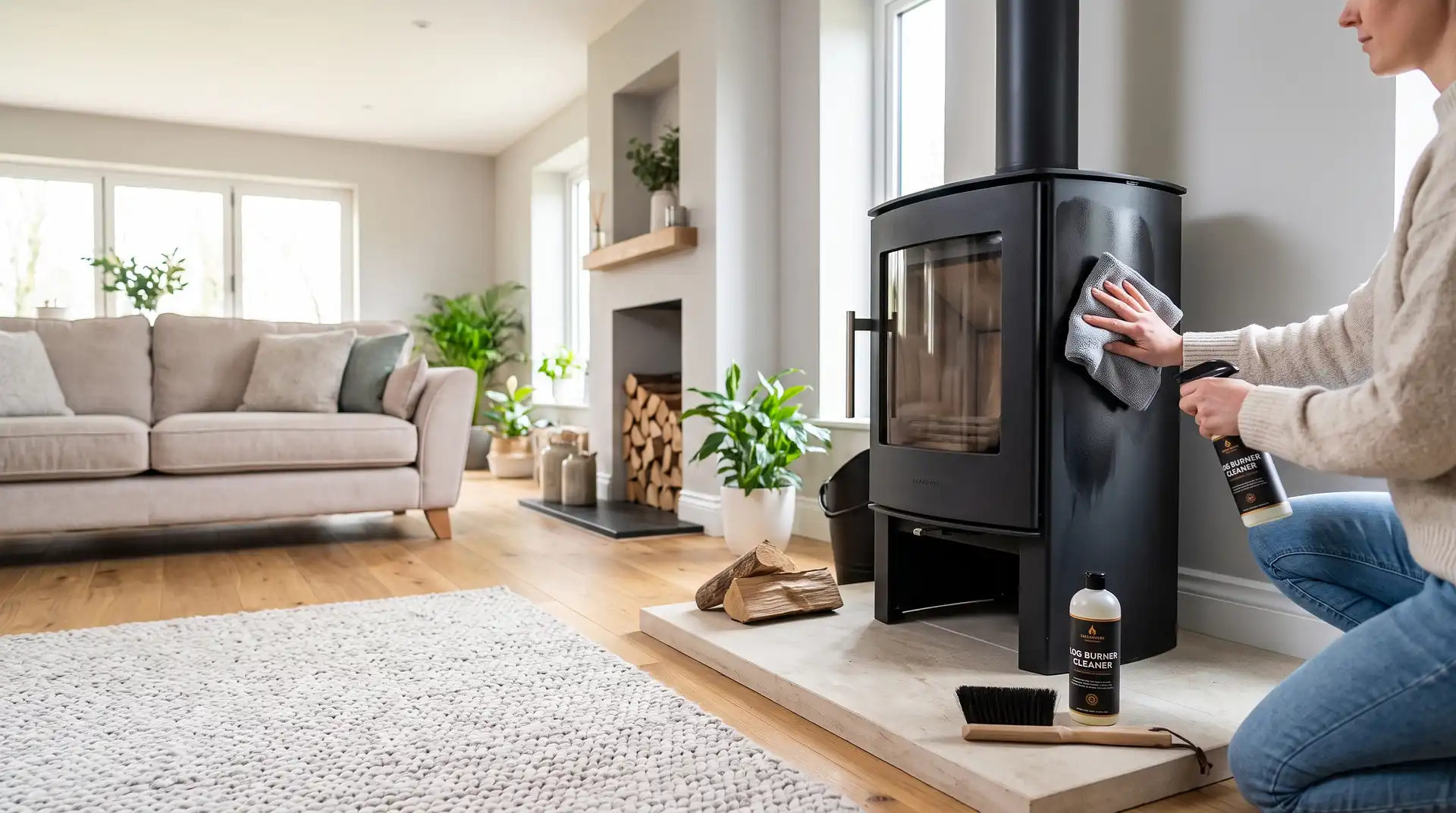
How to Clean the Exterior of a Log Burner
29 August 2026
How to Clean the Exterior of a Log Burner
Cleaning the exterior of a log burner restores the finish, removes soot staining, and prevents the minor surface corrosion that starts on neglected cast iron stoves during the off-season. The correct approach depends on two things: what material the stove body is made from, and whether the stove has been cold for at least 24 hours before you start.
Cast iron stoves, steel stoves, and enamelled stoves each need different products. Using the wrong one on the wrong surface either fails to clean or damages the finish permanently. Identifying the material first takes 30 seconds and determines everything that follows.
Let It Cool Completely First
Cleaning products applied to a warm or hot stove body burn off immediately, release toxic fumes, and can cause burns. The stove must be completely cold throughout, not just cool to the touch at the door handle, before any cleaning begins. Allow a minimum of 24 hours after the last fire before starting. If the stove has been burning heavily, 48 hours is safer.
Remove ash from the firebox before cleaning the exterior. Ash disturbed during exterior cleaning settles on the surfaces you are trying to clean and creates abrasive grit that scratches polished steel and glass. Bag the ash, seal it, and dispose of it before picking up any cloths or brushes.
Identifying Your Stove Material
Cast iron is the most common material for traditional and heritage-style log burners in the UK. It has a slightly rough, porous surface texture, is heavy for its size, and develops a deep matt black finish when correctly treated. Surface rust appears as reddish-brown bloom on neglected or unused stoves, particularly in damp conditions.
Steel (mild steel or stainless steel) is used in many contemporary log burner designs. It has a smoother, more uniform surface than cast iron and typically has a factory-applied high-temperature paint or vitreous enamel coating. It does not rust as readily as cast iron but the paint or enamel can chip and discolour.
Enamel stoves have a coloured vitreous finish fused to the steel body. Enamel is harder than paint, more resistant to temperature damage, and available in a range of colours. It chips rather than scratches under mechanical damage and requires specific enamel-compatible cleaners.
Glass door panels are on most modern UK log burners. They are tempered glass with a special coating that resists ash and soot adherence at high temperatures, but they collect a cloudy brown or black deposit during use that requires a specific glass cleaner or a traditional ash-and-newspaper method to remove.
Cleaning Cast Iron
Cast iron stove exteriors are cleaned and maintained rather than simply washed. The goal is to remove surface oxidation and soot deposits and then restore the stove blacking that protects the iron from rust and gives the characteristic deep matt black finish.
Step 1: Brush off loose soot and debris. Use a dry stiff-bristle brush to remove loose deposits from the surface, working into any joints and mouldings. Cast iron stoves often have decorative raised detail that traps soot. A small detailing brush or an old toothbrush reaches into recesses.
Step 2: Address surface rust. Light rust bloom, the orange-red surface discolouration that appears on unused or neglected cast iron, removes with fine wire wool (0000 grade) worked in small circular motions. Do not use coarse wire wool, which scratches the surface and creates more surface area for future oxidation. For heavier rust, a rust converter product applied according to label instructions neutralises the oxidation before the surface is refinished.
Step 3: Apply stove blacking or stove polish. Stove blacking is a graphite-based product applied to cast iron to restore the finish and provide a protective layer against moisture and oxidation. Work a small amount into the surface with a cloth or brush, allow to dry for the time specified on the product, then buff with a clean cloth until the surface has an even sheen. Most stove blacking products require gentle heating of the stove after application to cure the finish fully, so this step is best done just before the stove is brought back into use rather than at the end of summer.
Cleaning Painted or Enamelled Steel
Steel stoves with a factory paint or enamel finish should not be treated with stove blacking, which is formulated for bare cast iron and will produce an uneven result on painted surfaces.
For painted steel: Wipe the exterior with a damp cloth to remove dust and light soot. For stubborn soot marks, a small amount of washing-up liquid on a damp cloth removes residue without damaging factory paint. Dry thoroughly afterwards. Do not use abrasive pads, wire wool, or solvent-based cleaners on painted steel, all of which damage the finish.
Any chips in the paint that expose bare steel should be touched up with a high-temperature stove paint in the appropriate colour, available from stove retailers and specialist paint suppliers. Bare steel left exposed corrodes quickly on a stove that sees temperature cycling.
For enamel: Enamel cleans more easily than paint because the vitreous surface is non-porous. A damp cloth removes most marks. For soot staining, a cream enamel cleaner applied gently with a soft cloth removes deposits without scratching. Do not use wire wool or abrasive pads on enamel they produce fine surface scratches that accumulate dirt and dull the finish permanently.
Cleaning the Glass Door
Log burner glass accumulates brown to black deposits from tars and resins in wood smoke. These deposits form faster on stoves that are run at low temperatures with unseasoned or wet wood, because incomplete combustion produces more tarry compounds that condense on the cooler glass.
The ash method: This is the traditional and often most effective approach. Dampen a piece of scrunched-up newspaper or a cloth and dip it into the cold fine ash in the firebox. Use this to scrub the glass in small circular motions. The fine ash acts as a very mild abrasive and the alkalinity of the ash helps break down the soot and tar deposits. Wipe off with a clean damp cloth and dry.
Specialist log burner glass cleaner: Proprietary glass cleaners formulated for wood burner glass contain solvents that dissolve tar and resin deposits. Apply to a cold glass surface, leave for two to three minutes, then wipe off with a clean cloth. Effective on heavy deposits where the ash method requires multiple passes.
Do not use standard glass cleaners, household spray cleaners, or oven cleaners on log burner glass. Standard glass cleaners are not formulated for the temperature and chemical environment of a wood burner and may leave residue that stains when the stove is next used.
A Note on the Door Seals
While cleaning the glass and door frame, check the rope seal that runs around the door edge. This is the woven fibreglass or ceramic rope gasket that prevents combustion gases from escaping around the door. A healthy rope seal should be slightly springy when pressed and should hold the door closed firmly with the catch engaged.
A flattened or fraying seal allows air leakage into the firebox, which reduces efficiency, causes the stove to run too hot, and produces more soot on the glass. Rope seals cost £5 to £15 for a replacement kit from a stove retailer and take under an hour to replace using stove rope adhesive. This is a maintenance job worth doing at the start of each burning season alongside the exterior clean.
When to Call a Professional
Log burner exterior cleaning is straightforward DIY work. The job that requires a professional is chimney sweeping, which should be done at least once a year before the burning season begins and potentially twice if the stove is used heavily. An uncleaned chimney accumulates creosote and soot that is both a fire risk and an efficiency problem, and no amount of external stove cleaning addresses this.
A HETAS-registered chimney sweep is the correct professional for this work. HETAS is the UK competency scheme for solid fuel heating, and a registered sweep provides a certificate that most home insurance policies require for chimney maintenance. Chimney sweeping typically costs £60 to £100 for a single flue in the UK in 2026.
If your log burner is showing signs of problems beyond surface cleaning needs, such as smoke coming into the room when the door is opened, visible cracks in the firebox or body, or a flue damper that no longer operates correctly, a HETAS-registered stove installer or service engineer can assess and repair these. For broader home maintenance costs including professional cleaning services, the InstantCost house cleaning cost guide covers 2026 UK pricing for professional cleaning services that can be compared before booking any tradesperson.
Regular log burner maintenance also connects to the overall condition of the home exterior around the flue exit point. Our related guide on how to clean the exterior of gutters covers the roof-level maintenance that sits alongside chimney work, since both involve access to the upper elevations and are often scheduled together.
Common Mistakes and What to Do Instead
Mistake: cleaning a warm stove. Cleaning products vapourise on contact with residual heat, release fumes, and provide no cleaning action. The stove must be cold throughout before any product is applied.
Mistake: using household cleaning sprays on the stove body. Products not formulated for high-temperature surfaces leave residue that burns and stains when the stove is next used. Use only products specifically designed for stove or fireplace cleaning.
Mistake: using coarse wire wool on cast iron. Coarse abrasive creates scratches and increased surface area that rusts faster. Fine 0000-grade wire wool for light rust only.
Mistake: applying stove blacking to painted or enamelled stoves. Stove blacking is for bare cast iron. On painted surfaces it produces a patchy, uneven result. Use appropriate touch-up paint for chips and a damp cloth for general cleaning.
Mistake: using standard glass cleaner on the door panel. Standard glass cleaners leave residue on log burner glass that smokes and stains on first use. Use the ash method or a specialist log burner glass cleaner.
Mistake: cleaning the exterior but ignoring the chimney. An immaculate stove exterior connected to an unswept chimney is both a fire risk and an inefficiency. Schedule chimney sweeping annually before the burning season.
What It Costs in the UK
Item or service | Typical UK cost (2026) |
|---|---|
Stove blacking or stove polish | £5 to £12 |
Fine wire wool (0000 grade) | £3 to £8 |
High-temperature stove touch-up paint | £8 to £20 |
Specialist log burner glass cleaner | £6 to £15 |
Enamel cream cleaner | £5 to £10 |
Rope door seal replacement kit | £5 to £15 |
Stove rope adhesive | £4 to £10 |
Professional chimney sweep (single flue) | £60 to £100 |
HETAS stove service and inspection | £80 to £150 |
Chimney sweeping and stove service costs vary by region. Always use a HETAS-registered professional for chimney and flue work.
Staying Safe
Never clean a log burner that is still warm. Beyond the burn risk, cleaning products on a warm surface produce fumes in a confined space. Ensure the room is well ventilated during cleaning regardless of stove temperature.
Ash removed from the firebox can retain live embers for up to 72 hours even when it appears cold. Place ash in a metal container with a lid rather than a plastic bag or cardboard box, and store it outside away from any combustible material before disposal. Compost and garden soil benefit from wood ash, which is alkaline and contains potassium.
Fine ash and soot are respiratory irritants. Wear a dust mask when removing ash and brushing out loose soot deposits from the firebox and stove body. A window open during this process reduces airborne particle concentration in the room.
Keep children and pets away from the stove cleaning area. Stove blacking and glass cleaning products should be stored away from reach after use, and the fine ash used in the traditional glass cleaning method, while not acutely hazardous, should not be handled or ingested by children.
Log burners installed in UK homes must comply with Building Regulations Approved Document J, which covers combustion appliances and fuel storage. Any alterations to the installation, flue, or hearth arrangement require compliance assessment. HETAS provides a register of approved installers and servicing engineers at hetas.co.uk. Home insurance policies typically require evidence of annual chimney sweeping for properties with solid fuel appliances.
FAQ
How do you clean the outside of a log burner? Identify the material first: cast iron requires stove blacking after removing surface rust; painted or enamelled steel needs a damp cloth and touch-up paint for chips; the glass door cleans with the ash-and-newspaper method or a specialist log burner glass cleaner. Always clean with the stove completely cold.
How do you get soot off a log burner? A dry stiff brush removes loose soot from cast iron and steel bodies. For ingrained soot on cast iron, light buffing with 0000-grade wire wool followed by stove blacking restores the finish. Soot on painted steel lifts with a damp cloth and a small amount of washing-up liquid.
What is stove blacking and do I need it? Stove blacking is a graphite-based protective product applied to cast iron stoves to prevent rust and maintain the characteristic deep matt black finish. It is needed annually or when the cast iron surface shows rust bloom or dullness. It is not suitable for painted, enamelled, or steel stoves.
How do you clean log burner glass? Dampen scrunched newspaper, dip into cold fine ash, and scrub the glass in small circles. The ash acts as a mild abrasive and the alkalinity breaks down soot and tar deposits. Wipe clean with a damp cloth. A specialist log burner glass cleaner works faster on heavy deposits.
How often should a log burner be cleaned? The exterior should be cleaned and blacked at the start of each burning season. The glass should be cleaned as often as it becomes obscured, which may be weekly in heavy use. The chimney must be swept by a professional at least once a year, or twice for heavy users.
Can I use oven cleaner on a log burner? No. Oven cleaners are formulated for enclosed cooking appliances and their chemical residue burns and stains on a log burner when the stove is next used. Use only products specifically formulated for wood burning stoves.