How to Clean Walls in a House
30 August 2026
How to Clean Walls in a House
Cleaning interior walls correctly depends first on what paint finish covers them, because the wrong technique on the wrong finish causes more visible damage than the original mark. Matt emulsion, the most commonly used wall paint in UK homes, is highly sensitive to moisture and scrubbing vigorous cleaning on matt paint produces a shiny patch where the paint surface has been abraded, which catches light differently from the surrounding wall and is often more noticeable than the mark it replaced.
Silk emulsion, eggshell, and gloss are progressively more tolerant of damp cleaning. Identifying the finish on the wall takes ten seconds and prevents the most common cleaning mistake.
Identify the Paint Finish First
Run a finger across the wall surface in a light-lit area. Matt emulsion has a completely flat, non-reflective surface that feels slightly chalky. Silk emulsion has a subtle sheen and a smooth, slightly slippery feel. Eggshell sits between the two with a low sheen similar to the surface of an eggshell. Gloss is hard, reflective, and typically used on woodwork rather than walls but occasionally appears on kitchen or bathroom walls in older UK properties.
Wallpaper requires a separate approach entirely both the cleaning method and the acceptable moisture level differ from painted surfaces, and the wrong technique causes bubbling, lifting, and permanent staining.
General Rules Before Any Cleaning
Remove loose dust and cobwebs before applying any moisture to walls. A dry microfibre cloth or a soft brush attachment on a vacuum removes surface dust that would otherwise turn to muddy smears when wet cleaning begins.
Always test any cleaning solution on an inconspicuous area first behind a door, inside a wardrobe, or low on a wall behind furniture. Leave it for a minute and check for colour change, sheen alteration, or paint lifting before treating the visible area.
Work from the bottom of the wall upward when cleaning. Dirty water running down an uncleaned wall leaves streaks that are difficult to remove. Cleaning upward means any drips fall onto already-cleaned surface.
Wring cloths and sponges until they are barely damp rather than wet. Excess moisture on walls, particularly in older UK properties with plaster rather than plasterboard, soaks into the substrate and can cause the plaster to soften, stain, or eventually blow away from the wall face.
Cleaning Matt Emulsion
Matt emulsion is the finish that needs the lightest touch. The surface pigment is bound in a porous matrix that absorbs moisture and releases it unevenly, producing dark wet patches that dry to a different sheen than the surrounding paint.
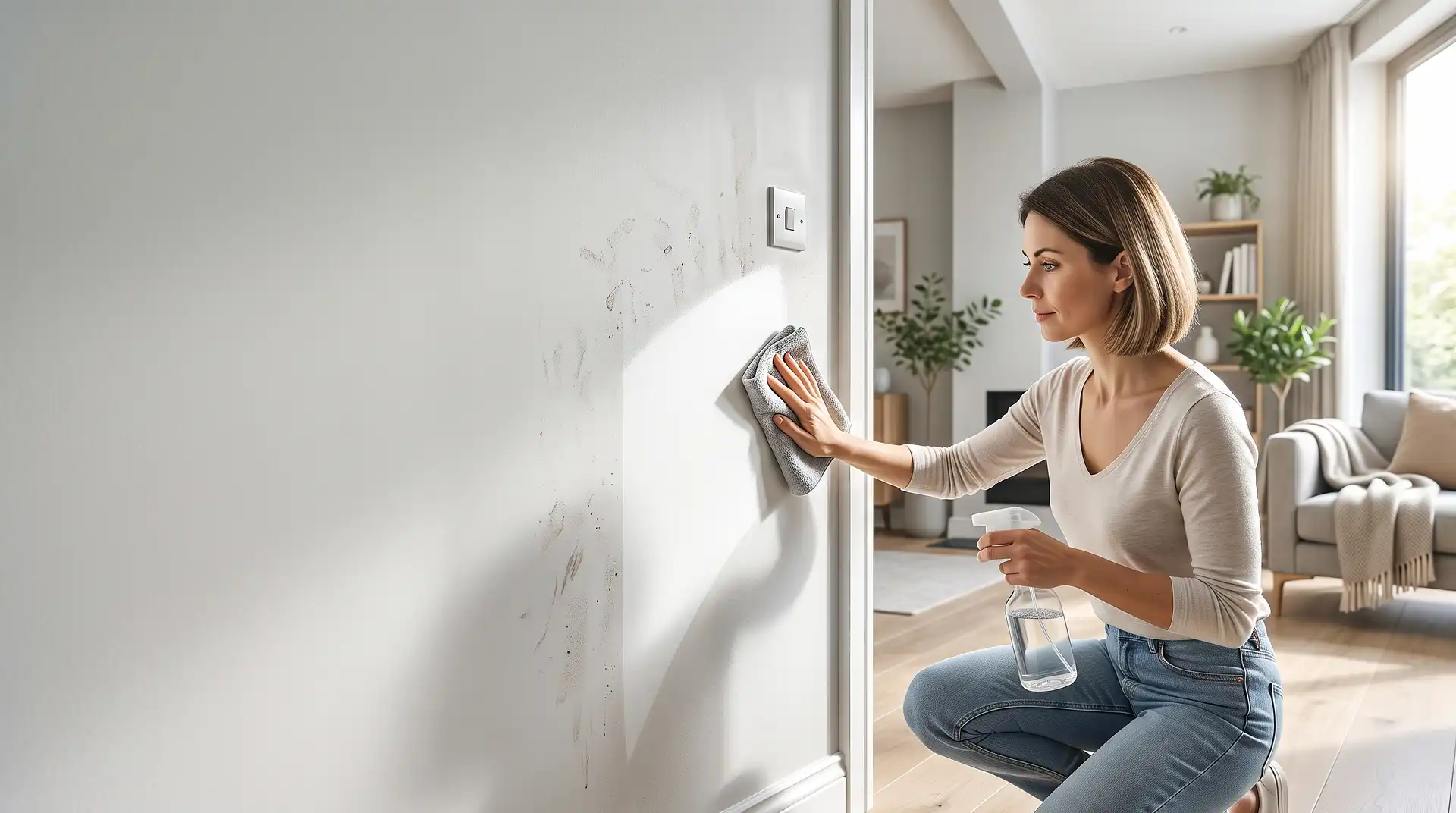
For light marks and general grime on matt walls, a barely damp white cloth used in gentle circular motions is the safest approach. Add a single drop of washing-up liquid to a bowl of warm water, wring the cloth thoroughly, and work over the surface. Follow immediately with a dry cloth to remove any remaining moisture before the wall surface absorbs it.
For scuff marks and hand prints, a white magic eraser sponge (melamine foam) used dry or barely damp lifts marks from matt emulsion effectively without the smearing risk of a wet cloth. Use light pressure the melamine foam is mildly abrasive and pressing hard removes a thin layer of paint along with the mark.
Avoid steam cleaners, abrasive cloths, and any product containing bleach on matt emulsion. Each causes either immediate visible damage or an invisible weakening of the paint film that shows up as flaking weeks later.
Cleaning Silk Emulsion
Silk emulsion handles moisture considerably better than matt and is the finish used in kitchens, bathrooms, and high-traffic areas in most UK homes for this reason. The plastic-rich binder in silk paint forms a more water-resistant surface that can be wiped with a damp cloth without the patch problem that affects matt.
Warm water with a small amount of washing-up liquid on a microfibre cloth removes most general kitchen and bathroom wall grime from silk emulsion. Wipe in the direction of any natural light source rather than in circular motions, which catch on any texture in the paint and leave swirl marks.
For grease splashes behind a cooker or around a kitchen worktop, a diluted kitchen degreaser applied to the cloth rather than sprayed directly onto the wall cuts through cooking residue effectively. Spray cleaners directed at the wall soak into gaps between tiles and around fittings where they cannot be rinsed, leaving chemical residue that attracts further dirt.
For mould spots on silk-painted bathroom walls, a diluted bleach solution (one part bleach to ten parts water) on a cloth applied briefly and then rinsed kills the surface mould. This is a surface treatment only recurring mould that returns within a month of treatment is growing from behind the paint surface and requires addressing the ventilation or moisture source rather than repeated surface cleaning.
Cleaning Eggshell and Gloss
Eggshell and gloss are the most robust paint finishes for cleaning and tolerate both damp wiping and mild abrasive cleaners without damage. These finishes are typically used on woodwork, doors, skirting boards, and window frames, and in some older or commercial-style UK kitchens on wall surfaces specifically chosen for their cleanability.
A damp cloth with washing-up liquid removes most marks. For ingrained grime on gloss woodwork, a cream cleaner applied with a cloth and rubbed gently along the grain of the wood removes accumulated layers of grease and dust effectively without scratching. Rinse with a clean damp cloth afterwards.
Cleaning Wallpaper
Wallpaper requires caution because both the paper and the adhesive beneath it are water-sensitive. Modern vinyl wallpaper is washable and tolerates careful damp wiping with a barely damp cloth and no cleaning product beyond a very small amount of washing-up liquid. Traditional paper wallpaper, lining paper, and any paper that is lifting at the seams should be cleaned dry only a soft brush or barely damp cloth used minimally.
Never scrub wallpaper or apply significant pressure, which causes the paper to pill and the surface finish to separate. Never use solvent-based cleaners, which dissolve the inks in printed wallpapers.
For marks on wallpaper that cannot be removed with damp wiping, a commercial wallpaper cleaning dough (a kneadable putty sold in UK decorating and art supply shops) used in a rolling and lifting motion removes surface marks without moisture. It is effective on pencil, light crayon, and sooty fingermarks.
Tackling Specific Stains
Crayon on walls is one of the most common cleaning challenges in homes with young children. A small amount of white toothpaste (not gel) rubbed gently onto the crayon mark and left for a minute breaks down the wax and pigment. Wipe off with a damp cloth. Effective on most painted surfaces. Test first on matt emulsion.
Permanent marker on painted walls requires a solvent. Rubbing alcohol or surgical spirit on a cotton pad, dabbed onto the mark rather than rubbed, lifts permanent marker from most painted surfaces without spreading it. Use minimal solvent and work quickly to prevent the dissolved ink from spreading to the surrounding paint.
Grease marks on walls near light switches and door frames, caused by repeatedly touching the wall with slightly greasy hands, respond to a dry-cleaning solvent or a small amount of washing-up liquid. The key is using a clean section of cloth on each pass to avoid spreading the dissolved grease.
Mould requires a fungicidal treatment rather than a cleaning product. Diluted bleach kills surface mould on painted walls but does not kill mould growing within the plaster or behind the paint layer. Specialist mould and mildew spray products containing fungicide address surface mould more completely and provide some residual protection against regrowth.
Most interior wall marks respond to patient treatment using the right product for the finish. Where a professional deep clean makes sense, either before selling a property, after building work, or when accumulated grime is beyond what household products can address, the InstantCost house cleaning cost guide covers 2026 UK pricing for professional domestic cleaning by property size, clean type, and region, so you can compare professional options against the DIY approach before deciding.
For the exterior equivalent of this job, our related guide on how to clean the exterior of a house covers render, brick, UPVC, and path surfaces in the correct sequence for a full exterior clean, with the product choices that apply to each surface.
Common Mistakes and What to Do Instead
Mistake: scrubbing matt emulsion. Scrubbing matt paint produces a sheen patch more visible than the original mark. Use light pressure with a barely damp cloth, or a dry melamine sponge.
Mistake: spraying cleaning products directly onto walls. Spray that reaches behind fittings, into electrical socket edges, or between tile grout lines cannot be rinsed and leaves residue. Apply to the cloth instead.
Mistake: working from the top of the wall downward. Drips from the cleaning cloth streak down uncleaned wall below, leaving marks that need a second pass. Work upward.
Mistake: using bleach on coloured wallpaper. Bleach lifts the ink from printed wallpapers immediately and permanently. Use dry cleaning methods or wallpaper cleaning dough on wallpaper marks.
Mistake: treating mould with cleaning products alone. Surface mould wiped away returns within weeks if the moisture source is not addressed. Ventilation, humidity management, and fixing leaks or cold bridges are the real fix.
Mistake: using too much water on walls. Excess moisture soaks into plaster substrates, causes staining, and weakens the bond between the plaster and the paint. Wring cloths until barely damp.
Mistake: not testing on a hidden area first. Cleaning products that work on one paint brand or finish can damage another. Two minutes on a test patch behind a door prevents a large visible problem.
What It Costs in the UK
Item | Typical UK cost (2026) |
|---|---|
Microfibre cloths (pack) | £4 to £10 |
Melamine foam eraser sponges (pack) | £3 to £8 |
Washing-up liquid | Under £2 |
Wallpaper cleaning dough | £5 to £12 |
Fungicidal mould spray | £4 to £10 |
Diluted bleach solution (DIY) | Under £2 |
Surgical spirit or rubbing alcohol | £3 to £7 |
Professional domestic clean (3-bed house) | £150 to £300 |
Professional deep clean (3-bed house) | £250 to £450 |
End-of-tenancy clean (3-bed house) | £200 to £400 |
Professional cleaning figures based on InstantCost.co.uk's 2026 UK house cleaning pricing data and vary by region, property condition, and provider.
Staying Safe
Most interior wall cleaning products are low-hazard, but two situations warrant extra care.
Bleach-based mould treatments release chlorine fumes in enclosed spaces. Open windows and doors before using any bleach product on bathroom or kitchen walls and keep the space ventilated throughout. Do not mix bleach with any other cleaning product, particularly anything containing ammonia or acidic toilet cleaners, which produces toxic chloramine gas.
Solvent-based products including surgical spirit and rubbing alcohol are flammable. Use away from naked flames, gas hobs, and lit candles. Ventilate the room.
Keep children away from any wall area being treated with mould spray or solvent products until surfaces are dry. Store all cleaning products in their original labelled containers and out of reach after use.
UK homes with mould affecting structural elements or covering a significant area may fall under the Housing Health and Safety Rating System (HHSRS), which requires landlords to address damp and mould conditions that pose a risk to tenant health. Tenants experiencing significant mould should report it in writing to the landlord and keep a record. If the problem is not addressed, the local authority Environmental Health team can inspect and issue improvement notices.
FAQ
What is the best way to clean painted walls without removing paint? Use a barely damp white microfibre cloth with a drop of washing-up liquid in warm water. Work from the bottom upward with light pressure. On matt emulsion, use a dry melamine sponge rather than a wet cloth for spot marks. Wring the cloth thoroughly before touching the wall and dry any moisture immediately.
Can you wash walls with washing-up liquid? Yes, diluted in warm water and applied with a well-wrung cloth. It is safe on silk, eggshell, and gloss finishes and gentle enough for most matt emulsion when used with minimal moisture and light pressure. Rinse with a clean damp cloth after cleaning to remove detergent residue.
How do you clean walls without leaving streaks? Work from the bottom upward, wipe in the direction of any natural light source rather than in circles, use a clean section of cloth on every pass, and follow with a dry cloth to remove moisture before it dries and leaves a tide mark.
Is it safe to use bleach on painted walls? Diluted bleach (one part bleach to ten parts water) is safe on white or near-white silk-painted surfaces for surface mould treatment. It removes colour from coloured paints and must not be used on wallpaper. Always ventilate the room and rinse the surface after treatment.
How do you get crayon off painted walls? Apply a small amount of white toothpaste (not gel) to the mark, leave for one minute, then wipe off with a damp cloth. This breaks down the wax and pigment without damaging most paint finishes. Test on a hidden area first on matt emulsion.
When should you call a professional to clean walls? Before selling a property, after building or renovation work where dust and debris have settled on all surfaces, when nicotine or heavy cooking residue has built up over years, or when mould is widespread enough to require specialist treatment beyond surface cleaning.