How to Get Nail Varnish Out of Carpet
30 July 2026
How to Get Nail Varnish Out of Carpet (Without Melting the Fibres)
The product most people reach for first to remove nail varnish, acetone-based remover, is also the one most likely to make things worse on the wrong carpet. Acetone is genuinely excellent at dissolving nail varnish, but it's just as effective at dissolving certain synthetic carpet fibres, particularly acrylic and some polyester blends, which means the same product that lifts the stain can also melt or discolour the carpet itself if you're not careful about what you're treating. Knowing your carpet's fibre type before you start matters more here than in almost any other carpet stain guide.
Check Your Carpet Fibre First
Wool and most natural fibre carpets generally tolerate acetone reasonably well in small, careful applications, though it's still worth testing first. Synthetic carpets, particularly acrylic, and some polyester or nylon blends, are genuinely at risk of melting, discolouring, or developing a sticky residue when acetone is applied, since acetone is a solvent that can soften or dissolve certain synthetic materials. If you're not sure what your carpet is made from, check any manufacturer documentation or ask whoever fitted it, and treat this uncertainty as a reason to test on a hidden patch before committing to treating the visible stain.
Step 1: Act While the Polish Is Still Wet, if Possible
A fresh spill is considerably easier to deal with than a dried one. If you catch it immediately, gently scrape up any excess polish with the edge of a spoon or a blunt knife, taking care not to press it further into the pile, then blot, don't rub, with a clean cloth to lift as much as possible before any product is applied.
Step 2: Test Your Remover on a Hidden Patch First
Whether you're using acetone-based or non-acetone nail varnish remover, test it first on a small, hidden section of the same carpet, a spot inside a wardrobe or under a piece of furniture works well, and leave it for a few minutes. If the carpet fibres change colour, feel sticky, or show any sign of damage, that product isn't safe to use on this carpet and it's worth switching to a gentler method or going straight to a professional.
Step 3: Blot With Remover on a Cloth, Not Directly on the Carpet
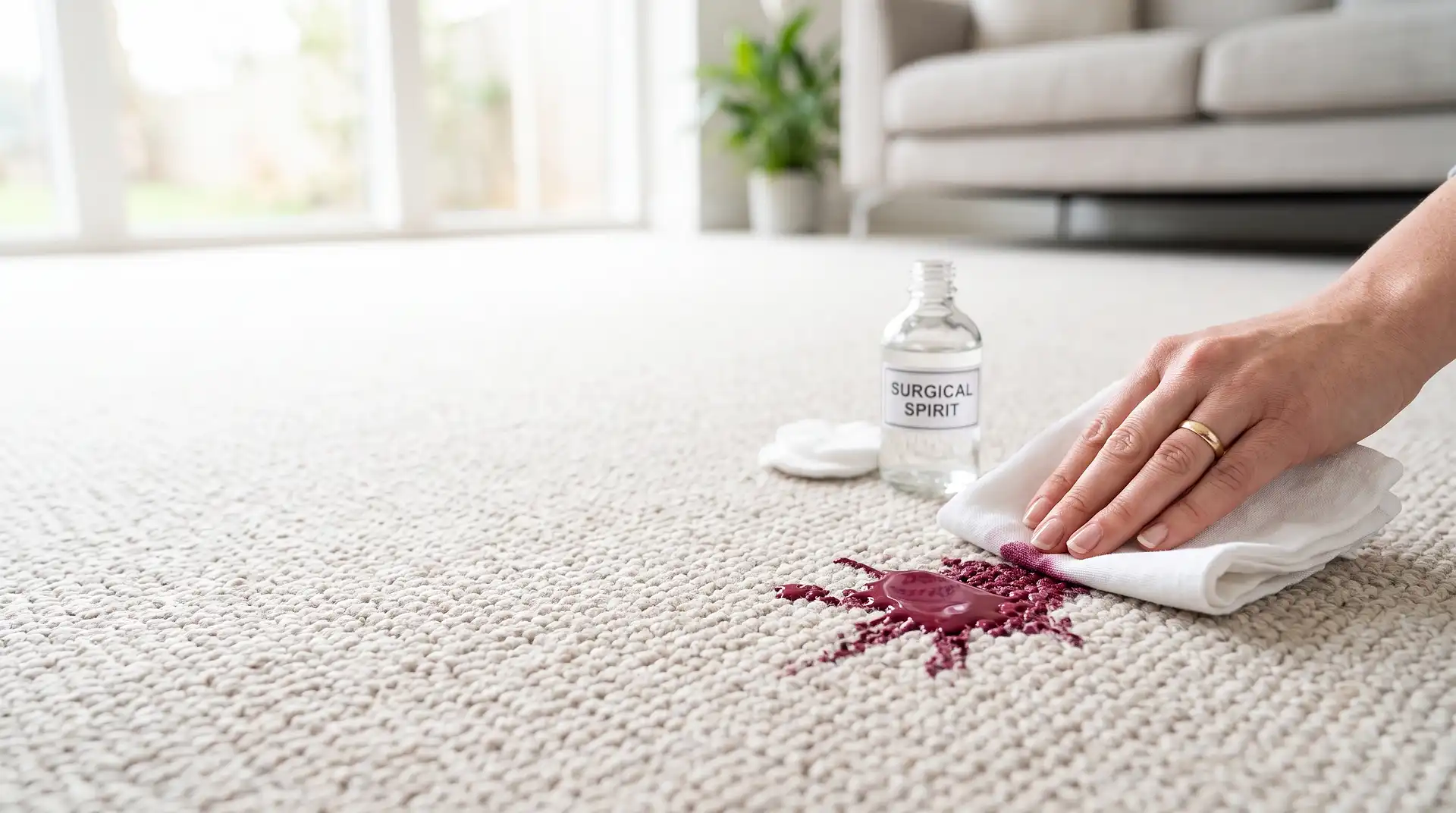
Apply a small amount of remover to a clean white cloth, not directly onto the stain, and press it onto the polish, working from the outside of the stain inward to avoid spreading it further. Blot repeatedly, using a fresh section of cloth each time so you're not just moving dissolved polish back into the carpet. Avoid scrubbing, which can push the polish deeper into the pile and damage carpet fibres through friction.
Step 4: Repeat in Short Bursts
Nail varnish, particularly if it's had time to dry, often needs several short applications rather than one saturating treatment. Apply a small amount, blot, check progress, and repeat, rather than soaking the area heavily in one go, which increases the risk of the solvent spreading and affecting a wider area of carpet than the original stain.
Step 5: For Dried Polish, Soften It First
If the polish has already dried and hardened, gently work at the edges with a blunt tool to break up the surface layer before applying remover, since this gives the solvent a better chance to actually reach and dissolve the polish rather than sitting on top of an intact, hardened layer.
Step 6: Rinse and Clean the Area Once the Stain Is Gone
Once the polish has lifted, dab the area with a cloth dampened in cool water to remove any remaining remover residue, then blot dry. Leftover remover residue can attract dirt faster if left untreated, so this final rinse step matters even once the visible stain is gone.
Alternative Methods for Sensitive or Synthetic Carpets
If acetone genuinely isn't safe for your carpet, a few gentler alternatives are worth trying, though they're generally less effective on set or larger stains. Hairspray containing alcohol, applied to a cloth and blotted the same way as remover, can help break down fresh, small amounts of polish through its alcohol content, without the stronger solvent action of pure acetone. Isopropyl rubbing alcohol, tested the same way on a hidden patch first, is another comparatively gentler option that can work on lighter stains, though it's still worth testing first rather than assuming it's automatically safe on every fibre type.
Common Mistakes and What to Do Instead
Mistake: using acetone remover on a synthetic carpet without testing first. This is the single most common cause of a nail varnish stain turning into carpet damage. Always test on a hidden patch, and if there's any sign of melting or discolouration, switch to a gentler method or a professional service.
Mistake: scrubbing instead of blotting. Scrubbing pushes dissolved polish further into the pile and can damage fibres through friction, particularly on softer or looped-pile carpets. Blot from the outside in, using a clean section of cloth each time.
Mistake: applying remover directly to the carpet rather than a cloth. Pouring or spraying remover straight onto the stain increases the risk of it spreading beyond the original mark and soaking deeper than necessary. Apply to a cloth first, then work it into the stain.
Mistake: soaking the area heavily in one go. This increases the chance of the solvent affecting carpet backing or underlay, and doesn't actually remove the polish any faster than several smaller, controlled applications. Work in short bursts and check progress between each.
Mistake: not rinsing the area once the stain is gone. Leftover solvent residue can attract dirt and leave a slightly different texture or sheen than the surrounding carpet. Dab with cool water and blot dry as a final step.
Mistake: giving up on a dried stain rather than trying to soften it first. Gently breaking up the hardened surface layer before applying remover gives the product a better chance to work, rather than sitting uselessly on top of an intact dried layer.
When to Call a Professional Instead
If the fibre test shows any sign of damage from available removers, if the stain is large or covers a valuable or delicate carpet, if it's an old, deeply set stain that's resisted careful DIY treatment, or if you're simply not confident testing and treating it yourself, it's worth calling a professional carpet cleaner rather than risking further damage. Professionals have access to specialist solvents formulated to lift nail varnish without the same fibre-damage risk as household acetone remover, and for carpets where the fibre type is genuinely uncertain or valuable, that expertise is worth the modest extra cost over a DIY attempt gone wrong.
What It Costs in the UK
DIY treatment costs very little: nail varnish remover, acetone or non-acetone, typically costs £2 to £6 for a bottle you likely already own, and hairspray or rubbing alcohol as gentler alternatives cost a similar small amount if not already in the house.
If professional treatment is needed, either because DIY testing showed a fibre risk or because the stain has resisted careful treatment, according to InstantCost.co.uk's 2026 UK pricing data, individual stain treatment for carpets is typically priced at £10 to £25 per stain, a sensible option for a single, isolated mark like this rather than booking a full room clean. If the nail varnish stain is one of several issues on an older or more heavily used carpet, a standard single-room professional clean typically costs £35 to £55, using hot water extraction, the UK industry-standard method, while a whole 3-bed house clean runs £140 to £240.
Option | Typical UK Cost (2026) |
|---|---|
Nail varnish remover (acetone or non-acetone) | £2 to £6 |
Hairspray/rubbing alcohol (alternative) | A few pounds |
Professional per-stain treatment | £10 to £25 |
Professional single-room clean | £35 to £55 |
Professional whole-house clean (3-bed) | £140 to £240 |
These are UK market estimates and vary by carpet type, stain age, and provider. For a single isolated stain, per-stain professional treatment is usually more cost-effective than booking a full room clean, unless the carpet needs a broader refresh anyway.
Staying Safe
Nail varnish remover, particularly acetone-based products, is flammable and releases strong fumes, so work in a well-ventilated room with a window open, and never use it near an open flame or lit candle. Keep any remover, and the cloths used to apply it, out of reach of children and pets while you're working and afterward, and dispose of used cloths properly rather than leaving them in a pile, since acetone-soaked material can pose a fire risk while drying.
If a large amount of remover has been used, ventilate the room for a while after finishing, and avoid letting children or pets back into the treated area until any residual smell has cleared.
Product-specific safety data varies by manufacturer, so it's worth checking the label for ventilation and flammability guidance before use, particularly in a household with children or pets.
FAQ
Can I use nail varnish remover on any carpet? Not safely, no. Acetone-based remover can melt or discolour certain synthetic fibres, particularly acrylic and some polyester blends. Always test on a hidden patch first before treating a visible stain.
What should I do if my carpet reacts badly to nail varnish remover? Stop immediately and don't apply any more product. Switch to a gentler alternative like diluted rubbing alcohol, tested carefully first, or call a professional carpet cleaner who has access to solvents formulated to avoid fibre damage.
Is non-acetone nail varnish remover safer for carpets? Generally gentler, but it's still worth testing on a hidden patch first, since carpet fibre reactions can vary by specific product and carpet material, not just by whether acetone is present.
How do I remove dried nail varnish from carpet? Gently soften the hardened surface first with a blunt tool before applying remover, then blot in short, repeated applications rather than one heavy treatment, working from the outside of the stain inward.
Should I scrub a nail varnish stain to get it out faster? No. Scrubbing pushes dissolved polish deeper into the carpet pile and can damage fibres through friction. Blotting, working from the outside in with a clean cloth each time, is more effective and safer for the carpet.
How much does professional nail varnish stain removal cost? Per-stain professional treatment typically costs £10 to £25 in the UK, which is generally more cost-effective than a full room clean for a single, isolated mark like a nail varnish spill.