How to Get Rid of Mould in the Bathroom
1 August 2026
How to Get Rid of Mould in the Bathroom
The right way to deal with bathroom mould depends heavily on how established it already is, and treating a small, fresh patch the same way as a widespread, recurring problem wastes effort in one direction or underestimates risk in the other. This guide is organised by severity for that reason: work out which stage you're actually dealing with first, then follow the response that matches it, rather than defaulting to the same spray-and-wipe approach regardless of how far the problem has actually progressed.
Stage One: A Small, Fresh Patch
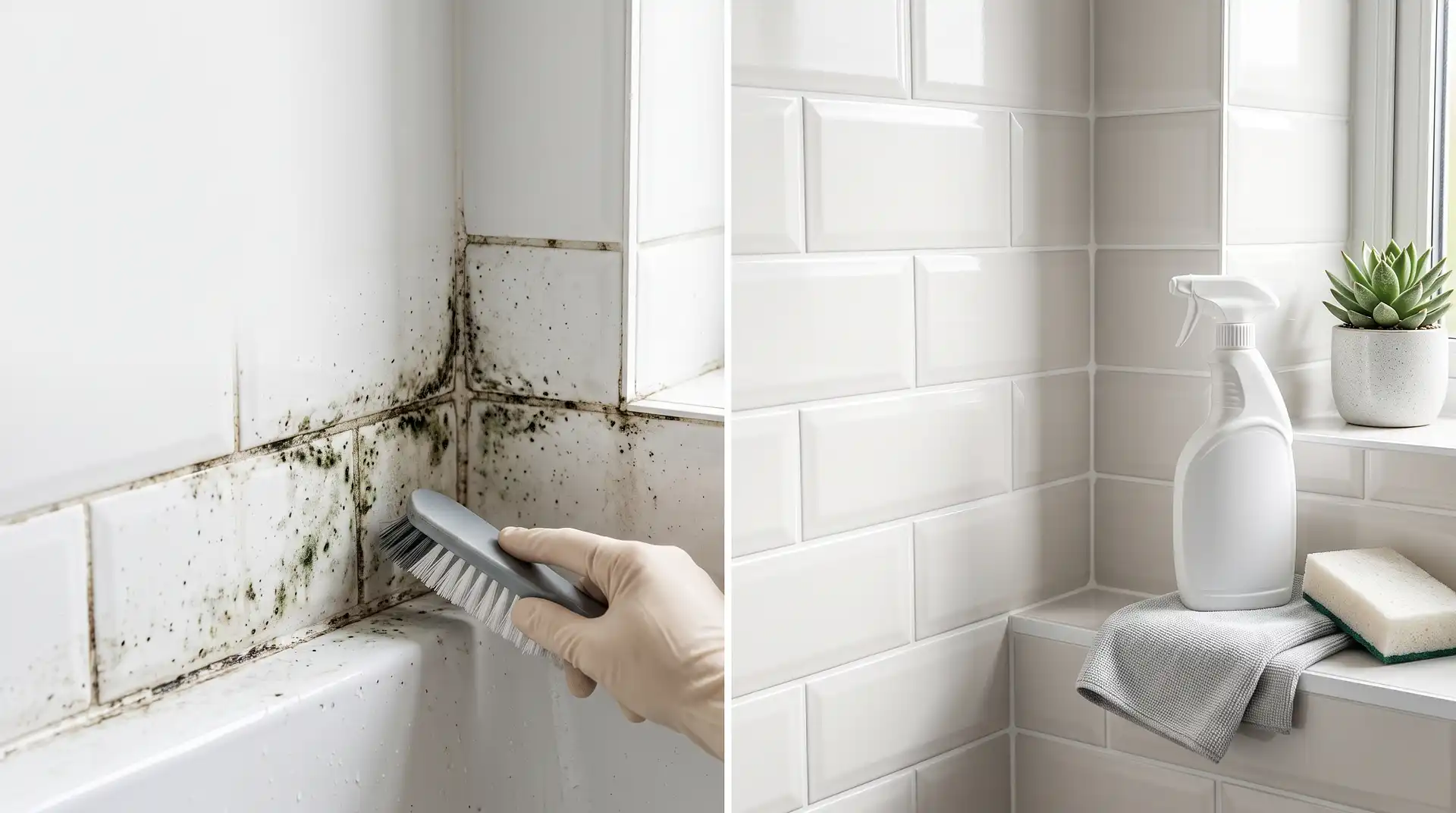
This is mould that's appeared recently, usually in a predictable spot, sealant around the bath, a corner of the shower, a section of grout, and hasn't spread beyond a small, contained area. This stage responds well to straightforward DIY treatment and is genuinely a five to ten minute job once you have the right product.
Open a window or turn on the extractor fan, apply a fungicidal mould and mildew spray directly to the affected area, and leave it to dwell for the time stated on the label, commonly 10 to 15 minutes. Scrub gently with a soft brush, an old toothbrush works well for grout lines specifically, then rinse thoroughly and dry the area with a clean cloth. Keep the extractor fan running for a further 20 to 30 minutes afterward, since a damp surface left to air dry slowly is exactly the environment mould needs to reappear.
Stage Two: Recurring Mould in the Same Spot
If you've treated a patch before and it's come back within a few weeks, even if it looked fully gone after cleaning, that's a different situation from a first-time fresh patch. Recurring mould in the same location almost always means the underlying moisture problem, not the mould itself, is the actual issue.
Start by checking whether your extractor fan is genuinely doing its job, running it during every shower and for a full 20 to 30 minutes afterward, rather than switching it off the moment you're done, resolves a significant proportion of recurring cases on its own. If ventilation is already good and mould still keeps returning at the same sealant line specifically, the sealant itself may have become porous enough to trap mould beneath the surface, where cleaning products simply can't reach it anymore. At that point, replacing the sealant, a fiddly but straightforward job, resolves what repeated treatment alone won't.
Stage Three: Spreading Across Multiple Surfaces
Mould that's moved beyond the immediately wet areas, appearing on ceiling paint, on a wall away from the shower, or across more than one surface type, points to a more significant moisture issue than simple post-shower humidity. This stage is still often manageable, but it needs a slightly more thorough response than spot treatment alone.
Treat every affected surface individually with a fungicidal product, since painting or wiping over mould without properly treating and drying the surface first simply traps it beneath whatever goes on top and it typically resurfaces within weeks. At this stage, it's also worth genuinely assessing ventilation across the whole bathroom, not just during showers, since a bathroom with no natural airflow and an underpowered or poorly positioned extractor fan will keep producing conditions mould thrives in regardless of how thoroughly you clean.
Stage Four: A Persistent Musty Smell Without Obvious Visible Mould
This is arguably the trickiest stage to self-diagnose, since there's often nothing obvious to actually clean. A musty smell without a clear visible source can indicate mould growing somewhere hidden, inside a wall cavity, beneath flooring, or behind tiling, where a leak or persistent damp has created conditions you can smell but not see. DIY treatment genuinely isn't the right response here, since there's nothing accessible to treat, and this stage calls for a professional damp and mould survey to actually locate the source before any treatment can be effective.
Stage Five: Structural Damage Alongside Mould
If mould is accompanied by other visible signs of damp, peeling paint, damaged or bubbling plaster, discoloured patches spreading across a wall, that combination points to an underlying moisture source serious enough to have caused genuine structural or cosmetic damage, not just surface mould growth. This stage needs a proper diagnosis and often a repair, addressing a leak, improving ventilation at a structural level, or in serious cases, treating rising damp, alongside the mould treatment itself.
Common Mistakes and What to Do Instead
Mistake: treating every stage the same way with a quick spray and wipe. A fresh, small patch and a recurring or spreading problem need genuinely different responses. Match the response to the actual severity rather than defaulting to the lightest treatment regardless of how established the mould is.
Mistake: assuming a musty smell without visible mould isn't worth investigating. This is often the sign of hidden growth behind a surface, which can't be treated without first locating it. A professional survey, rather than repeated surface cleaning of visible areas, is the right response here.
Mistake: not addressing ventilation once the mould is gone. Removing visible mould without fixing the humidity that allowed it to grow is treating the symptom, not the cause, and it's the single most common reason mould returns despite proper cleaning.
Mistake: painting over a mould-affected surface without treating and fully drying it first. This traps the problem beneath new paint, where it typically continues growing and shows through again within weeks or months.
Mistake: ignoring mould alongside other signs of damp. Peeling paint, damaged plaster, or spreading discolouration alongside mould growth suggests a genuine underlying issue that needs proper investigation and repair, not just repeated cosmetic treatment of the mould itself.
Prevention, Properly
Run the extractor fan during every shower or bath and for at least 20 to 30 minutes afterward, this single habit resolves a significant share of recurring bathroom mould cases. Wipe down tiles, shower screens, and sealant after use where practical, since reducing standing moisture on surfaces gives mould considerably less opportunity to establish in the first place. Leave the bathroom door open for a period after use where possible, to help humidity disperse rather than sitting concentrated in one enclosed space. If your bathroom genuinely has no window and an underpowered or ageing extractor fan, it's worth having the ventilation itself assessed and upgraded, since no amount of cleaning routine fully compensates for a room that structurally can't clear its own humidity.
What It Costs in the UK
DIY treatment is inexpensive at every early stage: a fungicidal mould and mildew spray typically costs £5 to £12 per bottle, and this, combined with improved ventilation habits, resolves the majority of stage one and stage two cases without any further spend needed.
Professional treatment scales with severity. Small, surface-level treatment, essentially a single bathroom patch, typically costs £200 to £450. Medium contamination spreading across a bathroom or into an adjoining room typically costs £500 to £2,000, and may include limited removal of affected sealant or damaged plasterboard. Extensive or structural mould linked to a genuine underlying moisture problem can run £1,500 to £5,000 or more, since this level of work typically requires investigating and fixing the moisture source alongside the mould itself. A professional damp and mould survey, useful for stage four's hidden-source scenario specifically, typically costs £150 to £300.
If mould has been left long enough to cause genuine structural or cosmetic damage, deteriorated plaster, damaged flooring, failed tiling, that shifts the conversation from treatment to renovation. According to InstantCost.co.uk's 2026 UK pricing data, even a basic like-for-like bathroom refit typically costs £3,500 to £5,500, rising to £5,500 to £8,500 for a mid-range renovation, and a small cloakroom refresh specifically starts around £1,800 to £3,000. Set against those figures, the relatively small cost of early treatment and a properly functioning extractor fan is a genuinely worthwhile investment against what prolonged neglect can eventually require.
Stage/Option | Typical UK Cost (2026) |
|---|---|
DIY fungicidal spray | £5 to £12 per bottle |
Professional treatment, small/surface-level | £200 to £450 |
Professional treatment, medium contamination | £500 to £2,000 |
Professional treatment, extensive/structural | £1,500 to £5,000+ |
Professional damp and mould survey | £150 to £300 |
Bathroom renovation, if damage has occurred | £3,500 to £8,500+ |
These are UK market estimates and vary by severity, provider, and region. A survey is worth the relatively small cost if mould keeps recurring despite proper treatment and improved ventilation, since it can identify a moisture source DIY methods simply can't diagnose.
Staying Safe
Mould treatment products are stronger than general surface cleaners, so ventilate the room fully during and after use, and never combine a mould spray with bleach or any other cleaning product. The NHS notes that damp and mould exposure can worsen respiratory problems, particularly for children, older people, and anyone with asthma or a weakened immune system, so treat even a small patch promptly rather than leaving it, and be especially thorough with drying and ventilation in a household with vulnerable members.
Store all treatment products in their original labelled containers, out of reach of children, and keep children and pets out of the bathroom while any treatment is dwelling and until the area is fully rinsed and dry.
Product-specific safety guidance and dwell times vary by manufacturer, so check the label before use, and consult a professional if mould in your home is extensive or the cause is unclear.
FAQ
How do I know which stage of mould I'm dealing with? A small, fresh, contained patch is stage one. Mould returning in the same spot despite cleaning is stage two. Spreading across multiple surfaces is stage three. A musty smell with no visible source is stage four. Any of these alongside peeling paint or damaged plaster is stage five.
Why does mould keep coming back even after I clean it properly? Cleaning removes the visible growth but not the humidity that allowed it to establish. Running the extractor fan during and after every shower resolves a significant share of recurring cases, since it addresses the actual cause rather than just the symptom.
Is a musty smell without visible mould something to worry about? Yes, it's worth investigating rather than ignoring, since it often indicates hidden growth behind a surface, inside a wall cavity, under flooring, or behind tiling, that needs a professional survey to locate before it can be treated.
When should I call a professional instead of treating mould myself? When it keeps recurring despite proper treatment and improved ventilation, spreads across multiple surfaces, produces a persistent smell without an obvious source, or appears alongside other signs of damp like peeling paint or damaged plaster.
How much does professional mould removal cost in the UK? Small, surface-level treatment typically costs £200 to £450. Medium contamination runs £500 to £2,000, and extensive or structural mould linked to an underlying moisture problem can cost £1,500 to £5,000 or more.
Can untreated bathroom mould lead to needing a full renovation? In serious, prolonged cases linked to an underlying leak or damp problem, yes. Untreated moisture damage to plaster, flooring, or tiling can eventually require a full refit, which according to 2026 UK data typically costs £3,500 to £8,500.