How to Lower Boiler Pressure
25 July 2026
How to Lower Boiler Pressure (Without Getting Burned)
A boiler pressure gauge reading above the normal range, particularly when the system is cold, is almost always a quick fix — but the method matters more than most people expect, because the fix involves a system that's pressurised and, if you get the timing wrong, hot. The actual task takes a few minutes once the system has cooled; the mistake worth avoiding is doing it too soon.
What High Pressure Actually Looks Like
Most domestic boilers should read 1–2 bar on the gauge when the heating is off and the system is cold, usually shown with a green zone marking the normal range. Pressure naturally rises a little once the heating is running, since the water inside expands as it heats — that's expected. The concern is a reading that's high even when the system has been off and cold for a while, since that points to a genuine excess that's worth correcting rather than something that will settle on its own.
Step 1: Let the System Cool Completely
This is the single most important step in the whole process. Never release pressure from a system that's still warm — turn the heating off and wait at least an hour, ideally longer, until the radiators are cool to the touch. Releasing pressure from a hot, pressurised system risks a sudden, forceful release of hot water or steam, which is a genuine scalding risk.
Step 2: Check for an Obvious Cause First
Before doing anything to the system, think about whether something recent explains the high reading. If you've topped up the pressure via the filling loop recently, or had a radiator or the whole system freshly filled after some work, over-filling is the most likely and simplest explanation. If pressure has crept up gradually over weeks without an obvious cause, that's more likely to point to a fault — commonly a failing expansion vessel — that a simple pressure release won't resolve on its own, even though it'll bring the reading down temporarily.
Step 3: Bleed a Radiator to Bring Pressure Down
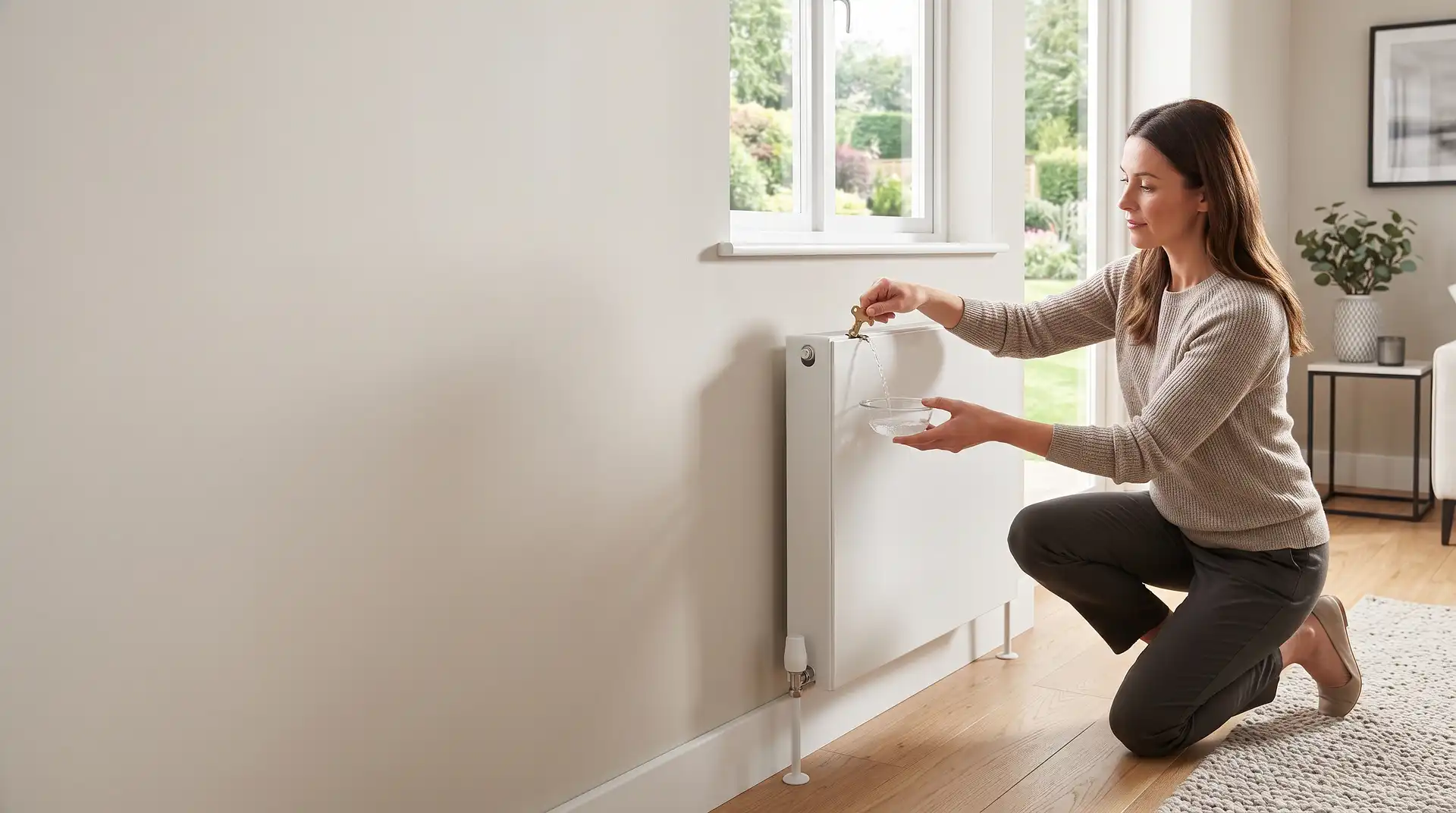
Once the system is cool, the simplest way to lower pressure on most combi and system boilers is to bleed a radiator, which releases a small amount of water (and any trapped air) and reduces overall system pressure as a result. Use a radiator bleed key on the valve at the top corner of a radiator, turning it slowly no more than a quarter turn. You'll hear air hissing out first, followed by water. Close the valve as soon as water starts flowing steadily, then check the boiler's pressure gauge.
Step 4: Repeat in Small Steps if Needed
If pressure is still above the normal range after bleeding one radiator, repeat the process on the same radiator briefly, or move to another, checking the gauge each time rather than opening several valves at once. Small, incremental releases give you far more control than trying to bring the pressure down in one go, and they make it much less likely you'll overshoot and end up with pressure too low instead.
Step 5: Stop Once You're in the Normal Range
Aim to stop once the gauge sits back within the green zone, typically 1–1.5 bar for a cold system — there's no need to chase an exact number, just get back within the normal range shown on your specific boiler.
Common Mistakes and What to Do Instead
Mistake: releasing pressure while the system is still warm. This is the main safety risk in the entire process. Hot, pressurised water or steam escaping from a valve can cause burns. Always confirm radiators are properly cool before starting.
Mistake: opening several radiator valves at once. This makes the amount of pressure released much harder to control and increases the risk of overshooting into low pressure. Bleed one valve at a time and check the gauge in between.
Mistake: repeatedly lowering pressure without asking why it's high in the first place. An occasional correction after topping up too much is normal. If pressure keeps climbing back up over weeks despite correcting it, that's a sign of an underlying fault rather than something to keep manually managing.
Mistake: using the wrong valve. The bleed valve, used for releasing air and a small amount of water, is different from the lockshield or control valve used for balancing or everyday adjustment. Using the wrong one won't achieve what you're trying to do and can cause other issues.
Mistake: ignoring a persistent fault code. If your boiler displays an error alongside the high pressure reading and it doesn't clear once pressure is corrected, that points to something beyond simple over-filling, and it's worth having an engineer investigate rather than repeating the release process.
When High Pressure Signals a Bigger Problem
Persistently high pressure that returns within days or weeks of being corrected, especially without an obvious cause like a recent top-up, is frequently linked to a failing expansion vessel — a component designed specifically to absorb the natural expansion of heated water, which stops doing its job effectively as it wears out. It can also point to a faulty pressure relief valve or, less commonly, an issue with the filling loop not sealing fully closed. None of these resolve themselves with repeated manual bleeding, and continuing to treat the symptom rather than the cause means dealing with the same problem indefinitely.
What It Costs in the UK
Lowering boiler pressure yourself costs nothing beyond a radiator bleed key, typically £3–£10 if you don't already own one. If a professional visit is needed because pressure keeps returning to a high reading, a standard Gas Safe engineer callout typically costs £60–£100, with hourly rates commonly £45–£90 depending on region. A diagnosed fault — a failing expansion vessel or pressure relief valve, for instance — typically costs £100–£300 to repair once identified, separate from the callout fee.
If pressure problems are one symptom among several on an older boiler — alongside inconsistent heating, unusual noises, or previous repairs — it's worth weighing continued repair costs against replacement. Current 2026 UK data puts the average installed cost of a new boiler at around £2,400, with the realistic range running roughly £1,800–£3,500 for a straightforward like-for-like combi swap, and higher for a more involved system conversion or larger property. Persistent, recurring faults on a boiler already several years old are a reasonable prompt to get a replacement quote alongside any repair quote, rather than assuming repair is automatically the cheaper long-term option.
Situation | Typical UK Cost (2026) |
|---|---|
DIY radiator bleed key (if needed) | £3–£10 |
Standard engineer callout | £60–£100 |
Engineer hourly rate | £45–£90 |
Expansion vessel/valve repair (once diagnosed) | £100–£300 |
New boiler, average installed cost | ~£2,400 (range £1,800–£3,500 for like-for-like) |
These are UK market estimates and vary by provider, boiler type, and region — a persistent pressure fault on an older boiler is worth getting a proper diagnosis for, both to fix the immediate issue and to judge whether repeated repairs still make sense against the cost of replacement.
Staying Safe
The core safety rule here is simple and non-negotiable: never release pressure from a boiler or radiator system that's still hot. Let it cool fully first, every time, regardless of how urgent the high reading feels. If a bleed valve feels stuck or seized rather than turning with normal, light effort, don't force it — a damaged valve is a bigger problem than the pressure issue you started with, and it's worth calling an engineer rather than risking it.
If children are in the home, keep them away from radiators and the boiler while you're working, and put the bleed key away once you're finished rather than leaving it accessible.
Pressure ranges and specific bleed valve locations vary by manufacturer, so it's worth checking your boiler's manual before starting, and calling a Gas Safe registered engineer if anything about your system looks unfamiliar.
FAQ
How do I lower my boiler's pressure? Once the system has fully cooled, bleed a radiator using a bleed key — this releases a small amount of water and air, which brings overall system pressure down. Check the boiler's gauge and repeat in small steps if needed.
Is it safe to bleed a radiator to reduce boiler pressure? Yes, but only once the system has fully cooled. Releasing pressure from a hot system risks a sudden release of hot water or steam, which is a genuine scalding risk.
Why does my boiler pressure keep going too high? Occasional high readings after a top-up are normal. Pressure that keeps climbing back up without an obvious cause often points to a failing expansion vessel or a faulty pressure relief valve, which needs a proper diagnosis.
What's normal boiler pressure when the heating is off? Most boilers should read 1–2 bar when cold, usually shown in a green zone on the gauge. Check your specific manufacturer's guidance, since the ideal figure can vary by model.
How much does it cost to fix a persistent high boiler pressure fault? A standard engineer callout typically costs £60–£100, with a diagnosed fault like a failing expansion vessel typically costing £100–£300 to repair once identified.
Should I consider a new boiler if pressure keeps being a problem? If it's one of several recurring issues on an older boiler, it's worth getting a replacement quote alongside any repair quote — current 2026 data puts average installed boiler cost around £2,400, which can be a more sensible option than paying for repeated repairs indefinitely.