How to Prevent a Rug From Moving on Carpet
30 July 2026
How to Prevent a Rug From Moving on Carpet
A rug that slides on carpet isn't really a friction problem in the way it would be on a hard floor. It's usually a surface-mismatch problem: most rug backings are designed to grip a smooth, hard surface, and carpet pile is soft and slightly springy underneath, which means the two materials never really lock together the way a rug and a wood or tile floor would. Fixing this properly means adding grip specifically designed for carpet-on-carpet contact, not just reaching for whatever anti-slip product is cheapest or most visible in the shop.
Why This Matters Beyond Annoyance
A rug that shifts, bunches, or curls at the edges on top of carpet isn't just inconvenient to keep straightening. It's a genuine trip hazard, particularly on stairs or in high-traffic areas, and repeated bunching and flattening at the same spots tends to wear both the rug and the carpet beneath it unevenly over time, since the constant friction and shifting concentrates wear in specific areas rather than distributing it naturally.
Method 1: Carpet-to-Carpet Rug Gripper Tape
Standard double-sided rug tape, designed for hard floors, generally doesn't hold well on carpet, since it needs a smooth surface to actually adhere to. Carpet-specific gripper tape, however, is designed differently, often using a hook-and-loop style grip on one side to catch onto carpet fibres rather than relying on adhesive stick alone. Apply strips around the rug's perimeter and, for larger rugs, in an X pattern across the middle, pressing firmly to help the grip side bed into the carpet pile properly.
Method 2: A Rug Pad Designed for Carpet-on-Carpet Use
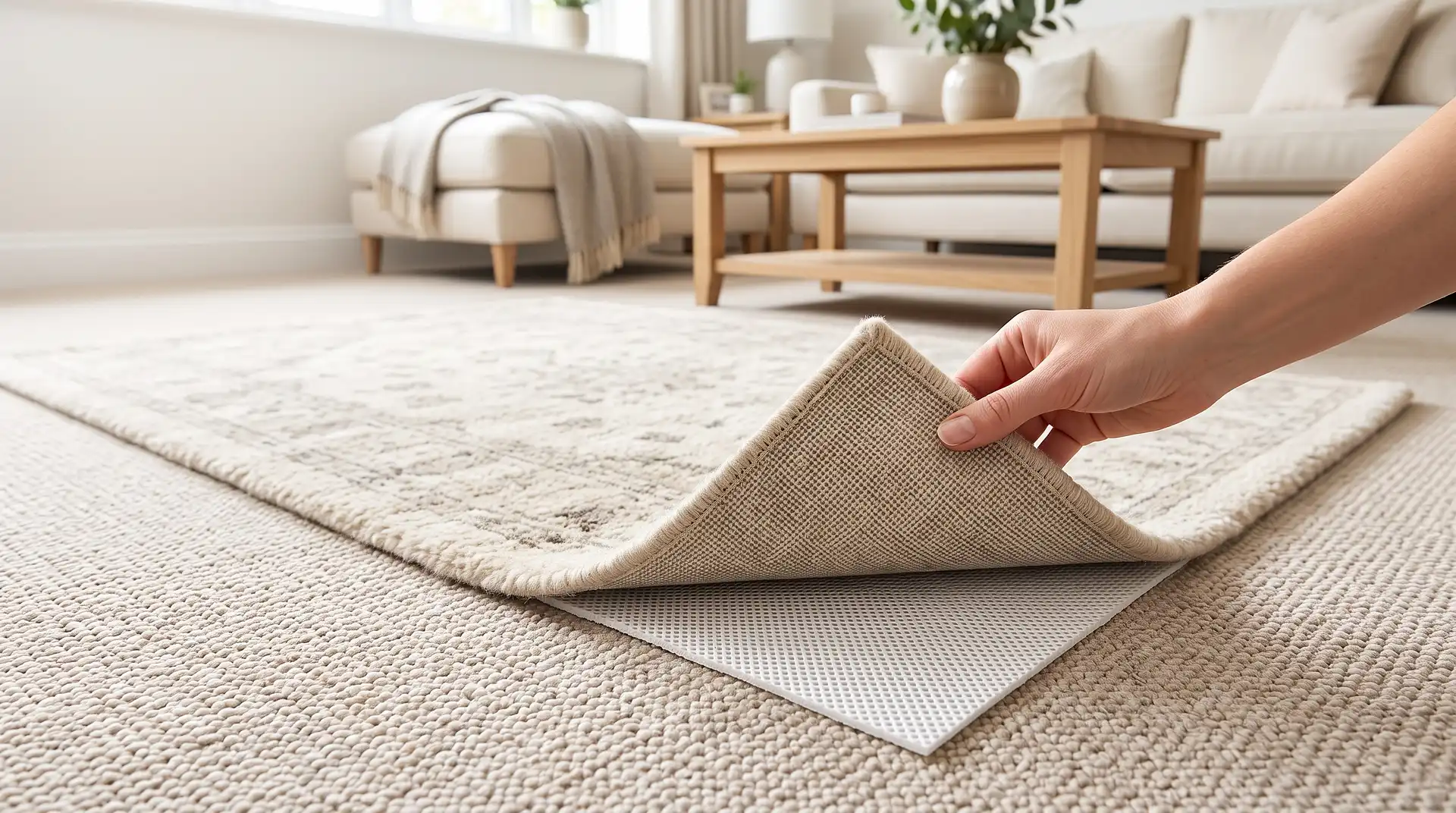
This is generally the most effective and longest-lasting solution for a rug sitting on carpet. Unlike standard felt or foam pads made for hard floors, carpet-specific rug pads use a grippier underside, often a waffle or rubberised open-weave design, that's built to interact with carpet pile rather than just cushion the rug. These pads sit between the rug and the carpet, adding both grip and a bit of cushioning, and they're widely considered the most reliable fix for a rug that keeps moving on carpet, particularly for larger or heavier rugs that smaller tape strips alone struggle to hold in place.
Method 3: Rug Grippers or Corner Anchors
Small, discreet corner grippers, often a two-part adhesive and grip system, can be applied to just the corners of a rug rather than the full perimeter. This is a lighter-touch option, useful for smaller or lighter rugs where full-coverage tape or a full pad feels like more than's needed, though it's generally less effective than a full pad for larger rugs or areas with a lot of foot traffic.
Method 4: Furniture Anchoring
For rugs positioned under furniture, positioning heavier pieces, a sofa, a coffee table, or a bed frame, so their legs sit on the rug itself adds significant weight-based stability without needing any additional product. This works well in combination with tape or a pad rather than as a standalone fix for the whole rug, since furniture typically only covers part of a rug's footprint.
Choosing the Right Method for Your Rug
Small, lightweight rugs in low-traffic areas often do fine with just corner grippers or a few strips of carpet-specific tape. Larger rugs, rugs in high-traffic hallways or living areas, or rugs on stairs benefit from a full carpet-specific rug pad, since the combination of size and foot traffic puts more shifting force on the rug than small anchor points alone can reliably counter. Rugs on stairs specifically deserve particular care given the trip-hazard risk, and a proper stair-rated rug pad or grip system is worth the modest extra cost over a general one.
Step-by-Step: Fitting a Carpet-Specific Rug Pad
Lift the rug and clean the carpet beneath it thoroughly, since dust and debris trapped under the pad can reduce how well it grips over time.
Lay the rug pad on the carpet, trimming to size if needed so it sits slightly smaller than the rug itself, roughly an inch or two in from the rug's edge all round.
Position the rug on top of the pad, centring it carefully, since repositioning after the pad has bedded in is more effort than getting it right the first time.
Press down firmly around the edges and across the middle to help both layers settle into the carpet pile properly.
Walk across it a few times and check for any noticeable sliding or lifting at the edges before considering the job finished.
Common Mistakes and What to Do Instead
Mistake: using standard hard-floor rug tape on carpet. This kind of tape needs a smooth surface to adhere to and generally fails on carpet pile within days or weeks. Use carpet-specific gripper tape or a proper carpet rug pad instead.
Mistake: only anchoring the corners of a large or heavily used rug. Corner grippers alone often aren't enough grip for bigger rugs or high-traffic areas, where the whole rug shifts under regular foot traffic. Step up to a full pad for anything beyond a small, lightweight rug.
Mistake: not cleaning underneath before fitting a pad or tape. Dust, grit, and debris trapped between the rug and carpet reduce how well any grip method actually bonds to the carpet pile. Lift the rug and clean thoroughly before fitting anything new.
Mistake: choosing a pad that's the same size as the rug. A pad that extends slightly beyond the rug's edge can be visible and catch underfoot. Trim the pad to sit a little smaller than the rug all the way round for a cleaner, safer finish.
Mistake: ignoring a rug on stairs until it becomes a hazard. Stair rugs move and curl more than rugs on flat carpet, given the change in surface angle and the concentrated foot traffic. Use a stair-specific grip solution here rather than a general flat-rug product, and check it periodically rather than assuming it'll stay put indefinitely.
When a Rug Keeps Moving Despite Proper Grip Products
If a rug continues to shift even after fitting a proper carpet-specific pad, it's worth checking whether the rug itself has become misshapen or curled at the edges over time, since a rug that's lost its original flat shape can continue moving regardless of how good the grip beneath it is. In this case, addressing the rug's shape, sometimes by reverse-rolling it for a period to counteract curling, alongside the grip product, tends to resolve what a pad alone can't fix on its own.
What It Costs in the UK
Carpet-specific gripper tape typically costs £5 to £12 per roll, enough for a small to medium rug's perimeter. Corner grippers, sold in packs of four, typically cost £4 to £10. A proper carpet-specific rug pad is the bigger investment but generally the most effective, typically costing £15 to £40 for a standard-sized rug, rising to £40 to £80 or more for larger rugs or premium rubberised options, with stair-specific grip products sometimes priced individually per step, commonly £3 to £8 each.
If a rug has caused visible wear or matting on the carpet beneath it from prolonged shifting before a grip solution was fitted, that's a separate issue worth addressing alongside preventing future movement. According to InstantCost.co.uk's 2026 UK pricing data, a standard single-room professional carpet clean, using hot water extraction, typically costs £35 to £55, which can help lift matted or unevenly worn patches left behind by a rug that moved around for a while before being properly secured.
Option | Typical UK Cost (2026) |
|---|---|
Carpet-specific gripper tape | £5 to £12 per roll |
Corner grippers (pack of 4) | £4 to £10 |
Carpet-specific rug pad, standard size | £15 to £40 |
Carpet-specific rug pad, large/premium | £40 to £80+ |
Stair grip strips (per step) | £3 to £8 |
Professional carpet clean, if wear has occurred | £35 to £55 |
These are UK market estimates and vary by rug size, product quality, and retailer. A carpet-specific rug pad is generally worth the extra cost over tape alone for anything beyond a small, lightly used rug.
Staying Safe
A rug that moves, bunches, or curls is a genuine trip hazard, particularly for young children, older adults, or anyone carrying items through the room without a clear view of the floor. Address a shifting rug promptly rather than living with it, and check grip products periodically, since even a good pad or tape can lose effectiveness over time with heavy use or if the rug or carpet beneath it gets damp.
On stairs specifically, a loose or shifting rug is a more serious hazard than on a flat floor, so it's worth checking stair rugs more frequently and choosing a proper stair-rated grip solution rather than a general flat-rug product.
Product-specific guidance and expected lifespan vary by manufacturer, so it's worth checking how often a particular grip product recommends replacement or reapplication, particularly for a rug in a high-traffic area or on stairs.
FAQ
Why does my rug keep sliding on my carpet specifically? Most rug backings and standard anti-slip tapes are designed to grip smooth, hard flooring. Carpet pile is soft and doesn't provide the same surface for standard products to bond to, which is why carpet-specific grip products, rather than general anti-slip solutions, work better here.
What's the best way to stop a rug moving on carpet? A carpet-specific rug pad, designed with a grippier underside built for carpet-on-carpet contact rather than hard floors, is generally the most effective and longest-lasting solution, particularly for larger rugs or high-traffic areas.
Can I use normal rug tape on carpet? Not effectively. Standard double-sided rug tape is designed to adhere to smooth, hard surfaces and generally fails to grip carpet pile properly, often lifting or losing effectiveness within days or weeks.
Do small rugs need the same grip solution as large ones? Not necessarily. Small, lightweight rugs in low-traffic areas often do fine with corner grippers alone, while larger rugs or those in high-traffic areas generally need a full carpet-specific pad for reliable grip.
Is a moving rug actually dangerous, or just annoying? It's a genuine trip hazard, particularly on stairs or in busy areas of the home, and it's worth addressing properly rather than just repositioning the rug repeatedly, especially in a household with children or older adults.
How much does it cost to stop a rug sliding on carpet? A proper carpet-specific rug pad typically costs £15 to £40 for a standard rug, while gripper tape or corner anchors cost considerably less, £5 to £12 and £4 to £10 respectively, though generally with less reliable long-term grip on larger rugs.