How to Reduce Boiler Pressure
16 July 2026
How to Reduce the Pressure on a Boiler (Safely, Step by Step)
Boiler pressure that's crept above the normal range is almost always fixable in a few minutes without a tool or a phone call — but the method matters, because doing it on a system that's still hot risks a scalding release of water or steam. The fix itself is simple once the system has cooled; the part people get wrong is skipping that step.
What Normal Boiler Pressure Looks Like
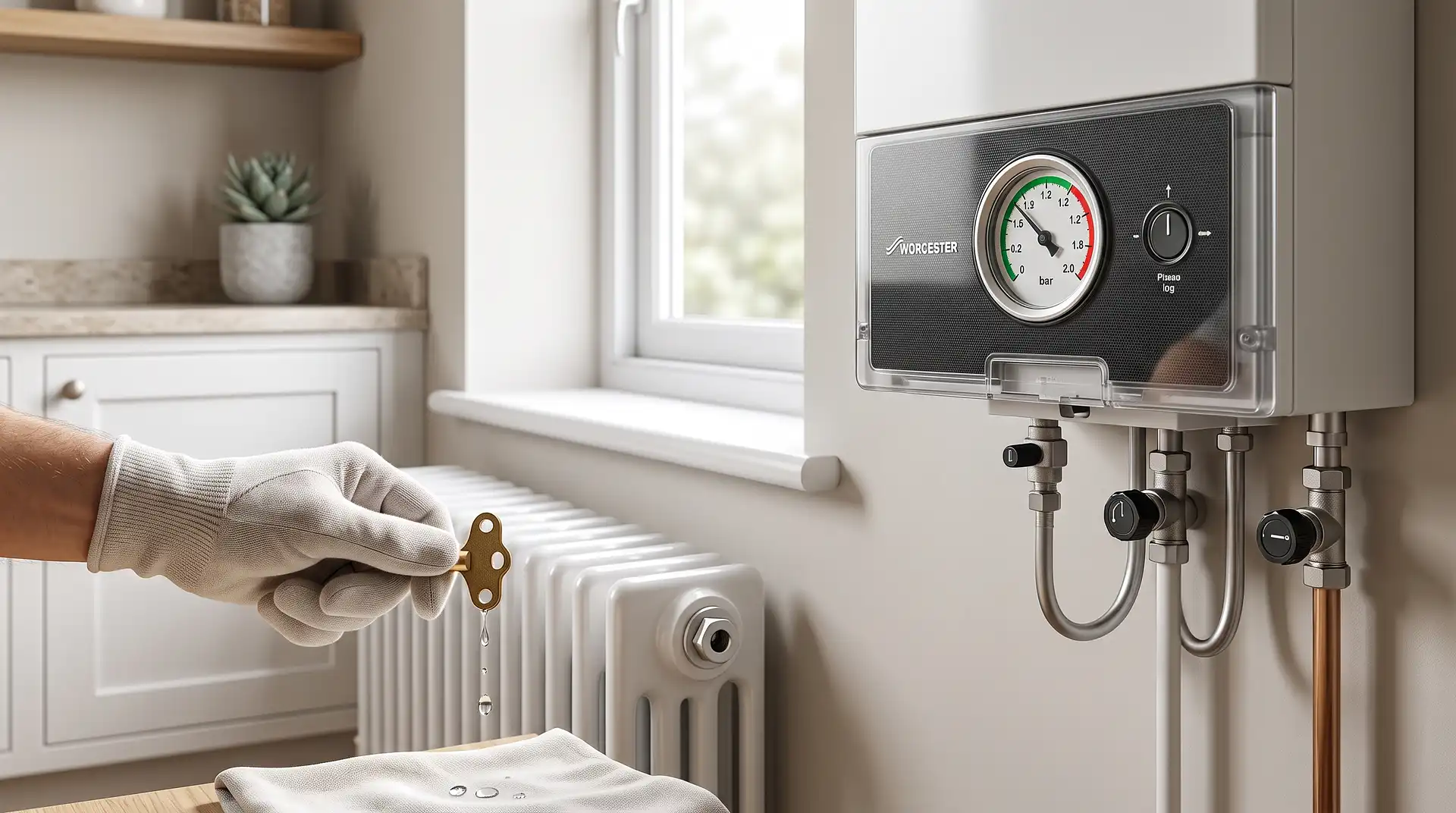
Most domestic boilers should sit between 1 and 2 bar on the pressure gauge when the heating is off and the system is cold — check your specific boiler's manual, since the exact ideal figure can vary slightly by model. Many boilers mark this range in green on the gauge, with red zones above and below it indicating too high or too low. Pressure naturally rises a little once the heating is running and the water heats up and expands, which is normal — the concern is pressure that's high even when the system is cold, since that's a genuine fault rather than expected fluctuation.
Step 1: Let the System Cool Fully
Never attempt to release pressure while the boiler or radiators are hot. Water expands under heat, and releasing pressure from a hot, pressurised system risks a sudden, forceful release of hot water or steam. Turn the heating off and wait at least an hour, ideally longer, until radiators are cool to the touch and the boiler has had time to settle.
Step 2: Identify the Cause Before Releasing Pressure
High pressure usually has one of a few causes, and it's worth a quick check before assuming a simple release is the full fix. If you've recently bled a radiator or topped up the system via the filling loop, over-filling is the most likely and simplest explanation. If pressure has crept up gradually over weeks with no obvious cause, it can point to a fault — commonly a failing expansion vessel or a developing leak somewhere in the system — that a pressure release alone won't resolve long-term.
Step 3: Bleed a Radiator to Release Excess Pressure
For most modern combi and system boilers, the simplest way to bring pressure down is to bleed a radiator, which releases a small amount of water (and trapped air) from the system and lowers overall pressure. Use a radiator bleed key on the valve at the top corner of a radiator, turn it slowly a quarter turn, and you'll hear a hiss of escaping air followed by water once the air has cleared. Close the valve as soon as water starts to steadily flow, and check the boiler pressure gauge — repeat briefly on the same or another radiator if pressure is still above the normal range, checking the gauge between each small release rather than opening several valves at once.
Step 4: Check the Gauge and Stop at the Right Point
Keep an eye on the pressure gauge throughout, since it's easy to release more than needed and end up with pressure too low instead of too high. Aim to stop once the gauge sits back in the normal range (typically 1–1.5 bar for a cold system), rather than trying to hit an exact number — a small amount either side of the middle of the green zone is generally fine.
What to Do If Pressure Is Too Low Instead
If bleeding a radiator (or a previous fix) has brought pressure too low, most combi and system boilers have a filling loop — a flexible braided hose connecting the boiler to the mains water supply, usually with a lever or valve at each end. With the system cool, open both valves slowly to let water back into the system, watching the pressure gauge rise, and close both valves as soon as it reaches the normal range. Adding too much too quickly is the most common mistake here, since the gauge can lag slightly behind the actual pressure, leading to over-filling if you don't pause and check as you go.
Common Mistakes and What to Do Instead
Mistake: releasing pressure while the system is still hot. This is the main safety risk in the whole process — hot, pressurised water or steam can cause burns. Always wait until radiators are cool to the touch before starting.
Mistake: opening several radiator valves at once. This makes it much harder to control exactly how much pressure is released and increases the risk of ending up with pressure too low. Bleed one valve at a time and check the gauge between each.
Mistake: repeatedly topping up pressure without investigating why it keeps dropping or rising. If you find yourself adjusting pressure every few weeks, that's a sign of an underlying fault — commonly a leak or a failing expansion vessel — rather than something to keep manually correcting indefinitely.
Mistake: using the filling loop too quickly. Because the pressure gauge can lag slightly, opening the filling loop valves fully and fast often results in over-filling before you notice. Open slowly and check the gauge in small increments.
Mistake: ignoring an error code alongside a pressure warning. Many modern boilers display a specific fault code when pressure is out of range. If the code persists after a manual adjustment, or reappears quickly, that points to a fault needing a professional diagnosis rather than repeated manual fixes.
When to Call an Engineer Instead
A few signs mean it's time to stop adjusting the pressure yourself and call a Gas Safe registered engineer: pressure that keeps rising or dropping repeatedly within days or weeks of a fix, any visible sign of a leak around the boiler, radiators, or pipework, a persistent fault or error code that doesn't clear after a normal reset, or if you're simply not confident locating or using the filling loop and radiator valves safely. Persistent pressure problems are frequently a sign of a failing expansion vessel, a pinhole leak in pipework, or a faulty pressure relief valve — all of which need a proper diagnosis rather than an ongoing manual top-up.
What It Costs in the UK
Adjusting boiler pressure yourself, once you know how, costs nothing beyond a few minutes and a radiator bleed key, which typically costs a few pounds if you don't already have one. If the issue turns out to need a professional visit — because pressure keeps recurring or a fault is suspected — a standard callout for a Gas Safe engineer typically costs £60–£120 for a scheduled visit, rising to £100–£200 or more for an emergency out-of-hours callout. If the underlying cause turns out to be a specific fault, such as a failing expansion vessel or a leaking valve, that's typically quoted and repaired separately once diagnosed, commonly £100–£300 depending on the part involved and labour required.
Situation | Typical UK Cost (2026) |
|---|---|
DIY radiator bleed key (if needed) | £3–£10 |
Standard engineer callout (scheduled) | £60–£120 |
Emergency/out-of-hours callout | £100–£200+ |
Expansion vessel or valve repair (once diagnosed) | £100–£300 |
These are UK market estimates and vary by provider and region — a persistent pressure fault is almost always cheaper to diagnose and fix properly than to keep manually correcting indefinitely, since the underlying cause typically doesn't resolve itself.
Staying Safe
Never attempt to adjust boiler pressure on a system that's still hot — this is the single most important safety rule in the whole process, since a pressurised, heated system can release scalding water or steam if opened too soon. If you're not confident identifying which valve is the filling loop, or your boiler's setup looks different from a standard configuration, it's entirely reasonable to call a Gas Safe registered engineer rather than experiment, since incorrect use of the wrong valve can cause a bigger issue than the original pressure problem.
If children are in the home, keep them away from the boiler and radiators while you're carrying out any pressure adjustment, and make sure any tools (bleed key) are put away afterward rather than left accessible, since a radiator valve left slightly open is both a minor water-damage risk and something small children shouldn't be able to interfere with.
Boiler pressure ranges and filling loop procedures vary slightly by manufacturer, so it's worth checking your specific boiler's manual before adjusting pressure, and consulting a Gas Safe registered engineer if anything about the process feels unclear or unfamiliar.
FAQ
What's the normal pressure range for a boiler? Most domestic boilers should read 1–2 bar when cold, often shown in a green zone on the gauge. Check your specific boiler's manual, since the exact ideal figure can vary slightly by model.
Is it safe to bleed a radiator to lower boiler pressure? Yes, once the system has fully cooled. Bleeding a radiator releases a small amount of water and trapped air, which lowers overall system pressure — but never do this while radiators or the boiler are still hot.
Why does my boiler pressure keep rising after I release it? Recurring high pressure often points to a fault, such as a failing expansion vessel, rather than something to keep manually correcting. If it happens repeatedly within days or weeks, it's worth calling a Gas Safe engineer.
How do I top up boiler pressure if it's too low? Most combi and system boilers have a filling loop — a braided hose with valves at each end connecting to the mains supply. Open both valves slowly with the system cool, watching the gauge, and close them once pressure reaches the normal range.
How much does it cost to get a boiler pressure fault fixed by a professional? A standard engineer callout typically costs £60–£120, with any specific repair (such as a failing expansion vessel) typically an additional £100–£300 once diagnosed.
Can low boiler pressure damage my boiler? Persistently low pressure can affect performance and may trigger the boiler to lock out for safety, but it generally won't cause immediate damage. It's still worth topping up promptly and investigating if it recurs.