How to Remove Carpet Beetles
8 August 2026
How to Remove Carpet Beetles From Your Home
Removing carpet beetles is fundamentally a two-part job: physically extracting the larvae and eggs already in your carpet, and treating the surface so anything you've missed doesn't survive to keep feeding. Most DIY attempts only really do the first part properly, a good vacuum, and skip the thoroughness that actually finishes the job. Getting genuine removal, not just a visible reduction, means working through vacuuming, washing, heat treatment, and insecticide in that specific order, each stage catching what the last one missed.
Where Carpet Beetle Larvae Actually Live
The larvae, the actual damage-causing stage, avoid light and stay in undisturbed spots: carpet edges against skirting boards, beneath heavy furniture that rarely moves, inside wardrobes, and in stored fabric boxes. This matters for removal specifically, since a quick pass with the vacuum down the middle of a room does very little if the larvae are concentrated three inches from the wall under a sofa that hasn't shifted in months.
Stage One: Thorough Vacuuming
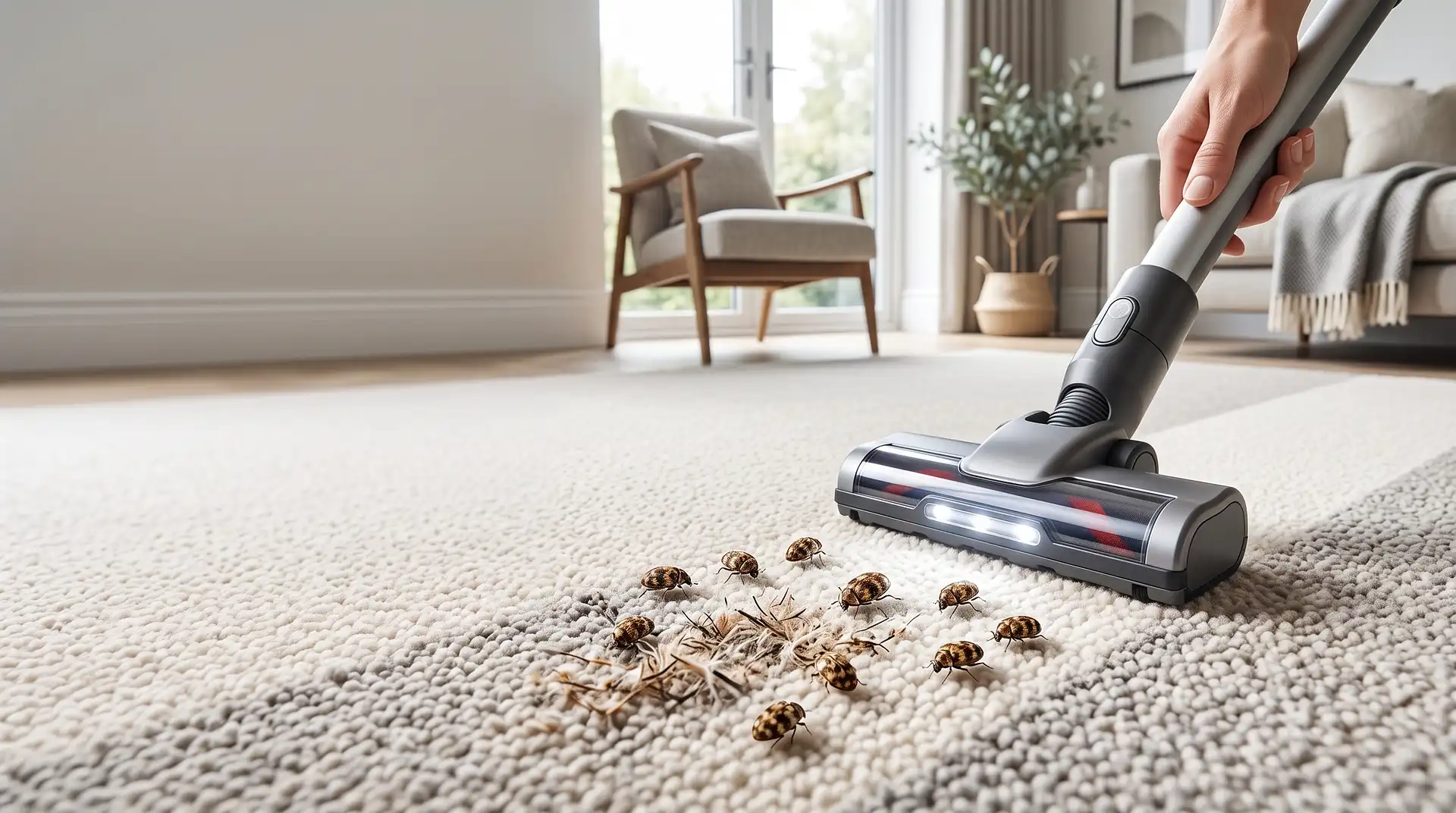
Vacuum every carpeted area with genuine thoroughness, not a quick pass, working carpet edges, skirting board junctions, and under all furniture specifically, moving pieces that don't normally move rather than vacuuming around them. This physically removes a meaningful proportion of larvae and eggs before any other treatment even begins, and it's also generally a prerequisite for whatever treatment follows, since a heavily fluffed or debris-laden carpet reduces how effectively either heat or insecticide can actually reach the surface. Dispose of the vacuum bag, or empty a bagless canister, immediately outside rather than leaving it sitting indoors.
Stage Two: Wash What Can Be Washed
Any washable fabric in the affected area, clothing, bedding, curtains, cushion covers, needs washing on the hottest cycle the fabric allows. Heat above roughly 50 to 60°C reliably kills both larvae and eggs, which is why this step matters considerably more than it might seem for something that looks like a carpet-specific problem. Items that can't be washed, wool coats, delicate fabrics, should go to dry cleaning instead, which achieves a comparable result through the cleaning process itself.
Stage Three: Heat-Treat the Carpet Itself
This is the stage most DIY approaches skip entirely, and it's genuinely one of the more effective tools available. Professional hot-water extraction, the UK industry standard method according to current carpet cleaning guidance, uses hot water and detergent injected under pressure and immediately extracted, reaching temperatures that help address larvae and eggs within the carpet pile itself, not just visible surface dirt. This is worth treating as a genuine part of beetle removal, not just a cosmetic step done separately from pest treatment.
Stage Four: Apply a Residual Insecticide
For anything beyond a very light, early infestation, vacuuming and washing alone generally aren't sufficient on their own. A residual insecticide spray formulated for carpet beetles, commonly based on cypermethrin, a synthetic pyrethroid widely used professionally, leaves a chemical barrier on treated surfaces that continues working for weeks after application. Apply along carpet edges, skirting boards, under furniture, and inside affected wardrobes, following the product's specific instructions, and avoid vacuuming the treated area for the period stated on the label, since premature vacuuming removes the residual protection before it's had time to work.
Stage Five: Repeat and Check
A single pass through these four stages often isn't the end of it. Carpet beetle eggs can survive an initial treatment and hatch afterward, which is why a second, thorough vacuum and inspection two to three weeks later matters, checking specifically for fresh damage or shed larval skins that indicate the removal isn't fully complete yet.
Should You Do This Yourself or Book Professional Cleaning?
DIY hire from a UK supermarket, Rug Doctor and similar, typically costs £25 to £40 per day plus £15 to £25 for chemicals, and works for small areas or a quick refresh. The trade-off is that these machines extract less water than commercial units, leading to longer drying times and a genuine risk of mould if carpets stay damp, which matters even more during a beetle removal process, since damp carpet is also a less hospitable environment for the residual insecticide to work as intended.
Professional cleaning typically pays for itself if you're dealing with multiple rooms, an established infestation, or older carpets where DIY equipment's lighter extraction genuinely isn't enough. A professional can also offer protector treatments and odour neutralisers that DIY units can't match, worth asking about specifically if beetle damage has affected how a room smells as well as looks.
If beetle removal is prompting you to think about a broader clean of the property rather than just the affected carpet, it's worth knowing where that fits against general house cleaning costs too. Our related guide on the InstantCost blog covers how much a deep clean for a house actually costs, useful if you're weighing up combining carpet-specific pest treatment with a wider deep clean of the property at the same time.
What to Look for in a Professional Carpet Cleaner
Look for membership of the National Carpet Cleaners Association, NCCA members are insured and have completed accredited training, a genuine reassurance when you're paying for a treatment specifically meant to address an infestation rather than just general dirt. Always confirm whether furniture moving, vacuuming, and any stain or pest pre-treatment are included in the headline price, since these matter more for beetle removal specifically than for a routine clean, given how much of the actual larvae population lives under furniture and along edges that need to be properly accessed.
Be cautious of quotes that look unusually cheap, under roughly £20 per room. These often rely on rotary brushes that can damage carpet fibres, or use bait-and-switch tactics where the agreed price doubles on arrival, neither of which is what you want when you're specifically trying to get a thorough, proper treatment rather than a quick surface pass.
Common Mistakes and What to Do Instead
Mistake: vacuuming once and considering the job done. A single pass removes some larvae and eggs but rarely all of them, particularly from carpet edges and under furniture that hasn't moved in a while. Treat vacuuming as an ongoing part of the process, not a one-off fix.
Mistake: skipping the wash cycle for fabric items because the problem seems carpet-specific. Larvae feed on any natural fibre, not just carpet, and washable items in the affected area need treating alongside the carpet itself, not separately or later.
Mistake: applying insecticide without vacuuming and cleaning first. Debris and fluff on the carpet surface reduce how effectively any treatment can actually reach and work on the larvae underneath. Vacuum and clean thoroughly before applying any chemical treatment.
Mistake: vacuuming immediately after insecticide application. This removes the residual protective layer before it's had time to work. Follow the product's specific guidance on how long to leave a treated area, often around ten days for professional-strength treatments.
Mistake: choosing DIY carpet cleaning equipment for a genuinely established infestation. Lighter extraction and longer drying times matter more here than for a routine clean, since damp carpet undermines the whole treatment process. For anything beyond a small, early-stage problem, professional hot-water extraction is worth the extra cost.
What It Costs in the UK
DIY equipment hire typically costs £25 to £40 per day plus £15 to £25 for cleaning chemicals, and a residual insecticide spray specifically formulated for carpet beetles typically costs £8 to £15 per can.
According to InstantCost.co.uk's 2026 UK carpet cleaning pricing data, professional hot-water extraction for a single small room typically costs £35 to £55, and a single large room £55 to £90. A whole 3-bed house, all carpets, typically costs £140 to £240. Stairs and landing typically cost £40 to £70. Deep-pile or shag carpets, which take longer to brush and dry, may carry a 10 to 20% surcharge on top of standard pricing, worth knowing if the affected carpet is a thicker pile type.
Item or Service | Typical UK Cost (2026) |
|---|---|
DIY machine hire (per day) | £25 to £40 |
DIY cleaning chemicals | £15 to £25 |
Residual insecticide spray | £8 to £15 per can |
Professional clean, single small room | £35 to £55 |
Professional clean, single large room | £55 to £90 |
Professional clean, stairs and landing | £40 to £70 |
Professional clean, whole 3-bed house | £140 to £240 |
Deep-pile/shag carpet surcharge | 10 to 20% |
These figures are based on InstantCost.co.uk's 2026 UK carpet cleaning pricing data and vary by region, carpet condition, and provider. Get three quotes and avoid anything priced unusually low, under roughly £20 per room, which often signals corners being cut on method or an unreliable final price.
Staying Safe
Ventilate the room well during and after insecticide application, and keep children and pets out of the treated area for the period specified on the product label, often several hours at minimum. Avoid vacuuming treated areas prematurely, both for effectiveness and to avoid disturbing a product not yet fully settled. If you have young children who put things in their mouths, or pets that spend significant time on carpets, this is a genuine reason to lean toward professional treatment, where technicians are trained in safe application for occupied homes.
Product-specific safety data and re-entry times vary by manufacturer and provider, so check the label or ask a professional directly, particularly in a household with children or pets.
FAQ
How do I physically remove carpet beetle larvae from my carpet? Thorough vacuuming focused on edges, skirting board junctions, and under furniture removes a meaningful proportion, followed by hot-water extraction cleaning and a residual insecticide treatment for anything beyond a very light infestation.
Does professional carpet cleaning help remove carpet beetles? Yes, hot-water extraction, the UK industry standard method, reaches temperatures that help address larvae and eggs within the carpet pile itself, making it a genuine part of the removal process rather than just a cosmetic clean.
Is DIY carpet cleaning as effective as professional cleaning for beetle removal? For light, early infestations, it can help, but DIY machines extract less water, leading to longer drying times and a mould risk, which also undermines how well any insecticide treatment can work on a carpet that stays damp longer than it should.
How much does professional carpet cleaning cost for beetle-affected carpets in the UK? A single small room typically costs £35 to £55, and a whole 3-bed house £140 to £240, according to 2026 UK data, with deep-pile carpets carrying a possible 10 to 20% surcharge.
How long after insecticide treatment should I avoid vacuuming? Follow the specific product's guidance, often around ten days, since vacuuming too soon removes the residual protective layer before it's had time to continue working on larvae that weren't eliminated in the initial treatment.
What should I look for in a professional carpet cleaner for a beetle infestation? NCCA membership, confirmation that furniture moving and pre-treatment are included in the price, and caution around any quote under roughly £20 per room, which often signals a lower-quality or unreliable service.