How to Repressurise a Boiler
16 July 2026
How to Repressurise a Boiler (Step by Step, Safely)
Low boiler pressure is one of the most common reasons a combi or system boiler stops working properly — heating that won't fire up, hot water that cuts out, or an error code on the display often trace back to pressure that's simply dropped below what the system needs to run. It's also one of the easiest fixes in the whole house: most modern boilers can be repressurised in under five minutes using a filling loop, without any tools or a call-out.
What Low Pressure Looks Like
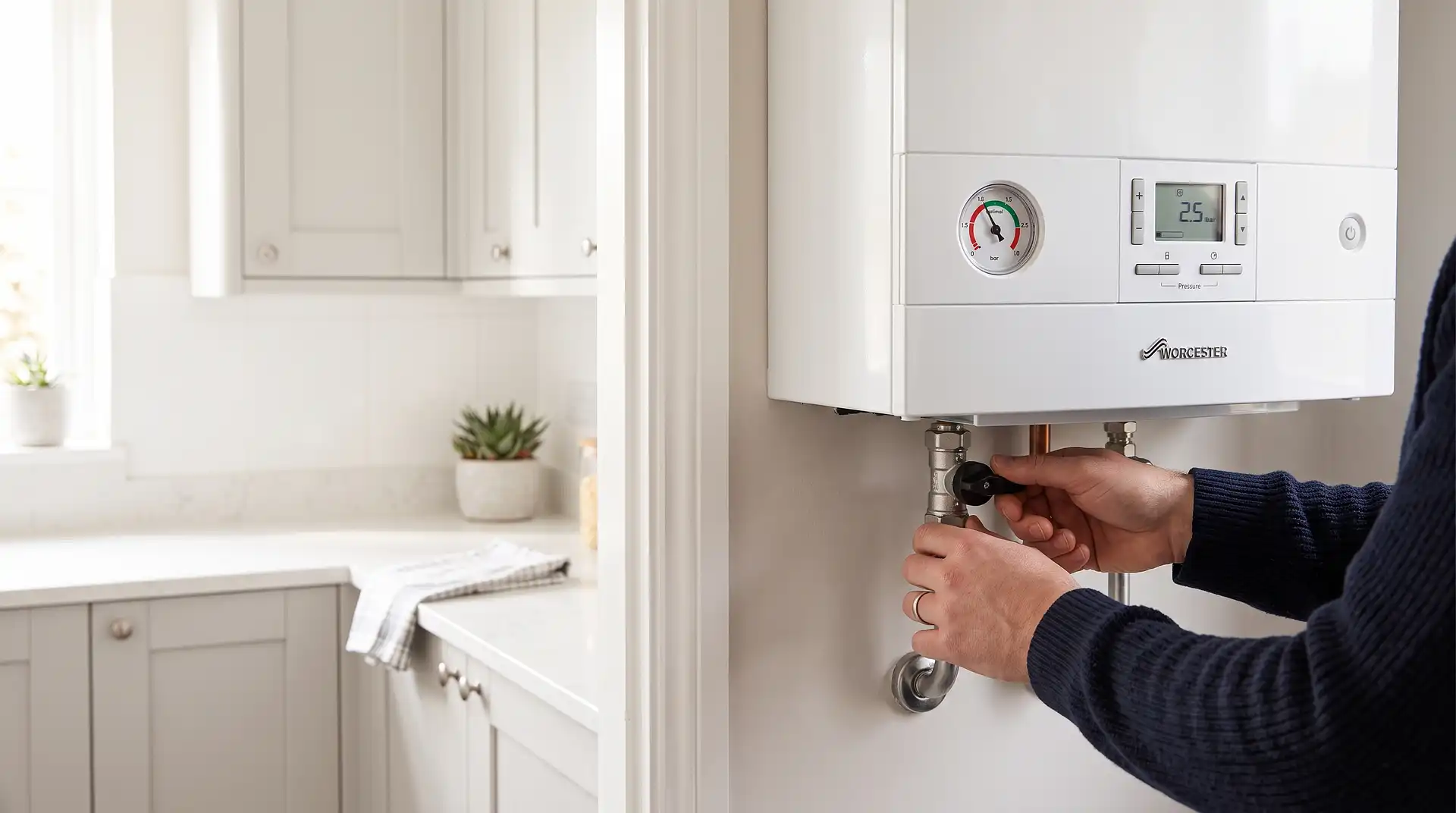
Most domestic boilers should read 1–2 bar on the pressure gauge when the system is cold, often shown in a green zone with red zones marking too high or too low — check your specific boiler's manual, since the exact figure can vary slightly by model. If the needle sits below the green zone, especially below around 1 bar, the boiler may refuse to fire, lock out, or display a low-pressure fault code until it's corrected.
What You Need
Almost all modern combi and system boilers have a built-in filling loop — a flexible braided hose with a valve or lever at each end, connecting the boiler's internal system to the mains cold water supply. Some are permanently attached; others are a separate hose you connect between two marked points when needed and remove afterward. Check your boiler's manual or the area directly beneath the unit if you're not sure which setup you have — the exact valve type and position vary by manufacturer, but the underlying process is the same.
Step 1: Turn Off the Boiler and Let It Cool
Switch the boiler off and, ideally, let the heating system cool down if it's been running recently. Repressurising a hot system isn't as immediately hazardous as releasing pressure from one, but working with a cool system makes the pressure reading more accurate and the whole process easier to control.
Step 2: Locate and Check the Filling Loop
Find the filling loop, usually a silver braided hose beneath the boiler with a lever or valve at each end. Confirm both ends are attached securely if it's a removable loop — a loose connection is one of the most common causes of water leaking out during the process rather than into the system.
Step 3: Open Both Valves Slowly
Open one valve, then the other, slowly and one at a time rather than both at once. You should hear water flowing into the system, and the pressure gauge will start to rise. Watch the gauge closely throughout this step — it's the main way you'll know when to stop, and it can lag slightly behind the actual pressure, so slow and incremental is safer than fast.
Step 4: Stop at the Right Pressure
Close both valves as soon as the gauge reaches the normal range — typically around 1 to 1.5 bar for a cold system, or whatever your specific manufacturer's guidance states. Close the valves in the same order you opened them, checking the gauge doesn't continue climbing after you've shut off the flow, which can happen briefly as pressure settles through the system.
Step 5: Turn the Boiler Back On and Check
Switch the boiler back on and check that it fires up normally without displaying an error code. Keep an eye on the pressure gauge over the next day or so — a small drop back toward the lower end of normal is common as any trapped air works its way out, but pressure that keeps dropping quickly or repeatedly points to a separate issue rather than a one-off top-up need.
Common Mistakes and What to Do Instead
Mistake: opening both filling loop valves fully and quickly. This makes it easy to overshoot the correct pressure before you notice, since the gauge can lag slightly. Open slowly, one valve first, and check the gauge as you go.
Mistake: forgetting to close both valves fully afterward. A valve left even slightly open can cause a slow leak into the system over time, gradually raising pressure again days later. Double-check both are fully closed once you're done.
Mistake: repressurising repeatedly without investigating why pressure keeps dropping. A one-off top-up after bleeding a radiator is normal. Needing to repressurise every few weeks points to an underlying leak or a fault, most commonly in a pipe joint, radiator valve, or the pressure relief valve, and isn't something to keep manually correcting indefinitely.
Mistake: using a loose or disconnected removable filling loop. If your boiler uses a detachable loop rather than a permanently fitted one, make sure both ends are pushed on and secured properly before opening the valves — a loose connection is a common cause of water spraying out rather than entering the system.
Mistake: ignoring a persistent fault code after repressurising. If the boiler still shows a low-pressure or fault code after you've corrected the reading on the gauge, that's a sign of a sensor issue or a fault beyond simple pressure loss, and it's worth calling an engineer rather than repeating the process multiple times.
When to Call an Engineer Instead
Repressurising is a reasonable DIY task for most people once they've located the filling loop and understood the process. It's time to call a Gas Safe registered engineer if pressure keeps dropping within days or weeks of topping up, if you notice any visible sign of water around the boiler, radiators, or pipework, if the boiler won't hold pressure at all even briefly, or if you're not confident identifying the correct valves on your specific model. Recurring pressure loss is frequently traced to a small leak somewhere in the system — sometimes visible, sometimes not — or a failing component like the pressure relief valve, and these need a proper diagnosis rather than an ongoing manual top-up.
What It Costs in the UK
Repressurising a boiler yourself costs nothing beyond a few minutes, since the filling loop uses your existing mains water supply. If the issue needs a professional visit — because pressure won't hold, or a fault is suspected — a standard Gas Safe engineer callout typically costs £60–£120 for a scheduled visit, rising to £100–£200 or more for emergency out-of-hours callouts. If a specific fault is diagnosed, such as a leaking valve or joint, repair costs are typically quoted separately and commonly range £100–£300 depending on the part and labour involved.
Situation | Typical UK Cost (2026) |
|---|---|
DIY repressurising via filling loop | Free (mains water only) |
Standard engineer callout (scheduled) | £60–£120 |
Emergency/out-of-hours callout | £100–£200+ |
Leak or valve repair (once diagnosed) | £100–£300 |
These are UK market estimates and vary by provider and region — a persistent pressure issue is almost always cheaper to diagnose and fix properly than to keep manually correcting on an ongoing basis.
Staying Safe
Repressurising itself is a low-risk task compared with releasing pressure from a hot system, but a few precautions still matter. Never force a valve that feels stuck or seized — this can damage the fitting and turn a simple top-up into a bigger repair. If you're using a removable filling loop, check it's genuinely disconnected and stored safely afterward rather than left attached, since a loop left connected can be a route for pressure to creep up unnoticed over time if a valve isn't fully seated.
If children are in the home, keep them away from the boiler and filling loop area while you're working, and make sure any loose hose or tool is put away once you're finished rather than left accessible near the unit.
Filling loop procedures and pressure ranges vary slightly by manufacturer, so it's worth checking your specific boiler's manual before repressurising, and consulting a Gas Safe registered engineer if anything about your setup looks different from a standard configuration.
FAQ
How do I know if my boiler needs repressurising? Check the pressure gauge — if it reads below the green zone, typically under 1 bar when the system is cold, your boiler likely needs repressurising. A low-pressure fault code or the boiler refusing to fire are also common signs.
Is it safe to repressurise a boiler myself? Yes, for most modern combi and system boilers with a filling loop. It's a routine task that takes a few minutes and doesn't require tools, though it's worth checking your manufacturer's manual for model-specific guidance.
What pressure should I stop at when repressurising? Most boilers should sit at 1–1.5 bar when cold, often shown as a green zone on the gauge. Stop adding water as soon as the needle reaches this range.
Why does my boiler keep losing pressure after I top it up? Recurring pressure loss usually points to a leak somewhere in the system or a failing component like the pressure relief valve, rather than something to keep manually correcting. If it happens repeatedly, it's worth calling a Gas Safe engineer.
How much does it cost to get a boiler repressurised professionally? Repressurising itself is typically included in a standard engineer callout, which costs £60–£120. If a fault is causing the pressure loss, any repair is usually quoted separately, commonly £100–£300.
Can I damage my boiler by repressurising it incorrectly? Overfilling beyond the recommended range or forcing a stuck valve are the main risks. Going slowly and checking the gauge as you go, and never forcing a valve that feels seized, avoids both.