How to Unblock a Kitchen Sink
23 July 2026
How to Unblock a Kitchen Sink (Without Calling a Plumber First)
Most kitchen sink blockages are caused by the same thing — fat, oil, and food debris that's cooled and hardened somewhere in the U-bend or the pipe just beyond it — and most of them respond to a fairly predictable escalation of methods, starting with the simplest and moving up only if needed. Working through that sequence in order, rather than jumping straight to the most aggressive option, is both more likely to succeed without damage and cheaper than assuming you need a plumber from the outset.
Why Kitchen Sinks Block More Than Other Drains
Kitchen sinks deal with fat, oil, and grease in a way bathroom sinks generally don't — cooking fat that goes down the drain warm and liquid cools and solidifies inside the pipe, gradually narrowing it and catching food particles, coffee grounds, and other debris until the pipe eventually blocks completely. This is why a kitchen sink blockage often builds gradually — slower draining over several days or weeks before it stops entirely — rather than blocking suddenly, and why prevention (not pouring fat down the sink) matters more here than for almost any other drain in the house.
Step 1: Try Boiling Water First
For a partial blockage, or one you suspect is fat-based, pour a full kettle of boiling water down the drain in two or three stages, giving it a minute or so between pours to work through the blockage. This alone resolves many fat-based blockages, since it melts solidified grease enough to let it wash through, and it costs nothing and carries essentially no risk of damage.
Step 2: Try a Sink Plunger
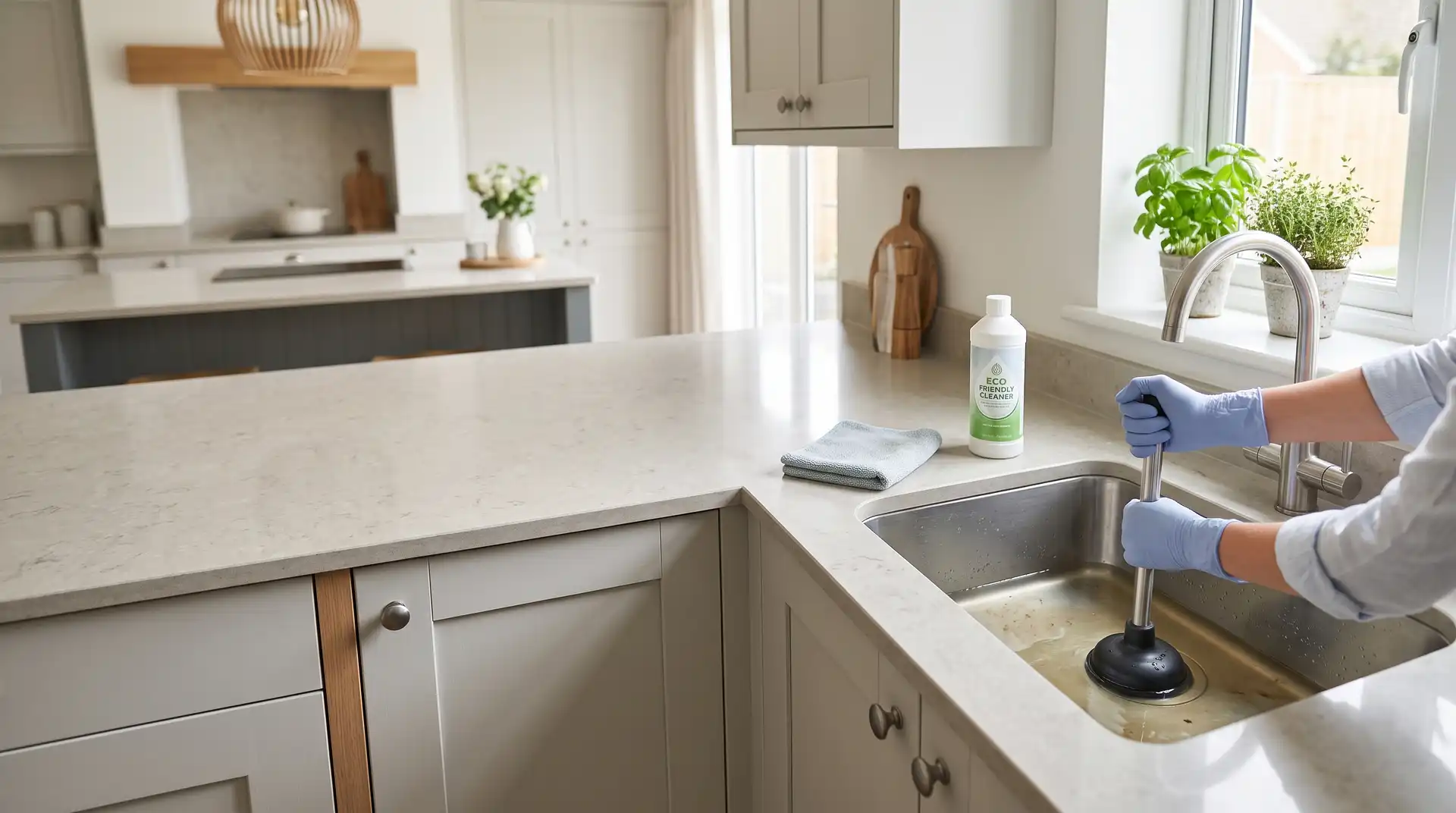
If boiling water alone doesn't clear it, use a sink plunger (a cup plunger, not a toilet-specific flange plunger). Block the overflow hole with a wet cloth first, since an open overflow lets the plunger's pressure escape rather than pushing it into the blockage. Add enough water to cover the plunger's cup, then plunge firmly and repeatedly, maintaining a tight seal around the drain opening throughout.
Step 3: Try a Baking Soda and Vinegar Treatment
Pour roughly half a cup of baking soda down the drain, followed by half a cup of white vinegar, and cover the drain (a plug or cloth works) to keep the resulting fizzing reaction contained within the pipe rather than escaping back up. Leave it for 15–20 minutes, then flush with hot water. This is a mild, low-risk method that can help with lighter blockages and is worth trying before anything more mechanical, though it's less effective against a substantial, established fat blockage than boiling water or a plunger.
Step 4: Check and Clean the U-Bend
If the above hasn't worked, the blockage may be sitting in the U-bend (P-trap) directly under the sink. Place a bucket underneath to catch water and debris, then unscrew the U-bend by hand or with a wrench, checking both the trap itself and the pipe fittings on either side for trapped debris. Clean it out, check for any damage to the seals, and reassemble securely before running water to test.
Step 5: Use a Sink Auger or Drain Snake
For a blockage further down the pipe than the U-bend, a hand-crank sink snake reaches further and can break up or hook debris the previous methods can't touch. Feed it in slowly while turning the crank, working through resistance with gentle pressure rather than forcing it, and retract slowly once you feel the blockage give or break up. Run hot water through afterward to flush out loosened debris.
Common Mistakes and What to Do Instead
Mistake: reaching for a chemical drain cleaner first. These can be effective on light blockages but are corrosive, and repeated or prolonged use can damage older pipework, particularly if the blockage doesn't clear on the first attempt and the product sits in the pipe longer than intended. Try the lower-risk mechanical methods above before chemical options.
Mistake: using a flange (toilet) plunger instead of a cup plunger on a sink. A flange plunger is shaped for a toilet bowl and doesn't create an effective seal on a flat sink drain. Use a standard cup plunger for sinks.
Mistake: not blocking the overflow hole before plunging. An open overflow lets pressure escape rather than forcing it into the blockage, which significantly reduces how effective plunging is. Always cover it with a wet cloth first.
Mistake: forcing a snake against resistance. Pushing hard rather than turning gently against resistance risks scratching the pipe's interior, which can lead to leaks or corrosion later. Turn the crank and apply steady, gentle pressure instead of force.
Mistake: not checking both sides of a double sink. If you have a double kitchen sink, a blockage can sometimes be affecting the shared pipe run rather than just one bowl, and treating only the blocked side without checking the other can miss the actual location of the problem.
Mistake: mixing chemical drain cleaner with a mechanical method immediately afterward. If you've used a chemical cleaner, flush thoroughly with plenty of water before following up with a plunger or snake, since residual chemical can splash back during mechanical work.
Preventing Future Blockages
Never pour fat, oil, or grease down the sink, even diluted with hot water — let it cool and solidify in a container, then dispose of it in general waste instead. Use a sink strainer to catch food particles and coffee grounds before they enter the drain, and run hot water through the sink for 20–30 seconds after washing up, particularly after cooking with any fat or oil, to help clear anything that has made it into the pipe before it has a chance to solidify. Consider a monthly baking soda and vinegar treatment as routine maintenance, even without an active blockage, to help keep the pipe clear of the gradual grease buildup that leads to blockages in the first place.
When to Call a Plumber Instead
If none of the DIY steps above clear the blockage, if water backs up into other fixtures (suggesting a blockage further down the shared drain line rather than just the kitchen sink's own pipe), if the sink drains slowly again within days of clearing it (suggesting a partial blockage that needs proper rodding or jetting rather than a quick fix), or if you're not comfortable using a drain snake or taking apart the U-bend, it's a reasonable point to call a plumber rather than escalate further with DIY tools.
What It Costs in the UK
DIY methods cost very little — boiling water and a baking soda and vinegar treatment are essentially free, a sink plunger typically costs £5–£15, and a basic hand-crank sink snake typically costs £15–£40. Chemical drain cleaner, if used, typically costs £5–£10 per bottle.
If a plumber is needed, a standard call-out for a scheduled visit typically costs around £60, rising to roughly £180 for an emergency out-of-hours callout. Snaking a blocked sink, including the callout, typically totals £60–£90. If the blockage is more established or further down the line, drain rodding is usually priced around £85, and high-pressure jetting — often needed for significant grease buildup a snake can't fully clear — around £185. London and the South East generally run around 20% above the rest of the UK for this kind of work.
Option | Typical UK Cost (2026) |
|---|---|
Boiling water / baking soda and vinegar | Free |
Sink plunger | £5–£15 |
Hand-crank sink snake | £15–£40 |
Chemical drain cleaner | £5–£10/bottle |
Plumber: unblock sink (inc. callout) | £60–£90 |
Plumber: drain rodding | ~£85 |
Plumber: high-pressure jetting | ~£185 |
These are UK market estimates and vary by provider, blockage severity, and region — working through the DIY methods above in order is worth doing before booking a plumber, since most kitchen sink blockages resolve without needing professional equipment.
Staying Safe
If using a chemical drain cleaner, wear gloves and avoid splashing it on skin or into eyes, and never mix it with bleach or any other cleaning product, since combining chemicals can produce toxic gas. Keep chemical drain cleaner in its original labelled container, stored well out of reach of children.
A drain snake's cable can recoil unexpectedly if cranked too fast or if it catches suddenly, so turn it slowly and keep hands and face clear of the opening while working. If children are in the home, keep them away from the sink area while you're using chemical products or mechanical tools, and clean up any spilled water promptly to avoid a slip hazard.
Product-specific safety data for chemical drain cleaners can vary by manufacturer, so it's worth checking the label before use, particularly around ventilation and any specific pipe-material warnings.
FAQ
What's the fastest way to unblock a kitchen sink? Boiling water is the quickest first attempt and resolves many fat-based blockages on its own. If that doesn't work, a cup plunger with the overflow blocked is usually the next step.
Why does my kitchen sink keep blocking in the same spot? This usually points to a partial blockage, often fat or grease buildup, that's never fully cleared. If DIY methods only provide a temporary fix, a plumber can rod or jet the line to clear it properly.
Can I use a toilet plunger to unblock a kitchen sink? It's not ideal. A flange (toilet) plunger doesn't seal effectively on a flat sink drain. A standard cup plunger is the right tool for a sink.
Is it safe to use chemical drain cleaner regularly? It's best used occasionally rather than as a routine fix, since repeated or prolonged use can be corrosive to some pipework over time. Mechanical methods and prevention (not pouring fat down the drain) are generally better long-term approaches.
How much does it cost to have a plumber unblock a kitchen sink? Snaking a blocked sink, including the callout fee, typically costs £60–£90 in the UK, rising to around £85 for drain rodding or £185 for high-pressure jetting if the blockage is more established.
How can I stop my kitchen sink from blocking in the first place? Never pour fat or oil down the sink, use a sink strainer to catch food debris, and run hot water through the drain after washing up, particularly after cooking with fat.