How to Use a Carpet Cleaner
20 July 2026
How to Use a Carpet Cleaner (Without Soaking or Streaking It)
Most disappointing DIY carpet cleaning results come down to one of two opposite mistakes: using too much water and solution, which leaves the carpet damp for days and risks mould in the underlay, or moving too fast and not giving the machine time to actually extract what it's just laid down. A carpet cleaner works by injecting a cleaning solution into the fibres and then extracting it back out with suction — both halves of that process matter, and skipping or rushing the extraction pass is the single most common reason carpets look fine wet but dry patchy, sticky, or re-soil quickly.
How a Carpet Cleaner Actually Works
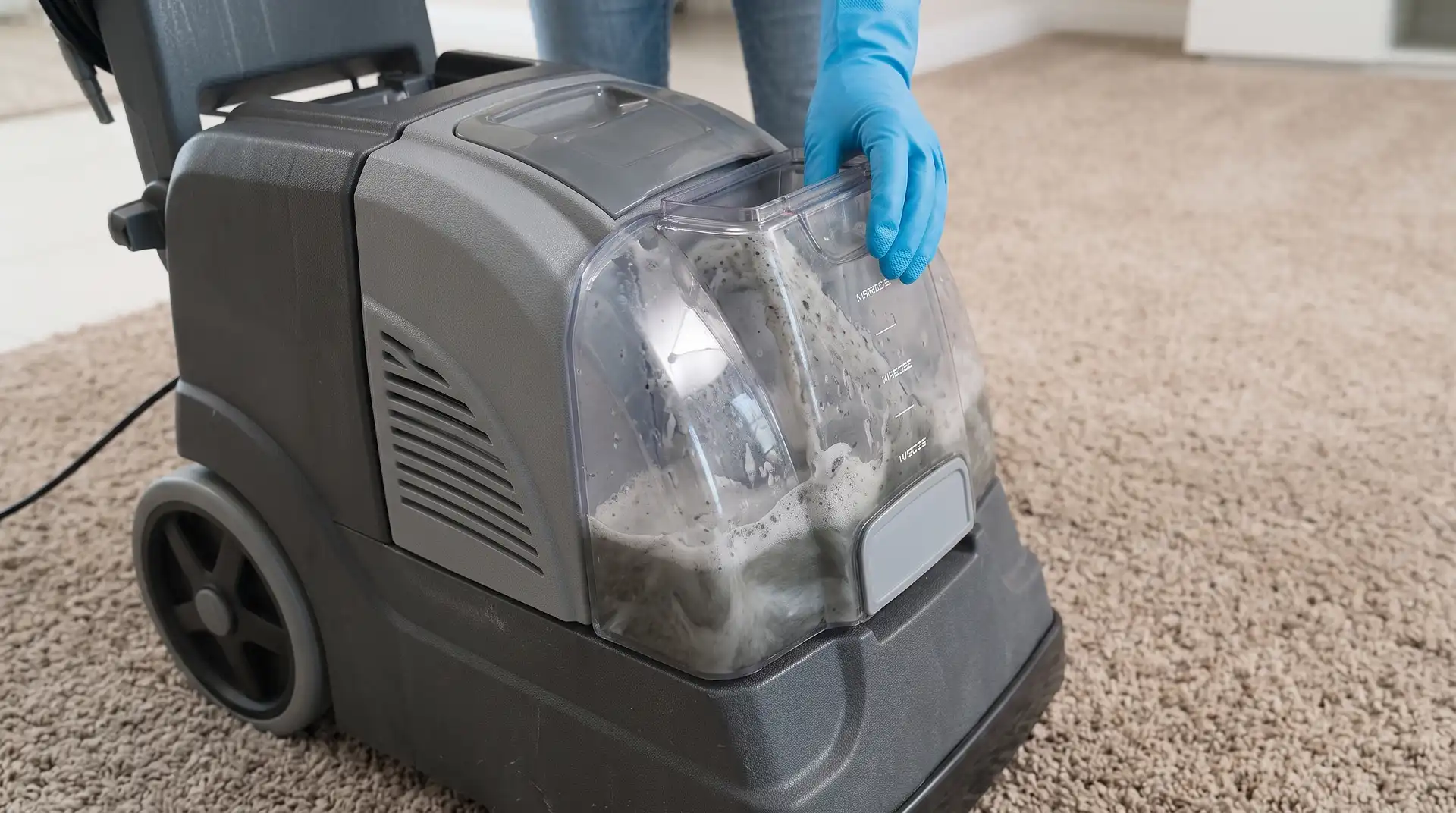
Most consumer and rental carpet cleaning machines use hot water extraction — the same principle professional carpet cleaners rely on, just at a smaller scale. The machine sprays a mix of water and cleaning solution into the carpet fibres under pressure, agitates it with a brush head to loosen dirt, and then immediately vacuums the dirty solution back out. The extraction step is what actually removes the dirt; the spraying step alone just loosens it. A machine that's pushed forward without pulling back slowly for the extraction pass leaves solution and loosened dirt behind in the carpet rather than removing it.
What You Need
A carpet cleaning machine — either owned or hired from a hardware or supermarket rental service.
The manufacturer's recommended cleaning solution — using a generic or overly concentrated solution can leave a sticky residue that actually attracts dirt faster once dry, which is a common cause of carpets re-soiling quickly after a clean.
A vacuum — carpets should be thoroughly vacuumed before wet cleaning, since loose dirt and debris turn to mud once wet and are far harder to extract than when removed dry first.
A stain pre-treatment product, if dealing with specific stains — general cleaning solution alone often isn't strong enough for set-in stains like wine, coffee, or pet accidents.
Fans or good ventilation — for speeding up drying time afterward, which matters more than most people expect for avoiding a damp-carpet smell or mould risk.
Step 1: Vacuum Thoroughly First
Vacuum the entire area properly before bringing out the carpet cleaner, including edges and corners a quick pass might miss. This single step makes a genuine difference to the end result, since wet dirt is both harder to extract and more likely to smear into fibres than dry dirt lifted by a vacuum beforehand.
Step 2: Pre-Treat Any Stains
Apply a stain-specific pre-treatment to any visible marks and let it dwell for the time stated on the product, typically several minutes, before starting the main clean. Trying to remove a set-in stain with the carpet cleaner's standard pass alone often isn't enough — the machine's general solution isn't formulated with the same targeted strength as a stain pre-treatment.
Step 3: Fill the Machine According to Instructions
Mix the cleaning solution with water at the ratio specified by the manufacturer, not by eye. Over-concentrating the solution is a common cause of the sticky residue problem mentioned above, and it doesn't actually clean any better than the correct ratio — it just leaves more product behind that needs extracting.
Step 4: Work in Overlapping Rows, Slowly
Start at the corner of the room furthest from the door and work in slow, overlapping passes, similar to mowing a lawn. Push forward to apply solution and agitate the fibres, then pull back slowly over the same section to extract — this slow backward pass is the step most people rush, and it's the one doing the actual dirt and moisture removal. Moving too quickly in either direction reduces how much solution actually gets extracted back out.
Step 5: Avoid Over-Wetting
Resist the urge to go over the same section repeatedly hoping for a deeper clean — this mainly adds more moisture without meaningfully improving the result, and it significantly extends drying time. If a section still looks dirty after two passes, a stronger spot pre-treatment is usually more effective than repeated passes with the general solution.
Step 6: Dry Thoroughly
Open windows, use fans, or run a dehumidifier to speed up drying, and keep the room ventilated for at least several hours, ideally overnight. Avoid walking on the carpet until it's fully dry, since foot traffic on a damp carpet can push dirt and moisture back down into the fibres and undo some of what the cleaning just achieved. Carpets typically take 6–24 hours to dry fully depending on how much moisture was used, room ventilation, and carpet thickness.
Common Mistakes and What to Do Instead
Mistake: skipping the pre-vacuum. Wet dirt is harder to extract and more likely to smear into the fibres than dry dirt removed beforehand. Always vacuum thoroughly first.
Mistake: using too much cleaning solution. This leaves a sticky residue that attracts dirt faster once dry, which is a common reason carpets look dirty again within weeks of a clean. Follow the manufacturer's mixing ratio exactly.
Mistake: rushing the extraction pass. Moving quickly through the backward "pull" stroke leaves more solution and moisture in the carpet than a slow, deliberate pass does. Slow down on the extraction stroke specifically, even if the application stroke feels fine at a normal pace.
Mistake: walking on a damp carpet before it's dried. This pushes moisture and any remaining loosened dirt back down into the fibres, undoing some of the clean. Keep the room off-limits until the carpet is fully dry.
Mistake: not addressing poor ventilation during drying. A carpet that takes days to dry in a poorly ventilated room is at real risk of a musty smell or mould developing in the underlay. Fans, open windows, or a dehumidifier make a meaningful difference to drying time and outcome.
Mistake: using the same machine pass for general cleaning and stubborn stains. General cleaning solution isn't formulated with the same strength as a targeted stain pre-treatment. Pre-treat visible stains separately before the main pass rather than expecting the standard clean to lift them.
When to Hire a Professional Instead
DIY carpet cleaning works well for regular maintenance and lighter soiling, but professional cleaning is worth considering for heavily stained or long-neglected carpets, delicate or natural fibres like wool that need gentler handling and specific products, end-of-tenancy cleans where a documented professional standard may be required by a landlord or agent, or situations involving pet odour or allergens where professional-grade extraction typically achieves better results than a consumer machine. Professional equipment generally applies stronger suction and higher water temperature than most rental or owned consumer machines, which is part of why professional results — and drying times — are often noticeably better.
What It Costs in the UK
DIY carpet cleaning is the cheaper route if you already own a machine, with ongoing costs limited to cleaning solution, typically £10–£20 per bottle. Hiring a machine, if you don't own one, typically costs around £30 per day from most hardware or supermarket rental services. Carpet shampoo, for a lighter approach without a machine, typically costs around £15 for a bottle usable across multiple rooms.
Professional carpet cleaning in the UK is generally priced per room or per square metre. According to InstantCost.co.uk's 2026 UK pricing data, a single small room typically costs £35–£55, while a whole 3-bed house using hot-water extraction — the industry-standard professional method — runs £140–£240, and individual stubborn stain treatments are usually priced separately at £10–£25 per stain. This aligns closely with the wider UK market: national averages for a full 3-bedroom property commonly land around £165–£260 depending on room count, condition, and provider, with a rough per-room minimum charge of £50–£60 common across the industry.
Option | Typical UK Cost (2026) |
|---|---|
DIY: cleaning solution only (own machine) | £10–£20/bottle |
DIY: machine hire (per day) | ~£30 |
DIY: carpet shampoo (no machine) | ~£15 |
Professional: single small room | £35–£55 |
Professional: whole 3-bed house | £140–£240 |
Professional: per-stain treatment | £10–£25/stain |
These are UK market estimates and vary by carpet size, condition, fibre type, and provider — get a few quotes for anything beyond routine maintenance, and confirm whether stain treatment is included or charged separately.
Staying Safe
Carpet cleaning solutions are generally milder than kitchen or bathroom chemicals, but a few precautions still apply. Never mix carpet cleaning solution with any other household chemical, including bleach, and always follow the manufacturer's dilution ratio rather than adding extra "for a deeper clean," since concentrated solution can irritate skin on contact and isn't more effective at the wrong ratio.
Keep pets and children off a freshly cleaned carpet until it's fully dry, both to protect the cleaning result and because a damp carpet with residual cleaning solution isn't somewhere young children should be crawling or putting hands to mouths. Store any cleaning solution in its original labelled container, out of reach, the same as any other household cleaning product.
Product-specific safety data varies by manufacturer, so it's worth checking the label for any specific ventilation or drying-time guidance before use, particularly in a household with children or pets.
FAQ
How long does it take a carpet to dry after cleaning? Typically 6–24 hours, depending on how much moisture was used, room ventilation, and carpet thickness. Using fans or opening windows meaningfully speeds this up.
Why does my carpet feel sticky after using a carpet cleaner? This usually means too much cleaning solution was used relative to the manufacturer's recommended ratio, leaving residue behind. It can also mean the extraction pass was rushed and didn't fully remove the applied solution.
Should I vacuum before using a carpet cleaner? Yes, always. Wet dirt is harder to extract and more likely to smear into carpet fibres than dry dirt removed with a thorough vacuum beforehand.
Is DIY carpet cleaning as effective as professional cleaning? It's effective for regular maintenance and lighter soiling, but professional machines generally use higher water temperature and stronger suction, giving better results and faster drying for heavily soiled, stained, or delicate carpets.
How much does professional carpet cleaning cost in the UK? A single small room typically costs £35–£55, while a whole 3-bed house costs £140–£240 using hot water extraction, based on 2026 UK pricing data, with stain treatments usually priced separately at £10–£25 per stain.
Can I walk on my carpet right after cleaning it? It's best to wait until it's fully dry. Walking on a damp carpet can push moisture and any remaining loosened dirt back down into the fibres, undoing part of the clean.