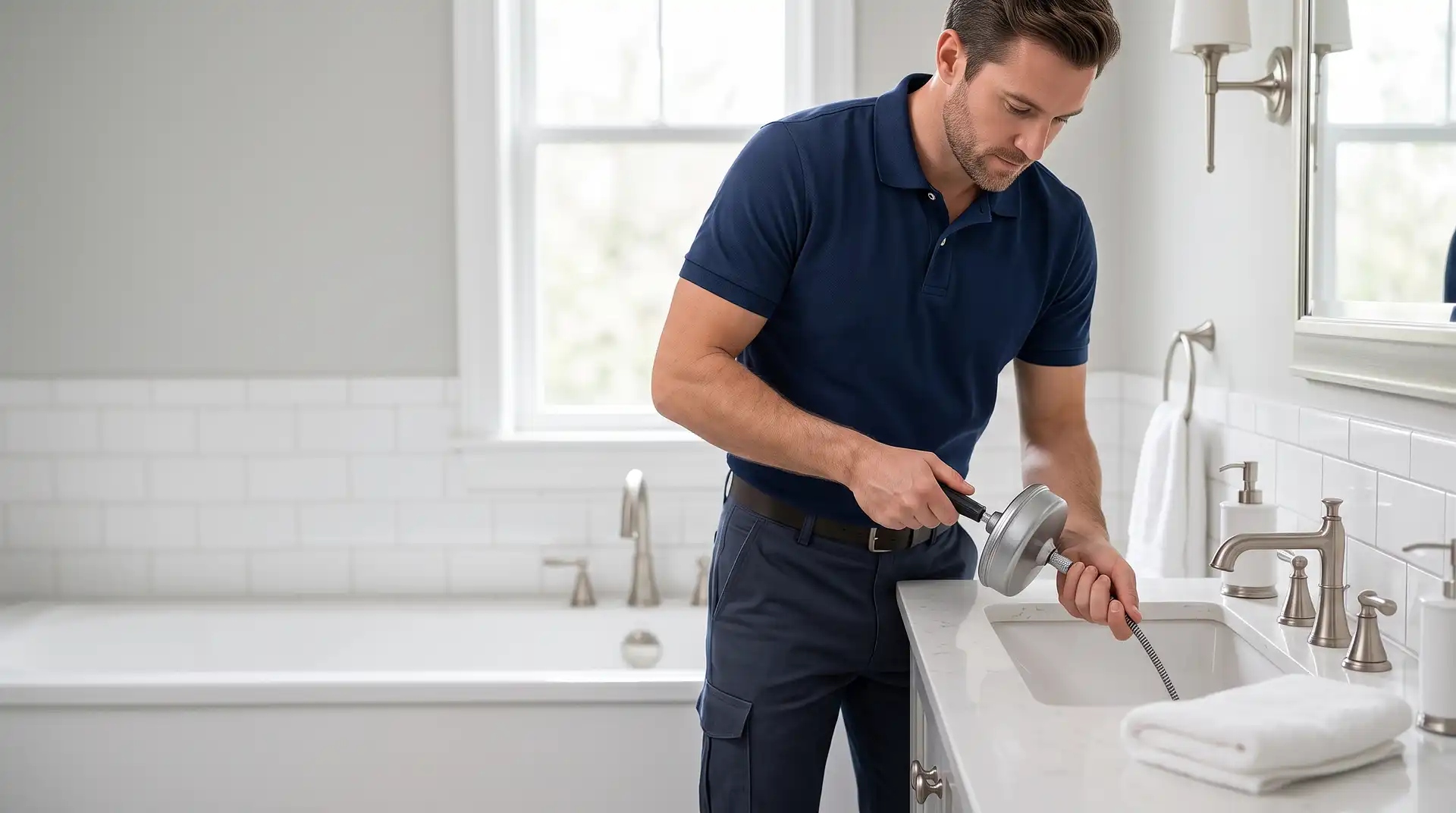
How to Use a Plumber's Snake
14 July 2026
How to Use a Plumber's Snake Without Damaging Your Pipes
A plumber's snake looks simple — feed a cable into a pipe until it hits the clog — but most of the damage people cause with one has nothing to do with the clog and everything to do with force. Cranking too hard, pushing past resistance instead of working through it, or using the wrong snake for the pipe can scratch the pipe's interior coating, which leads to leaks and rust well after the original clog is gone. The technique matters more than the tool.
What a Plumber's Snake Actually Is
A plumber's snake (also called a drain auger) is a flexible cable, usually coiled around a hand crank or drum, that's fed into a drain to physically break up or hook a clog rather than dissolve it chemically. Different types suit different jobs: a toilet auger has a protective sleeve to avoid scratching porcelain and is built specifically for WC blockages; a sink or hand-crank snake typically runs 3–8 metres and suits bathroom and kitchen sink clogs; a drum or power auger reaches 15 metres or more and is used for tougher blockages further down the line, including main drain work.
Using the wrong type for the job is one of the most common causes of poor results — a short sink snake won't reach a main line clog, and a rigid drum auger used carelessly on a delicate toilet bowl can crack porcelain.
Step-by-Step: Using a Sink or Bath Snake
1. Remove the drain cover or trap. For a sink, this often means removing the U-bend (P-trap) underneath first, which gives more direct access and lets you check whether the clog is actually in the trap itself before going further into the pipe.
2. Feed the cable in slowly. Insert the end of the snake into the drain opening and begin turning the crank handle while feeding cable in. Go slowly — the cable should advance with light, steady pressure, not force.
3. Stop and work through resistance, don't push past it. When you feel resistance, that's the clog. Continue turning the crank gently while applying light forward pressure, which lets the coiled end catch or break up the blockage rather than being rammed into it. Forcing the cable further without turning is what causes it to buckle or scratch the pipe wall.
4. Turn and pull back slowly once you feel it break through or catch. A slight give or a change in resistance usually means the clog has been caught or broken up. Slowly retract the cable while still turning, which helps pull debris back out rather than pushing it further down the line.
5. Run hot water through the drain once the snake is fully removed, to flush out any remaining debris and confirm the water is draining normally again.
Step-by-Step: Using a Toilet Auger
A toilet auger works differently from a sink snake because of the protective sleeve and the bowl's curved shape. Insert the auger into the bowl with the sleeve resting against the porcelain to protect the glaze, then feed the cable down through the trap while turning the handle slowly. Work through resistance the same way as with a sink snake — steady turning and gentle pressure, not force — and retract slowly once you feel the clog give. Flush to test before assuming the job's done, and be prepared to repeat the process once or twice for a stubborn blockage rather than escalating to more force on the first attempt.
Common Mistakes and What to Do Instead
Mistake: forcing the cable when it meets resistance. This is the single most common cause of pipe damage — a snake pushed hard against resistance can scratch the pipe's interior coating, which leads to cracking or rusting well after the clog is cleared. Turn the crank and apply gentle, steady pressure instead of pushing harder.
Mistake: using a rigid or oversized snake on a toilet. Without a protective sleeve, a metal cable can scratch or crack porcelain. Use a dedicated toilet auger, not a general sink snake, for WC blockages.
Mistake: cranking too fast. A cable spun too quickly can whip or recoil unpredictably, which is a genuine injury risk as well as a pipe-damage risk. Slow, controlled turning is both safer and more effective.
Mistake: not removing the trap first for a sink clog. Skipping this step means feeding the snake through the trap's tight bend, which is harder to control and more likely to jam. Removing the trap gives a straighter, more manageable path.
Mistake: assuming the clog is fully cleared after one pass. Partial clearance can let water drain temporarily before the blockage reasserts itself. Run water through for a minute or two and check drainage speed before considering the job done.
Mistake: using a snake on a suspected collapsed or badly damaged pipe. If a snake meets solid, unmoving resistance that doesn't respond to gentle working, forcing it further risks worsening structural damage rather than clearing a clog. That's the signal to call a plumber rather than escalate the tool.
When to Call a Plumber Instead
A few situations move this from a DIY job to a professional one: the blockage is in the main line rather than a single fixture, multiple drains in the house are backing up at once (which usually points to a shared line problem rather than a single clog), the snake meets resistance that feels solid or immovable rather than clog-like, or you've made two or three attempts without success. Professionals also carry equipment DIY tools don't match — CCTV cameras to diagnose exactly what's causing a stubborn blockage, and high-pressure water jetting for grease or root-based blockages that a manual snake can soften but rarely fully clears.
What It Costs in the UK
A basic hand-crank drain snake for household sinks and baths typically costs £15–£40, while a dedicated toilet auger with a protective sleeve runs £20–£50. For tougher or more frequent use, a longer manual drum auger (15 metres or more) typically costs £40–£90, and cordless power augers aimed at trade or heavy DIY use run considerably higher, often £150–£300 or more.
Staying Safe
A drain snake's cable can recoil at speed if it catches suddenly or is cranked too fast, which is a genuine injury risk to hands and eyes — wear gloves, and consider eye protection if using a power auger rather than a hand-crank model. Never leave a running power auger unattended, and keep the work area clear of anyone standing directly in line with the cable's path in and out of the drain.
Drain snakes are sometimes used alongside chemical drain cleaners, and this combination needs care: never feed a mechanical snake into a drain immediately after using a chemical cleaner without flushing thoroughly first, since residual chemical can splash back during the mechanical process. If chemical drain cleaner is used at all, keep it in its original labelled container, stored well out of reach of children, and never mix it with anything else, including bleach.
Product-specific safety data for chemical drain cleaners and manufacturer guidance for power auger use can vary, so it's worth checking the specific product or tool's instructions before use, especially around household chemicals in a home with children.
FAQ
Can a plumber's snake damage pipes? Yes, if used with too much force. Forcing the cable against resistance rather than working through it with gentle pressure and turning can scratch the pipe's interior coating, leading to cracks or rust over time.
What's the difference between a drain snake and a toilet auger? A toilet auger has a protective rubber or vinyl sleeve to prevent scratching porcelain and is built specifically for WC blockages. A general sink or drum snake lacks this protection and shouldn't be used in a toilet bowl.
How do I know if I need a plumber instead of doing it myself? If the snake meets solid, unmoving resistance, if multiple drains are backing up at once, or if a couple of attempts haven't cleared the blockage, it's time to call a professional rather than use more force.
How much does it cost to hire a plumber to snake a drain in the UK? Snaking a single blocked sink or toilet, including the callout fee, typically costs £60–£90 in 2026, rising for deeper blockages requiring rodding (around £85) or jetting (around £185).
Is it safe to use a chemical drain cleaner before snaking a drain? It's best avoided directly beforehand without thorough flushing, since residual chemical can splash back during the mechanical process. If chemicals are used, always follow the product's specific safety guidance.
How often should a plumber's snake be used to prevent blockages? Most guidance suggests professional drain cleaning every 2–3 years to prevent buildup, though households with recurring clogs (hair, grease) may benefit from more frequent DIY maintenance snaking.