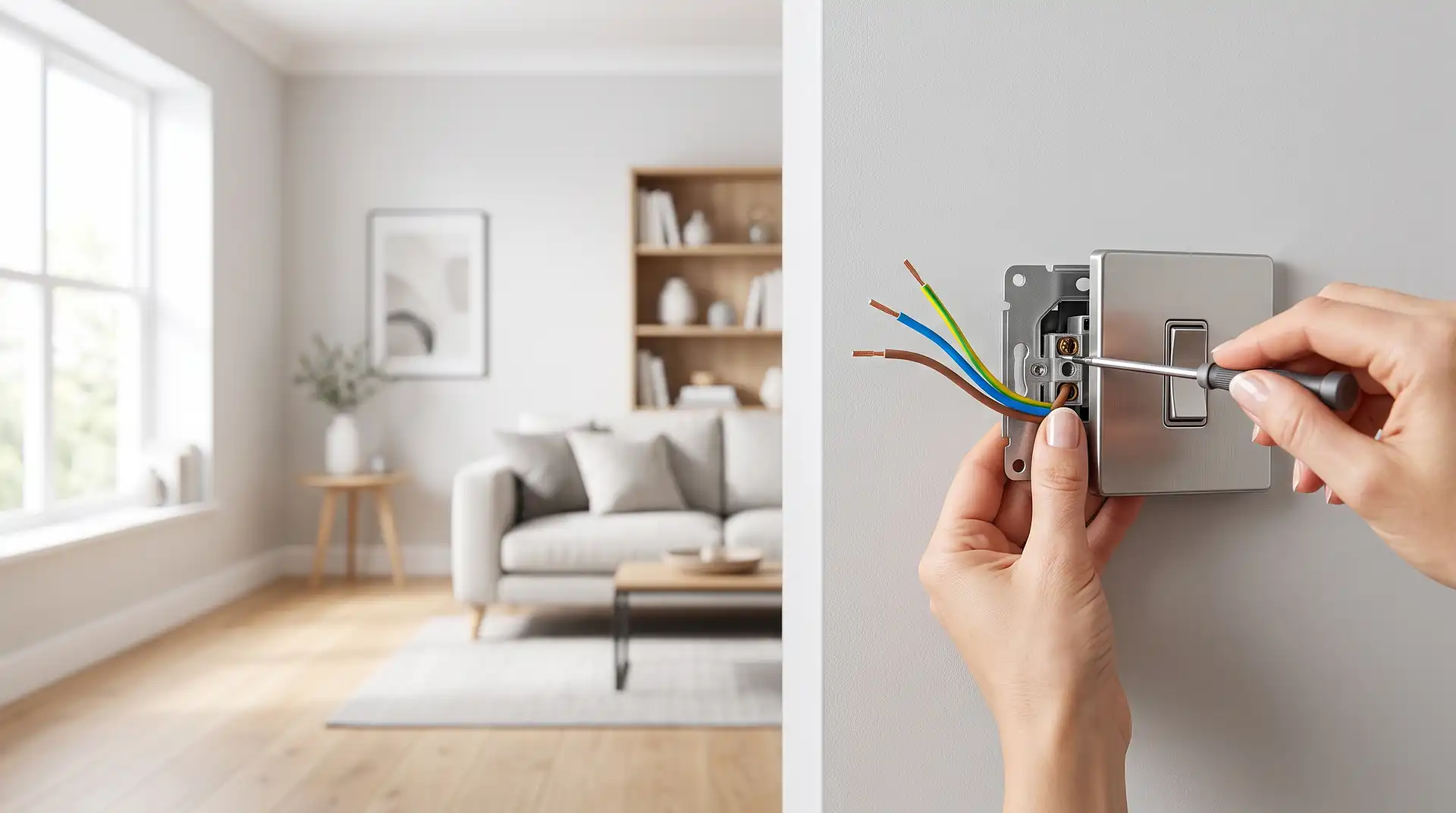
How to Wire a Light Switch
28 July 2026
How to Wire a Light Switch (One-Way, Two-Way, and When to Stop DIYing)
There's an important distinction buried in this question that most guides skip past: replacing an existing switch with an identical one is a different job, legally and practically, from wiring a switch from scratch — a new location, a new circuit, or converting one-way switching to two-way. The first is generally straightforward DIY territory. The second crosses into notifiable electrical work under Part P of the Building Regulations in England, and for good reason — getting new wiring wrong carries real risk in a way that reconnecting existing wires to a like-for-like replacement generally doesn't.
Understanding the Two Main Wiring Types
One-way switching is the standard setup for most rooms — a single switch controlling a single light, with a permanent live feed coming into the switch and a switched live wire going out to the light fitting. This is the simplest configuration and what most people picture when they think of "wiring a switch."
Two-way switching controls one light from two separate switches — the classic example being a landing light controlled from both the top and bottom of the stairs. This uses a different cable arrangement, typically involving three-core-and-earth cable between the two switches (rather than the standard two-core-and-earth used for one-way switching), with strapping wires connecting the two switches so either can turn the light on or off regardless of the other's position. This is meaningfully more complex than one-way switching, both in the cable itself and in getting the connections correct.
Intermediate switching, used when a light needs to be controlled from three or more locations, adds a third type of switch (an intermediate switch) between two standard two-way switches. This is the most complex of the three configurations and firmly sits in professional-electrician territory for the vast majority of DIYers.
What Counts as Notifiable Work
In England, under Part P of the Building Regulations, a straightforward like-for-like replacement of an existing switch — same wiring, same location, same basic function — is generally non-notifiable and can be carried out by a competent DIYer. However, installing a completely new switch and circuit where none existed before, adding a new circuit for two-way switching where it wasn't previously wired that way, or any work in a bathroom's zoned areas near water, moves into notifiable territory. Notifiable work needs to be either carried out or certified by a registered "competent person" (a member of a scheme like NICEIC or NAPIT), or separately inspected and certified by Building Control. This isn't a minor technicality — it's a legal requirement, and skipping it can cause real problems if you come to sell the property and can't produce the right certification for electrical work that was done.
The Basic Principle Behind One-Way Switch Wiring
For a standard one-way switch replacement (the notifiable/non-notifiable distinction above matters more for new installations than for this), the core principle is straightforward: a permanent live feed enters the switch on one terminal, and a switched live wire exits from another terminal to the light fitting, completing the circuit only when the switch is closed. Some modern setups also have a neutral present at the switch, particularly for smart switches that need constant power to operate their internal electronics, where a standard mechanical switch typically doesn't.
The practical process for replacing a switch involves isolating the circuit at the consumer unit, testing it's dead, noting the existing wiring configuration (ideally with a photo), disconnecting from the old switch, and reconnecting the same wires to the corresponding terminals on the new switch, following the new switch's own wiring diagram since terminal layouts vary between manufacturers.
Why Two-Way and New Installations Are a Different Level of Risk
Wiring a genuinely new switch — running new cable, connecting into an existing circuit at a junction point, or setting up two-way switching from a previously one-way setup — involves decisions a straightforward replacement doesn't: correct cable sizing for the circuit's load, safe routing that avoids other services and structural elements, correct polarity throughout, and, for two-way switching specifically, getting the strapping wire connections right so the light behaves correctly from both switches rather than only sometimes working or creating a dangerous cross-connection. Getting any of these wrong isn't just a "the light doesn't work" problem — incorrect wiring can create genuine fire or shock risk, which is precisely why this category of work needs to be either done by, or checked and certified by, a qualified and registered electrician.
When DIY Is Reasonable and When It Isn't
Reasonable for a confident DIYer: replacing an existing switch with an identical or very similar one, in the same location, with no changes to the circuit itself.
Better left to a qualified electrician: installing a switch in a new location, converting one-way to two-way switching, any work involving a bathroom's zoned areas, connecting a smart switch that needs a neutral wire your existing setup doesn't have, or any situation where you're not confident distinguishing what you're looking at in the wall box from what a manufacturer's wiring diagram describes.
Common Mistakes and What to Do Instead
Mistake: assuming any switch job is fine as long as the power's off. Turning off the power is necessary but not sufficient — for new wiring specifically, correct cable type, sizing, and connection matter just as much as isolation, and getting these wrong is a fire risk even with the power safely off during installation.
Mistake: attempting two-way switching without understanding strapping wires. Two-way switching uses a different cable and connection method than one-way, and connecting it like a standard one-way switch simply won't work correctly, or worse, can create a dangerous situation. This is a strong candidate for hiring a qualified electrician rather than DIY.
Mistake: not checking whether your job counts as notifiable before starting. Adding a new switch, changing circuit configuration, or working in bathroom zones typically needs proper certification. Check with a registered electrician or your local Building Control department before assuming a job is fine to DIY.
Mistake: connecting a smart switch without checking for a neutral wire. Many smart switches need a neutral present at the switch to power their internal components, which some older UK wiring setups don't include at the switch itself. Confirm compatibility before purchasing.
Mistake: not getting notifiable work certified. Even if the work itself is done competently, skipping proper certification for notifiable work can cause real problems later, particularly when selling a property and needing to demonstrate electrical work was compliant.
What It Costs in the UK
A straightforward like-for-like switch replacement typically costs £50–£150 in the UK if hiring an electrician, with dimmer switches adding roughly £20–£40 to the unit cost and smart or Wi-Fi switches adding £30–£80 or more depending on whether a neutral wire needs to be run. Installing a completely new switch, or moving one to a new location — which requires new cable runs and typically some minor replastering — commonly costs around £150, including materials, fitting, and making good.
For a full new light installation involving new wiring from scratch, rather than just a switch, costs scale with complexity: a simple light fitting replacement using existing wiring typically costs £40–£80 in labour, while installing a brand-new ceiling light with new wiring and switch drop typically takes 2–3 hours and costs considerably more, commonly £120–£300 depending on access and complexity. Electricians typically charge £40–£75 an hour generally, with day rates around £320 per person (some electricians work in pairs for larger or safety-sensitive jobs), and London and the South East running 20–30% above the national average.
Job | Typical UK Cost (2026) |
|---|---|
Like-for-like switch replacement | £50–£150 |
Dimmer switch (added unit cost) | +£20–£40 |
Smart/Wi-Fi switch (added unit cost) | +£30–£80+ |
New switch install / moving a switch | ~£150 |
New light fitting with new wiring | £120–£300+ |
Electrician hourly rate | £40–£75 |
Electrician day rate (per person) | ~£320 |
These are UK market estimates and vary by job complexity, access, and region — London and the South East typically run 20–30% above the national average. Always confirm whether a quote includes certification for any notifiable work.
Staying Safe
Regardless of which type of switch wiring you're dealing with, never work on live circuits — isolate the relevant circuit at the consumer unit and test it's genuinely dead with a proper voltage tester before touching any wiring, every single time, even for a job you've done before. For anything beyond a simple like-for-like replacement, treat the added complexity of two-way switching or new circuit work as a genuine reason to hire a qualified, registered electrician rather than attempt it yourself — the failure mode for getting new wiring wrong is meaningfully more serious than a switch that simply doesn't work.
If children are in the home, keep them away from any work area where wiring is exposed, and never leave a switch or circuit partially wired and accessible, even briefly, without either completing the job safely or properly isolating it until you can finish.
Part P notification requirements, what counts as notifiable work, and specific rules for Scotland, Wales, and Northern Ireland (which differ from England) can be updated, so it's worth checking current guidance via GOV.UK or asking a registered electrician if you're unsure whether your specific job needs certification.
FAQ
What's the difference between one-way and two-way light switch wiring? One-way switching uses a single switch to control a light with standard two-core-and-earth cable. Two-way switching controls one light from two separate switches, using three-core-and-earth cable and strapping wires so either switch works independently.
Can I wire a new light switch myself in the UK? A like-for-like replacement of an existing switch is generally non-notifiable DIY work. Installing a genuinely new switch, changing circuit configuration, or two-way switching typically counts as notifiable work needing certification from a registered electrician or Building Control.
Do I need a neutral wire for a smart light switch? Many smart switches do, to power their internal electronics, and some older UK wiring setups don't have a neutral present at the switch itself. Check your specific switch's requirements against your existing wiring before buying.
How much does it cost to install a new light switch in the UK? Installing a new switch or moving one to a new location typically costs around £150, including materials, fitting, and any necessary replastering, compared with £50–£150 for a simple like-for-like replacement.
Is two-way switching something I can DIY? It's considerably more complex than one-way switching and involves a different cable type and connection method. Many DIYers find this a reasonable point to hire a qualified electrician rather than risk getting the strapping connections wrong.
What happens if I don't get notifiable electrical work certified? It can cause problems later, particularly when selling your property, since you may be asked to demonstrate that electrical work was carried out compliantly. It's also, simply, a legal requirement for notifiable work in England.