What Is a Good Carpet Shampooer
9 July 2026
A good carpet shampooer is one with separate clean and dirty water tanks, a rotating brush strong enough to agitate the pile rather than just wet it, and enough suction to pull most of the moisture and detergent back out afterwards. The brand matters less than these three things — a cheaper machine that rinses well will outperform an expensive one that leaves detergent sitting in the carpet.
A carpet shampooer isn't the same thing as a steam cleaner, even though the two terms get used interchangeably in most shopping guides.
What a Carpet Shampooer Actually Does
A shampooer applies a foaming detergent solution to the carpet and works it into the pile with a rotating or oscillating brush, physically scrubbing dirt loose rather than just soaking it. Some machines then extract the dirty solution back out immediately; others leave it to dry, meaning you vacuum up dried residue later. This second type is genuinely older technology and tends to leave more sticky residue behind, which then attracts new dirt faster — worth checking before you buy, since the box doesn't always make the distinction obvious.
A hot water extraction machine, often sold under the same "carpet cleaner" umbrella, sprays hot water and a lower-foam solution into the carpet and immediately vacuums it back out, with no dedicated scrubbing brush doing the mechanical work. In practice, plenty of modern "shampooers" are actually hybrid extraction machines with a brush head added, which is generally the better option of the two for most homes.
Types of Carpet Shampooer
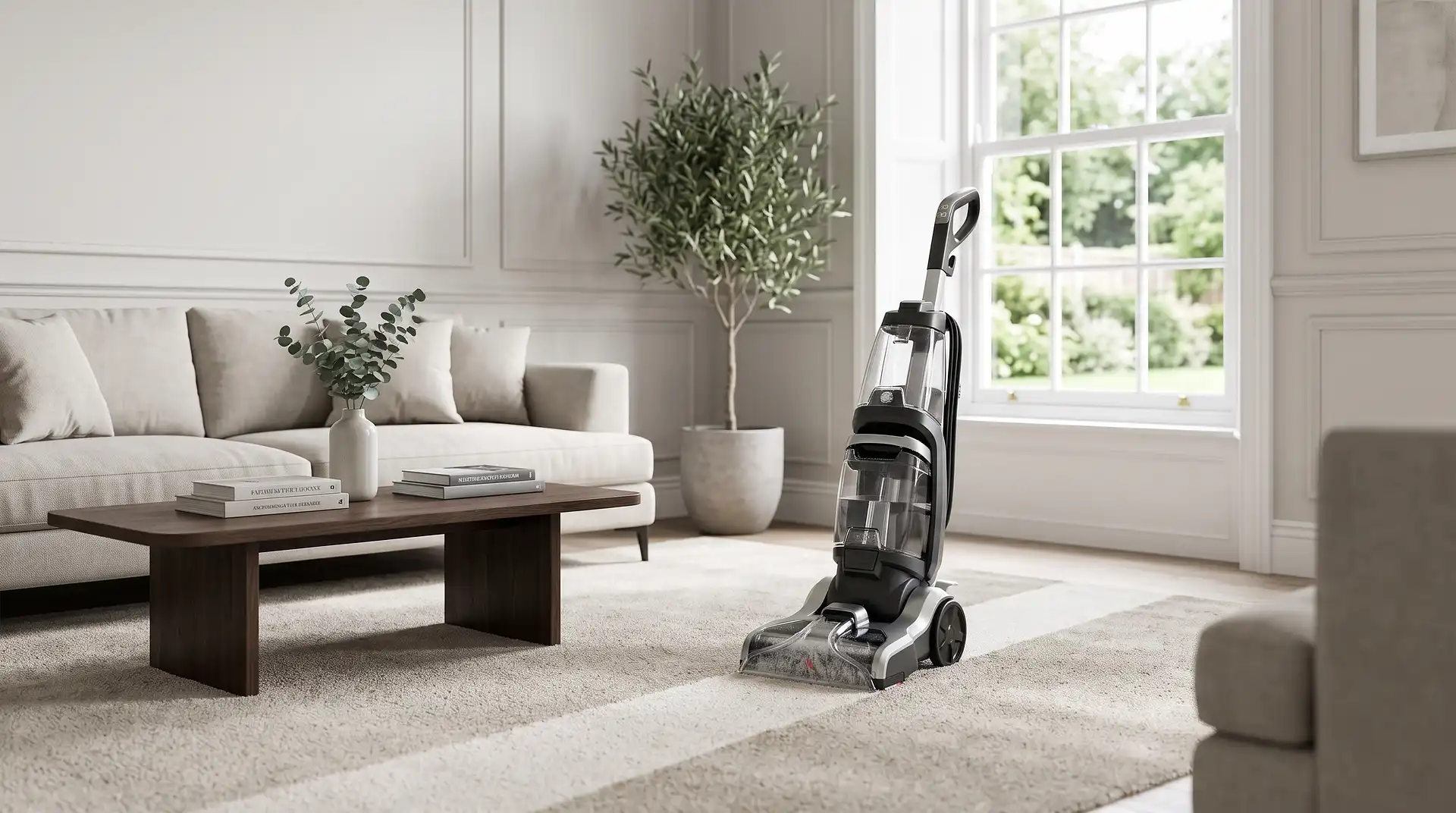
1. Upright dual-tank shampooer. Separate tanks for clean solution and dirty extracted water, a rotating brush, and a motor strong enough to pull most of the moisture back out. This is the type worth buying for regular home use.
2. Upright single-tank shampooer. Cheaper, but clean and dirty water mix in the same tank as you go, which reduces cleaning effectiveness on the later passes of a room since you're essentially spreading some of what you just picked up.
3. Portable/handheld shampooer. Smaller tank, designed for stairs, car interiors, and upholstery rather than whole rooms. Useful as a second tool, not a replacement for a full-size machine if you have wall-to-wall carpet.
4. Rental shampooer/extractor. Commercial-grade version of the upright type, available for short-term hire, with stronger suction than most consumer machines — worth it for a one-off deep clean rather than routine use.
Comparison Table: Carpet Shampooer Types
Type | Tank Design | Best For | Drying Time | Typical Cost |
Upright dual-tank | Separate clean/dirty | Regular whole-home use | 4–8 hours | £150–£350 |
Upright single-tank | Combined | Occasional light use, budget buyers | 4–8 hours | £80–£150 |
Portable/handheld | Small single tank | Stairs, cars, upholstery, spot spills | 2–4 hours | £40–£100 |
Rental extractor | Commercial dual-tank | One-off deep clean, moving house | 4–8 hours | £20–£40/day + solution |
How to Use a Carpet Shampooer Properly
Vacuum the carpet thoroughly first to remove loose dirt that would otherwise turn to mud once wet.
Fill the clean water tank with the correct dilution of shampoo — more isn't better, since excess detergent is exactly what causes residue and faster resoiling.
Test a hidden patch for colourfastness before doing the whole room, particularly on any carpet you haven't shampooed before.
Work in slow, overlapping passes, letting the brush agitate each section rather than rushing over it once.
Do at least one final pass in suction-only mode, if your machine supports it, to pull out as much moisture and residue as possible.
Empty and rinse the dirty water tank as it fills, since a full tank reduces suction efficiency on later passes.
Open windows or use a fan/dehumidifier to speed up drying and avoid the musty smell that comes with slow-drying damp carpet.
Keep the room clear of foot traffic until the carpet is fully dry, typically 4–8 hours, to avoid dirt transfer and pile flattening while it's still damp.
What a Good Shampooer Costs
A decent dual-tank upright shampooer typically sits somewhere in the £150–£350 range, and this is the type worth spending on if you're cleaning several rooms more than once or twice a year. Budget single-tank machines cost less upfront but tend to need replacing sooner and give patchier results, so they're better suited to occasional, light use than a household with pets or kids. Shampoo solution itself is a recurring cost — a bottle typically covers several full-room cleans — and buying a no-rinse or low-residue formula, even at a slightly higher price, usually pays off by reducing how quickly carpets resoil afterwards.
Common Mistakes (and What to Do Instead)
Buying based on brand name alone rather than tank design. Fix: check specifically whether the machine has separate clean/dirty tanks before comparing prices.
Using too much shampoo. More foam doesn't mean cleaner carpet — it means more residue left behind if the machine can't extract it all. Fix: follow the manufacturer's dilution ratio exactly.
Skipping the final suction-only pass. This is the step that actually removes the moisture and detergent, not just the wet pass. Fix: always finish with a dry pass if the machine allows it.
Not emptying the dirty water tank often enough. A full tank reduces suction, meaning later passes extract less. Fix: check and empty it regularly during a big clean.
Shampooing a wool carpet without checking manufacturer guidance first. The scrubbing brush and moisture can be harsher on wool than a gentler extraction-only method. Fix: confirm your carpet's fibre type and suitability before running a shampooer over it.
Rushing each pass. Fix: slow, overlapping passes let the brush actually agitate ground-in dirt rather than just wetting the surface.
Advanced Tactics Worth Knowing
A low-foam or no-rinse shampoo formula matters more than machine wattage. A powerful motor with a high-foam shampoo can still leave carpets sticky if the formula isn't designed to rinse cleanly, while a lower-foam formula paired with decent suction leaves noticeably less residue behind — this is the detail most buying guides skip entirely.
Brush speed and pattern affect deep-pile carpets differently to low-pile ones. A fast-oscillating brush works well on shorter, denser pile but can be too aggressive on deep or looped-pile carpet, potentially pulling at loops. Check your carpet type against the machine's recommended settings if it has adjustable brush speed.
Running a plain water pass after the shampoo pass, with no detergent in the tank, meaningfully cuts resoiling. This extra rinse step is standard in professional cleaning and is the main reason professional results feel less sticky underfoot afterwards — it's easy to replicate at home if your machine has a separate rinse setting.
A shampooer isn't always the right tool. For light annual refreshes or delicate wool carpets, a gentler extraction-only clean (no brush agitation) is often the safer choice, since aggressive scrubbing on fragile fibres can cause pile distortion over time.
FAQ
What is a good carpet shampooer to buy? One with a dual-tank system (separate clean and dirty water), a rotating brush, and strong enough suction to extract most of the moisture back out during the final pass.
Is a carpet shampooer the same as a steam cleaner? Not exactly. A shampooer scrubs detergent into the pile with a brush; a steam/hot water extraction machine sprays and vacuums with little to no scrubbing action, though many modern machines combine both.
Do carpet shampooers leave residue? They can, particularly with high-foam shampoo and weak suction. A dual-tank machine, a low-residue formula, and a final suction-only pass all reduce this significantly.
How long does it take carpets to dry after shampooing? Typically 4–8 hours, depending on how much moisture was used and how well the machine extracted it, plus room ventilation.
Is it worth buying a carpet shampooer or just hiring one? Buying pays off if you're cleaning more than once or twice a year; renting or hiring a professional makes more sense for a single deep clean.
Can a carpet shampooer damage carpet? Yes, if used on unsuitable fibres like wool without checking manufacturer guidance, or if over-wetting soaks into the underlay and causes slow-drying damp patches.
How often should you use a carpet shampooer? Every 6–12 months for average households, and every 3–6 months for homes with pets, allergy sufferers, or heavy foot traffic.