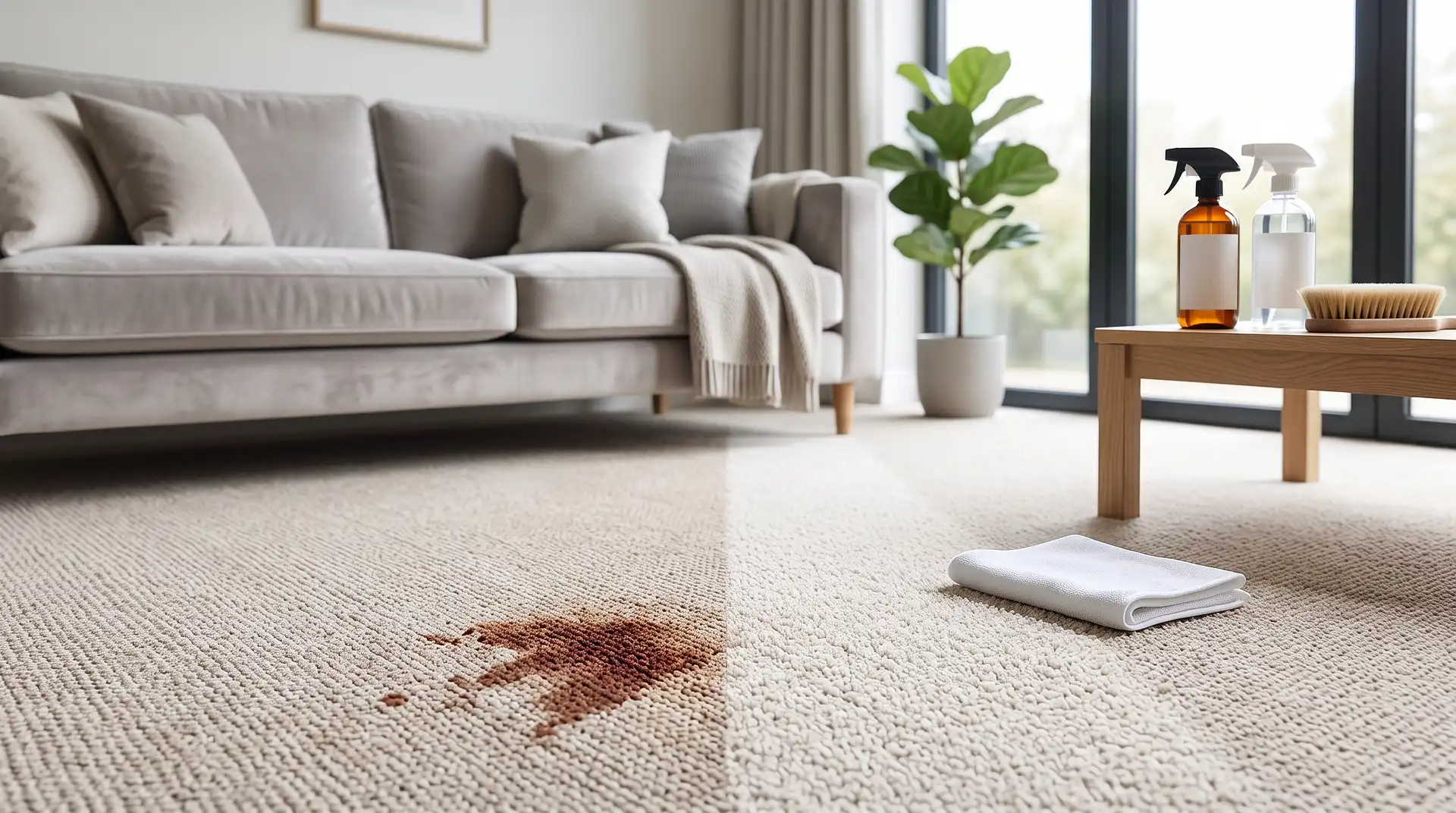
What's a Good Carpet Stain Remover
9 July 2026
A good carpet stain remover is one matched to the stain's chemistry, not just the most popular bottle on the supermarket shelf. Protein stains like blood need an enzymatic cleaner. Tannin stains like wine or coffee respond better to an oxygen-based or mild alkaline solution. Oil-based stains need something that breaks down grease, not water alone. Using the wrong type doesn't just fail to remove the stain — in some cases it sets it permanently, because heat or the wrong pH can bind the stain to the fibre instead of lifting it out.
Carpet stains aren't one problem — they're at least four different chemical problems, and that's why "just use vinegar" or "just use this spray" advice so often disappoints.
The Four Stain Categories (and What Actually Lifts Each One)
1. Protein stains — blood, dairy, egg, vomit, bodily fluids. These need an enzymatic cleaner, which breaks the protein bonds down so they lift out with water. Hot water is the enemy here — it cooks the protein and sets the stain, so always use cold or lukewarm water first.
2. Tannin stains — red wine, coffee, tea, fruit juice. These respond well to an oxygen-based cleaner or a mild alkaline solution. A quick vinegar-and-water blot can help on fresh tannin stains, but it's not reliable on stains that have already dried.
3. Oil-based stains — grease, cooking oil, some makeup, crayon. Water-based cleaners won't shift these on their own. A solvent-based carpet cleaner or a small amount of washing-up liquid (which breaks down grease) worked into the stain before blotting is more effective.
4. Dye-based stains — ink, some drink spills, certain cosmetics, pet accidents with strong colour. These are the hardest category, and some dye stains genuinely can't be fully removed at home — a specialist dye-stain remover or professional treatment is sometimes the only realistic option.
Comparison Table: Stain Remover by Stain Type
Stain Type | Examples | Best Remover Type | Water Temperature | Difficulty |
Protein | Blood, dairy, vomit | Enzymatic cleaner | Cold/lukewarm only | Medium |
Tannin | Wine, coffee, tea | Oxygen-based cleaner | Cool | Medium |
Oil-based | Grease, makeup, crayon | Solvent cleaner or washing-up liquid | Warm | Hard |
Dye-based | Ink, pet accidents, strong-colour spills | Specialist dye remover | Cool | Hard |
General/fresh spills | Mixed or unknown | General carpet shampoo | Cool | Easy |
How to Remove a Carpet Stain: Step by Step
Blot, don't rub, from the outside in. Rubbing spreads the stain and roughs up the fibres, which frays them and creates a lighter, fuzzy patch that can look like a permanent mark even once the actual stain is gone.
Identify the stain type before choosing a product — protein, tannin, oil, or dye — since the wrong chemistry can set rather than lift it.
Test the remover on a hidden patch first, inside a cupboard or under furniture, and check after a few minutes for any colour change.
Apply the appropriate remover — enzymatic for protein, oxygen-based for tannin, a grease-cutting solvent or washing-up liquid for oil, a specialist product for dye.
Work from the outside edge of the stain inward to stop it spreading further into clean carpet.
Blot with a clean, dry cloth to lift the loosened stain, changing to a fresh section of cloth as it picks up colour so you're not just reapplying the stain.
Rinse with a small amount of cold water and blot again to remove any remaining product residue, which can otherwise attract dirt.
Let it dry fully before walking on it or vacuuming, and repeat the process if any trace remains — most stubborn stains need two or three passes, not one.
What It Actually Costs
A shop-bought stain remover spray typically costs a few pounds and covers plenty of individual stains, making it the cheapest realistic option for most households. Enzymatic pet-stain products cost a little more but are worth it specifically for urine, which general removers don't fully neutralise. Homemade solutions (vinegar, baking soda, washing-up liquid) cost almost nothing and work reasonably well on fresh, mild stains, but they're not a like-for-like substitute for a purpose-made product on set-in or dye-based stains. If a stain has resisted several DIY attempts, a professional spot-treatment is usually cheaper than replacing carpet, and worth pricing up before giving up on it.
Common Mistakes (and What to Do Instead)
Rubbing instead of blotting. Fix: always blot from the outside of the stain inward, with a clean cloth.
Using hot water on protein stains. Heat sets the proteins into the fibres. Fix: use cold or lukewarm water on blood, dairy, and similar stains.
Grabbing whatever's under the sink without checking the stain type. Fix: identify whether it's protein, tannin, oil, or dye before picking a product.
Over-wetting the area. Excess liquid soaks into the underlay and can cause a musty smell or mould as it dries slowly. Fix: apply sparingly and blot thoroughly rather than pouring on more product.
Giving up after one application. Most set-in stains need repeat treatment. Fix: reapply and blot again rather than assuming one round of product failed.
Skipping the patch test. Fix: test on a hidden area every time, even with a product that's worked before, since carpets and dyes vary.
Advanced Tactics Worth Knowing
Old, dried-in stains almost always need a soak, not a quick spray. Apply the remover, then let it sit under a damp cloth for 15–20 minutes so the chemistry has time to break the stain down before you start blotting — spraying and immediately wiping rarely shifts anything that's had days to bond with the fibre.
Pet urine stains need enzymatic treatment specifically because of uric acid crystals, which recrystallise and start smelling again in humidity even after the visible stain is gone. A general stain remover can lift the colour but leave the smell-causing compound behind, which is why the same "stain" seems to reappear weeks later.
Vinegar is not safe on every carpet. It can dull or discolour some natural fibres, particularly wool, over repeated use, so it's better suited to synthetic carpets and should still be patch-tested rather than assumed safe by default.
Some stains are permanent, and no remover will fix them. Certain strong dyes, sun-bleached patches, and stains that have already damaged the fibre (rather than just sitting on top of it) are structural, not chemical, problems. In those cases, a rug or furniture placement over the spot is more realistic than continuing to try new products.
FAQ
What's the best carpet stain remover overall? There isn't one universal answer — it depends on the stain type. Enzymatic cleaners for protein stains, oxygen-based for tannin stains, and solvent-based or washing-up liquid for oil-based stains each outperform a general-purpose spray on their specific stain.
Does vinegar really remove carpet stains? It helps on some fresh tannin stains like wine or tea, but it's less effective on protein or oil-based stains and can dull some natural fibres, particularly wool, with repeated use.
Is baking soda good for carpet stains? Baking soda is better for absorbing fresh liquid spills and odours than for actively lifting set-in stains — it works well as a first step before applying a targeted stain remover.
How do you get old, dried-in stains out of carpet? Apply the correct remover for the stain type, let it soak under a damp cloth for 15–20 minutes, then blot. Most old stains need two or three repeat treatments rather than a single application.
What's the best carpet stain remover for pet urine? An enzymatic cleaner made specifically for pet stains, since it breaks down the uric acid crystals that cause both the stain and the returning smell.
Can carpet stains be removed after they've dried? Often yes, though it usually takes longer and more repeat treatment than a fresh stain. Some dye-based or fibre-damaging stains, however, may be permanent regardless of the product used.
How do professionals remove tough carpet stains? Professionals identify the stain type first, then use commercial-strength versions of the same categories — enzymatic, oxygen-based, or solvent cleaners — combined with hot water extraction to rinse the treated area thoroughly afterwards.