How Do I Bleed a Radiator
9 August 2026
How Do I Bleed a Radiator? (UK Guide)
Bleeding radiators is one of the few genuinely useful bits of home maintenance most UK households can do themselves in under half an hour, and it's worth doing before the heating season properly starts rather than once a cold room has already made the problem obvious. The process itself is simple. What most guides skip is the detail that actually affects the result: which order to work through the house in, and what your specific system type means for what happens to pressure afterward.
When to Do It in the UK
Autumn, before the heating goes on for the season properly, is the sensible default. Air accumulates in a system over the summer months when the heating sits unused, so radiators that worked perfectly in March often have cold patches by October. Doing this as an annual pre-season task, rather than reactively once a room feels cold, catches it before it affects how well your heating performs across the whole winter.
Beyond the annual check, bleed whenever a radiator feels cold at the top and warm at the bottom, or when you hear gurgling or banging from the pipework, both classic signs of trapped air.
Know Which System You Have First
This matters more than most guides suggest, because it determines what happens to your boiler pressure afterward.
Sealed systems, which include most modern UK combi and system boiler setups, are pressurised, and bleeding releases a small amount of system water along with the air. This lowers boiler pressure, sometimes noticeably if you're bleeding several radiators in one session, and it needs topping up afterward via the filling loop.
Open vent systems, more common in older UK properties with a header tank in the loft, refill themselves automatically from that tank, so pressure isn't something you need to check or correct afterward in the same way.
If you have a pressure gauge on the front of your boiler, you almost certainly have a sealed system, and the pressure check afterward genuinely applies to you.
The Order to Work Through the House
Start with the radiator furthest from the boiler on the ground floor, then work through the rest of the downstairs, and finish with the upstairs radiators, again working from furthest to nearest the boiler on each floor. Air rises, so working from the lowest and furthest point upward and inward pushes trapped air toward the highest points in the system rather than moving it around between radiators you've already done. Getting this order wrong doesn't ruin anything, but it can mean bleeding some radiators twice.
Step-by-Step
Turn the heating off and let the radiators cool completely, this matters for both safety and because it lets trapped air settle at the top of each radiator where the bleed valve can reach it.
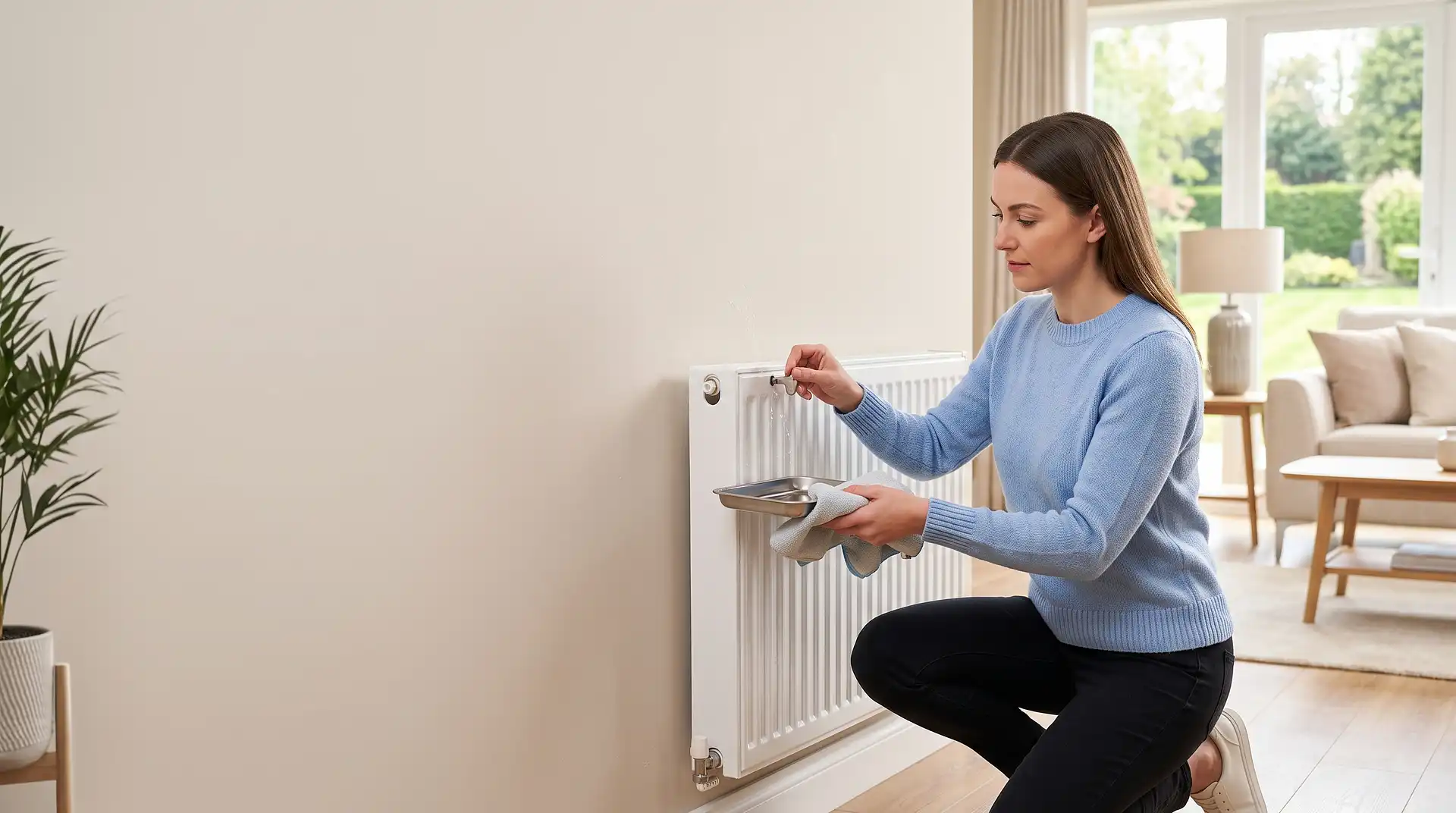
Have a cloth and a small container ready to catch water.
Fit a radiator bleed key onto the valve at the top corner of the radiator, turning it slowly anticlockwise, no more than a quarter turn.
Listen for the hiss of escaping air.
Close the valve as soon as a steady trickle of water replaces the hissing.
Move to the next radiator in the order described above.
Once you've finished the whole house, check the boiler pressure gauge if you have a sealed system, and top up via the filling loop if it's dropped below the normal range, typically 1 to 1.5 bar when cold.
Turn the heating back on and check each radiator heats evenly from top to bottom.
What If a Radiator Is Still Cold After Bleeding?
This is where the diagnosis genuinely matters. A radiator that's cold at the top and warm at the bottom has trapped air, which bleeding fixes. A radiator that's cold in the middle or across the bottom, or cold all over while others work fine, isn't an air problem, and bleeding won't help. Cold patches lower down usually point to sludge buildup, while a radiator that's cold all over often means a closed or seized valve rather than anything to do with air.
When Uneven Heating Isn't About Air at All
If several radiators heat unevenly across the house, some scalding hot while others barely warm, and bleeding hasn't resolved it, that's typically a balancing issue rather than an air one. An unbalanced system sends most of the flow to radiators nearest the boiler, starving those furthest away regardless of how well you've bled them. Our related guide on the InstantCost blog covers how to balance radiators properly, worth reading if bleeding has genuinely been done correctly across the whole house and some rooms still don't heat as well as others.
Common Mistakes and What to Do Instead
Mistake: bleeding radiators while the heating is running. Hot water under pressure can escape rather than air, which is both a scald risk and less effective, since air hasn't had a chance to settle at the top of each radiator. Turn the heating off and let it cool first.
Mistake: not checking boiler pressure afterward on a sealed system. Bleeding several radiators can drop pressure below the level the boiler needs to fire, meaning you fix the radiators and then find the heating won't come on at all. Check the gauge once you're finished.
Mistake: opening the bleed valve too far. A quarter turn is plenty. Opening it fully makes it harder to close quickly once water arrives and increases the chance of a mess.
Mistake: bleeding in a random order. Working from the furthest, lowest radiator toward the boiler and upward means you're pushing air in one direction rather than moving it between radiators you've already finished.
Mistake: assuming every cold radiator needs bleeding. Cold at the top means air. Cold in the middle, at the bottom, or all over means something else, and repeatedly bleeding won't fix sludge or a seized valve.
How Often Should You Do This?
Once a year, in autumn before the heating season, is a reasonable default for most UK homes. If you find yourself needing to bleed the same radiators every few months, that's not normal maintenance, it usually indicates air getting into the system somewhere, possibly through a small leak or a fault with an automatic air vent, and it's worth mentioning to an engineer at your next annual service rather than continuing to bleed indefinitely.
What It Costs in the UK
Bleeding radiators yourself costs essentially nothing, a radiator bleed key typically costs £3 to £10 from any UK hardware shop or supermarket if you don't already have one.
If bleeding doesn't resolve uneven heating and a genuine fault is suspected, according to InstantCost.co.uk's 2026 UK pricing data, fault diagnosis and repair typically costs £90 to £280, with the first hour usually included. An annual boiler service, which is a sensible time to raise any recurring radiator issues, typically costs £75 to £130, with independent Gas Safe engineers generally at the lower end and national brands higher. If radiators are consistently underperforming due to sludge rather than air, a power flush typically costs £500 to £900 and is generally recommended for systems over 8 years old.
Item or Service | Typical UK Cost (2026) |
|---|---|
Radiator bleed key | £3 to £10 |
DIY bleeding | Free |
Annual boiler service | £75 to £130 |
Fault diagnosis and repair | £90 to £280 |
Power flush (if sludge is the issue) | £500 to £900 |
These are UK market estimates based on InstantCost.co.uk's 2026 pricing data and vary by provider and region.
Staying Safe
Always let radiators cool fully before bleeding, this is the single most important safety point and applies regardless of system type. Don't force a bleed valve that feels genuinely seized rather than just stiff, since damaging it turns a five-minute job into a valve replacement. If you're not sure whether you have a sealed or open vent system, or you can't locate a filling loop to top up pressure afterward, it's worth asking a heating engineer rather than guessing.
Keep children away from radiators while you're working, and wipe up any spilled water promptly to avoid a slip hazard on hard flooring.
System types and valve designs vary between UK properties, particularly in older housing stock, so check your system's documentation or ask an engineer if anything looks different from a standard setup.
FAQ
When should I bleed my radiators in the UK? Autumn, before the heating season properly starts, is the sensible annual default, since air accumulates over the summer months when the system sits unused. Also bleed any time a radiator is cold at the top and warm at the bottom.
What order should I bleed radiators in? Start with the radiator furthest from the boiler on the ground floor, work through the rest of the downstairs, then move upstairs, again working furthest to nearest. This pushes air upward and inward rather than moving it between radiators you've already done.
Do I need to check boiler pressure after bleeding radiators? Yes, if you have a sealed system, which most modern UK combi and system boiler setups are. Bleeding releases system water and lowers pressure. Open vent systems with a loft header tank refill automatically and don't need this check.
How do I know if I have a sealed or open vent system? If your boiler has a pressure gauge on the front, you almost certainly have a sealed system. Open vent systems typically have a header tank in the loft instead and don't display a pressure reading.
Why is my radiator still cold after bleeding it? If it's cold in the middle, at the bottom, or all over rather than specifically at the top, air was never the problem. Sludge buildup or a closed or seized valve are more likely causes, and neither is fixed by bleeding.
How often should radiators be bled? Once a year for most UK homes, ideally in autumn. Needing to bleed the same radiators every few months suggests air is entering the system somewhere, worth raising with an engineer rather than continuing indefinitely.