How Much Does It Cost to Pigeon Proof Solar Panels
12 September 2026
How Much Does It Cost to Pigeon Proof Solar Panels?
Pigeon proofing a standard UK domestic solar array costs £300 to £1,000, with most homeowners paying £500 to £900 for a professionally fitted mesh system around a typical 3kW to 4kW installation. The gap between your panels and the roof is warm, sheltered, and exactly what a pigeon looks for when choosing somewhere to nest, and once one pair moves in, others tend to follow.
The price swings mainly on three things: how many panels need covering, how easy your roof is to access, and whether you're having proofing fitted at the same time as a new solar installation or retrofitting it onto an existing system. Retrofitting after the fact is consistently more expensive than including it from the start, since a fresh install already has scaffolding or access equipment in place.
Why Pigeons Target Solar Panels Specifically
The cavity beneath a roof-mounted panel stays warm from the panel's own heat absorption during the day, sheltered from wind and rain, and largely hidden from predators, making it close to ideal nesting real estate from a pigeon's perspective. Pigeons nest year-round in the UK rather than seasonally, so a gap left unprotected doesn't get a quiet winter reprieve the way some other pest problems do.
Pricing by Method
Bird Mesh
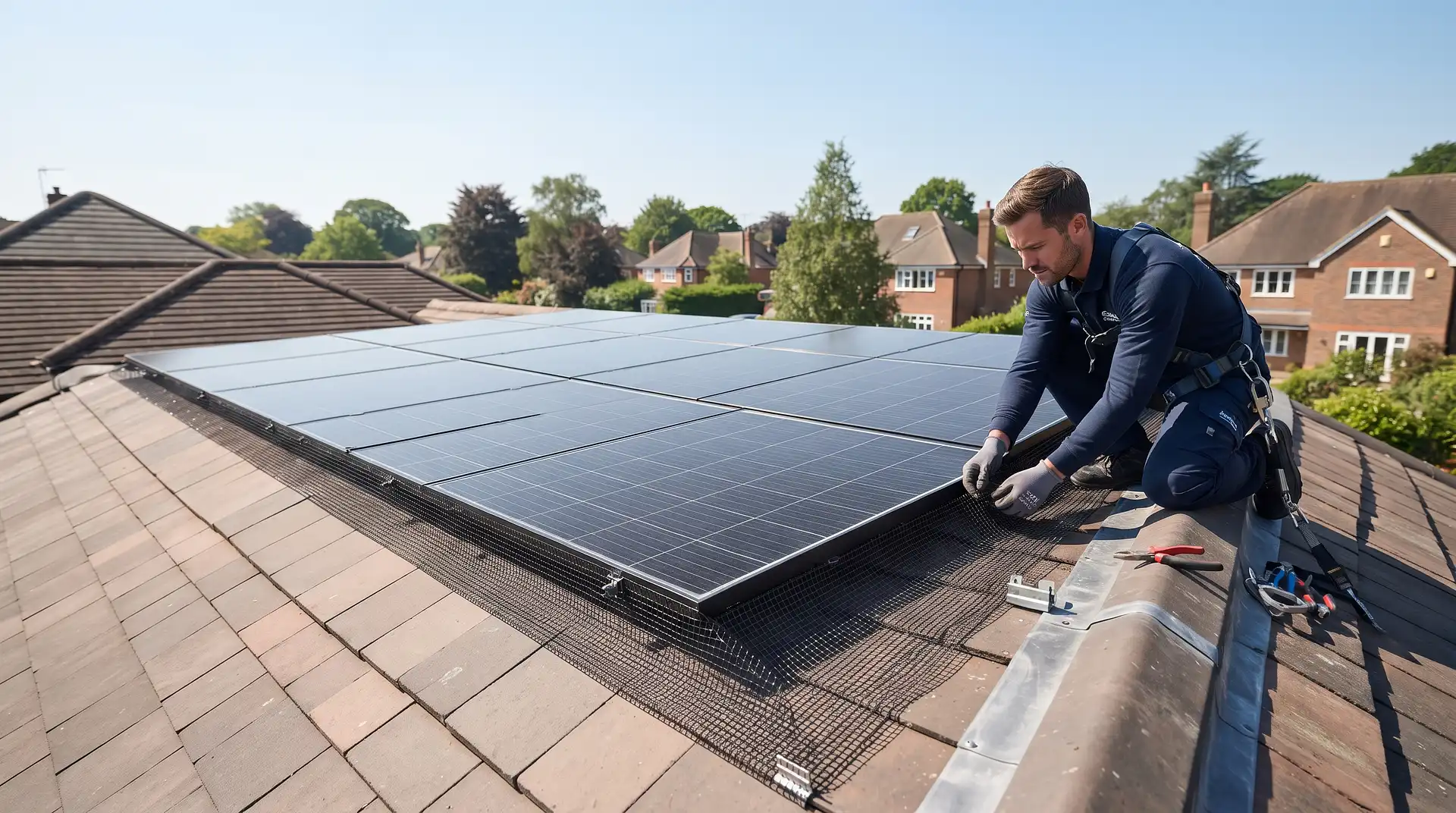
Bird mesh, fitted around the full perimeter of the array using non-penetrating clips rather than drilling into the panel frames, is the most widely recommended method because it gives complete perimeter coverage rather than blocking access at just one point. Mesh material typically costs £50 to £100 per metre or roll, with professional fitting bringing a standard domestic job to roughly £500 to £900 depending on array size and roof access.
Bird Spikes
Spikes are cheaper, often starting around £25 per pack, and work well at stopping pigeons perching on a roof ridge or ledge near the array. They're generally considered a weaker standalone solution for solar panels specifically, since spikes don't block pigeons walking underneath the panels from the side, which is how most nesting access actually happens.
Solar Skirts
Skirts are angled panels, usually black to blend with the array, that clip to the panel edges and rest against the roof at roughly 45 degrees, closing the gap without needing separate mesh fixed to the roof surface itself. They tend to sit at the higher end of the pricing range due to their neater appearance, though they're similarly difficult to see from ground level as mesh once fitted.
What Drives the Price Up or Down
System Size
A 10-panel array needs less material and labour than a 20-panel system, since the total perimeter length requiring mesh or skirting scales with the array's overall size.
Roof Access
If the roof is reachable via a tower or ladder, costs stay towards the lower end of the range. If scaffolding is needed for height or pitch reasons, this typically adds £400 to £600 on top of the base proofing cost.
Retrofitting vs Fitting at Installation
Bird proofing fitted as part of a new solar installation is considerably cheaper than retrofitting later, since access equipment, if scaffolding is needed at all, is already in place and the installer is already working on the array. If you're planning a new solar installation, discussing bird proofing with your installer from the outset is worth doing even if pigeon activity isn't currently a problem.
A Note on the Cost of Not Bird Proofing
Nesting material packed into the gap beneath panels blocks the airflow that keeps panels running at their designed operating temperature, and reduced ventilation can measurably lower generation output. Beyond the panels themselves, accumulated droppings and nesting debris commonly clog guttering, damage roof tiles, and in cases involving whole streets of unprotected installations, have led to widespread complaints about blocked drainage and roof leaks traced directly back to birds nesting under panels fitted without any proofing.
A Note on Wildlife Law
Active bird nests are protected under the Wildlife and Countryside Act 1981, meaning you generally can't disturb or remove an active nest containing eggs or chicks. This affects timing rather than whether you can proof your panels at all: if pigeons are already actively nesting under your array, a proper survey before work begins, and waiting until the nest is no longer active, is the correct approach rather than proceeding regardless.
When to Call a Professional
Bird proofing installation genuinely needs a professional who can safely access the roof, correctly fit mesh or skirting without penetrating or damaging panel frames, which can affect your manufacturer's warranty, and check for active nesting before work begins. This isn't a straightforward DIY job given the roof access and the wildlife law considerations involved.
Use InstantCost's solar panel cost calculator to see what your solar system itself would cost if you're planning a new installation and want to factor in bird proofing from the outset. If your panels are already showing reduced output and you're not sure why, how much electricity can a solar panel generate covers the factors that typically explain lower-than-expected generation.
Common Mistakes and What to Do Instead
Mistake: Waiting until pigeons are already nesting to consider proofing. Once established, removing an active nest is legally restricted, and proofing work may need to wait until the nesting period ends. Address the gap proactively before birds discover it, ideally at the time of installation.
Mistake: Choosing spikes alone as a full solution for solar panels. Spikes deter perching but don't block pigeons walking in from the side of the array, which is how most nesting access happens. Mesh or skirting that covers the full perimeter is generally the more effective standalone solution.
Mistake: Allowing a fitter to drill into panel frames to secure proofing. This can void your manufacturer's warranty and create a new point where water can enter. Insist on non-penetrating clips or fixings designed specifically for this job.
Mistake: Assuming droppings and nesting debris are just a cosmetic issue. Beyond blocked ventilation reducing output, accumulated nesting material and droppings commonly clog guttering and can lead to genuine water ingress and roof damage over time. Treat bird proofing as protecting the wider roof, not just the panels.
Mistake: Not checking for existing nesting before booking a proofing job. If pigeons are already established under your panels, this affects both the timing of the work and potentially the cost, since removal and cleaning of accumulated debris may be needed alongside the proofing itself. Have your installer check for current activity before quoting.
Mistake: Retrofitting proofing separately rather than at installation. Adding proofing after your solar system is already fitted typically costs more than including it from the start, since a fresh installation doesn't need a second separate access visit. Discuss bird proofing with your installer during the original quote if you're planning a new system.
What It Costs in the UK
Item or Service | Typical UK Cost (2026) |
|---|---|
Bird mesh, material only, per metre | £50–£100 |
Bird spikes, per pack | £25–£50 |
Professional mesh fitting, standard domestic array | £500–£900 |
Solar skirts, supplied and fitted | £600–£1,000 |
Scaffolding, where required | £400–£600 |
Fitted at time of new installation (discount vs retrofit) | £300–£700 |
Nest removal and debris clearance (if already present) | £150–£350 |
Figures based on UK market research for solar panel bird proofing in 2026 and vary by system size, roof access, and chosen method.
Staying Safe
Never attempt bird proofing work on your own roof without proper access equipment and training, since falls from height remain one of the most serious risks in any roof-related work. Leave the assessment of nesting activity and the fitting itself to a professional who can identify active nests correctly and knows the legal timing restrictions involved.
If you notice pigeon activity around your panels, avoid disturbing the area yourself in the meantime, since even well-intentioned interference with a suspected nest can breach wildlife protection law if a nest turns out to be active.
The Wildlife and Countryside Act 1981 makes it an offence to intentionally damage or destroy the nest of a wild bird while it's in use or being built. Always have a professional assess for active nesting before any bird proofing or removal work begins.
Frequently Asked Questions
Is it worth pigeon proofing solar panels? Generally yes, given that unprotected panels are a strong draw for pigeons in most UK locations, and the cost of proofing is considerably lower than the cumulative cost of reduced generation, roof damage, and gutter blockages that established nesting can cause over time.
What's the most effective way to pigeon proof solar panels? Bird mesh fitted around the full perimeter of the array with non-penetrating clips is generally considered the most effective method, since it blocks access from every side rather than just deterring perching in one spot.
Can I remove a pigeon nest under my solar panels myself? Only if you're certain the nest isn't active, since active nests containing eggs or chicks are protected under the Wildlife and Countryside Act 1981. If in doubt, have a professional assess it before attempting any removal.
Does pigeon proofing affect my solar panel warranty? It shouldn't, provided the work is done using non-penetrating clips or fixings that don't drill into or damage the panel frames. Check with your installer or the panel manufacturer if you're unsure whether a specific proofing method is compatible with your warranty.
How much cheaper is it to fit bird proofing during installation rather than after? Retrofitting after installation typically costs more, since it requires a separate access visit, whereas proofing fitted during the original installation shares scaffolding and labour already scheduled for the panels themselves.
Do pigeons actually reduce solar panel output? Yes, nesting material packed into the ventilation gap beneath panels can reduce airflow that keeps panels operating at their designed temperature, and accumulated droppings on the panel surface itself can also block sunlight and reduce generation.