How Much to Install a Heat Pump
17 August 2026
According to InstantCost.co.uk's 2026 UK pricing data, an air source heat pump costs £9,000 to £13,000 fitted for a typical 3-bed semi. That's the headline figure, and it's not what most households actually pay. The Boiler Upgrade Scheme takes £7,500 straight off, or £9,000 for off-gas-grid homes running on oil or LPG, which brings the real out-of-pocket cost down to roughly £1,500 to £5,500.
That gap between headline and net cost is the single most important thing to understand about heat pump pricing, and it's why quoted figures often sound alarming compared with what people end up paying.
Cost by Type and Property
Type | Typical price | Notes |
|---|---|---|
Air source, 3-bed semi | £9,000 to £13,000 | Before the grant |
Air source, 4-bed detached | £12,000 to £17,000 | Larger unit, more radiator work |
Ground source | £20,000 to £35,000 | Includes ground loop or borehole |
Hot water cylinder (new) | £800 to £1,800 | Needed if you currently have a combi |
Radiator upgrades | £120 to £400 per radiator | For lower flow temperatures |
Ground source costs considerably more because of the groundwork involved, and it genuinely only makes sense if you have the land and plan to stay in the property long term. For most UK households, air source is the realistic option.
The Grant That Changes the Maths
The Boiler Upgrade Scheme pays £7,500 towards an air source or ground source heat pump in England and Wales, with no income test, it's open to all property owners regardless of earnings. For applications submitted from 21 July 2026, homes off the gas grid heated by oil or LPG receive £9,000 instead.
Crucially, the money goes to your registered installer rather than to you. They apply, deduct the grant from your quote, and you pay the remainder. There's no upfront outlay followed by a wait for reimbursement.
Applying the standard £7,500 to a typical £9,000 to £13,000 air source installation leaves £1,500 to £5,500 to pay. Off-gas-grid households applying from 21 July 2026 with the £9,000 rate pay less still.
Where the Money Actually Goes
InstantCost's calculator example for Manchester and Liverpool puts a full installation at £8,514 to £12,521, breaking down as:
Component | Typical cost |
|---|---|
Heat pump unit | £3,831 to £5,634 |
Installation labour | £2,554 to £3,756 |
Hot water cylinder | £851 to £1,252 |
Radiator upgrades | £851 to £1,252 |
Controls | £426 to £626 |
The unit itself is well under half the total. Labour is the second largest component, and the cylinder and radiator work together often approach the cost of the pump itself, which is why the state of your existing system matters so much to the final figure.
Why Coming From a Combi Costs More
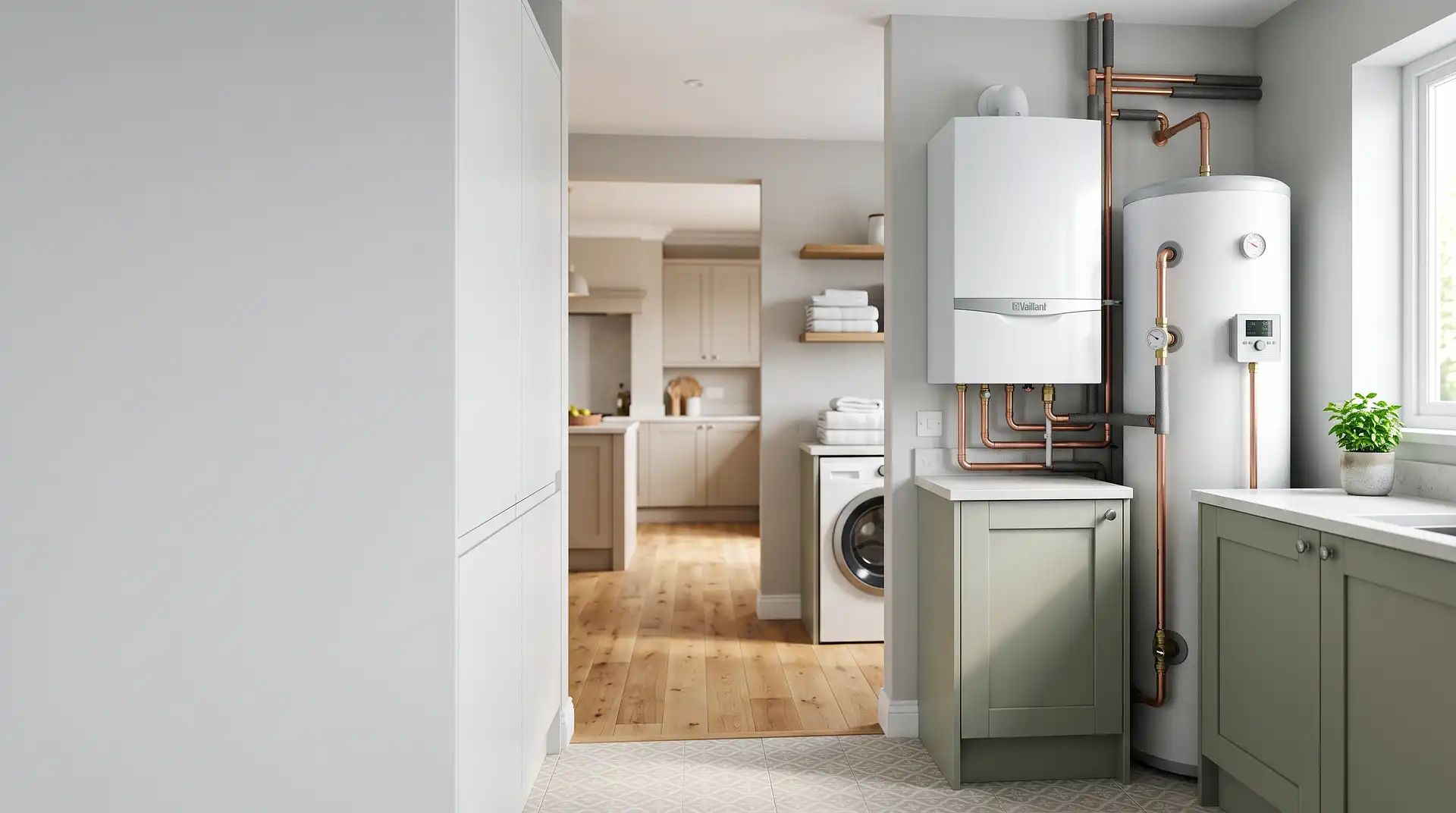
Heat pumps can't heat water on demand the way a combi boiler does. They need a hot water cylinder, which means if you currently have a combi, you're adding £800 to £1,800 for the cylinder plus pipework, and you need somewhere to put it.
This is a genuine structural difference rather than an optional upgrade, and it's worth understanding why before getting quotes. Our related guide covers how a combi boiler works, including why the absence of stored hot water is fundamental to the design, which explains exactly why switching to a heat pump involves adding a component your current system never needed.
Homes already running a system or regular boiler with an existing cylinder avoid this cost entirely, which can make a meaningful difference to the total.
Why Radiators Sometimes Need Changing
Heat pumps run at lower flow temperatures than gas boilers, typically around 45 to 55°C against 70°C or more. Delivering the same heat output at a lower temperature requires greater radiator surface area, so some rooms need larger radiators.
Not every radiator needs replacing. A room-by-room heat loss survey tells you which ones do, and budgeting £120 to £400 per radiator changed is realistic. This is another reason a proper survey matters before committing to any quote.
Insulation First Genuinely Saves Money
Poor insulation forces a larger heat pump, which costs more to buy and more to run. Fixing draughts and loft insulation before installation often reduces the required unit size enough to save money overall rather than adding to the project.
This connects to a useful point about grant stacking: insulation funded under ECO4 can sit alongside a Boiler Upgrade Scheme heat pump grant, since they cover different measures. You can't claim two grants for the same measure, but you can insulate under one scheme and install a heat pump under another. ECO4 closes on 31 December 2026, so there's a genuine timing consideration if this route applies to you.
Installation Time
An air source installation typically takes two to three days. Ground source takes one to two weeks because of the excavation or borehole work, which is another factor in the considerably higher cost and a real disruption consideration.
Common Mistakes and What to Do Instead
Mistake: judging heat pumps on the headline installed cost. The Boiler Upgrade Scheme deducts £7,500 to £9,000 at quote stage. Compare the net figure of £1,500 to £5,500 against a boiler replacement, not the pre-grant number.
Mistake: assuming you're not eligible for the grant. The Boiler Upgrade Scheme has no income test and is open to all property owners in England and Wales. Eligibility rests on the property and installation, not your earnings.
Mistake: skipping insulation improvements first. Poor insulation means a bigger, more expensive unit with higher running costs. Improving insulation beforehand often reduces the total project cost rather than adding to it.
Mistake: not getting a room-by-room heat loss survey. This determines which radiators genuinely need upgrading. Without it, you're either over-specifying radiator work or discovering shortfalls after installation.
Mistake: overlooking the cylinder cost when coming from a combi. At £800 to £1,800 plus pipework and space, this is a substantial addition that homes with existing cylinders simply don't face.
Mistake: paying an upfront fee to apply for a grant. You never pay to apply. The installer claims it and deducts it from your quote. Anyone charging an application fee isn't operating the legitimate scheme.
Getting a Fair Quote
Use an MCS-registered installer, this is required for Boiler Upgrade Scheme eligibility, not just advisable. Confirm the quote states the grant deduction explicitly, so you can see both the gross and net figures. Ask whether a room-by-room heat loss survey has been carried out and which radiators it identified. Check whether a cylinder is included if you're coming from a combi, and whether there's a suitable location for it.
Get three quotes, and check installer registration numbers before signing anything.
What It Costs in the UK: Quick Reference
Item | Typical UK Cost (2026) |
|---|---|
Air source, 3-bed semi | £9,000 to £13,000 before grant |
Air source, 4-bed detached | £12,000 to £17,000 before grant |
Ground source | £20,000 to £35,000 before grant |
Boiler Upgrade Scheme grant | £7,500 (£9,000 off gas grid, oil or LPG) |
Typical out-of-pocket, air source | £1,500 to £5,500 |
Hot water cylinder, if needed | £800 to £1,800 |
Radiator upgrade, each | £120 to £400 |
Air source installation time | 2 to 3 days |
Ground source installation time | 1 to 2 weeks |
All figures based on InstantCost.co.uk's 2026 UK pricing data. The £9,000 off-gas-grid grant rate applies to applications submitted from 21 July 2026. Always get three quotes and confirm with a site survey.
Grants Beyond the Boiler Upgrade Scheme
Three UK grants are currently open. The Boiler Upgrade Scheme covers heat pumps with no income test. ECO4 funds free boilers and insulation for households on qualifying benefits or low incomes via the LA Flex route, closing 31 December 2026. The Warm Homes Plan delivers council-funded insulation and low-carbon heating for low-income households in England, and becomes the main route once ECO4 ends.
Schemes differ across the UK. Scotland runs Home Energy Scotland grants and loans, Wales runs Nest, and Northern Ireland runs the Affordable Warmth Scheme, so the Boiler Upgrade Scheme figures above apply to England and Wales specifically.
Staying Safe
Never pay an upfront fee to apply for any government energy grant. Apply through gov.uk or via a TrustMark or MCS registered installer, and verify the installer's registration number before signing. Grants are non-repayable, so anyone describing one as a loan requiring repayment isn't describing a legitimate government scheme.
Heat pump installation involves both electrical and plumbing work and must be carried out by appropriately qualified, MCS-registered installers, which is also a condition of grant eligibility.
Grant values, eligibility criteria and scheme closing dates change, so confirm current details via gov.uk or your installer before building them into your budget.
FAQ
How much does a heat pump cost to install in the UK? An air source heat pump typically costs £9,000 to £13,000 fitted for a 3-bed semi in 2026, or £12,000 to £17,000 for a larger detached home. Ground source runs £20,000 to £35,000 because of the ground loop.
How much is a heat pump after the grant? The Boiler Upgrade Scheme pays £7,500, or £9,000 for off-gas-grid oil and LPG homes on applications from 21 July 2026, leaving most households paying £1,500 to £5,500 themselves.
Do I need to be on benefits to get the Boiler Upgrade Scheme grant? No. It's open to all property owners in England and Wales regardless of income, unlike ECO4 and most Warm Homes Plan support, which are means-tested.
Do I need new radiators for a heat pump? Not always, but some rooms will need larger ones since heat pumps run at lower flow temperatures. A room-by-room heat loss survey identifies which, at £120 to £400 per radiator changed.
Why do I need a hot water cylinder? Heat pumps can't heat water on demand like a combi boiler, so a cylinder is part of nearly every installation. Expect £800 to £1,800 plus fitting if you don't already have one.
How long does heat pump installation take? Air source typically takes two to three days. Ground source takes one to two weeks because of the excavation or borehole work involved.