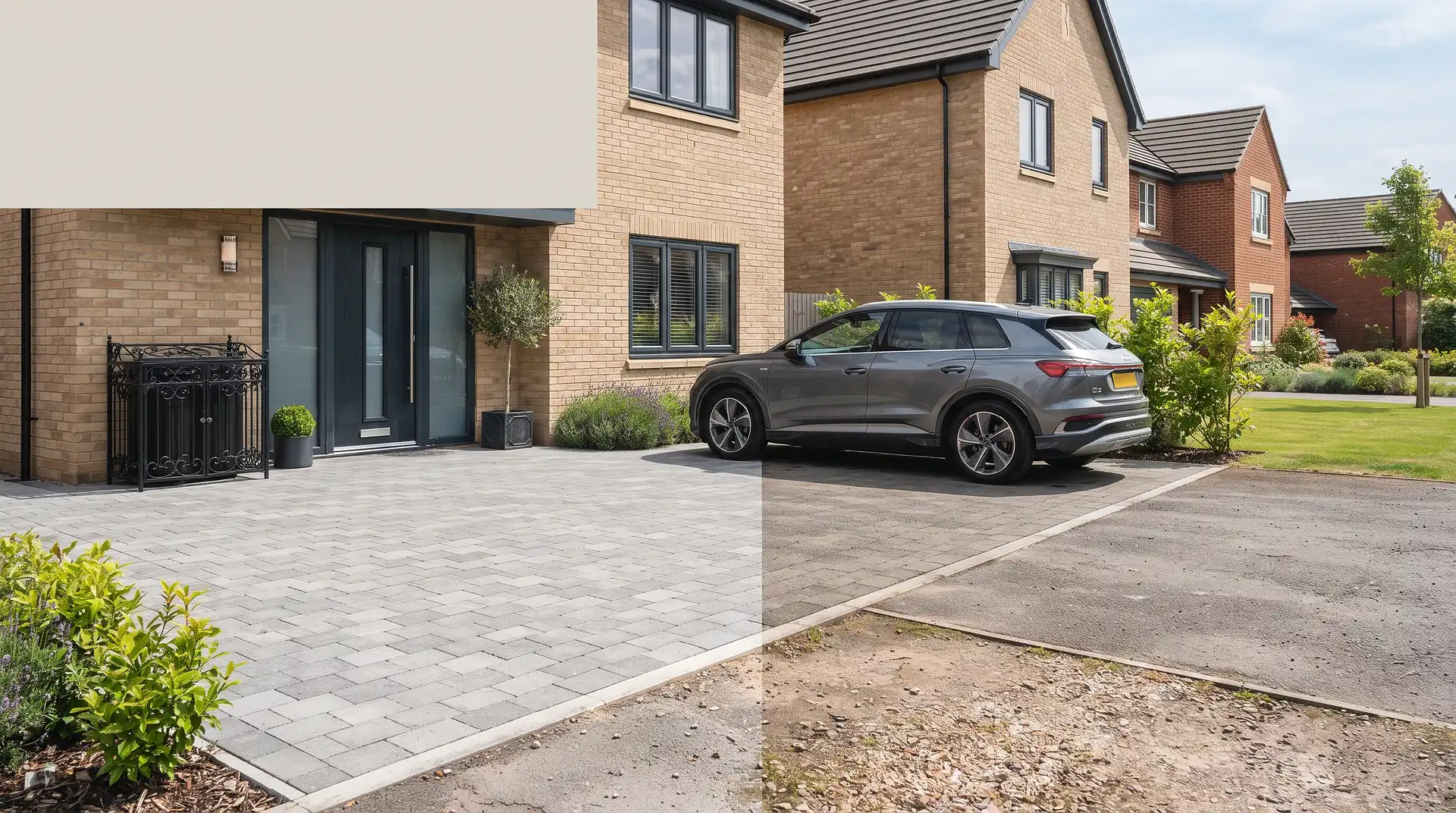
How Much to Pave a Driveway
17 September 2026
How Much to Pave a Driveway?
Block paving a driveway costs £110 per square metre supplied and fitted in the UK in 2026, according to InstantCost.co.uk's 2026 UK driveway pricing data, which works out to roughly £3,960 for a typical double driveway of around 36 square metres. That figure sits comfortably between gravel and resin bound in the UK's driveway pricing landscape, more expensive than gravel or tarmac but generally cheaper than resin bound or natural stone, while offering a 20 to 30 year lifespan that outperforms both cheaper materials.
What moves the price beyond this baseline figure comes down to three things: the specific block type and finish you choose, the laying pattern, since more intricate designs take longer to install, and whether the paving is permeable, which affects both compliance with UK drainage rules and, in some cases, the block cost itself.
What "Block Paving" Actually Covers
Block paving uses individual concrete or clay blocks laid onto a compacted sub-base and bedding layer of sharp sand, with the joints between blocks filled with kiln-dried sand. This construction is what gives block paving its key practical advantage over tarmac or resin: an individual damaged or stained block can be lifted and replaced without disturbing the surrounding surface, something neither tarmac nor a poured concrete driveway can offer.
What Drives the Price Up or Down
Block Material and Finish
Standard concrete block paving sits at the lower end of the price range, while clay pavers and premium textured or tumbled-finish concrete blocks cost more per square metre but offer a different aesthetic and, in the case of clay, generally better long-term colour retention than concrete, which can fade with UV exposure over years.
Laying Pattern
A simple running bond or basket weave pattern is the fastest and cheapest to lay, since it requires minimal cutting. Herringbone patterns, while more visually striking and often considered the most durable pattern for vehicle load-bearing due to how the interlocking blocks distribute weight, take longer to lay and involve more cutting at edges, adding to labour cost.
Permeable vs Standard Block Paving
Since 2008, UK regulations have required permeable surfaces, or drainage to a permeable area, for any new driveway over 5 square metres that fronts a public highway. Permeable block paving uses specially designed blocks with wider joints filled with permeable jointing material, allowing water to drain through rather than running off into the street. This adds a modest cost premium over standard blocks but avoids the need for planning permission or a separate soakaway, which can otherwise offset the extra cost.
Groundwork and Existing Surface
Removing an existing driveway surface, particularly a thick, well-established concrete or tarmac base, adds cost and time before the new paving can even begin. A driveway being laid on genuinely bare ground with straightforward excavation is cheaper to prepare than one replacing a difficult-to-remove existing surface.
Edging and Borders
A contrasting edging course, a common design feature that frames the driveway with a different coloured or sized block, adds a modest cost but is one of the more popular upgrades homeowners choose, since it noticeably improves the finished look for a relatively small additional spend.
Block Paving vs Other Driveway Materials
Material | Cost per m² | Lifespan | Permeable |
|---|---|---|---|
Gravel | £55 | 10–15 years | Yes |
Tarmac/Asphalt | £75 | 15–20 years | No |
Concrete | £85 | 25–30 years | No |
Block Paving | £110 | 20–30 years | Yes (if specified) |
Resin Bound | £130 | 20–25 years | Yes |
Indian Sandstone | £160 | 25+ years | No |
Block paving's position in this table reflects its balance of durability, repairability, and permeability options, generally justifying its mid-to-upper price point compared with cheaper, shorter-lived options like gravel or tarmac.
A Note on Repairing Rather Than Replacing
One of block paving's genuine long-term advantages is that oil stains, cracked blocks, or an area disturbed by utility work can be addressed by lifting and replacing just the affected blocks, rather than needing to resurface or replace the whole driveway. This repairability is worth factoring into a lifetime cost comparison against tarmac or concrete, which typically need full resurfacing once damaged rather than a localised, low-cost fix.
A Note on Weed Growth in Joints
Block paving's joints, while necessary for the surface's flexibility and permeability, can allow weeds to establish over time if maintenance is neglected. Periodic re-sanding of joints with fresh kiln-dried sand, alongside occasional weed treatment, keeps this under control and is worth factoring into the driveway's ongoing maintenance rather than a one-off installation cost alone.
When to Call a Professional
Block paving installation involves excavation, sub-base compaction to the correct depth and specification, and precise laying to achieve proper falls for drainage, all of which benefit significantly from professional experience. A poorly compacted sub-base is the most common cause of block paving failure, sinking, or unevenness developing within a few years, which is why this is generally not a straightforward DIY project despite the individual blocks themselves being simple to handle.
Use InstantCost's driveway cost calculator to get a personalised estimate for your specific driveway size and chosen block type. If you're also considering other driveway materials before deciding, how much does a driveway cost compares all six common UK driveway materials side by side.
Common Mistakes and What to Do Instead
Mistake: Choosing standard rather than permeable block paving without checking planning requirements. If your driveway is over 5 square metres and drains toward a public highway, non-permeable paving needs either planning permission or a separate drainage solution. Confirm which applies to your specific property before ordering blocks.
Mistake: Assuming all quotes cover the same groundwork depth. Sub-base depth and compaction quality significantly affect how long block paving lasts, and a cheaper quote sometimes reflects a shallower, less durable sub-base rather than genuinely better value. Ask specifically about sub-base depth and material when comparing quotes.
Mistake: Choosing a complex herringbone pattern without budgeting for the extra labour. While often the most durable pattern for load-bearing, herringbone takes noticeably longer to lay than a simple running bond due to the cutting involved at edges. Factor this into your budget if you want this specific pattern.
Mistake: Skipping edging or a border course to save a small amount. Edging is a relatively low additional cost that considerably improves the finished appearance for many homeowners. Weigh this against the overall project cost before dismissing it purely to save a modest amount.
Mistake: Not planning for joint maintenance. Assuming block paving is entirely maintenance-free once laid overlooks the periodic re-sanding and occasional weed treatment needed to keep joints in good condition. Budget for this ongoing, low-cost maintenance rather than being surprised by it later.
Mistake: Not asking whether individual block replacement is possible with your specific blocks. Some less common or discontinued block ranges can be hard to source exact matches for years after installation. If repairability matters to you, ask your installer about keeping a small number of spare blocks from the original batch.
What It Costs in the UK
Item or Service | Typical UK Cost (2026) |
|---|---|
Block paving, standard concrete, per m² | £100–£110 |
Block paving, clay or premium finish, per m² | £120–£140 |
Typical double driveway (36m²), block paving | £3,600–£5,040 |
Herringbone pattern (labour premium) | Additional 10–15% on labour |
Contrasting edging course | £15–£25 per linear metre extra |
Re-sanding joints (maintenance, existing driveway) | £150–£350 |
Individual block replacement (repair) | £30–£80 per m² affected |
Figures based on InstantCost.co.uk's 2026 UK driveway pricing data and vary by region, block type, pattern complexity, and groundwork required.
Staying Safe
If your existing driveway is being removed as part of the project, be aware that older concrete or tarmac surfaces occasionally contain materials that need specific disposal handling. A reputable installer will manage this correctly, but it's worth confirming how existing surface removal and disposal will be handled before work begins.
Keep children and pets away from the work area throughout installation, particularly during excavation and when heavy blocks and compaction equipment are in use. If the driveway borders a public pavement, ensure the work area is properly signed and safely separated from pedestrian traffic throughout the project.
Since 2008, UK planning regulations require permeable surfaces or appropriate drainage for new driveways over 5m² fronting a public highway. Verify current requirements with your local council before committing to a non-permeable block paving option.
Frequently Asked Questions
How much does it cost to block pave a double driveway? A typical double driveway of around 36 square metres costs roughly £3,600 to £5,040 for standard block paving, or higher for clay or premium finishes, based on the current UK rate of £100 to £140 per square metre.
Is block paving cheaper than resin bound driveways? Yes, generally. Block paving at £110 per square metre sits below resin bound's £130 per square metre, though resin bound offers a different aesthetic and slightly reduced weed growth due to having no traditional joints.
Do I need planning permission for a block paving driveway? Only if you choose standard, non-permeable block paving on a driveway over 5 square metres that drains toward a public highway. Permeable block paving, using specially designed blocks and jointing, avoids this requirement.
How long does block paving last? Well-installed block paving typically lasts 20 to 30 years, provided the sub-base was properly compacted and joints are periodically maintained with fresh sand and occasional weed treatment.
Can I repair a small area of block paving without redoing the whole driveway? Yes, this is one of block paving's genuine advantages. Individual damaged, stained, or sunken blocks can be lifted and replaced without disturbing the rest of the driveway, provided matching or spare blocks are available.
Does the laying pattern affect the cost of block paving? Yes. A simple running bond or basket weave pattern is faster and cheaper to lay than a herringbone pattern, which typically adds 10 to 15 percent to labour costs due to the additional cutting required at edges.