How to Bleed a Radiator Without a Key
5 August 2026
How to Bleed a Radiator Without a Key
A radiator bleed key is a genuinely tiny, specific tool, and it's also exactly the kind of thing that goes missing the moment you actually need it. The good news is that most UK radiator bleed valves are designed with a simple square-socket fitting that a handful of household tools can turn just as well as the purpose-made key, provided you use the right one carefully and don't force anything that isn't quite fitting properly.
Why This Works
The bleed valve on most standard UK radiators is a small square-socket screw, not a specialist mechanism that genuinely requires a dedicated key. A radiator bleed key is really just a small handle shaped to fit that square socket, which means anything else that can grip and turn a small square fitting will generally do the same job. The risk isn't that alternative tools don't work, it's using one that doesn't fit properly and rounding off the valve in the process.
Method 1: A Flathead Screwdriver
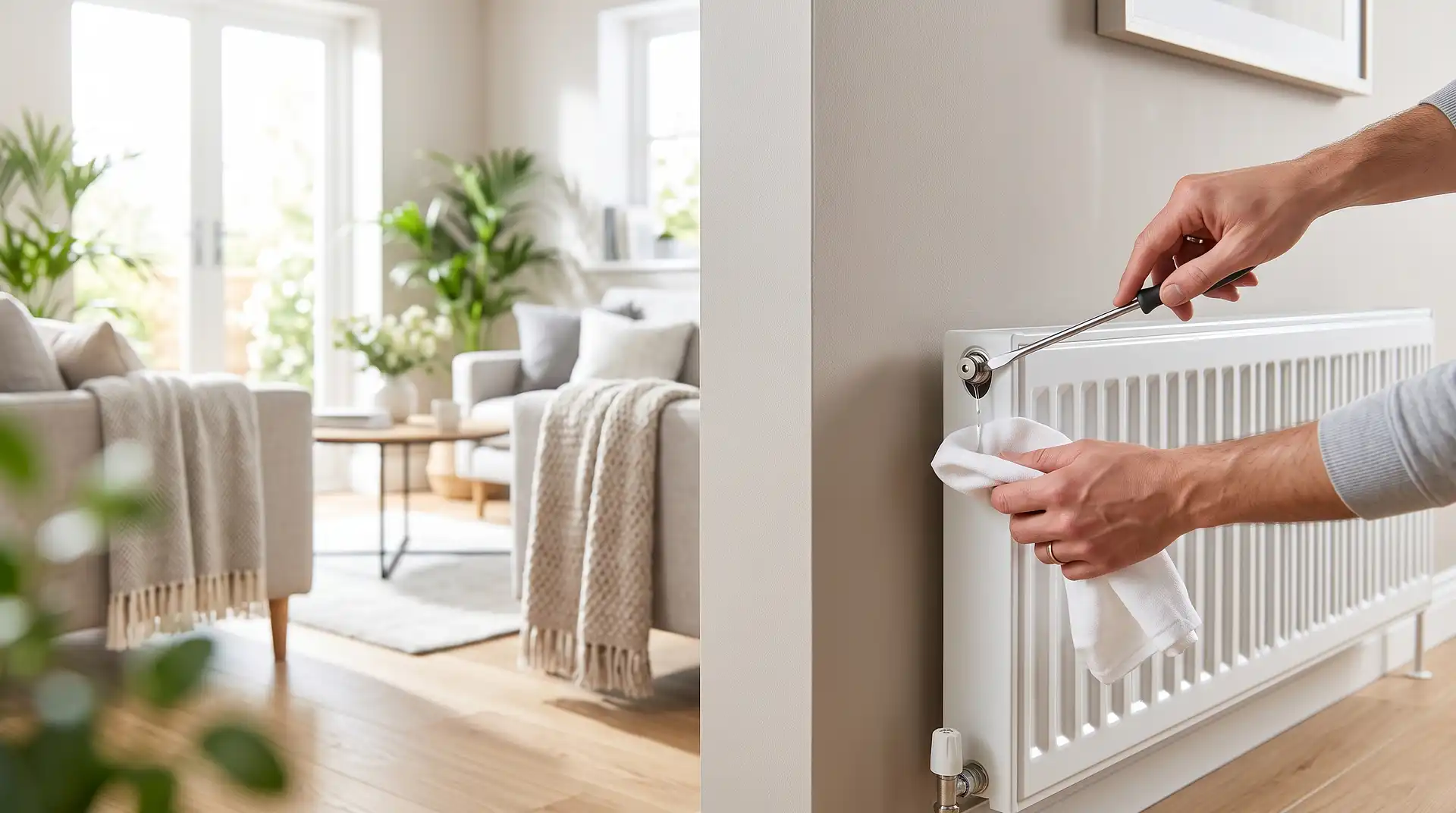
This is the most reliable substitute and the one worth trying first. Many radiator bleed valves have a small slot alongside the square socket specifically designed to also accept a flathead screwdriver, a detail built into the valve by manufacturers precisely because keys get lost so often. Check the valve closely for this slot before assuming you need something else, it's easy to miss at a glance.
Method 2: Long-Nose or Needle-Nose Pliers
If there's no flathead slot, needle-nose pliers can often grip the square socket directly and turn it, provided the jaws are narrow enough to fit into the recessed fitting without slipping. Turn gently and in small increments, since pliers give you less precise control than a properly fitted key or screwdriver, and it's easier to slip and round off the valve's edges with this method than the other two.
Method 3: A Small Adjustable Spanner
An adjustable spanner set to a narrow enough width can sometimes grip the square socket similarly to pliers, though this depends heavily on the exact valve design and how much of the square fitting is actually exposed and accessible to grip. This is generally a less reliable option than a flathead screwdriver, worth trying only if the first two methods genuinely don't fit your specific valve.
Method 4: A Universal Radiator Bleed Key Substitute Tool
If you're likely to need to do this more than once, a small universal tool, sometimes sold as a multi-fit radiator key or a combination tool covering several common valve types, costs very little and solves this problem permanently going forward, worth considering even after successfully improvising a fix this time.
Step-by-Step, With an Improvised Tool
Turn the heating off and let the radiator cool before starting, this applies regardless of which tool you're using.
Have a cloth or small container ready beneath the valve to catch the small amount of water that follows the escaping air.
Fit your chosen tool, flathead screwdriver, pliers, or spanner, as squarely and securely as you can into the valve.
Turn slowly, no more than a quarter turn, and listen for the hiss of escaping air.
Hold the tool steady rather than repeatedly adjusting your grip, since repositioning increases the risk of slipping and damaging the valve's edges.
Close the valve the moment a steady trickle of water replaces the hissing air, turning firmly but not forcefully.
Common Mistakes and What to Do Instead
Mistake: forcing a tool that doesn't fit properly. This is the main risk with improvised tools and the most common cause of a rounded, damaged valve that then genuinely can't be turned by anything. If a tool doesn't grip cleanly and turn smoothly, stop and try a different one rather than pushing harder.
Mistake: using pliers with jaws too wide for the socket. Wide-jawed pliers can slip off a small square fitting under pressure, sometimes scraping or damaging the surrounding valve housing in the process. Check the jaws genuinely fit the socket snugly before applying any turning force.
Mistake: turning too far, too fast. This applies with any tool, but matters more with an improvised one since you generally have less fine control than with a proper key. A quarter turn is usually enough, more than that with an unfamiliar tool increases the risk of losing your grip mid-turn.
Mistake: not having a cloth ready before starting. Water follows the air out fairly quickly once the valve opens, and fumbling for something to catch it mid-task is how small drips become bigger, avoidable messes.
Mistake: assuming every radiator valve has a flathead slot. Some genuinely don't, and trying to jam a screwdriver into a socket that isn't designed to accept one risks damaging it. Check the valve closely first rather than assuming.
When to Just Buy a Proper Key Instead
If none of the improvised methods fit cleanly, or if a valve has already started to round off slightly from a previous attempt, it's worth simply buying a proper radiator bleed key rather than continuing to improvise. They're inexpensive, widely available in any hardware shop or supermarket, and a genuinely rounded valve, one that's been damaged by a poorly fitting tool, can end up needing a plumber to replace entirely, a considerably bigger cost than the tool you were trying to avoid buying in the first place.
Don't Forget to Check Pressure Afterward
Bleeding a radiator releases a small amount of system water regardless of which tool you use to do it, and this can lower your boiler's pressure slightly, particularly if you're bleeding more than one radiator in the same session. Check the gauge once you're finished and top up via the filling loop if it's dropped below the normal range. Our related guide on the InstantCost blog covers how to top up boiler pressure step by step, worth a quick check straight after bleeding, especially if you've worked on more than one radiator in the same session.
What It Costs in the UK
Improvising with a tool you already own, a flathead screwdriver, pliers, or a small spanner, costs nothing. A proper universal radiator bleed key, worth buying if you don't want to improvise again next time, typically costs £3 to £10 from most hardware shops or supermarkets.
If a valve has been damaged by a poorly fitting improvised tool and genuinely needs replacing, that becomes a small plumbing job rather than something you can fix with any household tool. According to current UK plumbing rates, a straightforward callout for this kind of minor repair typically falls within a standard hourly rate of £40 to £80, generally resolved well within the first hour for a single damaged valve.
Option | Typical UK Cost (2026) |
|---|---|
Improvised tool (already owned) | Free |
Universal radiator bleed key | £3 to £10 |
Plumber callout for a damaged valve | Within standard £40 to £80/hour rate |
These are UK market estimates and vary by provider. Buying a proper key after one improvised fix is often the more sensible long-term choice, both for reliability and to avoid any risk of damaging a valve with a poorly fitting substitute tool.
Staying Safe
Let the radiator cool before bleeding it regardless of which tool you're using, releasing pressure from a hot system carries a genuine scalding risk that has nothing to do with the tool itself. Keep a firm, steady grip on whatever tool you're using and turn slowly, since a slipping tool under pressure can catch fingers or scratch the surrounding valve housing.
If children are in the home, keep them away from the radiator while you're working, and clear up any spilled water promptly, since a wet floor near tools and an open valve is a minor but avoidable slip hazard.
Radiator valve designs can vary slightly between manufacturers, so check your specific valve closely before choosing which improvised tool to try, and don't force anything that isn't fitting cleanly.
FAQ
Can I bleed a radiator with a flathead screwdriver instead of a key? Yes, in most cases. Many radiator bleed valves have a small flathead slot built in alongside the square socket specifically for this situation, check the valve closely for it before assuming you need something else.
What household tools can I use to bleed a radiator without a key? A flathead screwdriver is the most reliable substitute, followed by needle-nose pliers or a small adjustable spanner if the jaws fit the square socket snugly. Avoid anything that doesn't grip cleanly and turn smoothly.
Will using the wrong tool damage my radiator valve? It can, if the tool doesn't fit properly and slips or is forced. A rounded or damaged valve can end up needing professional replacement, so it's worth stopping and trying a different tool rather than forcing one that isn't working.
Do I need to check anything after bleeding a radiator without a key? Yes, check your boiler's pressure gauge afterward, since bleeding releases a small amount of system water regardless of the tool used, and top up via the filling loop if pressure has dropped below the normal range.
Is it worth buying a proper radiator bleed key afterward? Generally yes, if you don't already own one. They cost £3 to £10 and remove the need to improvise or risk valve damage the next time a radiator needs bleeding.
What if none of the improvised tools fit my radiator valve? Some valve designs genuinely don't accept a flathead screwdriver. If nothing fits cleanly, it's safer to buy an inexpensive universal bleed key rather than risk damaging the valve with a forced, poorly fitting tool.