How to Top Up Boiler Pressure
4 August 2026
How to Top Up Boiler Pressure (The Quick Version)
Topping up boiler pressure is one of those jobs that sounds more intimidating than it actually is. For most modern combi and system boilers, it's a two-minute task using a small hose already built into the system, no tools, no callout, and no reason to panic if the gauge is reading low. The part worth taking seriously isn't the mechanics of it, it's knowing when a top-up is genuinely all that's needed versus when low pressure is a symptom of something that keeps coming back.
Quick Check: Do You Actually Need to Top Up?
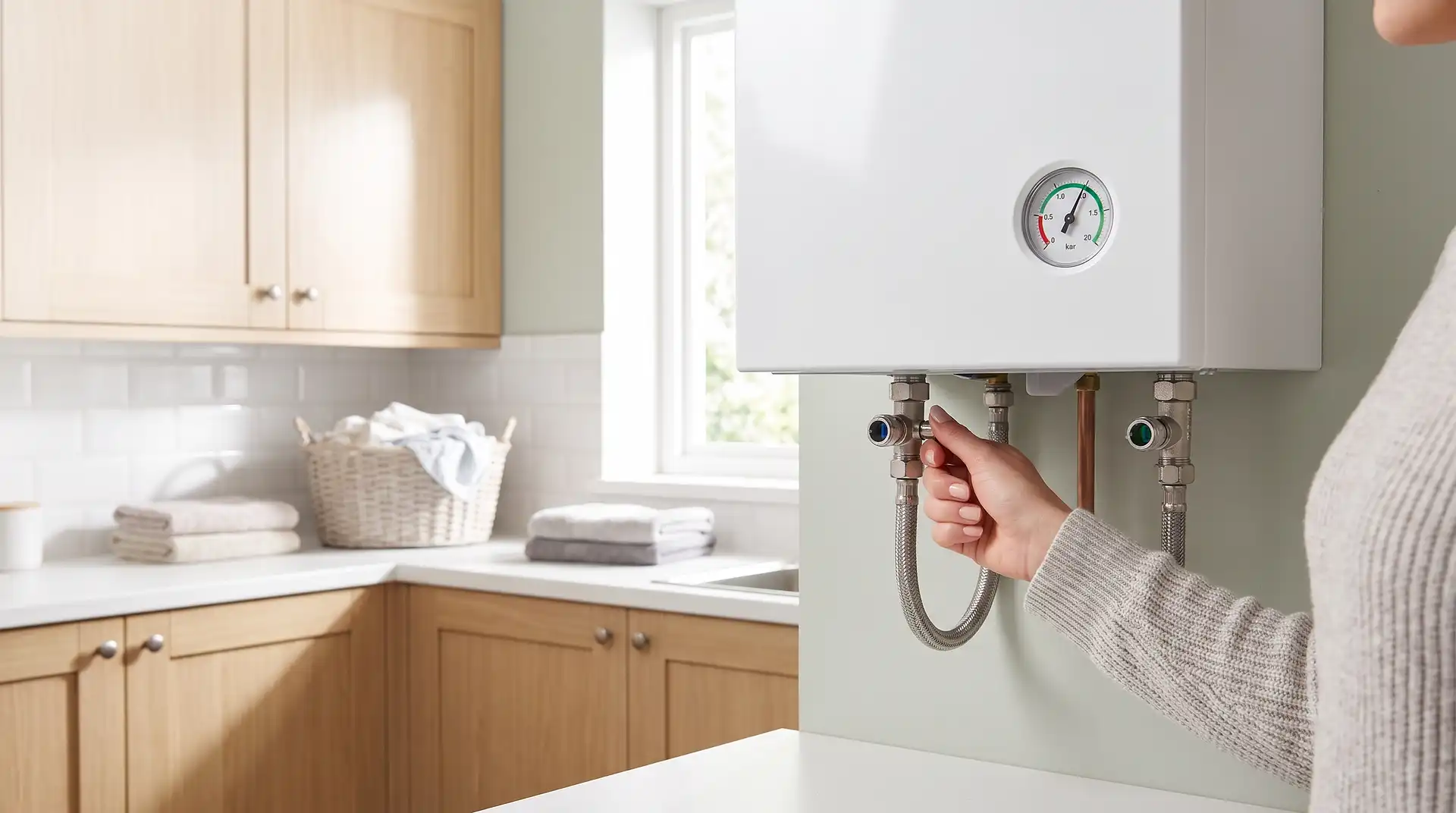
Look at the pressure gauge on the front of your boiler. Most should read 1 to 2 bar when the heating is off and the system is cold, usually shown with a green zone for normal range. If the reading sits below the green zone, particularly under around 1 bar, and your heating has stopped working properly or is throwing a fault code, a top-up is very likely the fix.
The Two-Minute Version
Turn the heating off.
Find the filling loop underneath the boiler, a small flexible hose, often silver and braided, with a valve or lever at each end.
Open both valves slowly, one after the other, and watch the gauge rise.
Close both valves as soon as the gauge reaches the normal range, typically 1 to 1.5 bar for a cold system.
Turn the boiler back on and check it fires up normally.
That's genuinely it for most straightforward cases. The rest of this guide covers the detail behind each of those steps, plus what to do if this doesn't hold.
Why Some Boilers Lose Pressure Occasionally, and That's Fine
A small, occasional drop in pressure is normal, particularly after bleeding a radiator, which releases a small amount of system water along with trapped air, or after any work has been done on the heating system recently. This kind of one-off top-up isn't a sign anything's wrong, it's just routine maintenance, and it's worth not overthinking a single occurrence.
Step-by-Step, With the Detail
Let the system cool first. If the heating's been running recently, give it a little time to cool before you start. This isn't strictly necessary for topping up in the way it is for releasing pressure, but a cool system gives a more accurate, stable reading and is simply easier to work with.
Locate the filling loop properly. Some boilers have it permanently fitted; others use a separate, removable hose you connect between two marked points only when needed. If yours is removable, check both ends are pushed on securely before opening anything, a loose connection is the most common reason water sprays out rather than filling the system properly.
Open slowly, not all at once. The gauge can lag slightly behind the actual pressure, so opening both valves fully and fast makes it easy to overshoot. Go slowly and check as you go.
Stop at the right point and close both valves fully. Once you're in the green zone, close both valves completely, in the same order you opened them. A valve left even slightly open can let pressure creep up further over the following hours without you noticing.
Reset if needed. Many boilers need a manual reset after a low-pressure lockout, check your specific manual for the process, usually a button held for a few seconds, and confirm the boiler fires up normally once pressure is corrected.
When a Top-Up Isn't the Real Fix
If you're finding yourself doing this every few weeks, that's the point where it stops being routine maintenance and starts being a sign of something else. Recurring pressure loss is commonly linked to a small leak somewhere in the system, sometimes visible, sometimes not, or a failing expansion vessel, a component that's meant to absorb the natural expansion of heated water and stops doing its job properly as it wears. Neither of these resolves itself with repeated top-ups, and continuing to treat the symptom rather than the underlying cause just means dealing with the same problem indefinitely.
If a radiator's recently been bled and pressure dropped as a direct result, that's the expected, one-off case covered above. But if you're bleeding radiators regularly because they keep needing it, that's worth looking into as its own issue, our related guide on the InstantCost blog covers how to bleed a radiator properly , including what it means if the same radiators keep needing air released more often than seems normal.
Common Mistakes and What to Do Instead
Mistake: opening the filling loop valves too quickly. This makes it easy to add too much pressure before you notice, since the gauge doesn't always respond instantly. Go slowly and check the reading as you add water.
Mistake: not checking a removable filling loop is properly connected. A loose end is a common cause of water spraying out rather than entering the system. Confirm both ends are secure before opening any valves.
Mistake: topping up repeatedly without asking why pressure keeps dropping. An occasional top-up is completely normal. Doing this every few weeks points to a leak or a failing component that needs proper diagnosis, not an ongoing manual fix.
Mistake: ignoring a fault code that persists after the gauge reads normal. If the display still shows an error once pressure is corrected, that often indicates a separate fault, and it's worth having it looked at rather than assuming the pressure fix has resolved everything.
Mistake: forcing a valve that won't turn easily. This can damage the fitting. If a valve feels properly stuck rather than just a little firm, stop and call an engineer rather than risk breaking it.
What It Costs in the UK
Topping up pressure yourself costs nothing beyond the mains water already supplying your filling loop. If a professional visit is needed, either because pressure keeps recurring or because you're not confident doing it yourself, according to InstantCost.co.uk's 2026 UK pricing data, fault diagnosis and repair typically costs £90 to £280, with the first hour usually included in that figure. If the cause turns out to be a specific failing component, an expansion vessel or a leaking valve, for instance, that repair is generally covered within the same diagnosis and repair pricing once identified.
If pressure problems are one symptom among several on an older boiler, alongside frequent faults or a unit already well into its expected lifespan, it's worth comparing repair costs against replacement. According to InstantCost.co.uk's data, a budget combi boiler like-for-like swap typically costs £1,800 to £2,400, and if a single repair quote starts approaching half that figure, particularly on a boiler over 10 years old, replacement generally becomes the more sensible option than continuing to fix an ageing system piece by piece.
Situation | Typical UK Cost (2026) |
|---|---|
DIY top-up via filling loop | Free |
Fault diagnosis and repair (first hour included) | £90 to £280 |
Annual service, for context | £75 to £130 |
New combi boiler, budget (like-for-like) | £1,800 to £2,400 |
These are UK market estimates based on InstantCost.co.uk's 2026 pricing data and vary by provider and region. A persistent pressure issue is almost always cheaper to diagnose and fix properly than to keep manually topping up on an ongoing basis.
Staying Safe
Never force a valve that feels stuck rather than just a little firm, this risks damaging the fitting and turning a simple top-up into a bigger repair. If you're using a removable filling loop, make sure it's disconnected and stored safely once finished, since one left attached with a valve not fully closed can be a route for pressure to creep up unnoticed over time.
If children are in the home, keep them away from the boiler and filling loop area while you're working, and put any hose or tools away afterward rather than leaving them accessible near the unit.
Filling loop procedures and normal pressure ranges vary slightly by manufacturer, so check your boiler's manual before topping up, and call a Gas Safe registered engineer if anything about your setup looks unfamiliar.
FAQ
How do I top up my boiler's pressure? Use the filling loop, a small hose connecting the boiler to the mains water supply, usually with a valve at each end. Open both slowly with the system cool, watching the gauge, and close them once it reaches the normal range, typically 1 to 1.5 bar.
Is it normal for boiler pressure to drop occasionally? Yes, particularly after bleeding a radiator or recent work on the heating system. A one-off top-up in these situations is routine maintenance, not a sign of a fault.
How often is too often to be topping up boiler pressure? If you're doing it every few weeks without an obvious cause like recently bleeding a radiator, that points to a leak or a failing component, and it's worth having a Gas Safe engineer diagnose the actual cause.
What happens if I add too much pressure when topping up? Slightly high pressure isn't usually dangerous, but it's worth bleeding a radiator afterward to bring it back down to the normal range, since consistently high pressure can trigger the boiler's safety relief valve to release water.
How much does it cost if a professional needs to fix a pressure problem? Fault diagnosis and repair typically costs £90 to £280 in the UK, with the first hour usually included, according to 2026 pricing data.
When should I consider replacing my boiler instead of repeatedly topping up pressure? If pressure problems are one of several recurring issues on an older boiler and a repair quote starts approaching half the cost of a new one, typically £900 to £1,200 against a £1,800 to £2,400 budget replacement, replacement is generally the more sensible option.