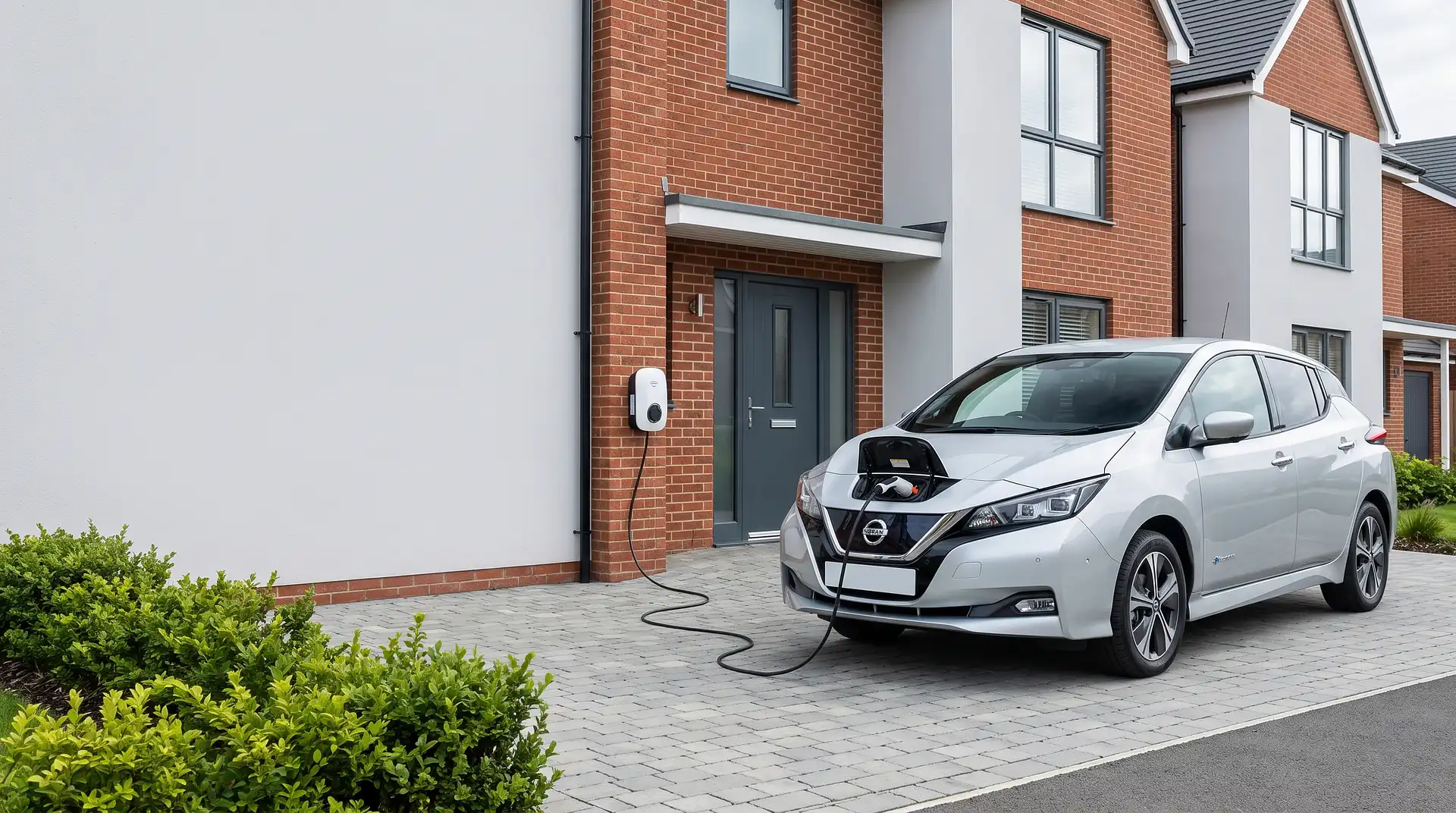
How to Charge an Electric Car at Home
16 August 2026
How to Charge an Electric Car at Home (From Choosing a Charger to Day One)
Home charging is where roughly 99% of most UK EV owners' charging actually happens, according to real driver data, which makes getting the home setup right considerably more important than anything about public charging. This isn't really about plugging in, that part's simple, it's about the decisions before installation day: which charger, which speed, which installer, and which tariff, all of which shape how convenient and how cheap charging at home actually turns out to be.
Step 1: Check Your Parking and Electrical Supply
Before anything else, confirm you have off-street parking, a driveway, garage, or dedicated space close enough to your consumer unit for a reasonable cable run. Installation without off-street parking is possible in some areas via a council-permitted cable channel, but it's a different, more expensive process, and worth knowing about early rather than assuming it after getting a standard quote.
Check your existing consumer unit too, or let your installer do this during the survey. Older or smaller boards sometimes can't take the additional load a charger adds without an upgrade, and around one in four UK installations needs exactly this.
Step 2: Choose 7kW, Not 22kW, for Almost Every Home
This decision is simpler than it looks. A 7kW charger suits almost every UK household, adding roughly 30 miles of range per hour, which comfortably fills a typical battery overnight in 8 to 9 hours. A 22kW charger requires a three-phase electricity supply, which most UK homes simply don't have, and installing one where you don't already have three-phase power adds significant extra cost for speed you'll rarely benefit from at home, since you're not usually in a rush overnight.
Step 3: Tethered or Untethered
A tethered charger has the cable permanently attached to the unit, ready to use, nothing to store or carry. An untethered charger has a socket that accepts a separate cable you plug in each time, costs slightly less, and gives you flexibility to use different cable types if you ever change vehicles. Most owners find tethered more convenient for daily use, since it removes a step from a routine you'll repeat hundreds of times a year.
Step 4: Get the Right Installer
Your installer needs to be OZEV-approved if you're claiming the EV chargepoint grant, and should be a certified, insured electrician regardless. The installation is notified under Part P of the Building Regulations, your installer handles this as part of the job, and it's worth confirming explicitly that they will, since it matters for both safety compliance and any future property sale.
Get three quotes. According to InstantCost.co.uk's 2026 UK pricing data, a standard 7kW installation with a cable run under 10 metres and no board work typically costs £900 to £1,400. Quotes below that range are worth scrutinising for what's actually included.
Step 5: The Survey
A proper installer conducts a site survey, either in person or via photos and questions, before quoting firmly. They'll assess the distance from your consumer unit to your parking spot, whether your existing board can take the load or needs upgrading, what cable route is practical, whether it needs to be buried, clipped externally, or run through a wall, and confirm mounting position for the charger itself, ideally sheltered but still accessible.
Cable runs over 15 metres, or jobs needing trenching, push cost up to £1,200 to £1,800. This is worth understanding before installation day, since it's genuinely one of the more common reasons a final bill differs from an initial ballpark estimate given without a proper survey.
Step 6: Installation Day
For a standard job, installation typically takes half a day to a full day. The installer mounts the unit, runs and connects the cable, connects to your consumer unit, upgrading it first if needed, tests the installation, and demonstrates how to use it, including any app or scheduling features. You should receive a certificate confirming Part P compliance and, if applicable, documentation for your chargepoint grant claim.
Step 7: Set Up Your Tariff Before You Rely on the Charger
This is the step people skip and then wonder why charging costs more than expected. A dedicated EV tariff with an overnight off-peak window, commonly 7p to 9p per kWh against a standard rate around 26p, is where the real savings come from, not the charger itself. Switching typically requires a smart meter, and for the smartest tariffs, a compatible car or charger that can communicate scheduling information.
Set this up around the same time as installation, or as soon afterward as possible, rather than charging on a standard tariff for months before getting round to switching.
Step 8: Schedule Your Charging
Most home chargers and many EVs let you schedule charging to start automatically once your cheap overnight window begins, rather than the moment you plug in. Set this once, based on your specific tariff's off-peak hours, and every subsequent charge happens automatically at the cheaper rate without you needing to think about timing each time.
Your Actual Daily Routine
Once everything's set up, day to day is genuinely simple: plug in when you get home, the schedule handles when charging actually starts, unplug in the morning to a full or near-full battery. This is the entire routine for the vast majority of charging sessions once the setup steps above are done properly.
If You're Also Considering Solar
Home charging and home solar generation interact in a specific way worth knowing about if you're weighing up both. Charging your car during daylight hours from your own solar generation, rather than overnight from the grid, uses electricity that would otherwise be exported at a lower rate. Our related guide covers how EV charging works more broadly, including connector types and public charging, useful background if home charging is only part of the picture and you'll also need to charge away from home occasionally.
Common Mistakes and What to Do Instead
Mistake: skipping the site survey and accepting a quote based on a phone call alone. Cable run length and consumer unit condition both significantly affect final cost. A proper survey avoids a quote that changes once the installer actually sees the job.
Mistake: choosing 22kW without checking for three-phase supply. Most homes don't have it, and installing 22kW without it either isn't possible or requires additional costly work. Confirm your supply type before assuming faster is simply better.
Mistake: not switching to an EV tariff around installation time. The charger enables cheap charging, but only if you're actually on a tariff with a cheap window. Set this up promptly rather than paying standard rates for months.
Mistake: not using scheduling features. Plugging in and charging immediately, rather than scheduling for your tariff's off-peak window, means paying more for identical electricity. Set the schedule once and let it run automatically.
Mistake: using an uncertified installer to save money upfront. This risks both safety and your ability to claim the chargepoint grant, which generally requires an OZEV-approved installer.
Mistake: not confirming Part P certification is provided. This documentation matters for compliance and for any future sale of the property. Confirm it's included as standard before booking.
What It Costs in the UK
Installation | Typical Cost |
|---|---|
7kW charger, standard install (under 10m cable) | £900 to £1,400 |
7kW charger, long cable run (over 15m) | £1,200 to £1,800 |
22kW charger (needs three-phase supply) | £1,400 to £2,200 |
Consumer unit upgrade, if needed | £450 to £900 |
Installation with no off-street parking | £1,500 to £2,500 |
EV chargepoint grant (renters, flat owners) | Up to £350 |
InstantCost's calculator example for Manchester and Liverpool puts a full standard installation at £1,075 to £1,581, breaking down roughly as £484 to £711 for the charger unit itself, £161 to £237 for cabling, £301 to £443 for labour, and £129 to £190 for any consumer unit work, a useful real-world reference for what a full quote actually contains.
All figures based on InstantCost.co.uk's 2026 UK pricing data. Around one in four installations needs a consumer unit upgrade. Get three quotes before booking, and confirm what a survey has and hasn't accounted for.
Staying Safe
Never attempt to install a home EV charger yourself. This is notifiable electrical work under Part P and needs a qualified, certified installer, both for safety and for the documentation you'll need later. Once installed, only use cables and accessories rated for your charger's output, and inspect the cable periodically for wear, particularly where it's handled daily.
If the charger is mounted outside, confirm with your installer that it's properly weatherproofed and rated for outdoor use, this should be standard on any legitimate installation but is worth confirming explicitly.
Grant eligibility and tariff availability change periodically, so confirm current EV chargepoint grant criteria and off-peak tariff rates before finalising your setup.
FAQ
What size charger do I need for home charging? 7kW suits almost every UK household, adding roughly 30 miles of range per hour and comfortably filling a typical battery overnight. 22kW needs a three-phase supply most homes don't have.
How long does home EV charger installation take? Typically half a day to a full day for a standard job, covering mounting, cabling, consumer unit connection, testing, and a demonstration of the charger's features.
Do I need to switch energy tariffs after getting a home charger? It's strongly worth it. A dedicated EV tariff with an overnight off-peak window, typically 7p to 9p per kWh against a standard rate around 26p, is where most of the actual cost saving comes from, not the charger itself.
Should I choose a tethered or untethered charger? Tethered is more convenient for daily use, with the cable always attached and ready. Untethered costs slightly less and offers flexibility if you might use different cable types in future.
How much does it cost to install a home EV charger in the UK? A standard 7kW installation typically costs £900 to £1,400 according to 2026 UK data, with longer cable runs, a 22kW unit, or a needed consumer unit upgrade all adding to that figure.
Can I install a home charger myself to save money? No, this must be done by a qualified, certified installer. It's notifiable electrical work under Part P, and using an uncertified installer also risks your eligibility for the EV chargepoint grant.