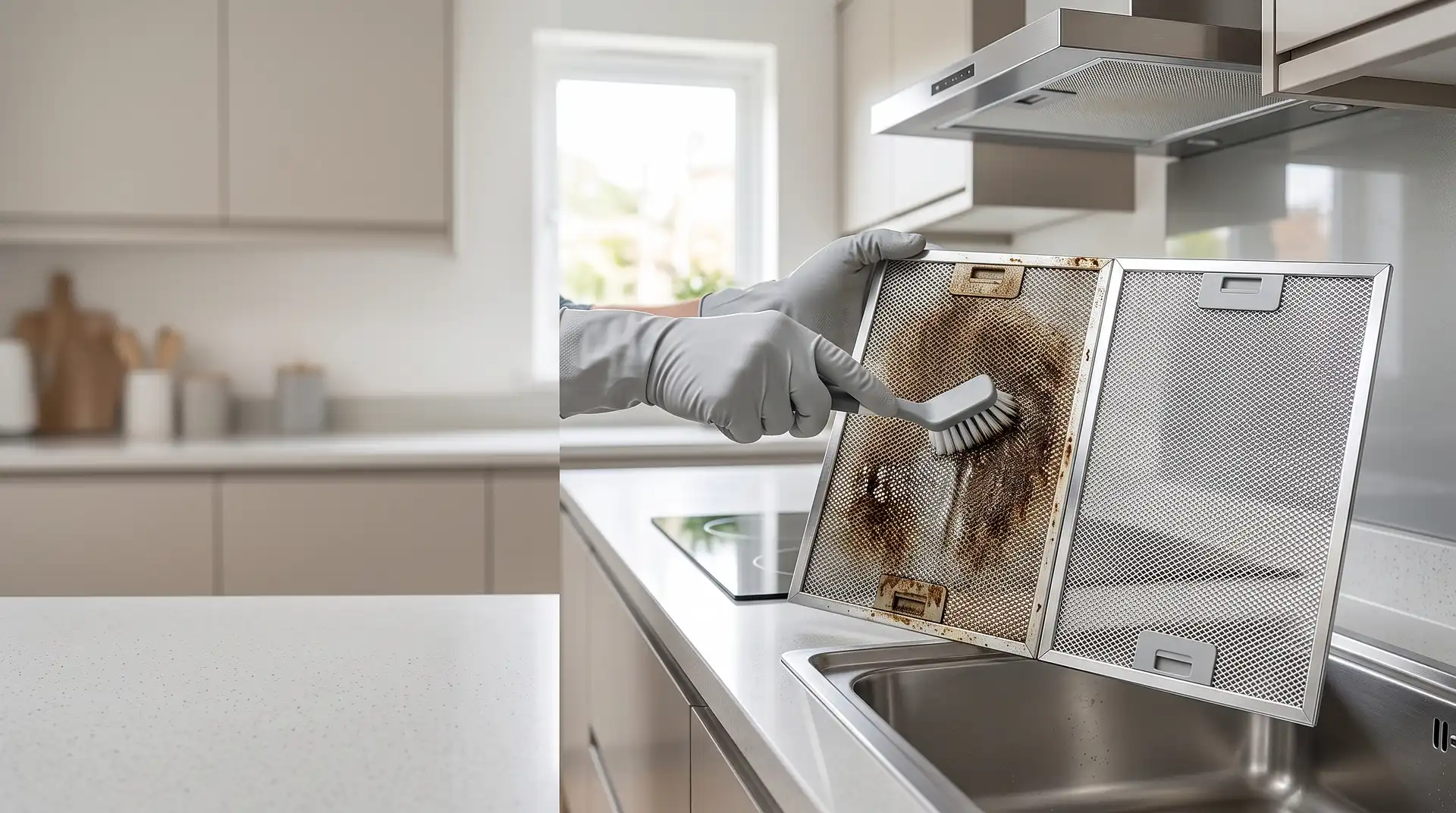
How to Clean a Kitchen Hood Filter
26 August 2026
How to Clean a Kitchen Hood Filter
Cleaning a kitchen hood filter is a different job depending on which type of filter you have, and doing the wrong thing to the wrong filter either leaves it dirty or destroys it entirely. The most important thing to establish before reaching for hot water and degreaser is whether the filter is a grease filter or a charcoal filter, because charcoal filters cannot be washed. Washing a charcoal filter destroys its activated carbon structure and renders it useless -- it needs replacing, not cleaning.
Most cooker hoods have both types. The grease filter sits on the underside of the hood and is the one you see when you look up into it. The charcoal filter, if fitted, sits behind the grease filter inside the hood body. Which type of charcoal filter you have -- or whether you have one at all -- depends on whether the hood is ducted to the outside or recirculating.
Ducted Versus Recirculating: Why It Matters
A ducted hood draws air through a grease filter and exhausts it outside through a duct in the wall or ceiling. It does not use a charcoal filter because the air leaves the kitchen entirely. The only filter to maintain is the grease filter.
A recirculating hood draws air through a grease filter, then through a charcoal filter, and returns the cleaned air back into the kitchen. It needs both filters maintained, and the charcoal filter replacement schedule is what most owners miss.
If you are unsure which type you have, look at the back or top of the hood for a duct or outlet pipe leading to the wall. If one exists and is connected, the hood is ducted. If the only outlet is back into the kitchen through a decorative grille, it is recirculating.
Grease Filter Types
Aluminium mesh filters are the most common type on UK domestic hoods. They look like layered metallic gauze, usually silver or grey, and are the filters most people picture when they think of a cooker hood filter. They are washable and reusable.
Stainless steel baffle filters are fitted to most commercial-style domestic hoods and some premium domestic ranges. They are thicker, heavier, and have a corrugated baffle design rather than mesh. They are also washable and reusable, and generally easier to clean than mesh because they have fewer surface gaps for grease to set into.
Synthetic fibre filters are found on some budget hoods and older models. They are usually white or cream-coloured fabric pads. These are not washable and must be replaced when saturated.
Step 1: Remove the Grease Filter
Grease filters are designed for quick removal. On most UK hoods the release mechanism is a push or slide latch on the filter frame. Push the latch, lower the filter, and slide it out of the retaining clips. The filter should come out without tools in under 30 seconds on any hood with accessible maintenance in mind.
If you are not sure of the mechanism, check the underside of the hood for any visible clips, tabs, or marked arrows. A filter that requires a screwdriver to remove has either seized in place from grease accumulation or is a model with a non-standard retention system -- check the manufacturer documentation.
Do not attempt to clean the filter in place inside the hood. The hot water and degreaser required will damage the fan motor and electrical components if they enter the hood body.
Step 2: Clean the Grease Filter
Dishwasher method (recommended for most aluminium mesh and baffle filters): Many modern cooker hood grease filters are dishwasher-safe. Check the manufacturer's instructions first, since some aluminium mesh filters discolour in the dishwasher if cleaned at high temperature or with harsh dishwasher tablets. If dishwasher-safe, place the filter flat in the bottom rack, run a hot cycle with a standard dishwasher tablet, and allow to dry before refitting. This is the easiest and most effective method for regular cleaning.
Hot water soak method: Fill a sink or large basin with very hot water -- as hot as the tap will produce or just off the boil from a kettle. Add a generous squirt of washing-up liquid and a tablespoon of bicarbonate of soda, which enhances the degreasing action. Submerge the filter and leave for 15 to 30 minutes. The hot water softens the grease and the soak does the majority of the work.
After soaking, scrub lightly with a soft brush -- an old toothbrush reaches into the mesh gaps effectively. Do not use steel wool or abrasive pads on aluminium mesh, which scratches and eventually distorts the surface. Rinse under hot running water and check that all visible grease has lifted. A second soak is sometimes needed on a filter that has not been cleaned in several months.
Degreaser spray method: For filters with heavy grease accumulation or where soaking space is limited, a proprietary kitchen degreaser or oven cleaner sprayed onto the filter surface and left to dwell for 10 minutes cuts through accumulated grease effectively. Rinse thoroughly after treatment. Use gloves and ensure ventilation when using strong degreaser products.
Allow the filter to dry completely before refitting. A wet filter returned to the hood reduces airflow efficiency and can drip onto cooking surfaces below.
Step 3: Check the Charcoal Filter (Recirculating Hoods Only)
Access the charcoal filter by removing the grease filter first, then locating the charcoal filter inside the hood body. On most hoods it is a cylindrical cassette or a flat pad that clips into place behind the grease filter housing.
Do not wash the charcoal filter. Activated carbon works by adsorbing odour molecules into its porous structure. Water destroys this structure and the filter loses its effectiveness entirely. A washed charcoal filter is an empty housing that does nothing.
Charcoal filters have a lifespan measured in use rather than cleaning cycles. Most manufacturers recommend replacing them every three to six months in a regularly used kitchen, or every six to twelve months in a kitchen where the hood is used only for occasional cooking. The filter does not show visible saturation the way a grease filter does -- it simply stops removing odours effectively.
The replacement charcoal filter must be the correct model for the hood. Filter compatibility is brand and model specific. The hood model number is usually on a label inside the filter housing or on the original documentation. Generic charcoal filter cassettes are available for some common brands, but compatibility should be confirmed before purchase.
How Often to Clean the Grease Filter
The correct cleaning frequency depends on how heavily the hood is used. In a kitchen where the hob is used daily for cooking with oils and fats, clean the grease filter monthly. In a kitchen with lighter use, every two to three months is adequate.
A simple visual test: hold the filter up to a light source. On a clean filter, light passes through the mesh relatively freely. On a filter that needs cleaning, the mesh gaps are visibly clogged and light passes through in an uneven, patchy pattern. A filter that is so clogged that light barely passes through is overdue for cleaning and is running at significantly reduced efficiency.
A saturated grease filter is also a fire risk. Accumulated fat in a mesh filter exposed to heat from the hob below is a documented cause of cooker hood fires. Keeping the filter clean is not just a performance issue.
A Note on Hood Performance After Cleaning
A clean filter restores the hood to its designed airflow capacity. If the hood is still noticeably underperforming after a clean filter is fitted -- noise from the fan has increased, extraction is visibly poor, cooking smells persist -- the issue is elsewhere: either the duct is blocked or partially obstructed, the fan motor has deteriorated, or on a recirculating hood, the charcoal filter is saturated and needs replacing.
A ducted hood that has not had the duct inspected in several years can accumulate grease in the duct run itself, particularly at bends and at the wall terminal. This is a fire risk independent of the filter condition and is worth inspecting if the hood is more than five to seven years old and has been in regular use.
If a full kitchen refresh is on the horizon and the cooker hood is one of the elements under consideration -- whether to replace it, upgrade to a ducted version, or factor it into a broader kitchen renovation the InstantCost kitchen renovation cost guide has a 2026 UK breakdown of full kitchen costs by cabinet tier, worktop material, and appliance level, with a calculator to understand what different elements cost before committing to any work.
For maintaining other kitchen appliances alongside the hood, our related guide on how to organise kitchen cupboards covers the storage layout logic that reduces clutter around the hob area, which is directly relevant to how often grease reaches the hood filter in the first place.
Common Mistakes and What to Do Instead
Mistake: washing the charcoal filter. Charcoal filters cannot be washed. Water destroys the activated carbon adsorption structure. Replace rather than clean.
Mistake: cleaning the filter in place inside the hood. Water and cleaning product entering the hood body damages the fan motor and electrical components. Always remove the filter fully before cleaning.
Mistake: using steel wool or abrasive pads on aluminium mesh. These scratch and distort the mesh surface, reducing airflow and eventually breaking the mesh structure. Use a soft brush only.
Mistake: not drying the filter before refitting. A wet filter returned to the hood reduces airflow efficiency and drips onto cooking surfaces. Allow to dry fully or pat dry with a cloth before refitting.
Mistake: cleaning only when the hood becomes visibly inadequate. By this point the filter has been running at reduced efficiency for months and the grease accumulation increases the fire risk. Monthly cleaning in a regularly used kitchen is the correct schedule.
Mistake: assuming the charcoal filter lasts indefinitely. It does not show visible saturation. Replace it on schedule -- every three to six months in regular use -- rather than waiting for performance to decline noticeably.
Mistake: buying a generic charcoal filter without confirming compatibility. Charcoal filter cassettes are model-specific. Confirm the hood model number before ordering a replacement.
What It Costs in the UK
Item | Typical UK cost (2026) |
|---|---|
Replacement aluminium mesh grease filter | £8 to £25 |
Replacement stainless steel baffle filter | £20 to £60 |
Replacement charcoal filter cassette | £8 to £30 |
Proprietary kitchen degreaser spray | £4 to £10 |
Professional cooker hood service and clean | £60 to £120 |
Duct cleaning and inspection | £80 to £150 |
New domestic cooker hood (budget) | £60 to £150 |
New domestic cooker hood (mid-range) | £150 to £400 |
New domestic cooker hood (premium) | £400 to £1,200+ |
Filter replacement costs vary by hood brand and model. Always confirm compatibility before ordering. Professional service costs vary by region.
Staying Safe
Grease accumulated in a cooker hood filter is flammable. A filter that has not been cleaned regularly and is exposed to heat from the hob below presents a genuine fire risk, and cooker hood fires from neglected filters are a documented and preventable cause of UK kitchen fires.
Keep the filter on a monthly cleaning schedule in a kitchen where oils and fats are used regularly. If the filter is visibly saturated and has not been cleaned in several months, allow it to cool fully before removing it for cleaning, and clean it away from any heat source.
Degreaser sprays and oven cleaners are irritants that cause skin and eye damage on contact. Wear nitrile gloves and eye protection when using these products, and ventilate the kitchen thoroughly. Do not use aerosol degreaser sprays near a naked flame or a hot hob surface.
Keep children and pets away from the cleaning area while degreaser products are in use. Store all cleaning chemicals in their original labelled containers and locked away or out of reach after use.
Cooker hoods fitted to gas hobs in UK kitchens are subject to the minimum separation distance requirements set by the hob manufacturer and the hood manufacturer, typically 650 mm for gas hobs. Hoods installed below this distance increase the fire risk regardless of filter condition. If the installation does not meet the minimum clearance, consult the manufacturer documentation or a Gas Safe registered engineer before continued use.
FAQ
Can you put a cooker hood filter in the dishwasher? Many aluminium mesh and stainless steel baffle filters are dishwasher-safe. Check the manufacturer's instructions for your specific model first, since some aluminium filters discolour at high dishwasher temperatures. Charcoal filters must never go in the dishwasher.
How often should you clean a cooker hood filter? Monthly in a kitchen where the hob is used daily with oils and fats. Every two to three months in lighter use. A simple visual test is to hold the filter up to light -- a filter that needs cleaning shows visibly clogged mesh with uneven light transmission.
How do you clean a very greasy cooker hood filter? Soak in very hot water with washing-up liquid and bicarbonate of soda for 30 minutes, then scrub lightly with a soft brush. For severe accumulation, a proprietary kitchen degreaser left to dwell for 10 minutes before rinsing is more effective. Allow to dry fully before refitting.
Can you wash a charcoal cooker hood filter? No. Charcoal filters use activated carbon that is destroyed by water. Washing a charcoal filter renders it ineffective. Replace it on schedule -- every three to six months in regular use -- rather than attempting to clean it.
Why is my cooker hood still noisy after cleaning the filter? A clean filter restores designed airflow and should reduce fan noise caused by restricted airflow. If the hood remains noisy after a clean filter is fitted, the fan motor may be deteriorating or the duct may be obstructed. A professional service will identify which.
How do I know if my hood is ducted or recirculating? Look for a duct or pipe at the back or top of the hood leading to the wall or ceiling. If one is present and connected, the hood is ducted and does not use a charcoal filter. If the air returns through a grille into the kitchen, it is recirculating and uses both a grease and a charcoal filter.