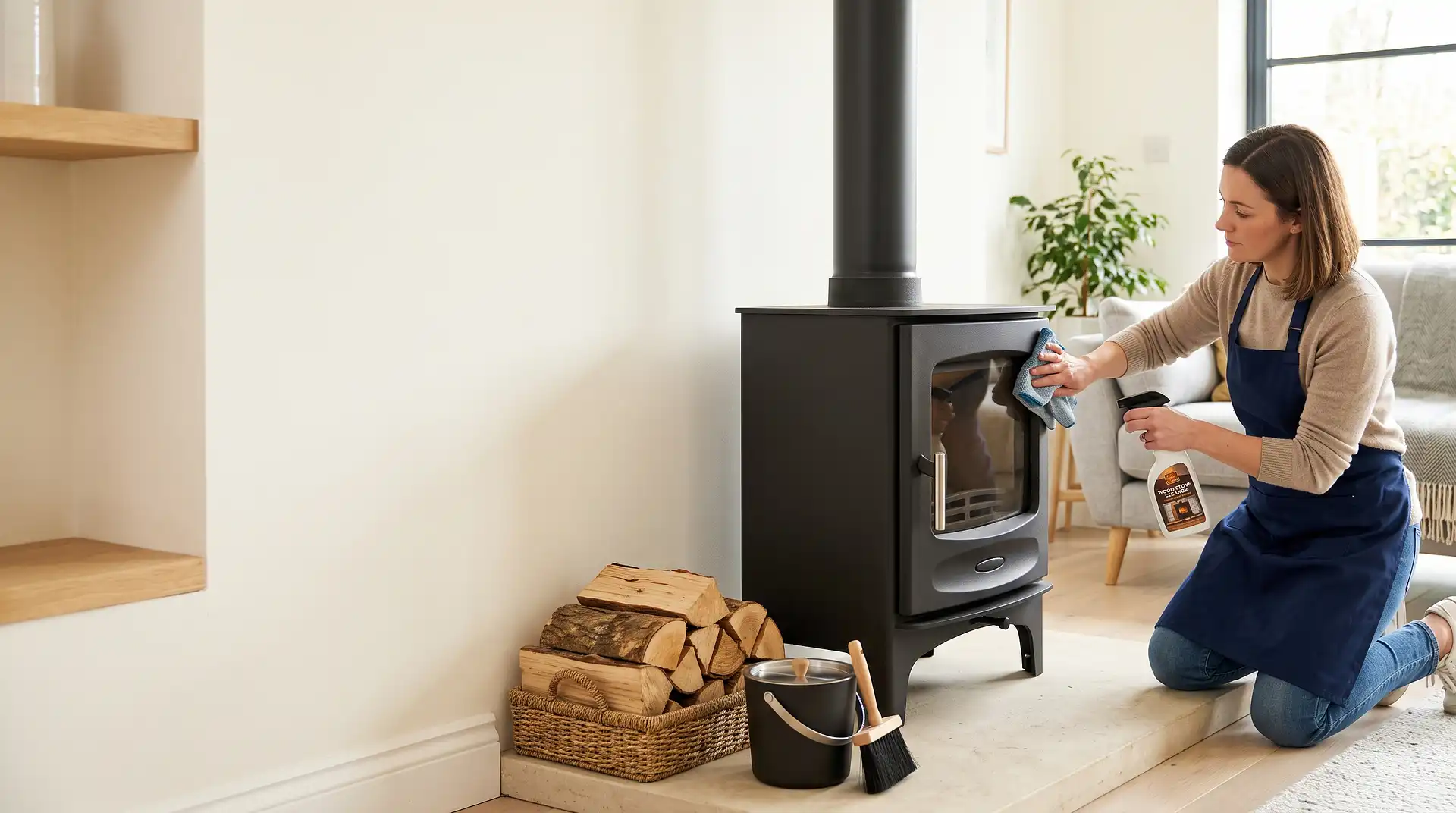
How to Clean a Wood Stove Exterior
31 July 2026
How to Clean a Wood Stove Exterior (Without Damaging the Finish)
Wiping down a wood stove looks like a simple job, and it mostly is, but the wrong product on the wrong surface causes damage that a quick clean should never have caused in the first place. Cast iron, painted steel, and enamel all need different treatment, and abrasive cleaners or the wrong polish will dull or discolour a finish that's meant to survive years of repeated heating and cooling. The material matters more here than the amount of soot on the surface.
Always Start Cold
This applies regardless of finish type, and it matters for more than comfort. Never clean a stove that's warm or has been used recently. Wait until it's been unlit long enough to be completely cool to the touch, ideally several hours or overnight after the last fire. A hot surface makes soot and ash more likely to become airborne when disturbed, and cleaning it risks a burn that a cool stove simply doesn't.
What You Need
A soft brush and a vacuum with a HEPA filter, for general soot and ash removal without scratching the finish.
A damp cloth or microfibre cloth, for wiping down the main body once loose soot and dust are removed.
A dedicated stove glass cleaner, or a vinegar and water solution, never an abrasive scourer or steel wool on the glass, which scratches it permanently.
Stove polish, specifically formulated for cast iron, if that's your stove's finish, since it isn't suitable for painted or enamelled surfaces.
Protective gloves and a dust mask, since soot is genuinely messy and fine ash particles are worth avoiding breathing in during a thorough clean.
A dust sheet or old towels, to protect the floor and surrounding furniture from soot marks while you work.
Cleaning by Finish Type
Cast iron benefits from a soft brush and vacuum to remove loose soot first, followed by a damp cloth wipe. Once dry, a light application of stove polish, buffed in with a cloth, restores the finish and offers some protection against surface rust. This step is specific to cast iron and generally isn't needed, or even recommended, on other finishes.
Painted steel should be wiped with a soft, damp cloth after loose soot is removed, without polish, since stove polish is formulated for bare or semi-porous cast iron rather than painted surfaces, and using it on paint can leave a patchy, uneven result. A dry microfibre cloth for a final buff is usually all a painted finish needs.
Enamelled stoves should be cleaned similarly to painted steel, a soft damp cloth, nothing abrasive, since enamel scratches more easily than raw cast iron and any scratch is difficult to disguise once it's there.
Across every finish, avoid abrasive scourers, steel wool, or general-purpose cleaning sprays not specifically designed for stove surfaces, since these can dull or damage the finish no matter what the stove is made of.
Cleaning the Glass
Remove any larger flakes of soot or debris from the glass first, by hand or with a soft brush, before applying anything wet, which reduces the risk of grinding loose particles into the glass while wiping. Apply a dedicated stove glass cleaner, or a mix of roughly two parts water to one part vinegar with a small amount of washing-up liquid, onto a cloth rather than spraying directly onto the glass, and wipe in a circular motion.
A well-known trick specific to wood stoves is worth mentioning here: dip a slightly damp cloth or scrunched newspaper into the soft, cold ash from the firebox and use it to wipe the glass. The fine ash acts as a very mild, natural abrasive that lifts soot without scratching the glass, which is why several stove manufacturers actually recommend it as an effective, low-cost method. Finish with a clean, dry cloth to remove any residue and streaks.
Cleaning the Hearth and Surrounding Area
Vacuum the hearth and immediate surrounding floor with a vacuum fitted with a HEPA filter, specifically designed to capture the very fine soot and ash particles that a standard vacuum filter can recirculate back into the room. Wipe any stone, slate, or tiled hearth with a damp cloth, and apply a specific hearth or slate oil if recommended for that particular material, since some natural stone hearths benefit from periodic conditioning much the same way natural worktops do.
Common Mistakes and What to Do Instead
Mistake: cleaning a stove that's still warm. This risks burns and causes soot to become airborne more easily than on a cool surface. Always wait until the stove is completely cool before starting.
Mistake: using an abrasive scourer or steel wool on the glass or main finish. This causes permanent scratching that no further cleaning can reverse. Use a dedicated stove glass cleaner, a vinegar solution, or the ash and newspaper method instead.
Mistake: applying stove polish to a painted or enamelled finish. Stove polish is formulated specifically for cast iron, and using it on paint or enamel can leave a patchy, discoloured result rather than a protective shine.
Mistake: spraying cleaning solution directly onto the glass. This lets liquid run down into the door seal or hinge mechanism. Apply solution to a cloth first, then wipe the glass.
Mistake: using a standard household vacuum without a HEPA filter for ash. Fine ash particles can pass straight through a standard filter and be recirculated into the room's air. Use a wet or dry vacuum, or one specifically fitted with a HEPA filter, built for this kind of debris.
Mistake: only ever cleaning the exterior and never booking a proper flue sweep. Exterior cleaning keeps the stove looking good, but it does nothing for creosote buildup inside the flue, which is a genuine fire risk if left unaddressed. These are two separate jobs, and both matter.
How Often to Clean
General exterior wiping and glass cleaning is worth doing every couple of weeks during regular use, up to roughly every two months for lighter or occasional use, depending on how often the stove is lit. This sits alongside, rather than replaces, the annual professional flue sweep and full safety service, which should happen at least once a year regardless of how well the exterior is kept in between.
A Note on Pricing
The InstantCost.co.uk page linked for this article covers carpet cleaning costs specifically, which isn't the right source for wood stove pricing, so the figures below instead come from current UK stove sweep and service data. If you're separately dealing with carpet issues near a wood-burning stove, ash trodden in underfoot being a fairly common cause, our guide on how to use a carpet cleaner properly covers the extraction technique that works well for that kind of fine, ground-in debris.
What It Costs in the UK
Cleaning the exterior yourself costs very little. A bottle of dedicated stove glass cleaner typically runs £8 to £15, and stove polish for cast iron finishes is similarly priced, usually £10 to £20. A HEPA-filter vacuum or dedicated ash vacuum, if you don't already own one suitable, typically costs £40 to £90.
Exterior cleaning is generally something homeowners handle themselves, but it's commonly included as part of a full professional stove sweep and service, which covers the flue, internal components, safety checks, and a clean of the stove body and glass together. A full professional service in the UK typically costs £75 to £160, with prices toward the lower end more common in some regions and the higher end reflecting more thorough multi-point checks or areas with higher labour costs. This is worth booking annually regardless of how well you maintain the exterior yourself, since it addresses the flue and internal safety checks that exterior cleaning alone doesn't cover.
Item or Service | Typical UK Cost (2026) |
|---|---|
Stove glass cleaner | £8 to £15 |
Cast iron stove polish | £10 to £20 |
HEPA-filter or ash vacuum | £40 to £90 |
Full professional sweep and service, incl. exterior clean | £75 to £160 |
These are UK market estimates and vary by region and provider. A professional service typically includes exterior and glass cleaning as standard alongside the more essential flue sweep and safety checks.
Staying Safe
Never clean a stove that isn't completely cool. This is the main safety rule for the whole process, since a warm stove risks burns and makes soot more likely to become airborne. Wear gloves and a dust mask for a thorough clean, particularly when removing ash and soot from the firebox and hearth area, since fine particles are genuinely unpleasant and potentially irritating to breathe in with extended exposure.
Beyond exterior cleaning, an annual professional flue sweep is a genuine fire-safety measure, not just a maintenance nicety. Creosote buildup inside the flue is a recognised cause of chimney fires if left unaddressed, and a proper sweep certificate is often required to validate stove warranty and home insurance cover too. If children are in the home, keep the hearth area and any ash bucket used during cleaning out of reach, since ash can retain heat for longer than expected even after a fire appears fully out.
Manufacturer-specific cleaning guidance can vary by stove model and finish, so it's worth checking your stove's manual for any specific product recommendations, and always confirming chimney sweep certification before booking a professional service.
FAQ
Can I clean my wood stove's glass with vinegar? Yes, a mix of roughly two parts water to one part vinegar with a little washing-up liquid works well, applied to a cloth rather than sprayed directly onto the glass, followed by a dry buff.
Should I use stove polish on my wood burner? Only if it's cast iron. Stove polish isn't generally suitable for painted steel or enamelled finishes, where it can leave a patchy, discoloured result rather than a protective shine.
Why shouldn't I clean my stove while it's still warm? Cleaning a warm stove risks burns, and soot and ash become airborne more easily on a hot surface, spreading dust further around the room than cleaning a cool stove would.
How often should I clean my wood stove's exterior? Roughly every couple of weeks during regular use, up to every two months for occasional use, separate from the annual professional flue sweep and safety service.
Does exterior cleaning replace the need for a chimney sweep? No. Exterior cleaning keeps the stove looking good, but it does nothing for creosote buildup inside the flue, which is a genuine fire risk addressed only by a professional sweep, ideally annually.
How much does a professional wood stove service cost in the UK? A full professional sweep and service, which typically includes cleaning the stove exterior and glass alongside the flue sweep and safety checks, costs £75 to £160 in the UK.