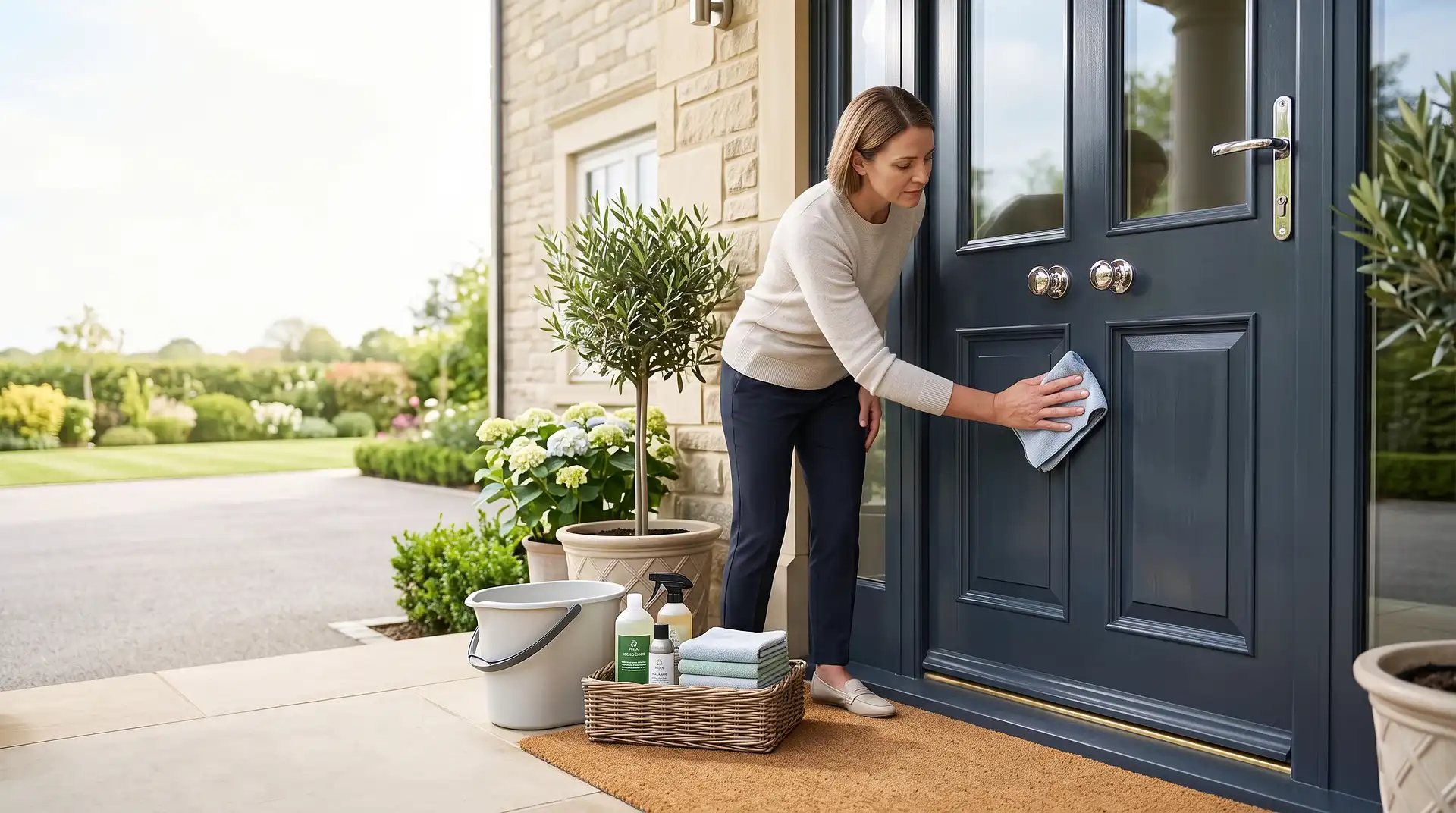
How to Clean an Exterior Painted Door
2 September 2026
How to Clean an Exterior Painted Door
A painted exterior door accumulates grime differently from any other surface on the front of a house. The area around the handle sees grease from thousands of hand contacts. The lower panels collect road traffic film and rain splash from the step. The top and outer edges weather differently from the recessed panels, leaving tide marks where dirt has washed across the face and dried.
Cleaning it correctly depends on what the door is made from. Timber, uPVC, composite, and steel doors share broadly similar painted appearances but need different products and different pressure limits to clean without damaging the paint film or the surface beneath.
Identify the Door Material First
Timber doors are common on Victorian, Edwardian, and interwar UK properties and on some modern builds where wood has been chosen for appearance. They are painted with exterior wood paint or microporous paint and have visible grain, slight surface texture, and joins between panels and rails. The paint film on timber is the weather barrier, and any cleaning method that strips or cracks it exposes bare wood to moisture.
uPVC doors are found on the majority of UK new-build and replacement door installations from the 1980s onwards. They are white or coloured as standard, with a smooth factory finish, and any colour other than the original factory colour will have been applied as a specialist paint product. uPVC is sensitive to abrasion and solvents.
Composite doors have a GRP (glass reinforced plastic) outer skin over a foam-filled timber or steel frame. They hold colour and finish better than timber or uPVC, are more resistant to moisture, and can be cleaned slightly more vigorously. Most UK composite doors are produced by a small number of manufacturers and can be identified by their uniform, slightly textured surface.
Steel doors are common in commercial settings and increasingly in residential security-focused installations. They are painted with metal-specific primer and topcoat. Bare steel exposed by chips or scratches rusts quickly, so maintaining the paint film is a maintenance priority beyond appearance.
Tools and Products to Have Ready
A bucket of warm water with a small amount of washing-up liquid, two clean microfibre cloths, a soft-bristle brush for recesses and mouldings, a garden hose on a gentle spray setting, and a dry cloth for finishing.
Do not bring a pressure washer to an exterior door clean. Even a wide fan nozzle at moderate pressure forces water into door seals, letterbox plates, and glazing beads where it cannot drain. Over time this causes seal failure, swelling of any timber components behind the outer face, and rust at steel fixings.
Step 1: Rinse the Surface First
Spray the door face with the garden hose on a gentle spray setting to remove loose surface dust and grit. This prevents abrasive particles from being dragged across the paint surface when the cloth is applied. Work top to bottom.
Pay attention to the door edges and the threshold below. Weathered mineral deposits, dried salt, and compacted grit accumulate at the base and at the horizontal reveals of recessed panels, and these need wetting and loosening before any cloth contact.
Step 2: Wash the Face
Dip the microfibre cloth into the warm soapy water, wring until barely damp rather than wet, and work across the door face in horizontal passes from the top downward. Change the water when it becomes visibly grey.
Work the soft brush into any recessed mouldings, panel grooves, and the area around the letterbox and knocker. These areas trap airborne contamination and road film that the flat face does not accumulate to the same degree.
The area immediately around the handle requires specific attention. Grease from repeated hand contact builds up around any surface-mounted handle or knocker and collects a dark ring of compacted grime. A small amount of washing-up liquid applied undiluted to the cloth and worked around the handle surround cuts through this effectively.
Step 3: Address Specific Marks
Traffic film (the grey-beige haze common on doors facing a road) is a combination of exhaust particulates, rubber tyre dust, and organic material that bonds to paint surfaces. A dedicated car shampoo or traffic film remover applied with a cloth removes it more effectively than plain soapy water. These products are available from motor factors and some supermarkets. Apply to the cloth, work across the affected area, and rinse promptly.
Weathering tide marks appear where rain has run down the door face, picked up contamination from the top edge or from recesses, and dried in a horizontal line across the panels below. These are slightly more concentrated grime deposits than the general surface and respond to a second pass with slightly more product concentration. If they persist after two cleaning passes, a small amount of cream cleaner on a cloth removes them without abrasion to most exterior paint types.
Green algae or mould on shaded or north-facing doors develops on paint that retains surface moisture. A diluted exterior biocide or a solution of one part bleach to ten parts water applied briefly with a cloth, left for five minutes, then rinsed removes biological growth from painted doors. Test on a small area first on coloured doors, as diluted bleach can affect some pigments.
Rust runs on steel doors from corroded hinges, fixings, or letterbox plates appear as orange streaks. These need a rust stain remover containing oxalic acid, applied carefully to the streak only and rinsed promptly. Prevent recurrence by touching up any bare metal with a metal primer before the rust run reappears.
Step 4: Clean the Hardware
The letterbox, knocker, handle, and any door numerals or house name plates each have different finishes chrome, brass, black powder-coat, stainless steel and each responds differently.
Chrome and stainless steel hardware wipes clean with a damp microfibre cloth and dries streak-free when polished immediately with a dry cloth. Lacquered brass cleans similarly but must not be polished with abrasive brass cleaner, which removes the lacquer and exposes the raw brass to tarnishing.
Unlacquered polished brass develops a verdigris patina over time and benefits from a dedicated brass cleaner applied with a soft cloth and buffed. This is maintenance work rather than cleaning and is worth doing annually alongside the door clean.
Black powder-coated hardware is cleaned with a damp cloth only. Solvent-based cleaners, abrasives, and cream cleaners all damage powder coat finishes.
Step 5: Clean Any Glazing
Most modern UK exterior doors have double-glazed side panels or a glazed section in the door itself. Clean the glass with a clean microfibre cloth and a glass cleaner or warm water, then dry immediately with a separate dry cloth to prevent water spots from hard mains water drying on the surface.
For heavy mineral deposits on glazing, a diluted white vinegar solution dissolves calcium deposits effectively. Apply, leave for two to three minutes, then rinse and dry. Do not allow vinegar to dry on the glass surface or onto the door face, where it can affect some paint pigments.
Restoring a Faded Painted Finish
If cleaning reveals that the paint is chalking, fading, or has lost its sheen rather than simply being dirty, cleaning alone will not restore the appearance. Chalking paint leaves a dusty residue on the cloth during washing and produces a dull, flat finish when dry.
Faded or chalking exterior paint on a timber or composite door can be restored with a fresh coat of the appropriate exterior paint. Preparation is the critical step: lightly sand any chalking or flaking areas, prime any bare timber or metal, and apply two thin topcoats of exterior paint. A litre of quality exterior wood or composite door paint costs £15 to £30 and covers a standard door with two coats to spare.
If the door paint is sound but has dulled from UV exposure, a specialist exterior paint reviver or a very light application of exterior varnish in the original sheen level (gloss, satin, or eggshell) restores the finish without full repainting.
The condition of an exterior front door says more about a property than most homeowners realise. For a broader look at what professional exterior cleaning covers and what it costs by surface type and region, the InstantCost exterior cleaning cost guide has a 2026 UK price breakdown including fascias, render, gutters, and windows alongside specialist one-off cleans, with a regional calculator before approaching any contractor.
Cleaning the door is one element of a full exterior clean that also covers the walls, gutters, and paths. Our related guide on how to clean exterior paint covers the masonry, timber cladding, and fence paint cleaning methods that apply to the surfaces around the door, along with the products to avoid that would damage the paint film in the same way they would damage the door finish.
Common Mistakes and What to Do Instead
Mistake: using a pressure washer on an exterior door. Water forced into door seals, glazing beads, and letterbox plates causes seal failure and timber swelling. Use a garden hose on a gentle spray setting for rinsing only.
Mistake: using abrasive cloths or cream cleaner as a first approach. Abrasion on exterior paint produces dull patches that collect dirt faster than the surrounding surface. Reserve cream cleaner for specific persistent marks only, and use a microfibre cloth throughout.
Mistake: using solvent-based cleaners on uPVC. Solvents dissolve the plasticisers in uPVC and cause irreversible surface crazing and yellowing. Use only water-based products on uPVC doors.
Mistake: not rinsing off bleach-based treatments promptly. Bleach left on coloured painted surfaces longer than five minutes risks affecting the pigment. Apply, time it, and rinse promptly.
Mistake: cleaning the door face and ignoring the edges and threshold. Weathering deposits at the edges and base of the door are the source of the tide marks across the face panels. Clean the whole door assembly including edges and step.
Mistake: drying hardware with the same cloth used on the door face. Grit particles transferred from the door face to hardware can scratch chrome and powder-coated finishes. Use a dedicated dry cloth for hardware.
What It Costs in the UK
Item | Typical UK cost (2026) |
|---|---|
Washing-up liquid | Under £2 |
Microfibre cloth set | £4 to £10 |
Traffic film remover | £5 to £15 |
Diluted bleach solution (DIY) | Under £2 |
Exterior biocide spray | £8 to £20 |
Rust stain remover | £6 to £15 |
Brass cleaner | £4 to £10 |
Exterior door paint (1 litre) | £15 to £30 |
Professional exterior clean (full house) | £200 to £600 per elevation |
Professional cleaning figures based on InstantCost.co.uk's 2026 UK exterior cleaning pricing data. A door-only clean is typically quoted as part of a broader exterior clean rather than as a standalone.
Staying Safe
Bleach-based cleaning solutions release chlorine fumes in enclosed spaces. Clean the door with the internal door to the hallway closed if using any diluted bleach treatment, and stand to the side of the door face rather than directly in front of it to avoid breathing fumes at close range.
Rust stain removers containing oxalic acid are corrosive and cause skin and eye irritation. Wear gloves and eye protection when applying, and rinse the door surface thoroughly after treatment.
Do not clean the door from a stepladder needed to reach the top of a tall or fanlight-topped door while also managing a bucket, cloth, and hose. Position everything within comfortable reach from the ground before starting. A stable step stool for the upper sections is safer than a leaning reach from a ladder.
Keep children away from the door area while cleaning products are in use, particularly any bleach or oxalic acid treatments. Store all products in their original labelled containers after use.
Exterior door paint and timber treatments used on wood in contact with the ground should comply with relevant UK Biocidal Products Regulation requirements if they contain fungicidal or insecticidal actives. Check product labels before use.
FAQ
What is the best way to clean a painted exterior door? Rinse with a garden hose, then wash with warm soapy water and a microfibre cloth from top to bottom, paying specific attention to the handle area and recessed mouldings. Rinse again and dry with a clean cloth. For traffic film or biological growth, use a dedicated product before the soapy water wash.
Can you use a pressure washer on a front door? No. Pressure washing forces water into door seals, letterbox plates, and glazing beads, causing seal failure and potential timber swelling. Use a garden hose on a gentle spray setting for rinsing only.
How do you clean green algae off a painted front door? Apply a diluted bleach solution (one part bleach to ten parts water) with a cloth, leave for five minutes, then rinse thoroughly. Test on a small hidden area first on coloured doors, as bleach can affect some pigments. An exterior biocide spray is a gentler alternative that also prevents rapid regrowth.
How do you clean a uPVC door that has been painted? Use warm soapy water and a microfibre cloth. Do not use solvent-based cleaners, abrasive pads, or cream cleaners, all of which damage the uPVC surface beneath the paint. Traffic film remover applied to a cloth is safe on most painted uPVC for stubborn grime.
How do you remove tide marks from a painted door? Tide marks on door panels are concentrated grime deposits left by rain runoff. A second cleaning pass with slightly more washing-up liquid concentration removes most. For persistent marks, a small amount of cream cleaner on a cloth applied carefully to the mark only, then rinsed, works on most exterior paint types.
How often should an exterior painted door be cleaned? A basic wash twice a year, at the start of spring and autumn, keeps most UK exterior doors in good condition. Doors facing a road or in a sheltered position that accumulates moisture and biological growth may benefit from quarterly attention.