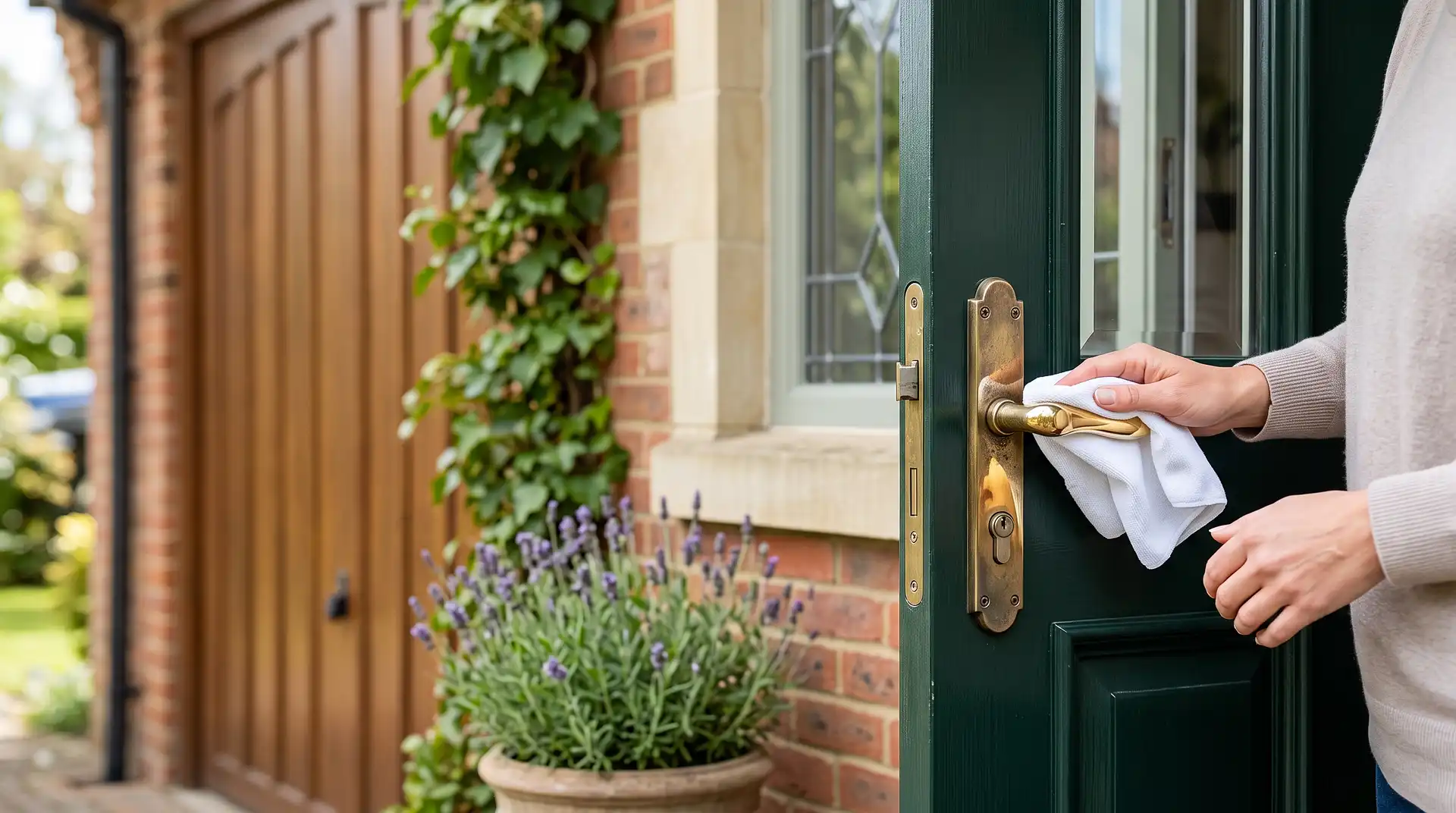
How to Clean Exterior Door Hardware
8 August 2026
How to Clean Exterior Door Hardware (Handles, Locks, Letterboxes and More)
A front door gets judged on more than its handle. The letterbox, the knocker, the lock escutcheon, the kick plate if there is one, all sit on the most-viewed door in the house, and they're almost always cleaned less often, and less thoroughly, than anywhere else on the exterior. Treating this as one job rather than several separate afterthoughts, and matching the cleaning method to each piece's actual material, gets a noticeably better result than an occasional wipe of just the handle.
A Note on Pricing
The InstantCost.co.uk page linked for this article covers house exterior cleaning services, driveway jet washing, roof cleaning, exterior walls, and windows, which doesn't include door hardware specifically. Where it is genuinely useful is the bundling principle their data highlights: combining services on the same visit typically saves 10 to 20% versus booking separately, since setup time is shared. If you're already having exterior walls or windows professionally cleaned, that's the natural moment to have door hardware given proper attention too, rather than as a separate task entirely.
Identify Each Piece and Its Material
Handles and knockers are most commonly brass, chrome, stainless steel, or a painted or powder-coated finish, each needing different treatment, covered in detail below.
Letterboxes are usually the same material family as the handle, brass being especially common on period properties, and often have a working flap mechanism worth keeping free of paint or polish buildup so it continues to close properly.
Lock escutcheons and keyholes are frequently overlooked entirely, small, fiddly, and easy to skip, but they accumulate grime just as readily as anything else on the door.
Kick plates, where fitted, are usually stainless steel or brass and take the most direct physical contact and weather exposure of any hardware on the door, which shows.
Door numbers and any decorative fittings are often a different finish again from the main hardware set, worth checking individually rather than assuming they match.
Cleaning Brass Hardware
Check whether it's lacquered, sealed with a protective coating and generally staying shiny without much natural tarnish, or unlacquered, bare brass that darkens and develops patina with weather exposure over time. Lacquered brass should only ever get a soft cloth with warm water and mild dish soap, abrasive brass cleaner will damage the lacquer coating and leave a patchy result that's difficult to fully correct. Unlacquered brass showing genuine tarnish responds well to a dedicated brass cleaner worked in with a soft cloth in small circular motions, or a traditional lemon juice and baking soda paste for lighter tarnish, left a few minutes before rinsing and buffing dry.
Cleaning Chrome and Stainless Steel Hardware
Both tolerate routine cleaning well, warm water with a small amount of mild dish soap, applied with a soft cloth. The detail that matters most here is drying immediately afterward with a separate clean cloth rather than letting the piece air dry, which is what causes the water spotting chrome in particular is prone to. For a build-up of grime rather than just routine dirt, a dedicated stainless steel or chrome cleaner, used sparingly, restores shine without the scratching risk an abrasive pad carries.
Cleaning Painted or Powder-Coated Hardware
Mild soap and water only, nothing abrasive, since repeated harsher cleaning wears through the coating over time and exposes the material beneath. If the coating has already started chipping in places, clean gently around those specific spots rather than scrubbing at them, which accelerates the wear rather than fixing it.
The Letterbox Flap and Lock Mechanism
Beyond the visible surface, check that the letterbox flap moves freely and closes properly, a build-up of old polish or paint around the hinge can gradually stiffen the mechanism without being obviously visible from the front. Keyholes and lock mechanisms shouldn't get wet cleaning treatment beyond wiping the surrounding escutcheon, moisture inside a lock mechanism itself can cause longer-term problems, a dry brush or a small blast of compressed air is the safer approach for the keyhole itself if it looks like it's accumulated debris.
Step-by-Step: A Full Hardware Clean
Start with a dry brush or soft cloth to remove loose dust and cobwebs from every piece before introducing any liquid.
Work through each piece with the appropriate wet cleaning method for its material, handle, knocker, letterbox, escutcheon, kick plate, in turn rather than treating the whole door as one uniform surface.
Pay particular attention to the underside of handles and knockers, and any recessed detailing, areas that collect grime and get missed in a quick, surface-only wipe.
Dry every piece immediately with a clean cloth rather than air drying, particularly relevant for chrome and unlacquered brass.
Apply appropriate polish only where relevant, unlacquered brass benefiting most, and only after the piece is fully clean and dry.
Check the letterbox flap and any moving parts operate smoothly once you're finished.
If You're Cleaning the Whole Exterior at the Same Time
Door hardware cleaning naturally pairs with a broader exterior refresh, and if you're having walls or windows professionally done anyway, it's worth mentioning the hardware specifically when booking, since it's easy for a professional service focused on jet washing or window cleaning to simply not think to include it unless asked. Our related guide on the InstantCost blog covers how to clean exterior brick properly, worth reading if door hardware cleaning is part of a wider seasonal refresh of the property's exterior rather than a standalone task, since both are commonly tackled around the same time of year.
Common Mistakes and What to Do Instead
Mistake: using abrasive brass cleaner on lacquered hardware. This damages the protective coating and leaves a patchy finish that's hard to fully correct. Check whether brass is lacquered before choosing a product, and stick to mild soap and water if it is.
Mistake: letting hardware air dry after cleaning. This causes water spotting, particularly on chrome, and can accelerate tarnish forming on unlacquered brass. Dry every piece with a clean cloth immediately after cleaning.
Mistake: only cleaning the handle and ignoring everything else on the door. The letterbox, knocker, escutcheon, and kick plate all accumulate grime at a similar rate to the handle, and skipping them leaves a visibly inconsistent result once the handle's freshly polished.
Mistake: getting moisture into the keyhole or lock mechanism. Wet cleaning should stay on the surrounding surface, not the keyhole itself. Use a dry brush or compressed air for debris inside the lock rather than any liquid.
Mistake: scrubbing at chipped paint on powder-coated hardware. This accelerates wear rather than fixing it. Clean gently around damaged areas and consider a proper repaint or replacement for hardware that's genuinely worn through.
How Often to Clean It
Front door hardware faces more handling and weather exposure than almost anything else on the exterior, a wipe every couple of weeks keeps it looking good with minimal effort, with a more thorough clean and polish, where applicable, every couple of months or whenever tarnish or grime becomes visibly noticeable.
What It Costs in the UK
Cleaning door hardware yourself costs very little if you already have mild dish soap and cloths at home. A dedicated brass, chrome, or stainless steel cleaner, worth having if your hardware regularly tarnishes or spots, typically costs £5 to £12 per bottle or tin and lasts for many applications.
This isn't something typically booked as its own professional service, but according to InstantCost.co.uk's 2026 UK exterior cleaning data, if you're bundling it into a broader exterior visit, standard exterior window cleaning for a typical 3-bed semi costs £40 to £80, and exterior wall cleaning for render or brick typically costs £200 to £600 per elevation. Bundling services on the same visit, walls and windows together, for instance, typically saves 10 to 20% versus booking each separately, since setup time is shared across the whole job, and it's the natural moment to ask a professional to give door hardware proper attention as part of the same visit.
Item or Service | Typical UK Cost (2026) |
|---|---|
Mild dish soap and cloths (already owned) | Free |
Dedicated metal cleaner (brass, chrome, or steel) | £5 to £12 |
Exterior window cleaning, standard 3-bed semi | £40 to £80 |
Exterior wall cleaning, per elevation | £200 to £600 |
Bundled service saving vs booking separately | 10 to 20% |
Cleaning product figures are general UK market estimates. Exterior service figures are based on InstantCost.co.uk's 2026 pricing data. Door hardware itself is rarely worth a standalone professional booking, better handled as a quick DIY task or folded into a broader exterior visit.
Staying Safe
Keep any metal polish or cleaning product out of reach of children, and store dedicated brass, chrome, or steel cleaners in their original labelled containers rather than decanted into anything unmarked. If hardware is positioned at height on a taller exterior door with an unusual reach, take the same care as with any exterior task and avoid overreaching or using an unstable surface to reach it.
Product-specific safety guidance varies by manufacturer, so check the label before use, particularly in a household with children.
FAQ
What's the best way to clean exterior door hardware? Work through each piece, handle, knocker, letterbox, escutcheon, kick plate, individually with the cleaning method suited to its specific material, rather than treating the whole door as one uniform surface with a single product.
Can I use the same cleaner on brass, chrome, and painted hardware? No, not safely. Lacquered brass and painted finishes need mild soap and water only, while unlacquered brass and chrome can generally take a dedicated metal cleaner. Using the wrong product on the wrong material risks damaging the finish.
Should I clean my letterbox and lock the same way as the handle? The visible surface, yes, following the same material-appropriate method. The keyhole and lock mechanism itself should stay dry, use a brush or compressed air for debris rather than any liquid cleaner.
How often should exterior door hardware be cleaned? A quick wipe every couple of weeks, with a more thorough clean and polish every couple of months or whenever tarnish or grime becomes noticeable, given how much handling and weather exposure a front door faces.
Is it worth booking a professional to clean door hardware specifically? Not usually as a standalone service. It's better handled as a DIY task, or mentioned specifically if you're already booking exterior wall or window cleaning, since bundling services on the same visit typically saves 10 to 20%.
Why has my letterbox flap gone stiff even though it looks clean? Old polish or paint build-up around the hinge mechanism can stiffen it gradually without being obviously visible. Check the hinge area specifically, not just the visible flap surface, when cleaning.