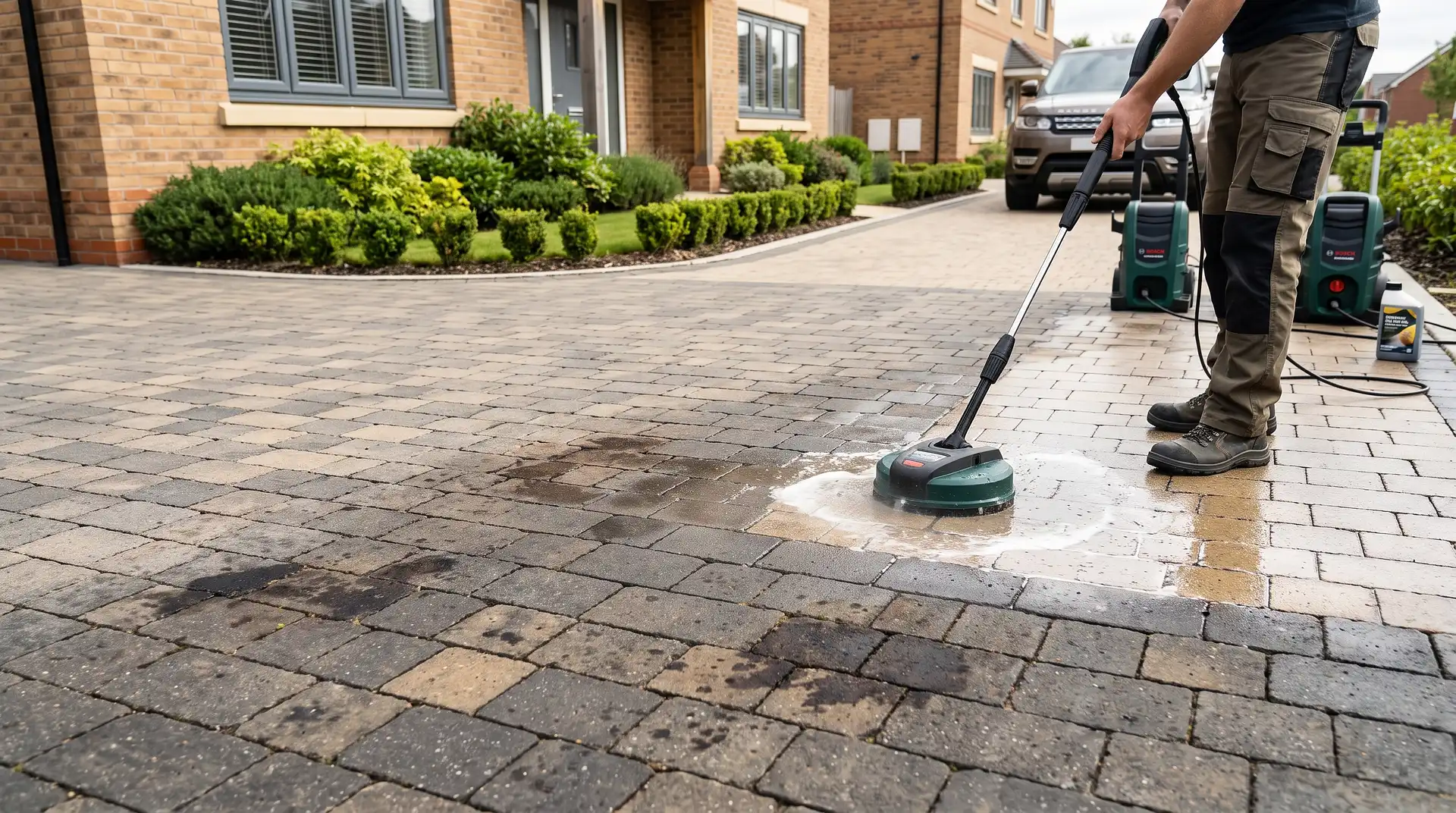
How to Clean Oil Spots on a Driveway
29 July 2026
How to Clean Oil Spots on a Driveway (Before They Become Stains)
A small oil spot, the kind left by a slow drip under a parked car, is a completely different problem from a deep, set-in stain, and it's worth treating it that way. Caught early, a spot is usually a five-minute job with things most people already have at home. Left for weeks or months, that same spot soaks in, spreads slightly at the edges, and turns into the kind of stain that needs a proper degreaser and repeated treatment to shift. The single biggest factor in how easy this job is isn't the product you use. It's how quickly you get to it.
Why Small Spots Are Worth Catching Early
Oil sitting on a driveway surface doesn't stay put. Every day it's left, more of it soaks into the pores of concrete, or settles further into the joints of block paving, or works its way into tarmac that's already slightly softened by summer heat. A spot you notice within a day or two is still mostly sitting on the surface, which is exactly why it comes out so much more easily than a stain that's had weeks to set. This is really the whole logic behind this guide: the method for a fresh spot is simple, and the method gets progressively more involved the longer it's left.
Step 1: Blot, Don't Wipe
If you catch a spot while it's still wet or fresh, lay paper towels or an old cloth over it and press down firmly to soak up as much oil as possible before it spreads or sinks in further. Wiping in a circular motion at this stage tends to smear the oil across a wider area rather than lifting it, so a straightforward press and lift works better.
Step 2: Cover With an Absorbent Material
For a spot that's already sitting on a porous surface like concrete, cover it with cat litter, sawdust, or a commercial oil absorbent, and leave it for a few hours or overnight. This draws oil up out of the surface pores rather than leaving it to soak in further, and it's genuinely one of the most effective, lowest-effort things you can do for a spot caught within the first day or two.
Step 3: Treat With Washing-Up Liquid or a Light Degreaser
Sweep away the absorbent material, then work a small amount of washing-up liquid or a mild degreaser into the spot with a stiff brush, using a circular motion this time to lift what remains. For a genuinely fresh, small spot, this step alone often finishes the job. Rinse with clean water once you're done.
Step 4: For a Spot That's Already a Bit Older, Step Up the Product
If the spot has been there for a week or more and washing-up liquid isn't fully shifting it, move up to a dedicated driveway degreaser rather than repeating the same light treatment. These are formulated specifically to break oil's grip on porous surfaces in a way general detergent can't fully match, and giving the product a proper dwell time, often 10 to 15 minutes before scrubbing, makes a real difference to how much lifts out.
Step 5: Check Block Paving Joints Specifically
If the spot sits near or across a joint in block paving, check whether oil has tracked down into the sand between the blocks. A surface treatment alone won't reach oil that's settled below the block face, and this is worth catching early too, since sand that's absorbed oil is far easier to sweep out and replace while the contamination is still limited to a small area.
What to Keep in the House for This
A small stock of cat litter or sawdust, a stiff outdoor brush, and a bottle of driveway degreaser cost very little and mean you're never caught without a quick fix when a spot appears. This is genuinely one of the cheapest forms of driveway maintenance available, and it's a lot less effort than dealing with the same mark six months later once it's had time to set properly.
Common Mistakes and What to Do Instead
Mistake: leaving a fresh spot because it seems small and not worth the effort. Small spots are exactly the ones worth dealing with immediately, since they take the least effort to remove while fresh and the most effort once they've had time to soak in.
Mistake: scrubbing hard before absorbing anything. This pushes oil further into a porous surface rather than lifting it out. Absorb first with cat litter or sawdust, then treat what remains.
Mistake: using a pressure washer on a fresh spot as the first step. Pressure alone doesn't break oil's bond with the surface and can spread it or drive it deeper without a degreaser first. Save the pressure washer for rinsing after proper treatment, not as the primary tool.
Mistake: assuming one light treatment handles every spot the same way. A spot caught within hours needs far less than one that's had a week to settle in. Match the strength of the treatment, and how long you give it to work, to how long the spot has actually been there.
Mistake: ignoring repeated small spots from the same source. If the same area keeps getting fresh spots, that usually points to a slow leak from a parked vehicle worth having checked, rather than an ongoing cleaning problem to keep managing after the fact.
When Spots Turn Into a Bigger Job
If a spot has been missed for long enough that it's set into a genuine stain, rather than a fresh mark, the approach changes meaningfully: expect to need a proper degreaser with a longer dwell time, possibly repeated treatments, or a poultice method for anything that's been there for months. Our full guide on removing oil stains from a driveway covers that deeper process in detail, including how the method differs by driveway material and when a poultice treatment is worth the extra time over repeated surface scrubbing.
It's also worth knowing that persistent, widespread oil contamination across an older driveway is occasionally a sign the surface itself is due for attention beyond cleaning, particularly on tarmac that's softened or cracked with age.
What It Costs in the UK
Dealing with a fresh oil spot yourself costs next to nothing if you already have washing-up liquid and a brush at home. A bottle of dedicated driveway degreaser, worth keeping on hand for anything beyond the lightest mark, typically costs £15 to £40 and lasts for many treatments. Cat litter or sawdust for absorption costs a few pounds and is often already in the house if you own a cat or do woodworking.
If a spot has gone unnoticed long enough to need professional attention, treatment is generally priced either per m² or per stain. Chemical treatment for oil marks typically costs £3.50 to £7.50 per m², and treating a smaller, isolated stain specifically is often quoted as a flat £10 to £30 per stain. Where oil spotting is widespread enough that it's really part of a general driveway clean, a full professional clean typically costs £250 to £400 for a medium sized driveway, with heavy staining adding roughly £50 to £100 on top for the extra preparation time involved.
Option | Typical UK Cost (2026) |
|---|---|
DIY treatment, fresh spot | Free to a few pounds |
Driveway degreaser (bottle, for stock) | £15 to £40 |
Absorbent material | A few pounds |
Professional oil stain treatment, per m² | £3.50 to £7.50 |
Professional oil stain treatment, per stain | £10 to £30 |
Full professional driveway clean | £250 to £400 |
These are UK market estimates and vary by driveway material and provider. Catching a spot early is almost always the cheaper and easier path compared with waiting for it to set into a proper stain.
Staying Safe
Driveway degreasers are stronger than household surface spray, so wear gloves for anything beyond washing-up liquid, and check the label for guidance on drainage and run off, since some products shouldn't be allowed to run untreated into nearby drains or planting. If you're using a pressure washer for the final rinse, keep a sensible distance from the surface, particularly on older or already worn tarmac, since excessive pressure at close range can damage the surface itself.
Keep children and pets away from the area while any degreaser is applied and working, and put products away in their original labelled containers once you're finished rather than leaving them out.
Product labels vary by manufacturer, so it's worth checking specific dwell time and drainage guidance before use, particularly near planting or in a household with children or pets.
FAQ
What's the quickest way to clean a fresh oil spot on a driveway? Blot up any excess with paper towels or cloth, cover the area with cat litter or sawdust for a few hours to draw out the rest, then treat with washing-up liquid or a light degreaser and rinse.
Do I need a special product for a small, fresh oil spot? Not always. Washing-up liquid and a stiff brush handle most fresh, small spots well. A dedicated degreaser becomes worth using once a spot is a week or more old and hasn't fully lifted with a lighter treatment.
Why does an oil spot keep coming back in the same place? This usually points to a slow, ongoing drip from a parked vehicle rather than a cleaning issue. It's worth having the source checked, since repeated fresh spots will keep reappearing regardless of how well each one is cleaned.
How long can an oil spot sit before it becomes a permanent stain? There's no fixed cutoff, but generally the first day or two makes the biggest difference. A spot treated within that window usually lifts fully, while one left for weeks has typically soaked in enough to need stronger, repeated treatment.
Should I use a pressure washer on a fresh oil spot? Not as the first step. Pressure alone doesn't break oil's bond with the surface and can spread it further. Use it to rinse after proper absorption and degreasing rather than as the main removal method.
How much does it cost to have oil spots professionally treated? Typically £3.50 to £7.50 per m² for chemical treatment, or £10 to £30 as a flat fee for a single isolated stain, depending on how the provider prices the job.