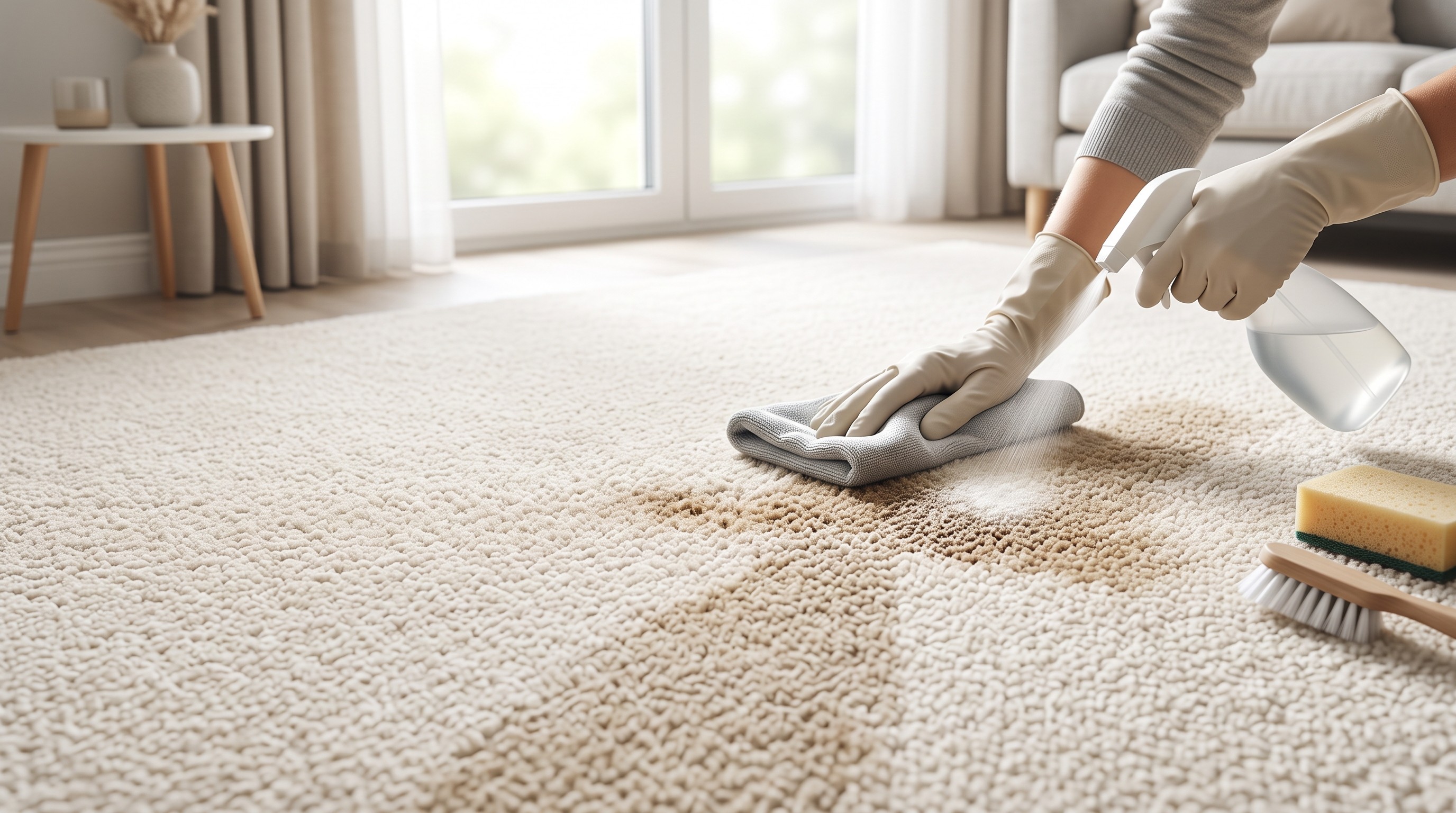
How to Clean Vomit From Carpet
7 September 2026
How to Clean Vomit From Carpet
Vomit comes out of carpet properly in three stages: physically removing the solid material, treating the stain and breaking down the proteins and acids left behind, and disinfecting the area to deal with the bacteria vomit carries. Skipping any one of these stages leaves either a visible stain, a lingering smell, or a genuine hygiene risk, even if the carpet looks clean on the surface.
The stomach acid in vomit is the part most people underestimate. It can begin discolouring some carpet dyes within minutes if left untreated, which is why speed matters here more than with most household spills, alongside the practical need to manage a genuinely unpleasant clean-up as calmly as possible.
Step 1: Remove Solid Material First
Using a plastic scraper, the edge of a piece of card, or a disposable spoon, gently lift and scrape solid material away from the carpet surface, working from the outer edge of the affected area towards the centre to avoid spreading it further. Dispose of everything scraped up in a sealed bag rather than down a drain, since solid matter can block pipework.
Blot, rather than rub, any remaining wet residue with paper towels or an old cloth you're happy to discard, pressing down firmly and lifting straight up repeatedly rather than dragging the cloth across the carpet.
Step 2: Neutralise the Stomach Acid
Vomit is acidic, and that acid can begin affecting carpet dye almost immediately, particularly on lighter coloured carpets. Mix a small amount of bicarbonate of soda with water to form a paste, or use a solution of one part white vinegar to two parts water, and apply it to the affected area to help neutralise the acid before it sets further into the fibres.
Leave the solution to sit for a few minutes, then blot it away with a clean cloth. This step matters most in the first thirty minutes after the spill, so it's worth doing even before you've fully cleared every trace of solid material if speed genuinely matters for that specific carpet.
Step 3: Treat with an Enzymatic Cleaner
Vomit contains proteins that ordinary detergents don't fully break down, which is why a standard carpet shampoo often leaves a faint smell even after the visible stain is gone. An enzymatic cleaner, the same type used for pet accidents, contains bacteria-produced enzymes specifically designed to break down these proteins at a molecular level rather than just masking them.
Apply the enzymatic cleaner according to the product's instructions, usually meaning you saturate the affected area lightly and leave it for the specified contact time, often fifteen minutes or more, before blotting it away. Avoid the temptation to wipe it off early, since the enzymes need that contact time to actually work through the proteins in the fibres.
Step 4: Disinfect the Area
Vomit can carry bacteria and viruses, particularly if the cause was illness rather than something like motion sickness or overindulgence. Once the enzymatic treatment has done its work, a final wipe with a diluted disinfectant solution suitable for use on carpet, checked against the product's fabric compatibility guidance, adds a genuine hygiene layer beyond simply removing the stain and smell.
Step 5: Dry the Area Thoroughly
Blot the treated area with clean, dry towels to remove as much moisture as possible, then leave it to air dry fully, using a fan or opened window to speed this along where practical. A carpet left damp for extended periods risks mould growth in the underlay, which introduces a completely separate and harder-to-fix problem on top of the original spill.
A Note on Carpet Fibre and Product Safety
Always check any enzymatic cleaner or disinfectant against a hidden area of carpet first, since some products can affect dye colour or fibre texture on certain carpet types, particularly wool or natural fibre carpets that respond differently to chemical treatments than synthetic ones. A ten-minute test patch check saves considerably more time than discovering a discoloured patch after treating the visible area.
When to Call a Professional
If the affected area is large, has soaked through to the underlay, or a persistent smell remains after following the full process above, a professional carpet cleaner has access to hot-water extraction equipment and stronger enzymatic treatments that reach deeper into the pile and underlay than home products typically manage.
Use InstantCost's carpet cleaning cost calculator to see what a professional stain and odour treatment would cost in your area. If the cause was a pet rather than a person, how to clean dog pee from a carpet overs the related issue of pet accidents and the enzymatic treatment they need as well.
Common Mistakes and What to Do Instead
Mistake: Rubbing rather than blotting. Rubbing pushes vomit and its acid deeper into the carpet fibres and spreads the affected area wider. Always blot by pressing down and lifting straight up.
Mistake: Skipping the acid-neutralising step. Leaving stomach acid untreated risks permanent dye damage, particularly on lighter carpets, within the first hour. Treat with a bicarbonate of soda paste or diluted vinegar solution as soon as the solid material is cleared.
Mistake: Using only a standard carpet shampoo. General cleaning products don't break down the specific proteins vomit contains, which is why a smell can linger even after the stain looks gone. Use an enzymatic cleaner specifically for the protein and odour issue.
Mistake: Not disinfecting at all. Treating this purely as a stain and odour problem misses the genuine hygiene risk, particularly if illness was the cause. Always finish with an appropriate disinfecting step.
Mistake: Leaving the area damp afterwards. Excess moisture left in carpet and underlay creates a mould risk that's considerably harder to deal with than the original spill. Always dry the area thoroughly with towels and airflow.
Mistake: Using hot water during the initial clean-up. Hot water can help set some protein stains rather than lifting them. Use cool or lukewarm water during the removal and treatment stages.
What It Costs in the UK
Item or Service | Typical UK Cost (2026) |
|---|---|
Bicarbonate of soda | £1–£2 |
White vinegar | £1–£2 |
Enzymatic cleaner | £4–£10 |
Fabric-safe disinfectant | £3–£7 |
Professional stain and odour treatment (per stain) | £10–£25 |
Single room professional clean | £35–£55 |
Whole 3-bed house professional clean | £140–£240 |
Figures based on InstantCost.co.uk's 2026 UK carpet cleaning pricing data and vary by region, stain severity, and provider.
Staying Safe
Wear disposable gloves throughout the clean-up process, since vomit can carry bacteria and viruses, and wash your hands thoroughly afterwards even if gloves were worn. Dispose of any solid material, used cloths, and gloves in a sealed bag rather than leaving them exposed.
Ventilate the room well while working, particularly if using a disinfectant or vinegar solution, and keep children and pets away from the affected area until the clean-up and disinfecting steps are fully complete and the carpet has had a chance to dry. If the vomiting was caused by a contagious illness such as norovirus, be aware that surfaces nearby, not just the carpet itself, may also need cleaning to reduce the risk of spreading infection to others in the household.
General UK public health guidance recommends thorough hand washing and surface disinfection after cleaning up bodily fluids, particularly where a contagious illness is suspected. Check current NHS guidance if illness in the household continues or spreads.
Frequently Asked Questions
Why does vomit still smell after I've cleaned it up? A lingering smell after cleaning usually means the proteins in the vomit weren't fully broken down by a standard cleaning product. An enzymatic cleaner specifically targets these proteins and typically resolves the smell where general cleaning products don't.
Can vomit permanently stain carpet? It can, particularly on lighter coloured carpets, if the stomach acid isn't neutralised quickly. Treating the area with a bicarbonate of soda paste or diluted vinegar solution within the first hour significantly reduces the risk of lasting discolouration.
Is it safe to use bleach on a vomit stain? Bleach can damage carpet dye and isn't recommended for most domestic carpets. A fabric-safe disinfectant, checked against the carpet manufacturer's guidance, is a safer choice for the disinfecting stage.
How long should I leave an enzymatic cleaner on the stain? Most enzymatic cleaners need at least fifteen minutes of contact time to properly break down the proteins in vomit, though this varies by product, so always check the specific instructions on the bottle.
Do I need to disinfect the carpet after cleaning up vomit? Yes, particularly if illness was the cause. Cleaning removes the visible stain and much of the smell, but a separate fabric-safe disinfecting step addresses the bacteria and viruses vomit can carry.
What if the vomit has soaked through to the underlay? A spill that's reached the underlay usually needs professional hot-water extraction to fully clean and dry, since home treatments generally can't reach or properly dry that layer, and a damp underlay left untreated risks mould and a persistent smell.