How to Drain a Radiator
12 August 2026
How to Drain a Radiator (One Radiator or the Whole System)
There are two genuinely different jobs hiding behind this question, and knowing which one you actually need saves considerable time and mess. Draining a single radiator, to move it, redecorate behind it, or replace it, means isolating that one radiator and emptying only what's inside it, typically a few litres. Draining the whole system, needed for a power flush, major pipework changes, or replacing multiple radiators, means emptying every radiator and the pipework connecting them. Most people asking this question need the first job, which is considerably simpler than the second.
Draining a Single Radiator
What You Need
An adjustable spanner, or two if the valves are stiff, one to hold the valve body steady while the other turns the nut
A radiator bleed key
A shallow bowl or tray, low enough to slide under the valve
A larger bucket
Old towels and a dust sheet
A jug, for transferring water from the shallow tray to the bucket as it fills
Step 1: Turn the Heating Off and Let It Cool
This matters for both safety and practicality. A radiator full of hot water under pressure is a genuine scald risk, and cool water is simply easier to handle. Give it at least an hour, ideally longer, and check the radiator is cool to the touch before starting.
Step 2: Close Both Valves
Turn the thermostatic radiator valve, or manual control valve, fully clockwise to close it. Then close the lockshield valve at the opposite end, usually under a plastic cap, turning clockwise until it stops. Count and note the number of turns it takes to close the lockshield, since you'll want to return it to exactly that position afterward to preserve the system's balance.
Step 3: Position Everything Before Loosening Anything
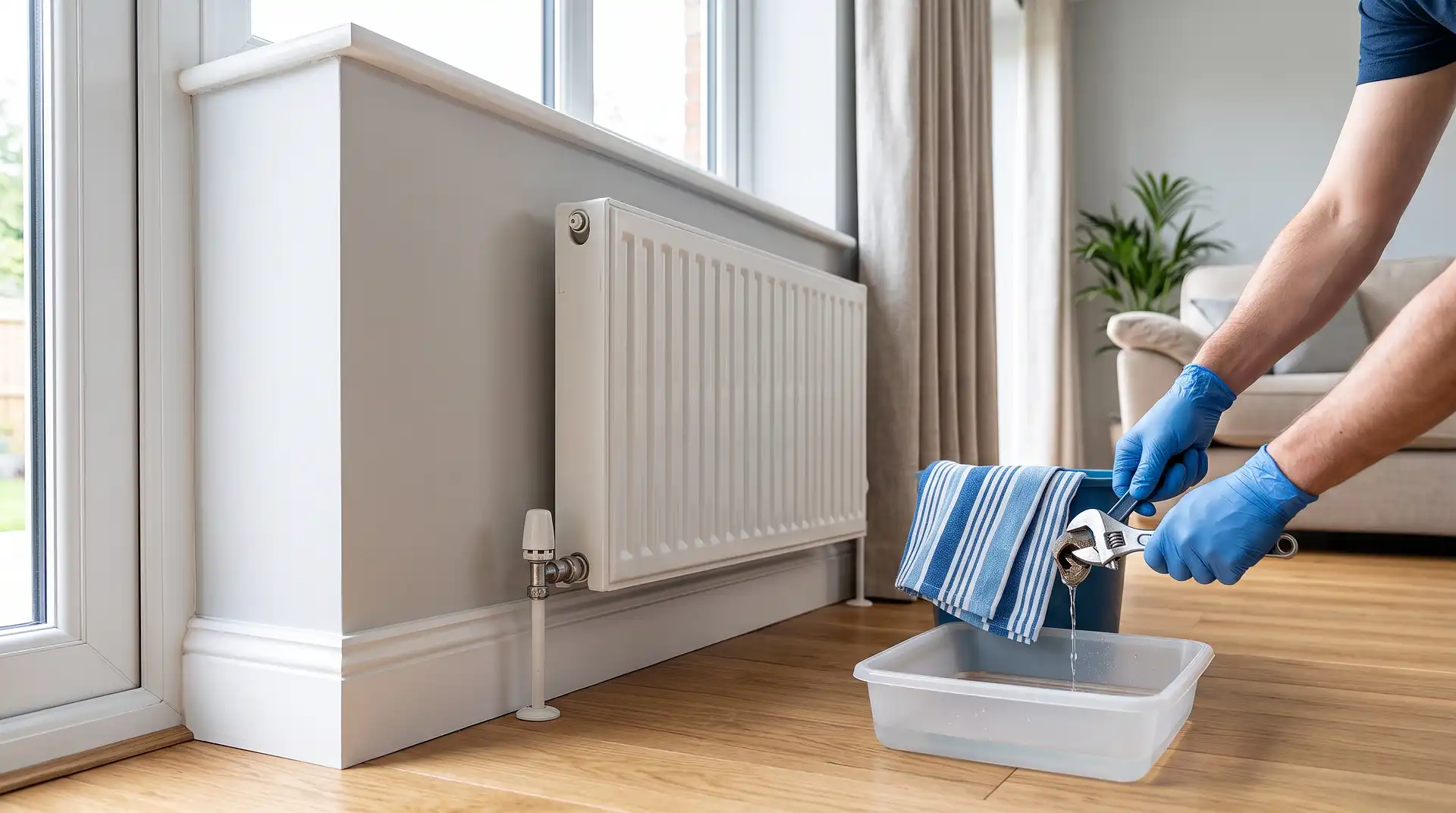
Lay the dust sheet and towels down, slide the shallow tray under the valve you're going to open first, and have the bucket and jug within reach. This preparation is genuinely what determines whether this job is tidy or a mess.
Step 4: Open the Bleed Valve
Open the bleed valve at the top of the radiator with the bleed key. This lets air in, which is what allows water to drain out properly rather than airlocking.
Step 5: Loosen the Valve Nut Slowly
Using one spanner to hold the valve body steady and the other to turn the union nut, loosen the connection gradually. Water will start flowing into your tray. Let it drain at a controlled rate rather than opening the nut fully straight away, and transfer water from the tray to the bucket with the jug as it fills, since a shallow tray fills faster than expected.
Step 6: Tilt to Empty the Last of It
Once flow stops, the radiator still holds residual water. Lift the disconnected end slightly to tip the remainder out, then repeat at the other end if you're removing the radiator entirely.
A Note on What Comes Out
The water draining from a radiator is often black or dark brown, and this is normal rather than alarming, it's magnetite sludge, a mix of corrosion products that builds up in heating systems over time. It stains badly, which is why dust sheets and towels genuinely matter here, and it's also a useful indicator, particularly dark, thick sludge suggests the system might benefit from a power flush.
Draining the Whole System
This is a bigger job, worth understanding before deciding you need it. Turn off the boiler and let the system cool completely. Turn off the water supply to the system, for a sealed system this means closing the filling loop, for an open vent system, tying up the ballcock in the loft feed and expansion tank. Attach a hose to the drain-off valve, usually at the lowest point of the system, often on a downstairs radiator, and run it to an outside drain. Open the drain valve, then open all radiator bleed valves working from the top floor downward, which lets air in and speeds drainage considerably.
Refilling reverses the process, close all bleed valves and the drain valve, reopen the water supply, then bleed each radiator working from the ground floor upward as the system fills, checking boiler pressure as you go.
When Each Job Is Actually Needed
Drain a single radiator to remove it for decorating, to replace a damaged radiator, or to move one to a different position. Drain the whole system for a power flush, significant pipework alterations, replacing multiple radiators at once, or before certain boiler replacement work.
The Sludge Question
If what drains out is genuinely thick and black rather than just discoloured, that's worth taking seriously as a system health indicator rather than just a mess to clean up. Sludge buildup reduces heating efficiency, causes cold spots at the bottom of radiators, and puts strain on the pump and boiler. If radiators are heating unevenly and bleeding hasn't resolved it, the issue is often balance rather than sludge, and it's worth ruling that out first since it costs nothing to correct. Our related guide covers how to balance radiators properly, worth reading before assuming uneven heating means you need a full system drain and flush, since an unbalanced system produces very similar symptoms for an entirely different and much cheaper reason.
Common Mistakes and What to Do Instead
Mistake: draining a radiator that's still hot. Genuine scald risk, and the water is harder to handle safely. Let the system cool fully first, at least an hour.
Mistake: not counting the lockshield turns before closing it. The lockshield position sets that radiator's balance within the system. Without knowing how many turns it took to close, you'll need to rebalance rather than simply restoring it.
Mistake: not opening the bleed valve. Without air entering the top, water drains slowly or airlocks entirely. Open the bleed valve before loosening the union nut.
Mistake: loosening the union nut too quickly. Water arrives faster than expected and overflows a shallow tray. Loosen gradually and control the flow rate.
Mistake: forgetting the radiator still holds water once flow stops. Residual water remains inside. Tilt it over a bucket before carrying it, or you'll find out the hard way somewhere between the wall and the door.
Mistake: draining the entire system when only one radiator needs work. Full drain-downs are considerably more work and introduce fresh oxygenated water into the system, which can accelerate corrosion. Isolate the single radiator instead where possible.
When to Call a Professional
Draining a single radiator is genuinely achievable for most people with basic tools. It's worth calling a heating engineer if valves are seized and won't close, if you're dealing with an unfamiliar system type, if a full system drain-down is needed and you're not confident with the refill and bleed sequence, or if what drains out suggests significant sludge that needs a proper power flush rather than a DIY drain.
What It Costs in the UK
Draining a single radiator yourself costs essentially nothing beyond a bleed key, typically £3 to £10 if you don't already have one, and a couple of hours of your time.
If the sludge you find suggests a system flush is needed, according to InstantCost.co.uk's 2026 UK pricing data, a power flush typically costs £500 to £900 and takes 5 to 7 hours, generally recommended if your system is over 8 years old or you're upgrading to a new boiler brand, since it protects the new unit's warranty. A Magnacleanse or chemical flush, a quicker and less invasive alternative, typically costs £250 to £450. If a specific component has failed rather than needing a general flush, a pump or PCB replacement, common on systems 8 or more years old, typically costs £280 to £500. An annual boiler service, a sensible time to raise any concerns about system water condition, typically costs £75 to £130.
Item or Service | Typical UK Cost (2026) |
|---|---|
Radiator bleed key | £3 to £10 |
DIY single radiator drain | Free beyond tools |
Annual boiler service | £75 to £130 |
Magnacleanse or chemical flush | £250 to £450 |
Power flush, full system | £500 to £900 |
Pump or PCB replacement | £280 to £500 |
Figures based on InstantCost.co.uk's 2026 UK pricing data and vary by provider, system size, and region.
Staying Safe
Never drain a radiator that hasn't fully cooled. Radiators are also heavier than they look even once drained, due to residual water, so get help lifting anything beyond a small radiator rather than risking injury or dropping it onto flooring. Don't force a seized valve, a damaged valve is a considerably bigger problem than the job you started with.
Keep children away from the work area while valves are open and tools are out, and clear up spilled water promptly, both for slip safety and because system water stains carpets and flooring badly.
System types and valve configurations vary, particularly in older UK properties, so check your system's documentation or consult an engineer if anything looks different from a standard setup.
FAQ
Do I need to drain the whole system to remove one radiator? No. Closing both valves on that specific radiator isolates it, so you only drain the few litres inside it rather than emptying the entire system.
Why is the water from my radiator black? That's magnetite sludge, corrosion products that accumulate in heating systems over time. Some discolouration is normal, but genuinely thick black sludge suggests the system may benefit from a power flush.
Should I count the lockshield valve turns before closing it? Yes. The lockshield position determines that radiator's balance within the system, so noting the number of turns lets you restore it exactly rather than having to rebalance afterward.
How long should I let the system cool before draining a radiator? At least an hour, ideally longer, and check the radiator is genuinely cool to the touch. Draining hot water under pressure is a real scald risk.
How much does a power flush cost if my system is full of sludge? Typically £500 to £900 for a full power flush taking 5 to 7 hours, or £250 to £450 for a quicker Magnacleanse or chemical flush, according to 2026 UK pricing data.
Is it bad to drain the whole system unnecessarily? It's worth avoiding where possible, since refilling introduces fresh oxygenated water that can accelerate corrosion. Isolate individual radiators instead unless a full drain is genuinely required.