How to Exterminate Carpet Beetles
30 July 2026
How to Exterminate Carpet Beetles (Before They Destroy Your Carpet)
The adult carpet beetle you spot on a windowsill isn't actually the problem. It's harmless, feeds only on pollen and nectar, and is often just trying to find its way back outside. The damage to your carpet, clothes, and upholstery is caused entirely by the larval stage, a small bristly grub often called a "woolly bear", which feeds on natural fibres for months before it ever becomes a visible adult beetle. Treating this properly means targeting the larvae and their hiding spots, not just the odd adult beetle you happen to see.
Identify What You're Actually Dealing With
Adult carpet beetles are small, mottled, rounded beetles, usually 2 to 4mm long, most often seen on windowsills in spring as they try to leave the property after finishing laying eggs indoors. The larvae look completely different: elongated, bristly, brownish grubs that avoid light and stay hidden in carpet edges, under furniture, inside wardrobes, and in other undisturbed fabric. The actual sign of an infestation is usually damage, not beetles themselves: irregular holes in carpet, clothing, or upholstery, often in patches you wouldn't normally check, along with small shed skins left behind as larvae grow. Moths in the property aren't a sign of carpet beetles specifically, so it's worth confirming what you're actually looking at before assuming which pest you're treating.
Step 1: Find the Source
Carpet beetle infestations very often trace back to an external source, most commonly bird nests in guttering, eaves, or chimneys, since the beetles thrive on the feathers, fur, and debris found there before moving into the property itself. Check gutters, roof spaces, and any nearby nests, and have these removed or treated if found, since continuing to treat the inside of the house without addressing an active outdoor source usually means the problem returns.
Step 2: Vacuum Thoroughly and Dispose of the Bag Properly
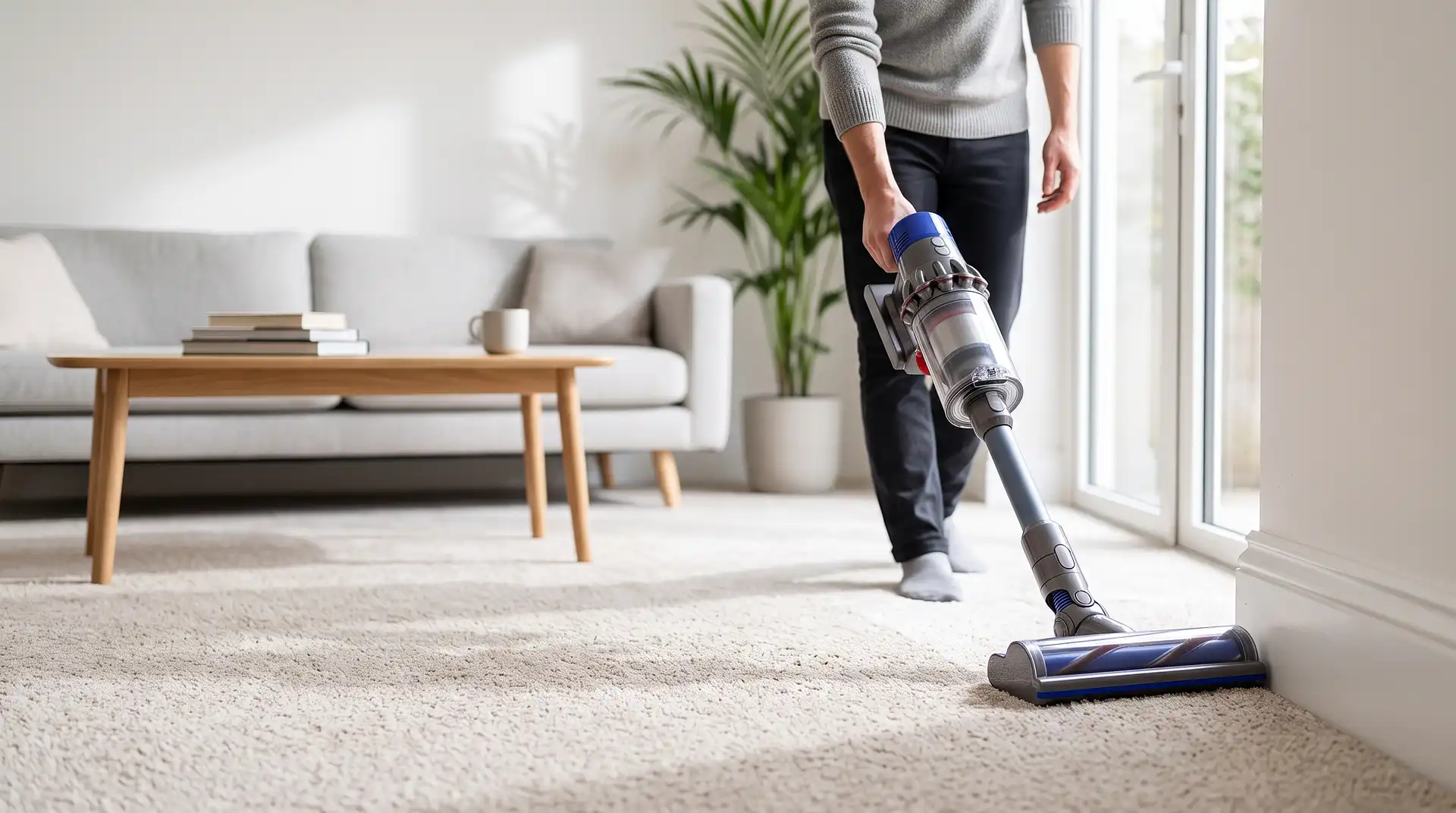
Vacuum every carpeted area thoroughly, paying particular attention to edges, skirting board junctions, under furniture, and inside wardrobes, since these are exactly the undisturbed spots larvae prefer. This step matters for two reasons: it physically removes a meaningful number of larvae and eggs, and it's also a prerequisite most professional treatments require before they'll attend, since a heavily fluffed or debris-filled carpet reduces how well an insecticide treatment can actually reach the surface. Dispose of the vacuum bag or empty a bagless canister immediately outside the house, rather than leaving it to sit indoors.
Step 3: Wash or Dry Clean Affected Fabrics on a Hot Cycle
Clothing, bedding, and any washable fabric items showing damage or found near an infestation should be washed on the hottest cycle the fabric allows, since heat above around 50 to 60°C reliably kills both larvae and eggs. Items that can't be washed, wool coats or delicate fabrics, for instance, should be dry cleaned instead, which achieves a similar effect through the cleaning process itself.
Step 4: Steam Clean or Deep Clean Carpets
Heat is genuinely effective against carpet beetle larvae and eggs, which is why steam cleaning carpets, alongside thorough vacuuming, is a meaningful part of DIY treatment rather than just a cosmetic step. A proper hot water extraction clean, the standard method used by professional carpet cleaners, reaches temperatures that help address larvae and eggs within the carpet pile itself, not just visible dirt. If you're doing this yourself, our guide on how to use a carpet cleaner properly covers the technique in detail, including the mistake of rushing the extraction pass, which matters here as much as it does for general cleaning.
Step 5: Apply an Insecticide Treatment
For anything beyond a very light, early infestation, a residual insecticide spray formulated for carpet beetles is generally needed alongside cleaning. Products based on cypermethrin, a synthetic pyrethroid widely used by professional pest controllers, work by leaving a residual chemical barrier on treated surfaces that continues killing larvae as they cross it, often for weeks after application. Apply along carpet edges, skirting boards, under furniture, and inside affected wardrobes or drawers, following the product's specific instructions closely, and avoid vacuuming the treated area for the period stated on the label, since this is what lets the residual protection keep working rather than being removed prematurely.
Step 6: Declutter and Reduce Hiding Spots
Carpet beetles thrive in undisturbed areas: piles of stored clothing, boxes of fabric, and cluttered wardrobes all give larvae places to feed and hide without being disturbed. Reducing clutter, particularly natural fibre items in storage, and moving furniture periodically to expose carpet edges to light and airflow, makes the environment considerably less hospitable for an ongoing infestation. If the carpet has other contamination alongside beetle damage, pet accidents being a common example in the same undisturbed edges and corners beetles favour, it's worth addressing both at once. Our guide on cleaning urine from carpet overs the enzymatic treatment approach for that specific issue, which pairs well with the vacuuming and steam cleaning steps already covered here.
Step 7: Repeat and Monitor
A single treatment often isn't enough. Carpet beetle eggs can survive an initial treatment and hatch afterward, which is why most professional treatments include a planned follow-up visit, and why a DIY approach benefits from a second, thorough vacuum and inspection two to three weeks after the first treatment, checking specifically for fresh damage or shed larval skins that indicate the problem isn't fully resolved.
Common Mistakes and What to Do Instead
Mistake: only treating where you've seen an adult beetle. Adults are largely irrelevant to the actual infestation and are often found away from where the real damage is happening. Focus treatment on carpet edges, under furniture, and wardrobes, where larvae actually live and feed.
Mistake: vacuuming once and assuming that's sufficient. A single vacuum pass removes some larvae and eggs but rarely all of them, particularly from deep carpet pile or tight edges. Repeat vacuuming as part of an ongoing routine, not a one-off fix.
Mistake: not addressing an external source like a bird's nest. Treating the inside of a property repeatedly without dealing with an active outdoor source generally means the infestation keeps returning. Check guttering, eaves, and roof spaces if the problem persists despite indoor treatment.
Mistake: vacuuming immediately after applying insecticide. This removes the residual protective layer the product is designed to leave behind. Follow the product's specific guidance on how long to leave a treated area before vacuuming again, often around ten days for professional treatments.
Mistake: washing only visibly damaged items. Larvae can be present on fabric that doesn't yet show obvious holes. Treat all natural fibre items in the affected area, not just the ones with visible damage, particularly during an active infestation.
Mistake: assuming DIY cleaning alone resolves a moderate to severe infestation. Cleaning and vacuuming help considerably, but a genuine, established infestation usually needs a proper insecticide treatment, professional or DIY, to actually eliminate rather than just reduce the population.
When to Call a Professional Instead
DIY treatment can genuinely resolve early, minor infestations, particularly when combined with thorough cleaning, laundering, and a proper insecticide product. It's worth calling a professional pest controller for infestations that persist despite proper DIY treatment, damage spreading across multiple rooms or fabric types, an unclear or hard to locate source, or if you'd simply rather have a guaranteed, professionally applied treatment with a scheduled follow-up visit built in. Professional treatment typically involves spraying residual pesticide on floors and walls, sometimes followed by a fogging treatment (ULV) to reach every corner of a room, including gaps a spray alone might miss, and BPCA-certified technicians are trained to identify which of several similar-looking fabric pests they're actually dealing with, since carpet beetles, clothes moths, and other textile pests need slightly different treatment approaches.
What It Costs in the UK
DIY treatment costs are modest: a residual insecticide spray specifically formulated for carpet beetles typically costs £8 to £15 per can, and most households already own a vacuum cleaner and washing machine, so the main additional cost is the product itself alongside your own time.
Professional carpet beetle extermination in the UK typically costs £160 to £260 for a standard treatment covering a property up to around three bedrooms, with several established pest control providers pricing a straightforward single-visit treatment from around £160 to £195 plus VAT. London-based providers often price by property size specifically, commonly £210 plus VAT for a one-bedroom flat, with roughly £49 added per additional bedroom. Most infestations are resolved in one to two visits, though severe or persistent cases can need a third follow-up, and some providers include a guarantee covering a return visit if the initial treatment doesn't fully resolve the problem. Local authority pest control services, where still offered, sometimes price this separately and lower than private providers, though missed appointment fees, typically around £10, are common across both.
If carpet damage is significant enough that cleaning and treatment alone won't restore the affected area, replacement or professional deep cleaning of the carpet itself becomes a separate cost. According to InstantCost.co.uk's 2026 UK pricing data, a standard single-room professional carpet clean, using hot water extraction, the industry-standard method, typically costs £35 to £55, while a whole 3-bed house clean runs £140 to £240. If beetle damage has left stains or localised areas needing specific attention alongside treatment, individual stain or spot treatment is typically priced at £10 to £25 per area. Combining a proper hot water extraction clean with pest treatment addresses both the immediate infestation and the general cleanliness that helps prevent it recurring.
Option | Typical UK Cost (2026) |
|---|---|
DIY insecticide spray | £8 to £15 per can |
Professional treatment, single visit | £160 to £260 |
London flat treatment (1-bed, +£49 per extra bedroom) | £210+VAT upward |
Professional carpet clean, single room | £35 to £55 |
Professional carpet clean, whole 3-bed house | £140 to £240 |
Carpet spot/stain treatment | £10 to £25 per area |
These are UK market estimates and vary by property size, infestation severity, and provider. Ask any pest control company whether follow-up visits are included in the quoted price, since most genuine infestations need more than one treatment to fully resolve.
Staying Safe
Insecticide sprays for carpet beetles are genuinely effective but shouldn't be treated casually. Ventilate the room well during and after application, keep children and pets out of the treated area for the period specified on the product label, often several hours at minimum, and avoid vacuuming treated areas prematurely, both for effectiveness and to avoid disturbing a product not yet fully settled. If you have young children who put things in their mouths, or pets that spend a lot of time on carpets and soft furnishings, this is a genuine reason to lean toward professional treatment, where technicians are trained in safe application specifically for occupied homes, rather than a stronger DIY product applied without that training.
If damaged fabric has been in contact with skin, particularly for anyone with sensitive skin or allergies, washing on the hottest safe cycle before further handling is a sensible precaution alongside the extermination process itself.
Product-specific safety data and re-entry times after treatment vary by manufacturer and provider, so it's worth checking the label or asking a professional directly, particularly in a household with children or pets.
FAQ
What actually causes carpet beetle damage, the beetles or the larvae? The larvae, sometimes called woolly bears, cause the damage by feeding on natural fibres. Adult beetles are largely harmless and feed only on pollen and nectar outdoors, though they lay the eggs that become the damaging larvae.
Can I get rid of carpet beetles without calling a professional? For early, minor infestations, yes, thorough vacuuming, hot washing of affected fabrics, steam cleaning carpets, and a proper residual insecticide spray can resolve it. Moderate to severe infestations generally respond better to professional treatment.
Why do I keep finding carpet beetles even after cleaning? An unaddressed outdoor source, commonly a bird's nest in guttering or eaves, is a frequent cause of ongoing infestations. It's also possible eggs survived an initial treatment and have since hatched, which is why a follow-up check matters.
How much does professional carpet beetle treatment cost in the UK? Typically £160 to £260 for a standard treatment up to around three bedrooms, with London providers sometimes pricing per bedroom, commonly from £210 plus VAT for a one-bedroom flat.
Does steam cleaning carpets help with a carpet beetle infestation? Yes. Heat from proper hot water extraction cleaning helps address larvae and eggs within the carpet pile, and it's a genuinely useful part of a combined DIY approach alongside vacuuming and insecticide treatment.
How long does it take to fully get rid of carpet beetles? Most professional treatments resolve an infestation in one to two visits over a couple of weeks, since a follow-up visit is often needed to catch larvae that hatch from eggs that survived the initial treatment.