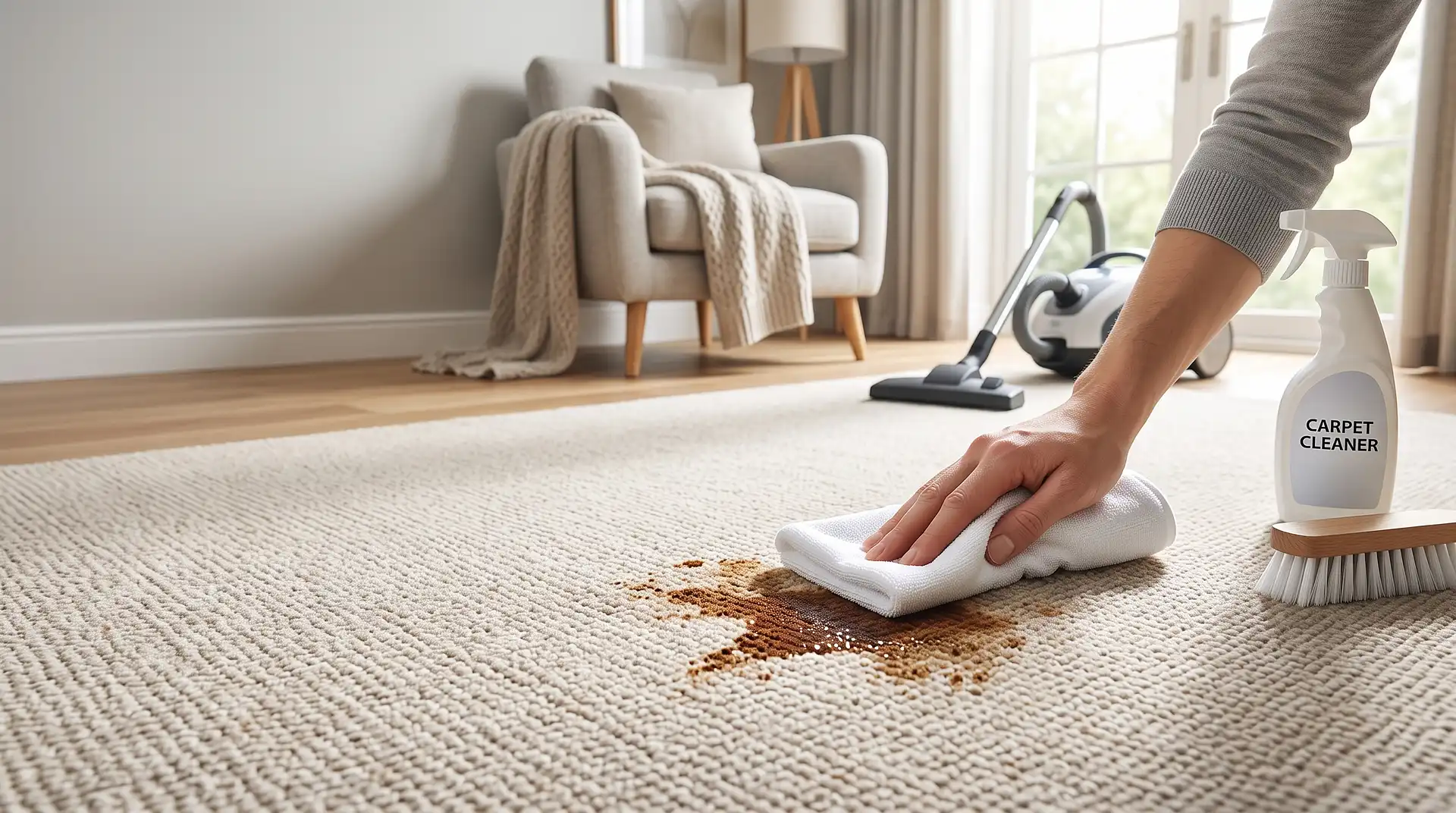
How to Get Coffee Stains Out of Carpet
9 September 2026
How to Get Coffee Stains Out of Carpet
Coffee stains come out of carpet with a solution of white vinegar, washing-up liquid, and warm water, blotted in from the outside of the stain inward while the coffee is still wet, or after briefly rehydrating a dried stain with a damp cloth. Coffee's tannins are what cause the lasting brown discolouration, and vinegar works because it helps break down these tannins rather than just lifting surface liquid the way plain water alone would.
Speed matters, but not as much as technique. A fresh spill treated the wrong way, rubbed vigorously or flooded with too much liquid, can set a stain deeper into the fibres than a dried spill treated correctly a day later.
Step 1: Remove Excess Liquid Immediately
Blot a fresh spill straight away using a clean, dry cloth or paper towel, pressing down firmly and lifting straight up repeatedly rather than rubbing. Work from the outer edge of the spill towards the centre to stop it spreading further across the carpet.
Step 2: Mix the Cleaning Solution
Combine one tablespoon of white vinegar, one teaspoon of washing-up liquid, and two cups of warm water in a bowl or spray bottle. This mild solution is strong enough to break down coffee's tannins without the harshness of stronger commercial stain removers, which can sometimes affect carpet dye on their own.
Step 3: Apply and Blot
Apply the solution to the stain using a clean cloth, dampening the area rather than soaking it.
Blot repeatedly, working from the outside of the stain inward, replacing the cloth with a clean section or a fresh cloth as it picks up colour from the stain.
Repeat the application and blotting two or three times for a stubborn stain, checking progress after each round rather than assuming one pass will fully clear it.
Rinse with a cloth dampened in plain water to remove any remaining solution, then blot dry with a clean towel.
Treating a Dried or Set-In Coffee Stain
Older coffee stains need rehydrating before the same treatment works effectively. Dampen the stain with a cloth soaked in warm water and leave it for five to ten minutes, allowing the dried coffee to soften slightly, before applying the vinegar and washing-up liquid solution exactly as you would for a fresh spill.
Set-in stains often need more repetitions of the blot-and-rinse cycle than a fresh spill, and a very old, dark stain may only fade rather than disappear completely with home treatment, depending on the carpet's fibre type and how long the stain has been there.
A Note on Coffee with Milk or Sugar
Coffee with milk added leaves a slightly different residue than black coffee, since the milk proteins can contribute to a lingering smell even after the visible stain lifts. If the spill included milk, follow the same vinegar treatment for the visible stain, then treat any remaining odour with a light application of bicarbonate of soda left to sit for a few hours before vacuuming, which helps absorb any protein-related smell the vinegar solution alone doesn't fully address.
Sugary coffee spills can also leave the carpet feeling slightly sticky even after the colour is removed. A final rinse with a cloth dampened in plain water, focused specifically on the treated area, usually clears any residual tackiness.
When to Call a Professional
If a coffee stain covers a large area, has soaked through to the underlay, or remains stubbornly visible after several rounds of home treatment, a professional carpet cleaner has access to hot-water extraction and stronger tannin-specific stain treatments that reach deeper into the pile than a home solution typically can.
Use InstantCost's carpet cleaning cost calculator to see what a professional stain treatment or full clean would cost in your area. If you're dealing with several different mark types across the carpet, how to remove marks from carpet covers a wider range of common stains and the right approach for each.
Common Mistakes and What to Do Instead
Mistake: Rubbing the stain instead of blotting. Rubbing spreads the coffee further into the fibres and can damage the pile texture over repeated treatment. Always blot by pressing down and lifting straight up.
Mistake: Using hot water to treat the stain. Heat can help set some stains rather than lift them. Use lukewarm or cool water throughout the treatment process instead.
Mistake: Applying too much liquid at once. Oversaturating the carpet slows drying considerably and risks the stain spreading wider than the original spill. Dampen the cloth rather than pouring solution directly onto the carpet.
Mistake: Skipping the rinse step. Leaving vinegar and washing-up liquid solution in the fibres without rinsing can leave a slightly sticky residue that attracts dirt faster than clean carpet. Always follow up with a plain water rinse.
Mistake: Giving up after one treatment round on an older stain. Set-in stains often need two or three repetitions of the blot-and-treat cycle to fully lift. Judge progress after each round rather than assuming the first attempt should fully clear it.
Mistake: Not testing the solution on a hidden area first. Some carpet dyes, particularly on wool or natural fibre carpets, can react differently to vinegar-based solutions. Test on an inconspicuous patch before treating a visible stain.
What It Costs in the UK
Item or Service | Typical UK Cost (2026) |
|---|---|
White vinegar | £1–£2 |
Washing-up liquid | £1–£2 |
Bicarbonate of soda (for milk-based spills) | £1–£2 |
Professional stain treatment (per stain) | £10–£25 |
Single room professional clean | £35–£55 |
Whole 3-bed house professional clean | £140–£240 |
Stain protector treatment (to prevent future staining) | £8–£18 |
Figures based on InstantCost.co.uk's 2026 UK carpet cleaning pricing data and vary by region, stain severity, and provider.
Staying Safe
Keep any cleaning solution, even a mild vinegar mixture, away from young children and pets while it's out during the cleaning process, and ventilate the room if the smell of vinegar is strong in a small or enclosed space. Wash your hands after handling cleaning solutions, particularly if you have sensitive skin.
Avoid mixing vinegar with any other cleaning chemical, particularly bleach-based products, since combining certain household chemicals can produce harmful fumes. Stick to the simple vinegar, washing-up liquid, and water solution described here rather than layering in additional products.
General UK household chemical safety guidance recommends never mixing cleaning products, particularly anything containing bleach, with vinegar or other acidic solutions, due to the risk of harmful fumes. Always use one cleaning product at a time and ventilate the room during use.
Frequently Asked Questions
Does coffee permanently stain carpet? Not usually, if treated reasonably promptly with a proper tannin-breaking solution like vinegar and washing-up liquid. Very old, dark stains left untreated for a long time can become harder to fully remove and may only fade with home treatment.
Can I use carpet shampoo instead of vinegar for a coffee stain? Carpet shampoo can help with general cleaning, but vinegar specifically targets the tannins responsible for coffee's staining colour, making it more effective for this particular type of stain than a general-purpose shampoo alone.
Why does my coffee stain keep coming back after cleaning? A stain that reappears after apparently being removed often means some coffee has wicked back up from deeper in the carpet pile or underlay as the area dried. Blotting thoroughly and allowing full drying with good airflow helps prevent this.
Is vinegar safe to use on all carpet types? Vinegar is generally safe for most synthetic and wool carpets when diluted as described, but always test on a hidden area first, since some natural fibre carpets and certain dyes can react differently to acidic solutions.
How do I remove the coffee smell from carpet, not just the stain? A light dusting of bicarbonate of soda left on the treated area for a few hours before vacuuming helps absorb any lingering smell, particularly useful for milk-based coffee spills where the smell can persist after the visible stain is gone.
What if I don't have white vinegar at home? A solution of washing-up liquid and warm water alone can still lift a fresh coffee stain reasonably well, though it's generally less effective on the tannin-based discolouration than a vinegar-based solution, particularly for older or set-in stains.